
Digital Orthodontics
How Is It Different from Traditional Treatment?
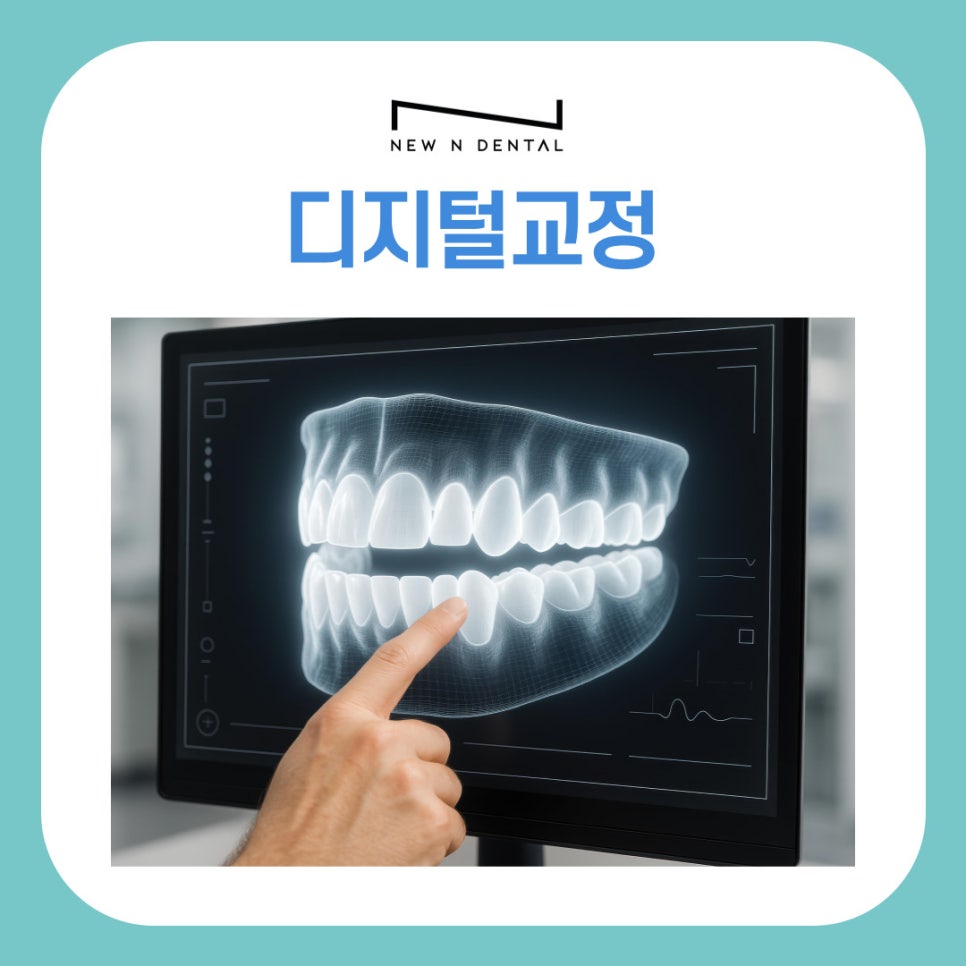
Digital orthodontics is a method that designs the entire process, from diagnosis to treatment planning, based on data.
Compared with traditional orthodontics, it improves predictability and precision, while also enhancing treatment understanding and convenience.
If you structurally understand what is different and how, the criteria for making a choice become clear.
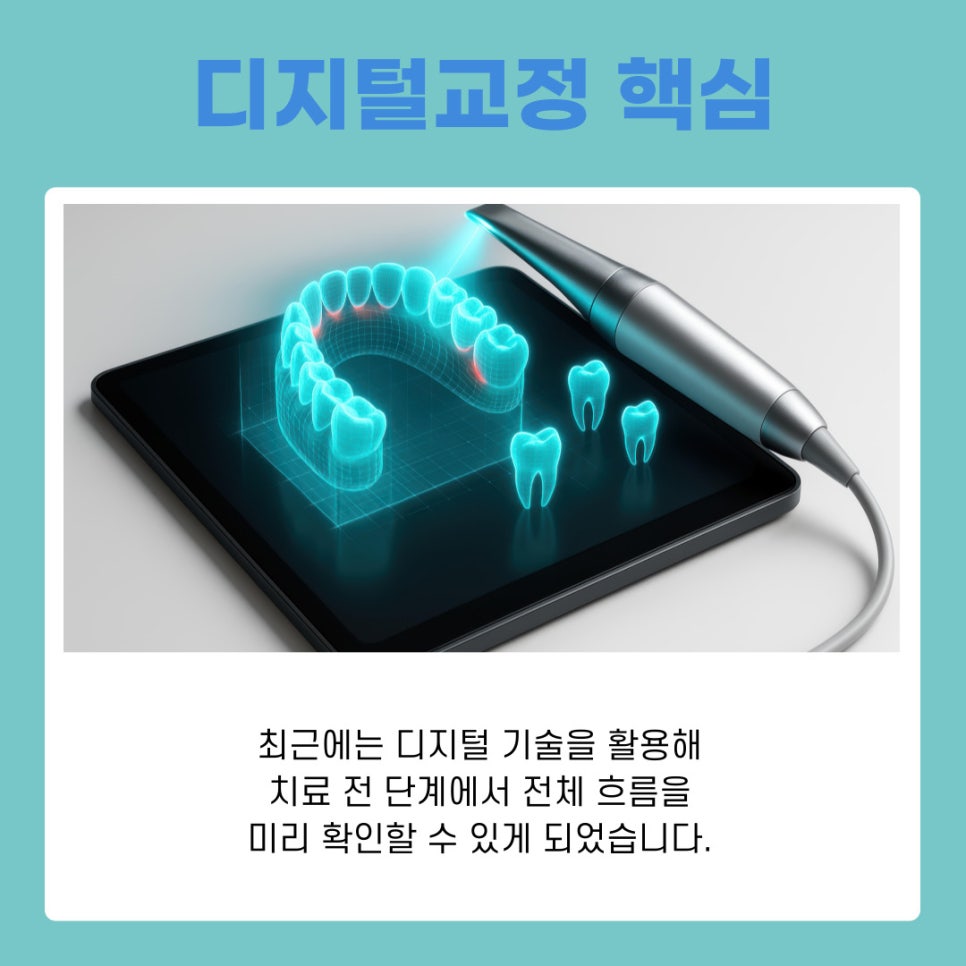
In the past, many people only began to feel the treatment process after treatment had already started.
But recently, by using digital technology, it has become possible to review the overall flow in advance during the pre-treatment stage.
This change is the core of digital orthodontics.
Traditional orthodontics was diagnosed mainly through plaster models, two-dimensional X-rays, and visual observation.
This method has been used for a long time, but it had limitations in fully reflecting three-dimensional structures.
In the tooth movement process, collisions or subtle variables were often left to experience.
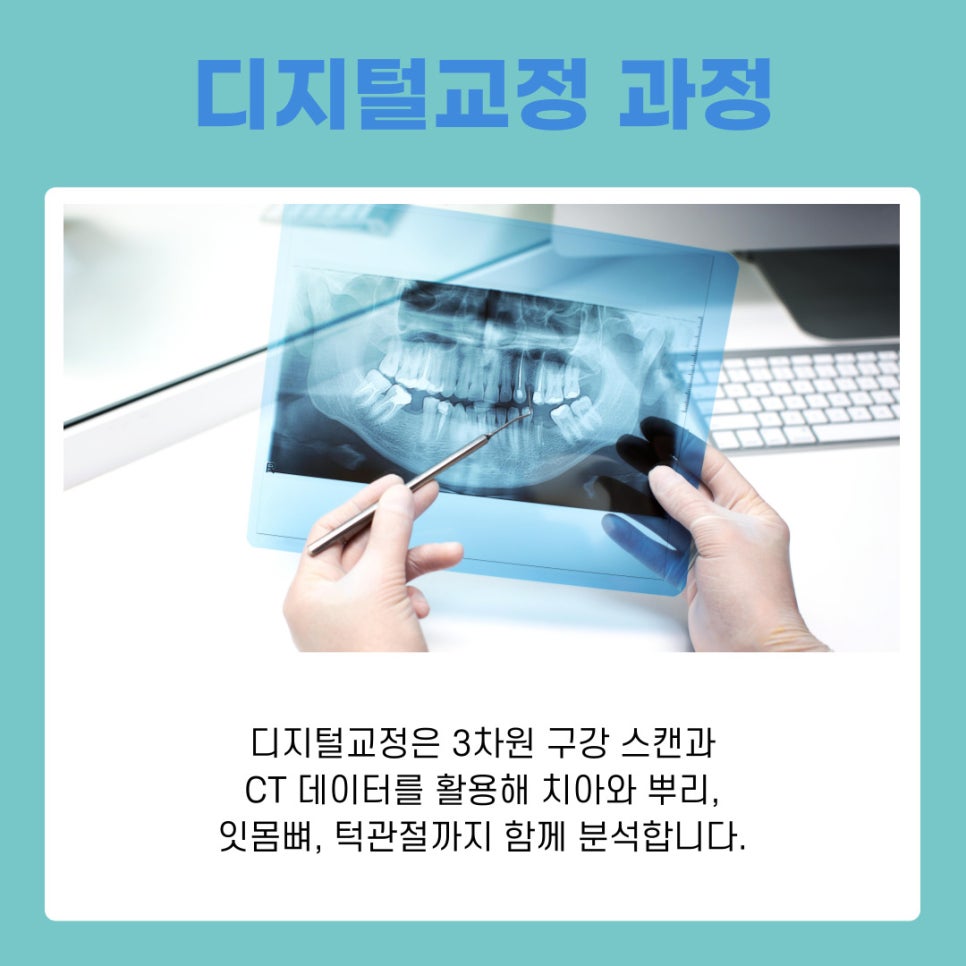
Digital orthodontics uses 3D oral scans and CT data to analyze the teeth, roots, jawbone, and temporomandibular joint together.
As a result, it becomes possible to create a treatment plan that also considers structures that are not visible.
It is not simply about looking at alignment, but about designing the entire movement path.
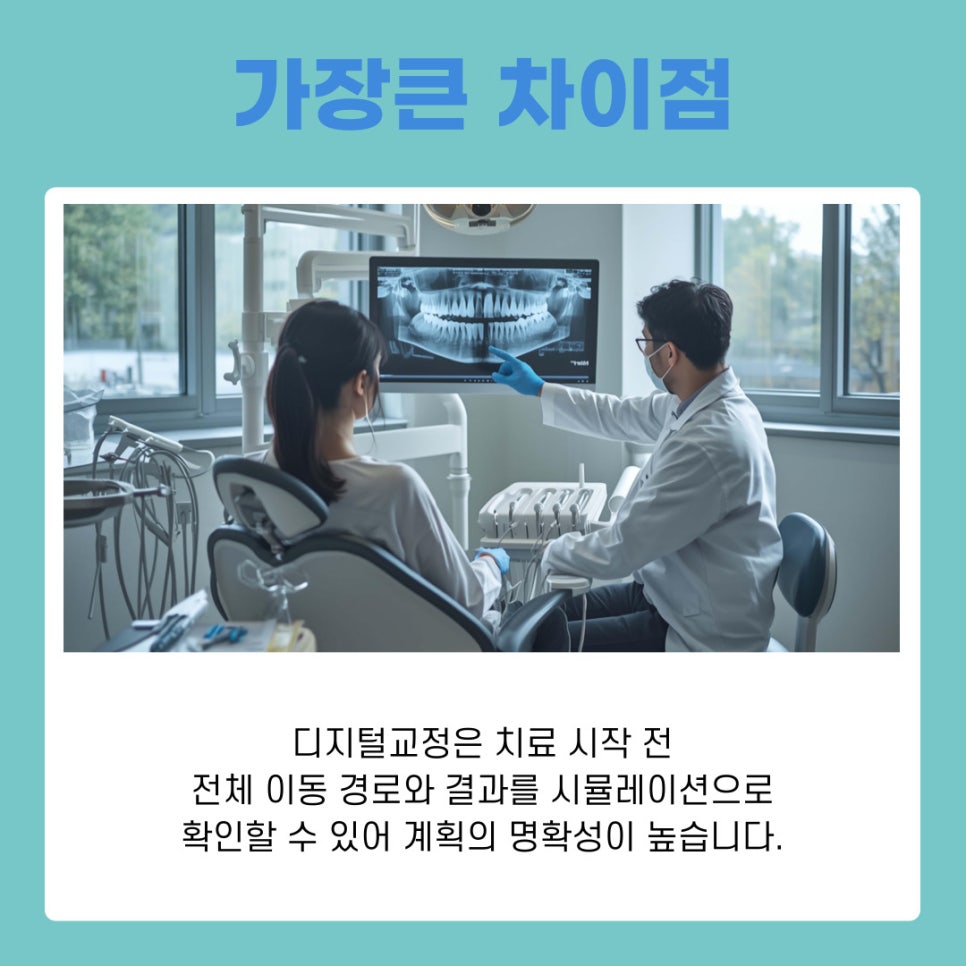
The biggest difference is simulation. In digital orthodontics, before treatment begins, you can check in advance how the teeth will move and at what point what changes will appear.
This makes it possible to set the overall treatment period and target points more clearly.
It improves understanding because it is treatment where the plan is visible.
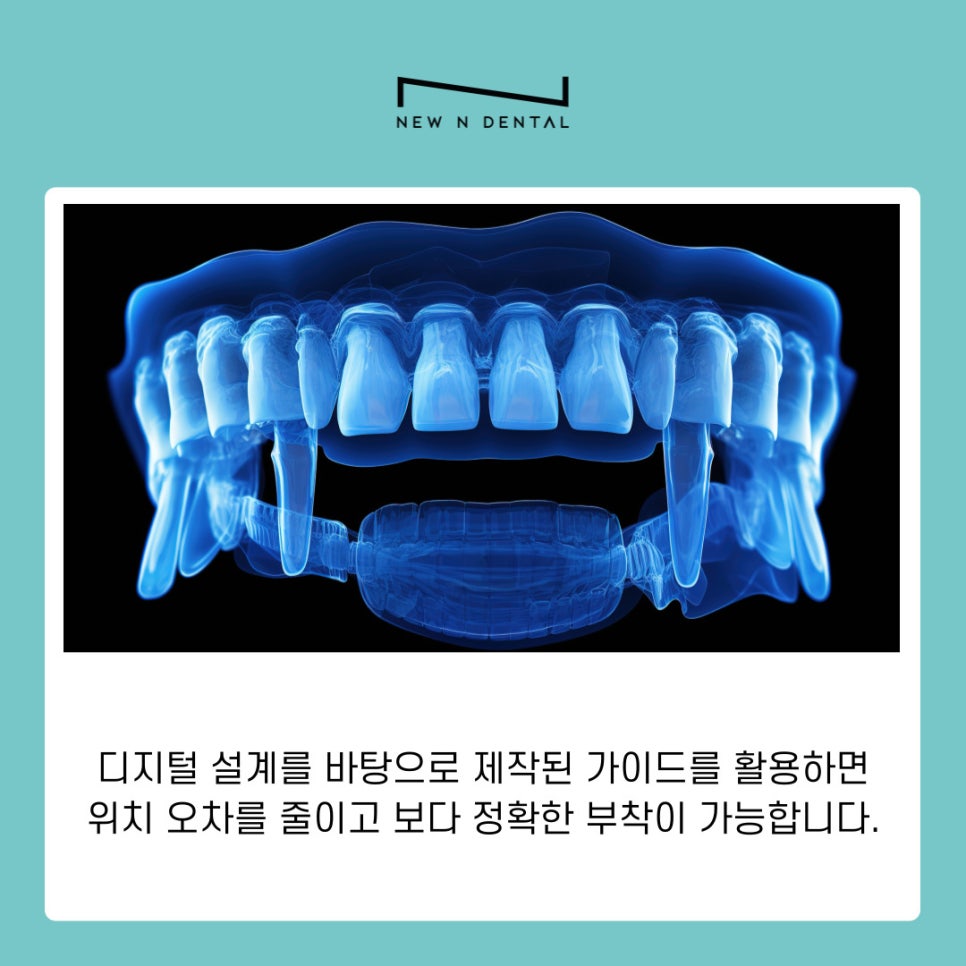
There is also a difference in the way brackets are attached.
Using a guide made based on digital design helps reduce positioning errors and allows more accurate placement.
This shortens procedure time and lowers the possibility of unnecessary readjustment.
Small improvements in accuracy affect the overall treatment period.
In traditional orthodontics, the plan sometimes changed during intermediate adjustment due to unexpected variables.
Digital orthodontics aims to reduce these variables at the initial design stage.
It helps minimize unnecessary tooth movement and keeps treatment within the planned range.
That is why stability increases.
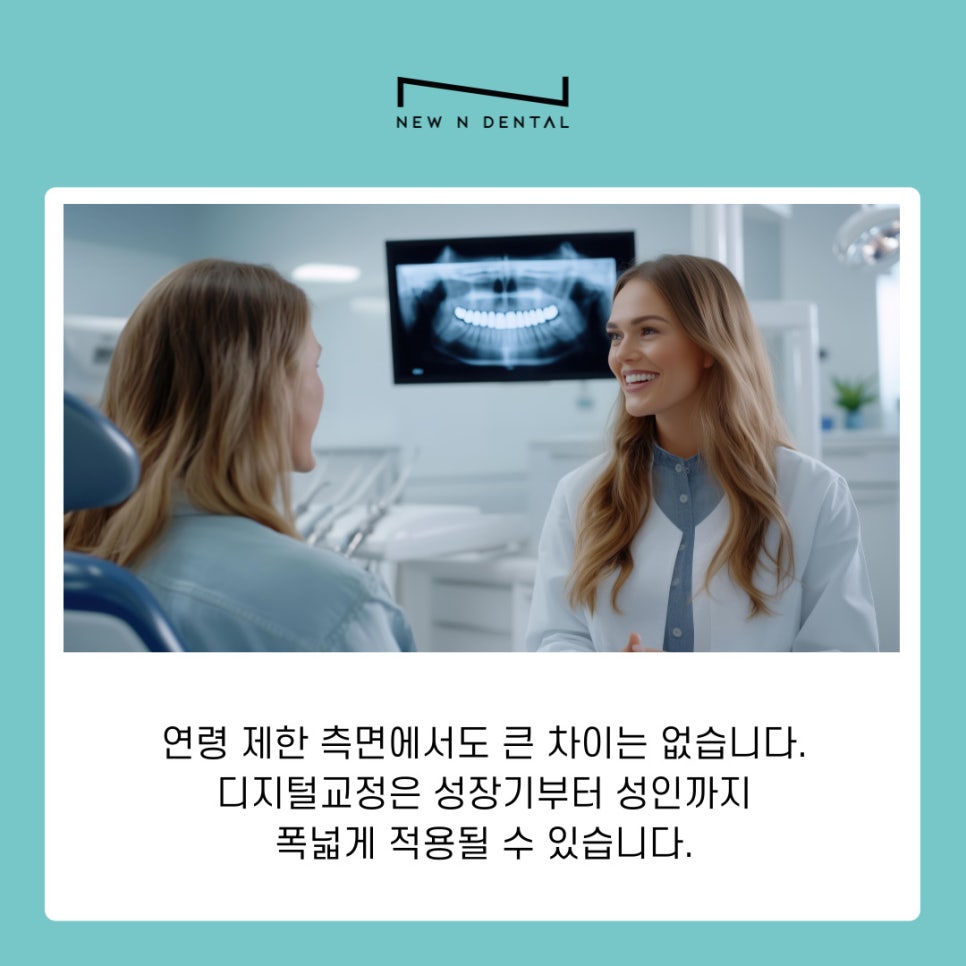
There is not a major difference in terms of age restrictions.
Digital orthodontics can be broadly applied from growing children to adults.
Especially during the growth period, it is possible to precisely analyze jaw growth and the timing of permanent tooth eruption to establish a space management plan.
This allows an approach that reduces unnecessary extractions.
Clear aligners are also closely related to digital technology.
Based on 3D scan data, step-by-step appliances are made and worn sequentially.
They have advantages in aesthetics and hygiene management, and they are relatively less burdensome in daily life.
However, it is important to follow the wearing time.

Clear aligners are not suitable in every case.
When the range of tooth movement is large or the structure is complex, traditional metal braces may be a more stable choice.
Digital orthodontics refers to a difference in method, not to a specific appliance alone, and the choice depends on the condition.
Another advantage of digital orthodontics is communication. Through the simulation screen, the treatment plan can be reviewed together, making the treatment process easier for patients to understand.
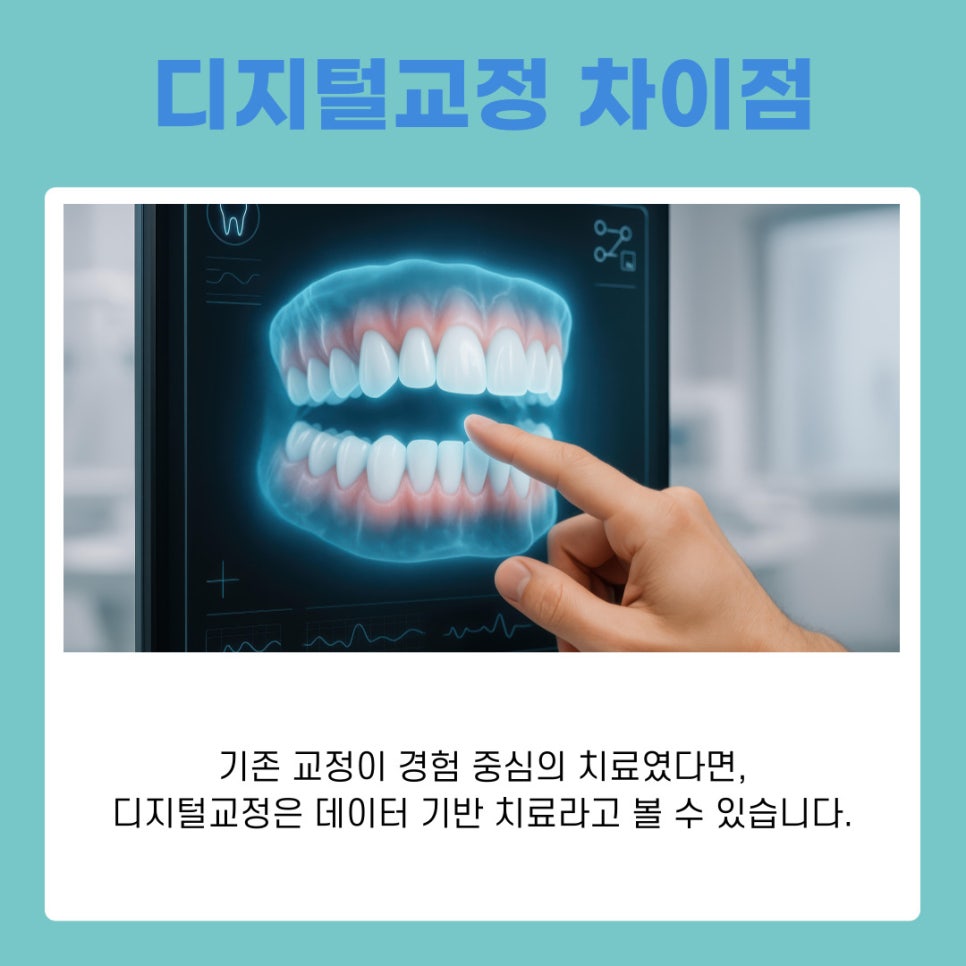
Visual information rather than vague explanations increases understanding and also raises trust in the treatment.
If traditional orthodontics was experience-based treatment, digital orthodontics can be seen as data-based treatment.
Both methods have pros and cons, but there is a clear difference in approach.
What matters is determining which method is more suitable for me.
Digital orthodontics is a direction aimed at increasing treatment accuracy.
It does not mean that a machine handles every part of the process; rather, it plays a role in helping diagnosis and planning more precisely.
In the end, the center of treatment is the person, and technology is a means of supporting that.
Orthodontic treatment is not a choice that ends quickly.
That is why it is necessary to fully understand the information before starting.
Once you understand the difference between digital orthodontics and traditional treatment, you can approach it with realistic criteria rather than vague expectations.
Q. What is the biggest difference from traditional orthodontics?
A. Predictability and precise treatment planning.
Traditional orthodontics is carried out mainly using plaster models and two-dimensional data, so adjustments are often needed during treatment.
Digital orthodontics allows you to check the entire movement path and the results through simulation before treatment begins, which makes the plan clearer.
Digital orthodontics is not a concept intended to replace traditional treatment, but rather a method that complements and advances it.
Just understanding what is different already makes the criteria for choice much clearer.
Satisfaction with orthodontic results depends more on the plan than on the appliance.
Digital technology plays a role in showing that plan more concretely.
That is why the pre-treatment stage becomes even more important.