
The Secret to Long-Lasting Implants in Seocho-dong Dentistry
Key Post-Treatment Care Points
| Summary |
|---|
| 1. The treatment starts with accurately identifying the amount of jawbone and the position of nerves through 3D CT and X-ray imaging. |
| 2. If a tooth has been lost due to trauma or severe decay, an implant is often more advantageous than leaving it untreated when long-term stability is considered. |
| 3. Depending on the individual, temporary sensitivity or pain may occur, so the condition of the gums and sensitivity should be checked before the procedure. |
| 4. More than the procedure itself, regular checkups and hygiene management afterward are the key factors that determine the lifespan of an implant. |
| 5. Rather than making a quick decision, plan while considering bite changes and lifestyle habits over the next several decades. |
For those looking for an implant dental clinic near Seocho-dong
or who are worried before treatment,
we have organized the essential information for you.
From people in their 20s to older adults, implants are now
an important option for restoring dental health,
regardless of age.
When a tooth is lost, the first thing many people consider
is an implant.
Especially for implant patients in their 20s,
there are many cases where treatment is delayed because they are young,
or decisions are made too hastily.
However, it is important to remember that an implant is not simply
about filling an empty space, but about placing a new tooth
that will stay with you for decades to come.
What Matters More Than the Surface: Internal Structure
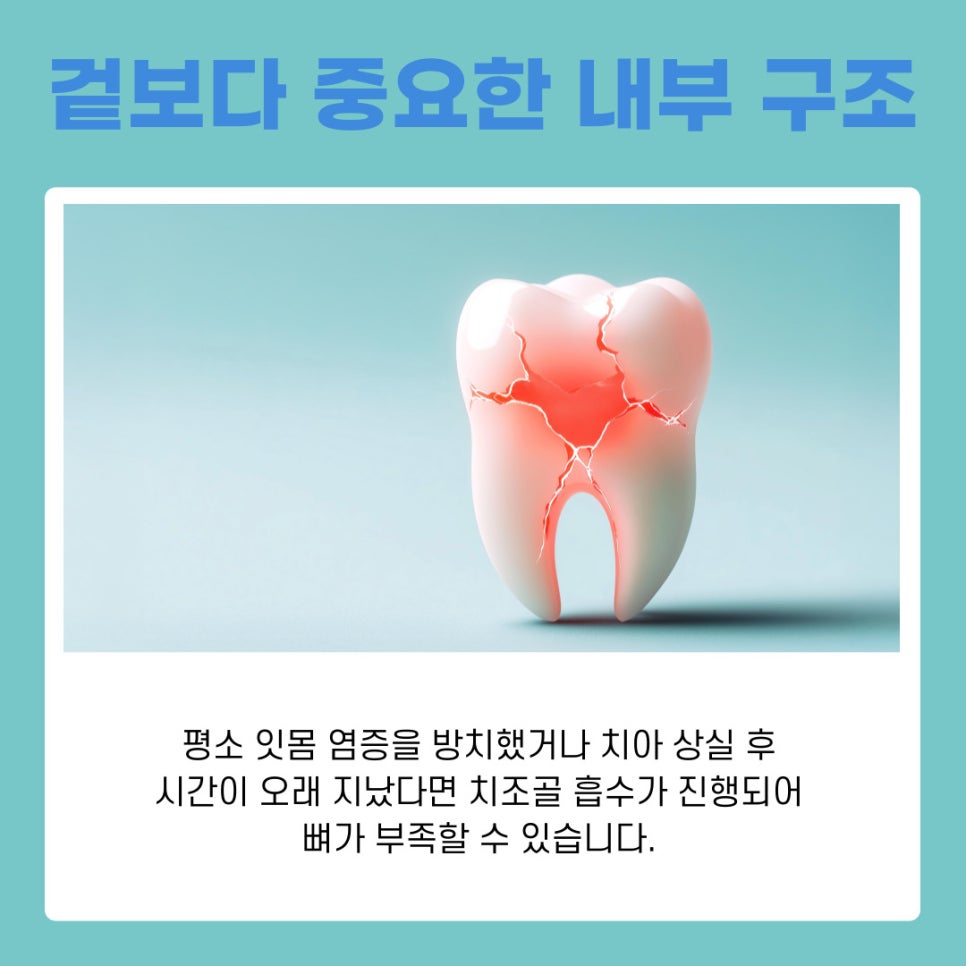
The success of an implant depends on the condition of the alveolar bone
(the jawbone) that supports the teeth.
If gum inflammation has been left untreated for a long time,
or if a long time has passed since tooth loss, bone resorption may progress
and there may be insufficient bone.
Signs to Watch For
If the gums have receded and the teeth look longer,
or food frequently gets stuck, these may be signs that the bone is shrinking.
Customized Treatment
If the bone density and amount are not sufficient,
combining treatment with bone grafting is essential
to build a solid foundation.
From People in Their 20s to Older Adults
Age-Specific Customized Criteria
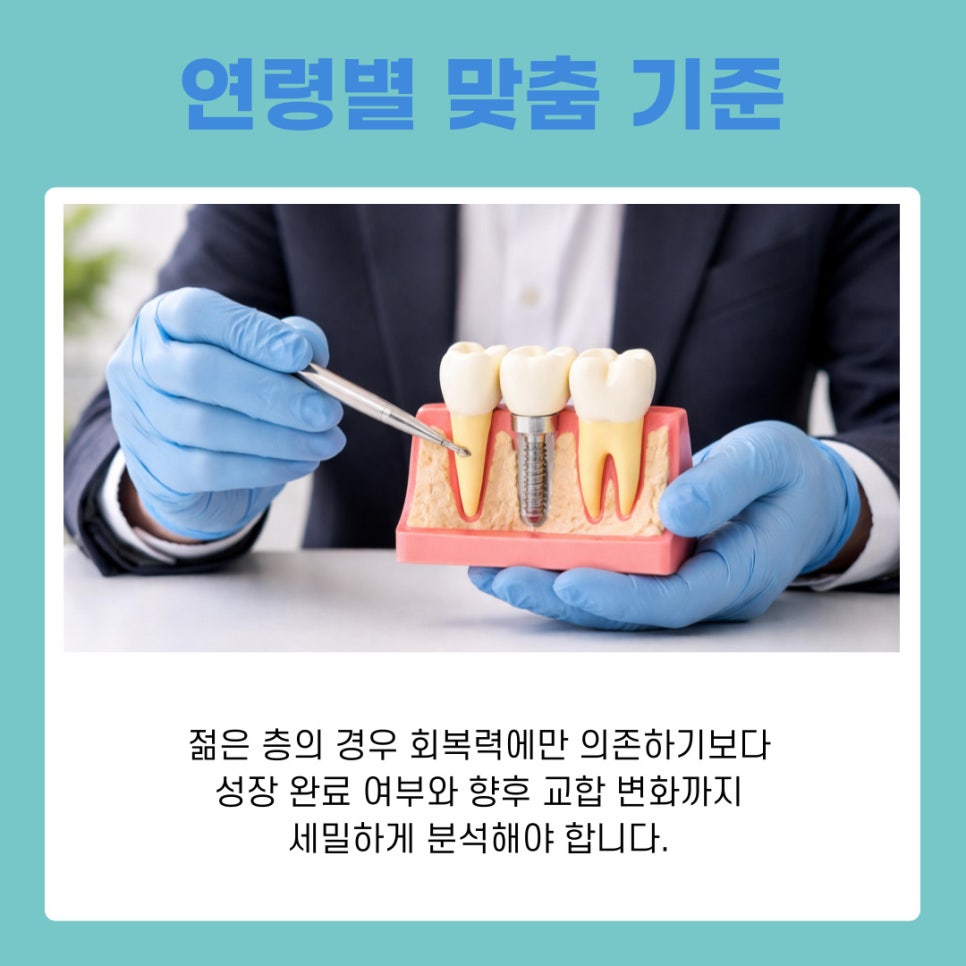
In younger people, there are many cases where implants are needed
because of trauma or severe cavities during sports activities.
In such cases, rather than relying only on youthful recovery,
it is necessary to carefully analyze whether growth is complete
and how the bite may change in the future.
On the other hand, for middle-aged and older adults,
systemic diseases or medications (such as blood pressure medication)
may cause dry mouth and increase the risk of peri-implantitis,
so more careful management is needed.
Before and After Implant Treatment,
Be Sure to Check These!
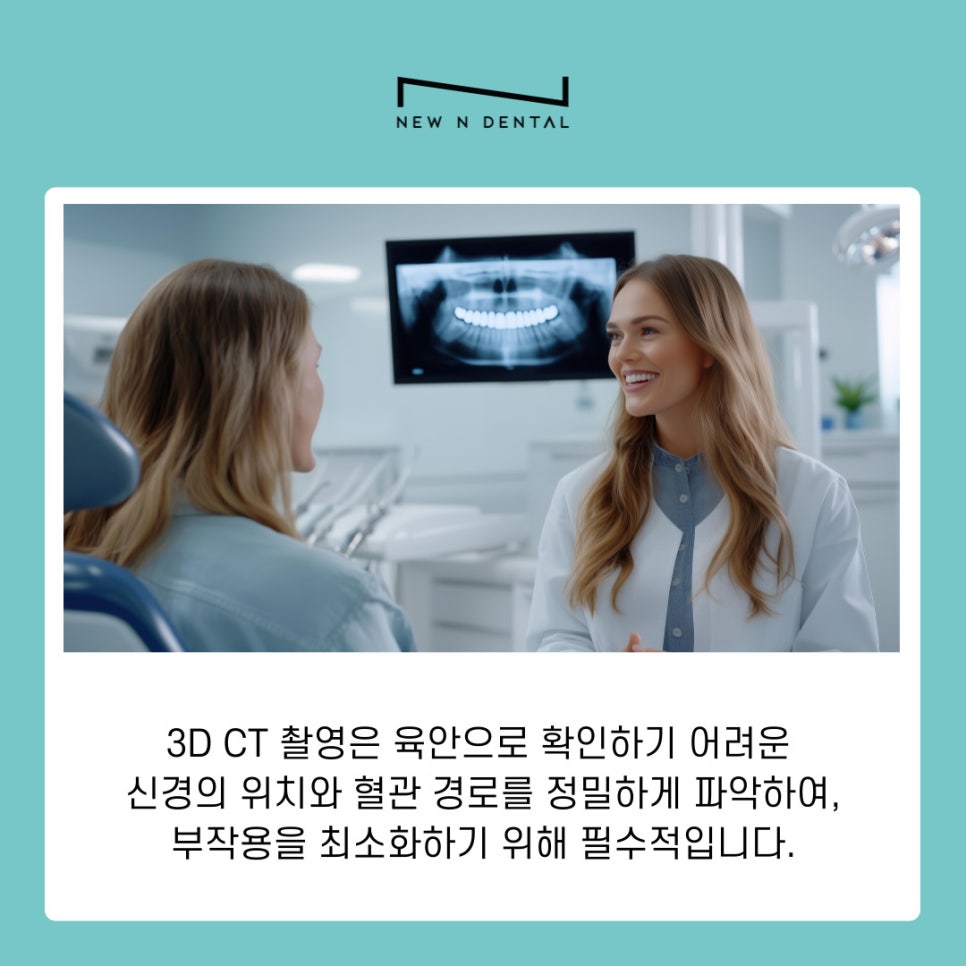
For successful placement,
3D CT imaging is essential.
This is because the position of nerves and the path of blood vessels,
which are difficult to confirm with the naked eye, must be identified
to minimize side effects.
When choosing a dental clinic in Seocho-dong,
checking whether it has such digital equipment and provides sufficient consultation
becomes a standard for trust.
Aftercare Determines the Outcome.
Unlike natural teeth, implants have no nerves,
so it is difficult to feel pain even if a problem occurs.
Regular Checkups
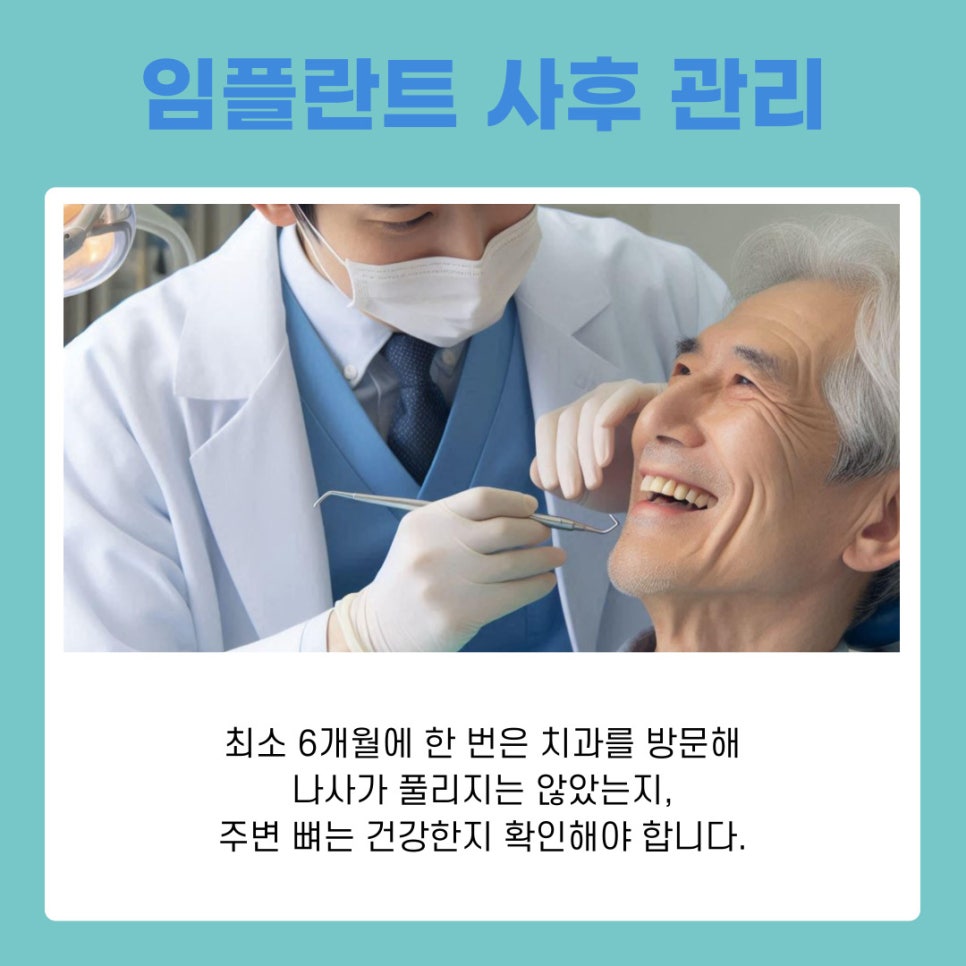
At least once every 6 months, visit the dental clinic
to check whether any screws have loosened
and whether the surrounding bone is healthy.
Cleanliness Maintenance
If tartar builds up around the implant,
peri-implantitis can develop and the tooth that was carefully placed
may be lost.
Habit Correction
If you have a habit of clenching your teeth or grinding them,
excessive force may be applied to the implant,
which can shorten its lifespan, so caution is needed.
What If You Suddenly Have a Toothache
or Discomfort?

If it is night or the weekend and it is difficult to visit the hospital,
cold compresses on the outside of the face may help reduce swelling and pain.
However, this is only a temporary measure.
Swollen gums or throbbing symptoms are signs that internal inflammation has worsened,
so it is safest to visit a Seocho-dong dental clinic as soon as possible
and receive an accurate diagnosis.
Implants are no longer a scary procedure.
If you create a treatment plan that suits you based on accurate criteria,
you can regain the joy of chewing and a bright smile.
Q. What process is involved before an implant procedure?
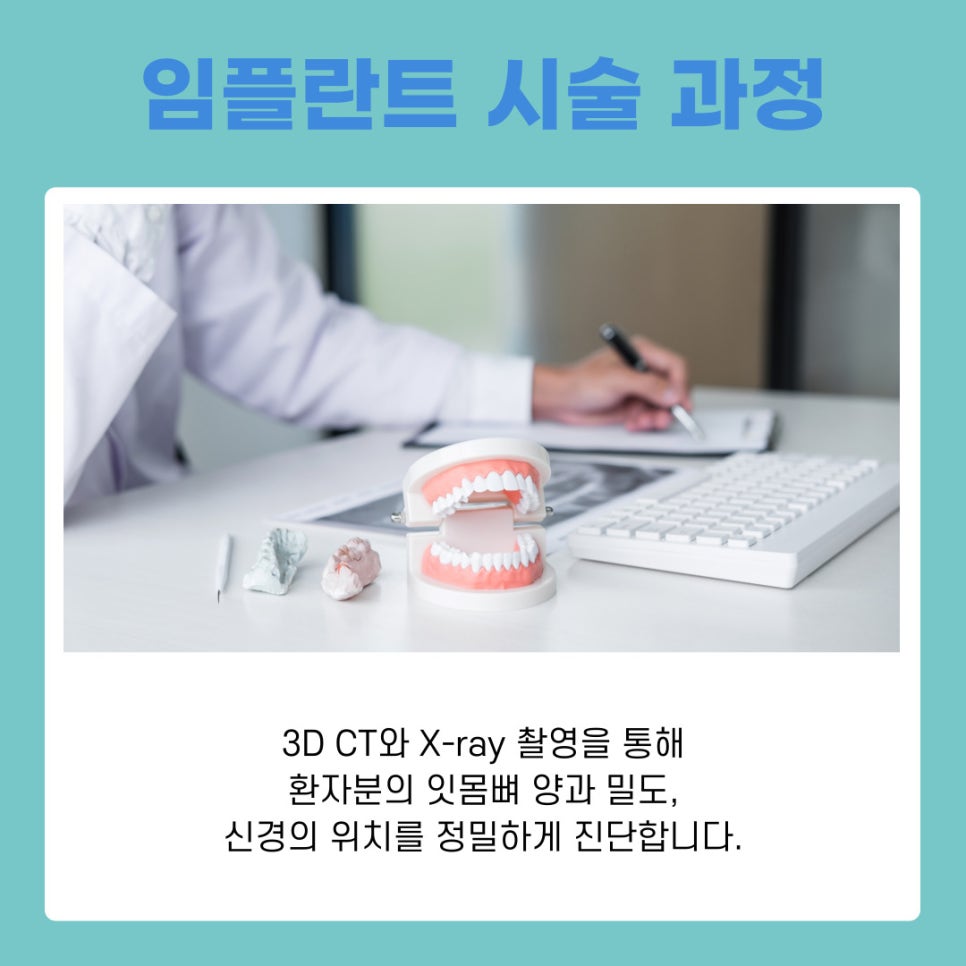
A. First, 3D CT and X-ray imaging are used to precisely diagnose
the amount and density of the patient's jawbone,
and the position of the nerves.
Based on this data, the exact position and angle for placing the implant are determined,
and if there is insufficient bone, whether bone grafting is needed is also planned.
Rather than judging solely by age,
it is most important to establish a customized treatment plan
by comprehensively considering each individual's oral condition
and the possibility of future changes.