
| Summary |
|---|
| 1. Periodontal disease often begins with minor changes such as gum bleeding, swelling, and bad breath without pain, making it easy to overlook. |
| 2. If blood keeps appearing even after brushing more gently, it is a sign that inflammation has already started inside the gums. |
| 3. If the gums darken or the teeth look longer, the gum tissue is receding and the condition has become more advanced. |
| 4. Symptoms may improve and worsen repeatedly, and even when the pain briefly eases, internal damage may be getting deeper. |
| 5. If the early signs are ignored and the condition is left untreated until the teeth become loose, extraction and implants may become necessary, increasing the burden. |

Periodontal disease is not a condition that suddenly appears in a severe state one day,
but rather starts with very small changes.
In many cases, it begins with slight bleeding from the gums during an ordinary brushing session
or with a growing sense that the mouth does not feel as refreshed as usual.
Because these signs are common in everyday life and seem minor,
they are easy to dismiss, but periodontal disease
progresses slowly from these small moments.
Periodontal disease symptoms

Rather than clear pain,
it feels more like a subtle discomfort.
After brushing, the gums may feel slightly swollen,
or they may react more sensitively than usual when touched by a toothbrush.
It is easy to think it is just fatigue because it seems to get better after a day or two,
but if this happens repeatedly, it may be evidence that a warning light has already turned on for gum health.
For many people, the first change they notice is gum bleeding.
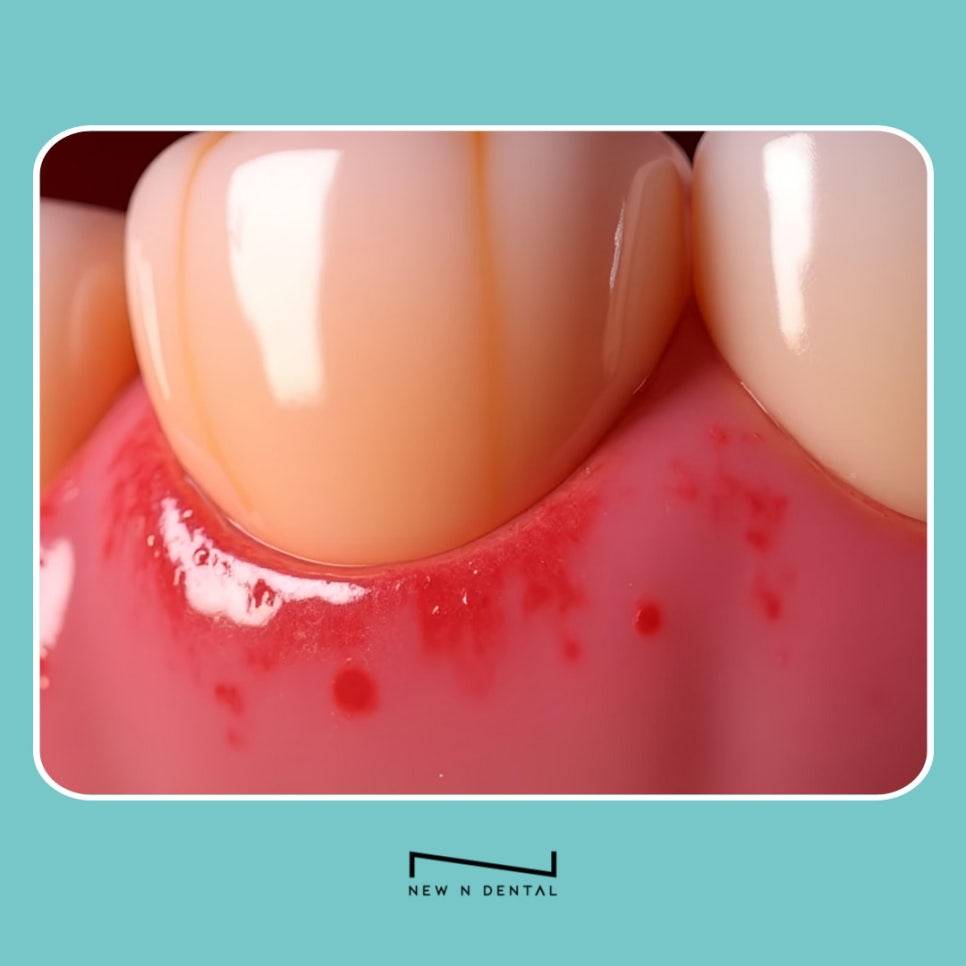
When blood appears while chewing food or brushing,
at first people usually think, Did I just brush too hard?
But if the same symptom continues even after reducing brushing force,
the likelihood is very high that an inflammatory reaction has begun
inside the gums.
At this stage, there is almost no pain,
so treatment is often delayed and left untreated.
Changes in breath

If brushing thoroughly does not leave your mouth feeling fresh for long,
or if bad breath is noticed more often than before,
this may be more than a simple hygiene issue.
It can be a sign that the environment around the gums is changing.
In other words, it means bacterial activity in the mouth has increased,
so extra caution is needed.
As time passes, the gums begin to swell more often
and more easily than usual.
Even if there is no major visible change yet,
a subtle foreign-body sensation or pressure may be felt when chewing.

Unfortunately, even at this stage, many people
endure the symptoms or dismiss them as unimportant
and continue with daily life.
As periodontal disease progresses further, the color of the gums changes.
Healthy gums have a light pink color,
but if inflammation continues, they gradually turn red or dark in color.
However, this change is hard to notice on your own unless you look closely in a mirror and compare,
so symptoms often worsen without the person realizing it.
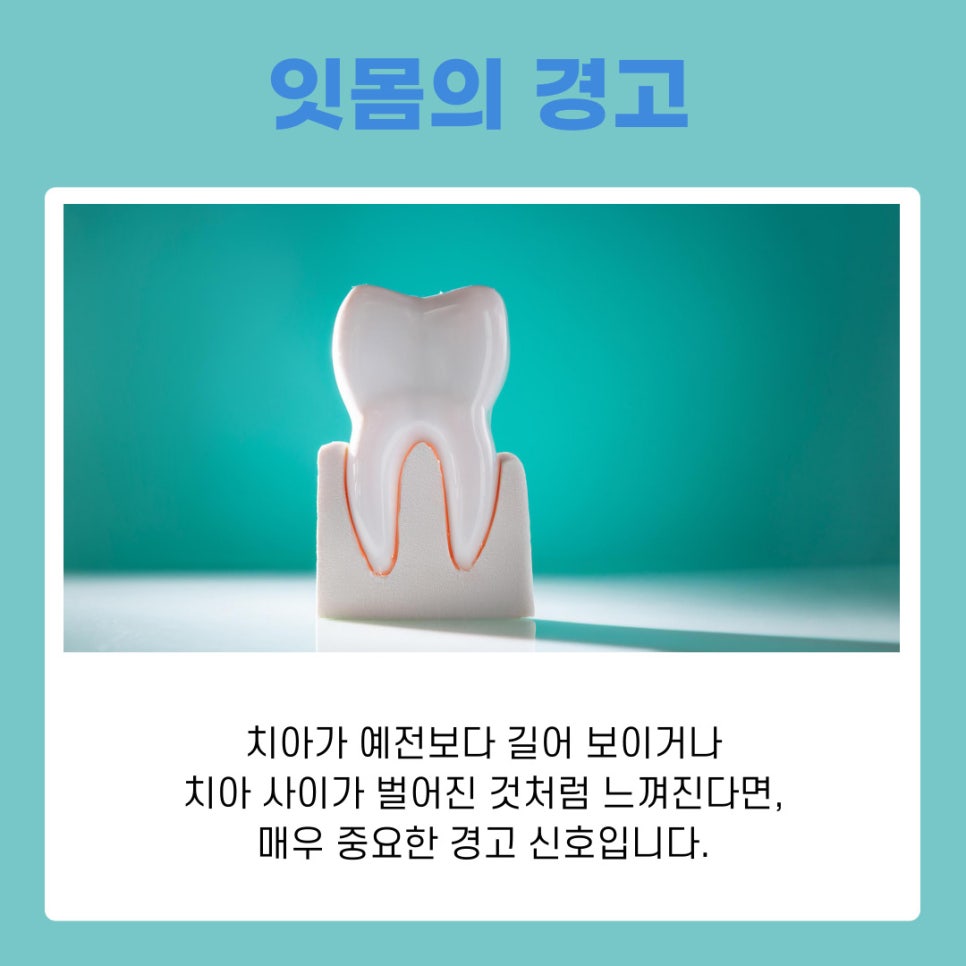
Feeling as though the gums are gradually receding
is also a very important warning sign.
If the teeth look longer than before
or if the spaces between teeth feel wider,
it means the gum tissue is slowly receding.
At this point, periodontal disease should be understood as a sign that it has moved beyond the early stage
and is now progressing in earnest.
From this point on, pain or discomfort when chewing
begins to appear intermittently.
Particularly when chewing hard foods, a specific area may feel sore,
or there may be a strange ache when pressure is applied.

But because the symptoms do not continue every day
and instead improve and worsen repeatedly,
many people still do not fully realize how serious the condition is.
In fact, one of the scariest things about periodontal disease is that there are times when symptoms temporarily lessen.
As the gum inflammation deepens, nerve responses may become duller,
and the pain may decrease for a while.
At that point, many people mistakenly think the condition has improved,
but in reality, it is often a state like calm before the storm,
with internal damage progressing even deeper.

Through this process, the structures that once firmly supported the teeth
become rapidly weakened.
As a result, you may feel the teeth becoming loose
or notice that the bite between the upper and lower teeth feels slightly different,
and by this stage, periodontal disease can be considered to have progressed quite deeply.
If periodontal disease is not managed early
and is left untreated, it can ultimately lead to the loss of precious teeth.
When it becomes difficult to keep the teeth any longer,
extraction followed by implants may become the only alternative.
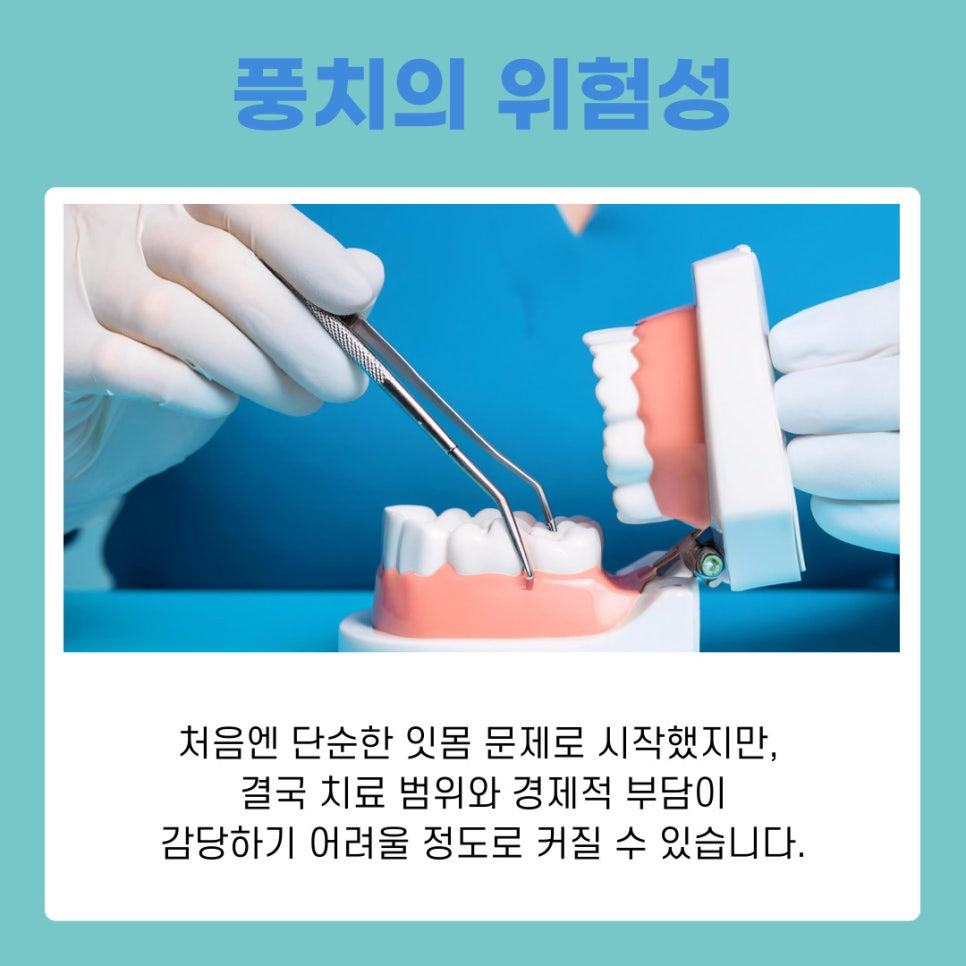
What started as a simple gum problem at first
can eventually grow into a situation where the treatment scope and financial burden
become difficult to manage.
The important point is that periodontal disease symptoms are not a rare problem that only appears in special people.
Even people who believe they brush well can still experience it depending on their care methods or lifestyle habits,
and dismissing it as something that naturally comes with aging and leaving it untreated is never a good idea.
The earlier you notice and respond to the signs of periodontal disease,
the easier it is to manage.
If small changes such as gum bleeding, swelling, or bad breath keep happening,
never just brush them off.
The habit of not ignoring small signals from your body
is the most certain and practical way to protect your oral health in the long term.

Q. If my gums bleed when I brush,
does that definitely mean periodontal disease?
A. Repeated gum bleeding is a representative early sign that inflammation
has begun.
If bleeding continues even after reducing the force of brushing,
this strongly suggests the possibility of inflammation inside the gums,
rather than simple external irritation, so it must be checked.