A Complete Guide to Dental Tooth Whitening: From the Principles to the Features of Each Type
| Summary |
|---|
| 1. When pigments penetrate between the enamel due to external factors or aging, it is difficult to reverse them with brushing alone |
| 2. Whitening agents break down staining substances inside the tooth into oxygen bubbles, restoring a white appearance |
| 3. Professional whitening uses high-concentration agents and special light to provide a safe whitening effect |
| 4. For about 48 hours after the procedure, avoid foods with strong pigments |
| 5. Decide whether to proceed and what plan to follow through sufficient consultation with medical staff |

Hello,
This is Newn Dental Clinic.
One of the important factors that determines first impressions
is a clean and bright smile.
However, coffee, tea, wine, and other drinks and foods we often enjoy
as well as smoking and aging
cause teeth to gradually discolor.
Since once-discolored teeth are difficult to restore
with ordinary brushing alone, many people consider tooth whitening.
Today, we will organize the essential information you need to know
for safe and effective tooth whitening.
Causes of tooth discoloration and the need for whitening
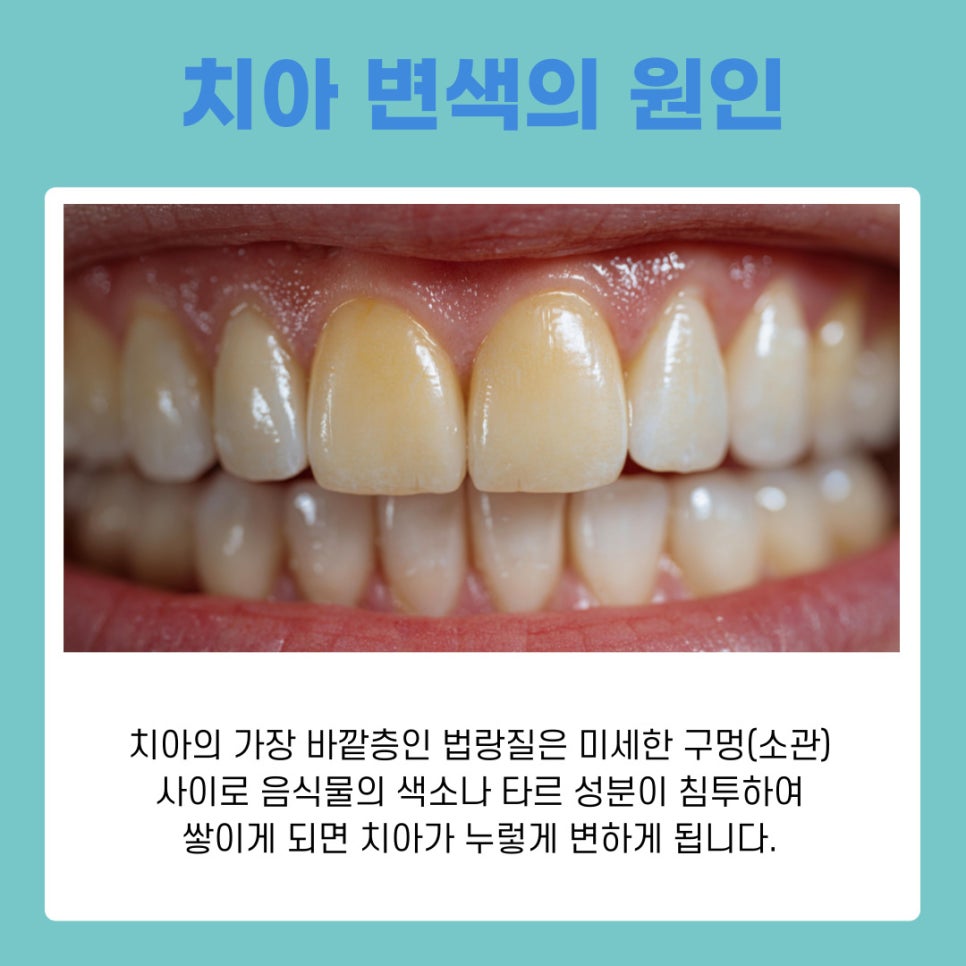
The outermost layer of the tooth, the enamel, is made up of tiny pores
(tubules).
Over time, pigments from food
and tar components seep in and build up through these pores,
causing teeth to turn yellow.
External discoloration: discoloration caused by outside factors such as coffee, curry, cola,
and smoking.
Internal discoloration: discoloration caused by enamel wear due to aging,
which makes the yellow dentin inside show through, or discoloration that progresses from within due to
certain medications taken in childhood, tooth nerve necrosis, and similar causes.
Discoloration that cannot be resolved through daily care
must be treated through a dental approach to break down the stained proteins
in order to restore the original brightness.
Principles of tooth whitening
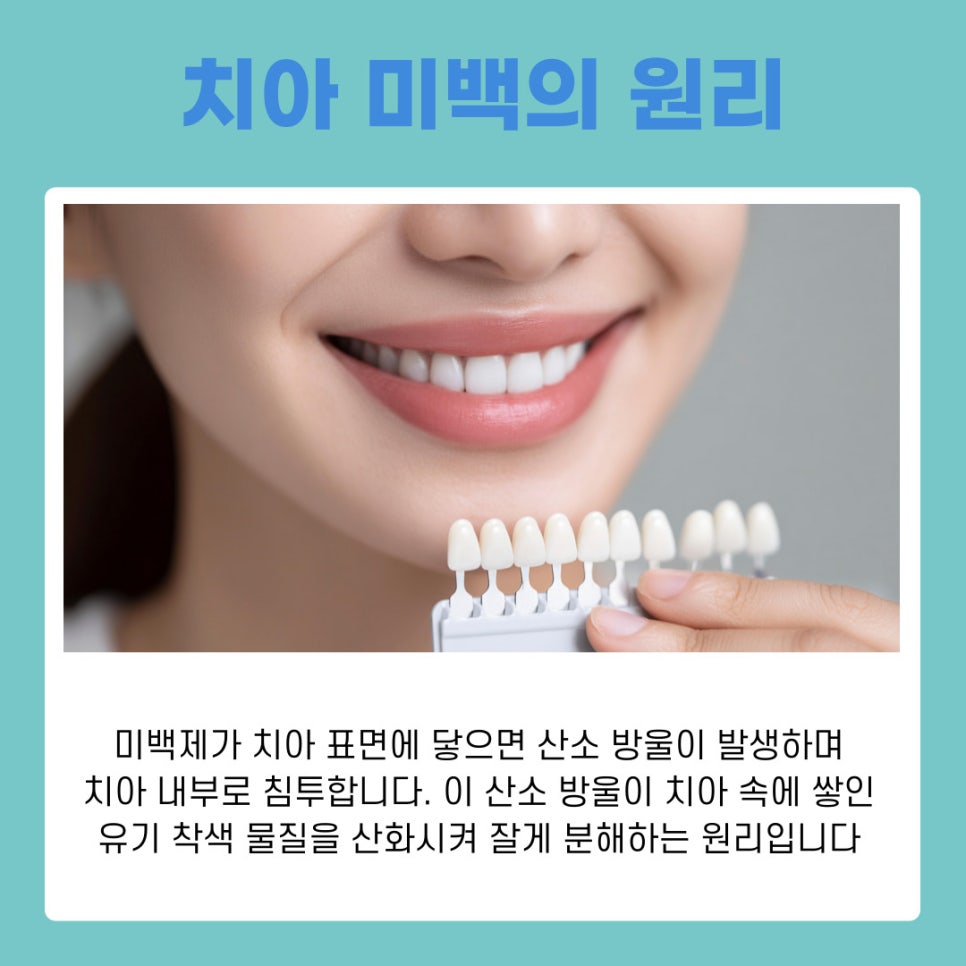
When the whitening agent touches the tooth surface, oxygen
bubbles are generated and penetrate into the tooth.
This oxygen breaks down the organic staining
substances accumulated inside the tooth through oxidation.
As the staining substances are broken down, the reflectivity of light increases,
and as a result, the teeth appear brighter and whiter.
In professional whitening, to promote this reaction,
a special light (laser) is applied to
draw out a high level of effect in a short time.
Tooth whitening procedure
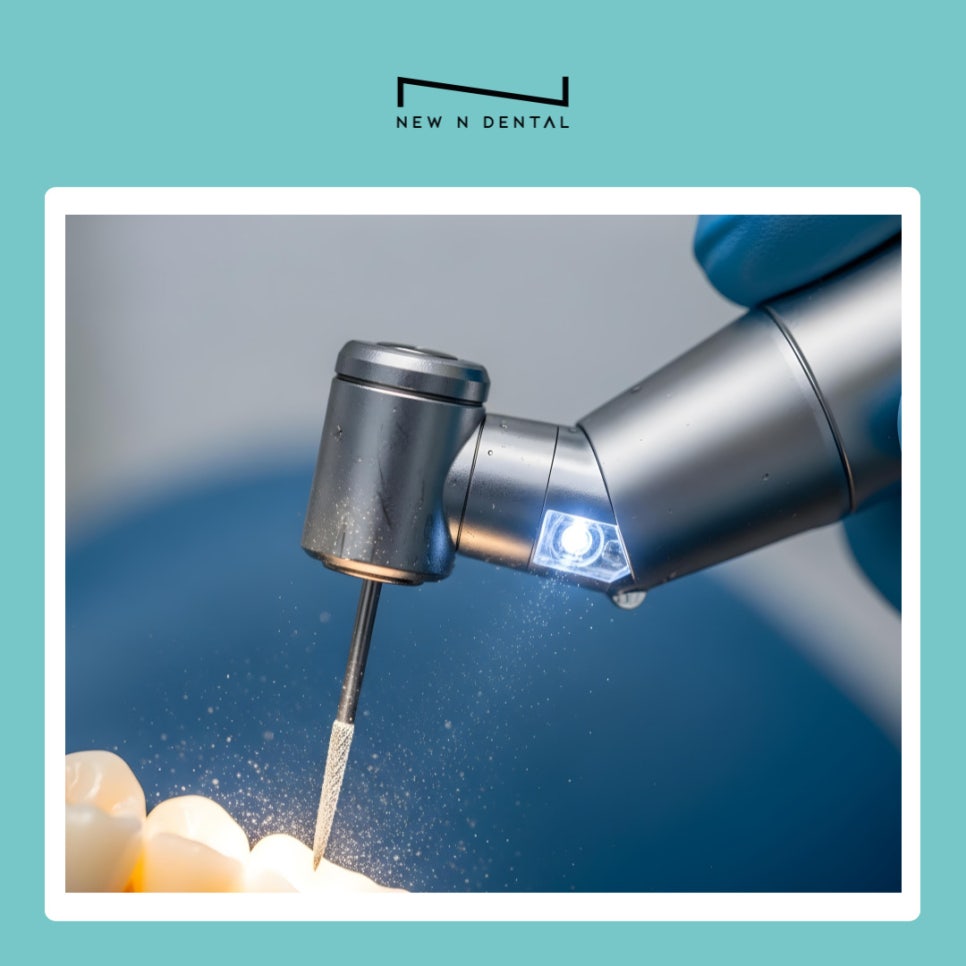
Professional whitening
Oral examination and scaling: Before whitening, check for cavities or gum disease
and remove tartar so that the whitening agent
adheres well to the tooth surface.
Tooth shade check: Before the procedure, record the current condition
using a tooth shade guide.
Application of a gum protector: To protect the gums from the high-concentration agent, a barrier is applied and hardened.
Application of whitening agent and light exposure: After evenly applying the agent to the tooth surface, a special laser is applied repeatedly
for about 15 to 20 minutes at a time, 2 to 3 times.
Completion and result check: After wiping off the agent, the final
shade is checked and precautions are explained.
Precautions and aftercare after tooth whitening
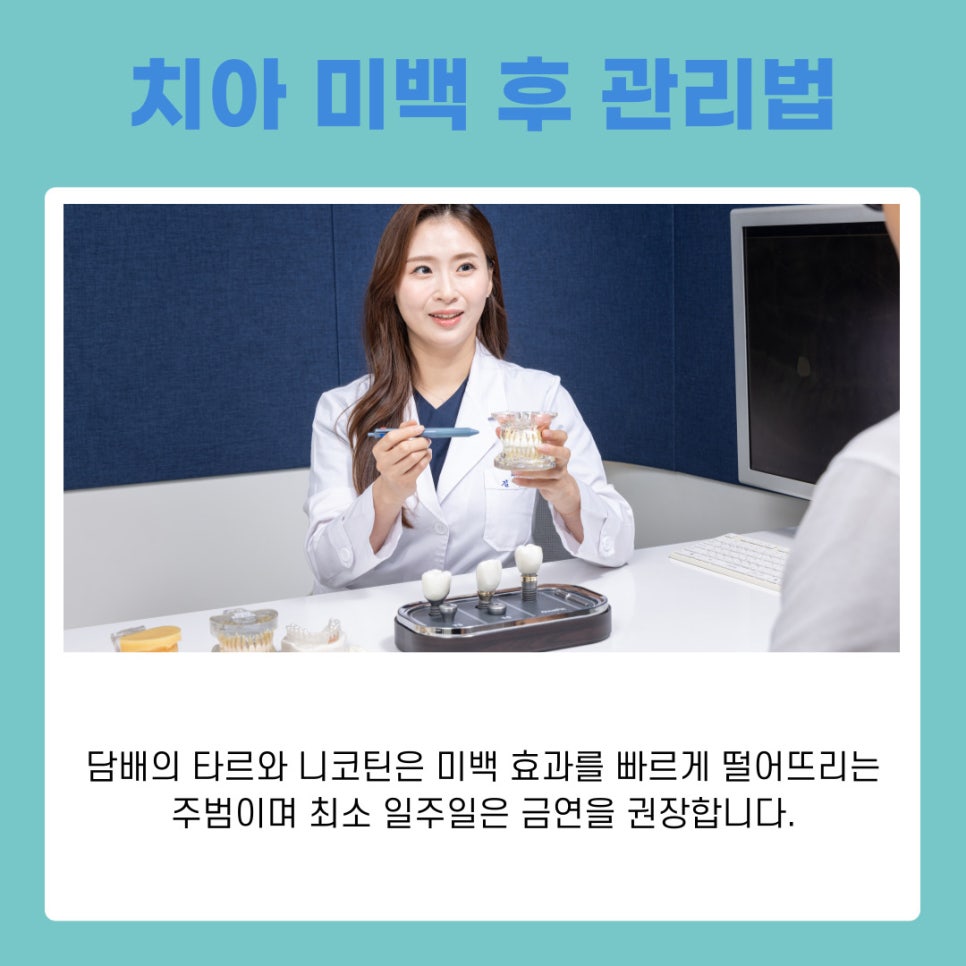
Dietary control
For at least 48 hours after the procedure, avoid strongly staining foods such as curry,
coffee, wine, and jjajang. It is best to focus on light-colored foods (milk, tofu,
white fish, etc.).
Dealing with sensitivity
Right after the procedure, your teeth may temporarily
feel sensitive. This is a natural phenomenon that occurs as the whitening agent penetrates and usually disappears within 1 to 2 days.
If the symptoms are severe, avoiding cold water and using toothpaste for sensitive teeth can help.
No smoking
Tar and nicotine in cigarettes are the main culprits that
quickly reduce whitening effects,
and quitting smoking for at least one week is recommended.
Please be careful if you are in these groups!
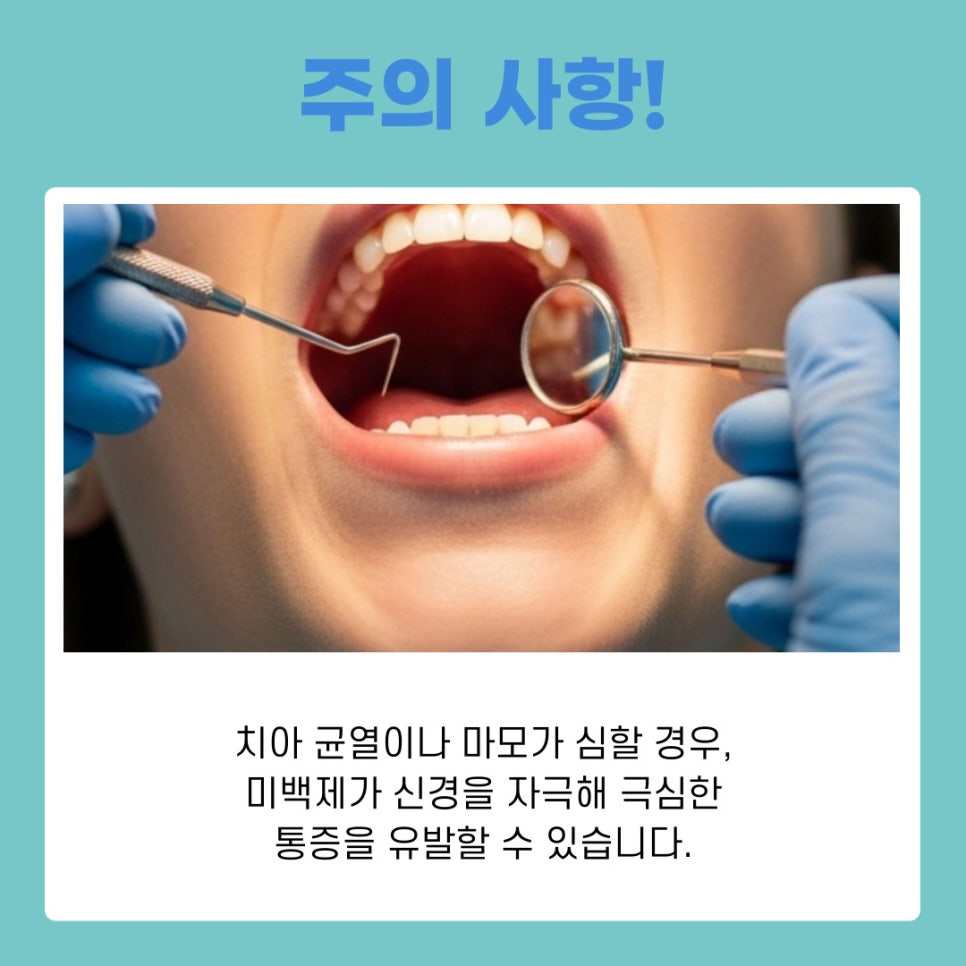
Cracks in the teeth and severe wear
The whitening agent may overstimulate the nerves and
cause severe pain.
Artificial teeth (crowns, resin)
Whitening agents react only with natural teeth.
If there are many prosthetic restorations on the front teeth, only the surrounding teeth may
become brighter, causing color imbalance,
so a replacement plan for the prosthetics should be made together.
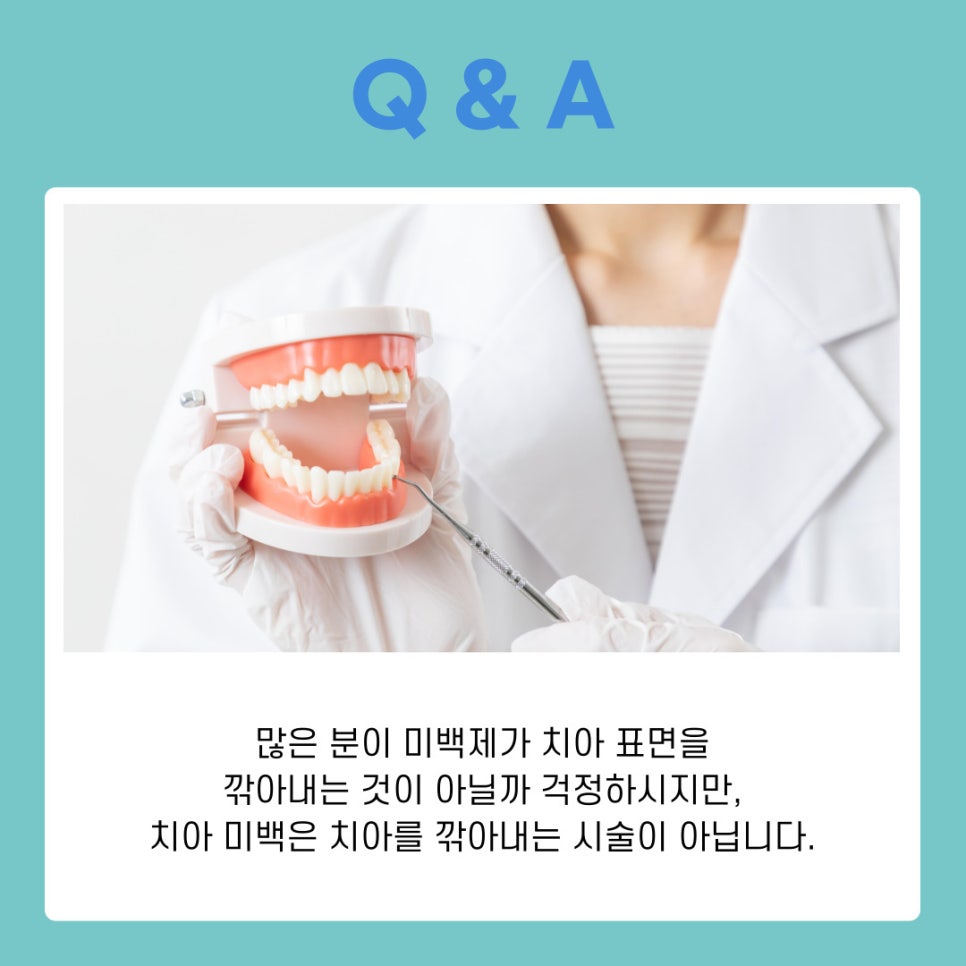
Q. Does tooth whitening shave down the teeth or make them weaker?
A. Many people worry that whitening agents might
wear down the tooth surface, but
tooth whitening is not a procedure that shaves the teeth down.
The principle of tooth whitening is that the hydrogen peroxide in the whitening agent
generates oxygen bubbles and penetrates the tiny pores
on the tooth surface, then selectively breaks down only the
pigment substances accumulated inside.
In other words, because it does not damage the tooth structure itself
but only removes the organic matter deposited inside,
the teeth do not become thinner or weaker.