Gapped front teeth at a Seocho-gu dental clinic
Finding the Right Treatment for Me
| Summary |
|---|
| 1. Front teeth can become spaced apart for various reasons, such as a mismatch between tooth size and jawbone space, gum disease, and more. |
| 2. Resin treatment is a quick way to fill gaps, but there is a risk of discoloration or detachment. |
| 3. Partial orthodontic treatment takes about 3 to 6 months, but it is the most conservative option. |
| 4. Veneers improve not only gaps but also shape and color at the same time by preparing the tooth surface and bonding ceramic. |

Hello,
this is New N Dental Clinic.
Many people worry about gapped front teeth that stand out every time they look in the mirror.
Even apart from the superstition that it means good fortune is leaving according to physiognomy, some people become self-conscious in social situations because of their aesthetic dissatisfaction.
Depending on the cause and degree of the gap between the front teeth, the solution can differ clearly.
Today, we will take an in-depth look at three treatment options for gapped front teeth that may be most suitable for your condition.
What causes front teeth to separate?
Before deciding on a treatment method,
it is first necessary to identify why the teeth have become spaced apart.
Mismatch between the dental arch and tooth size
If the space in which the teeth are arranged (the dental arch) is wide,
but the teeth are relatively small (microdontia), or if there are too few teeth,
gaps can form.
Periodontal disease (gum disease)
When the bone supporting the teeth weakens due to gum inflammation,
teeth may shift and spaces can open up.
In such cases, gum treatment should come first.
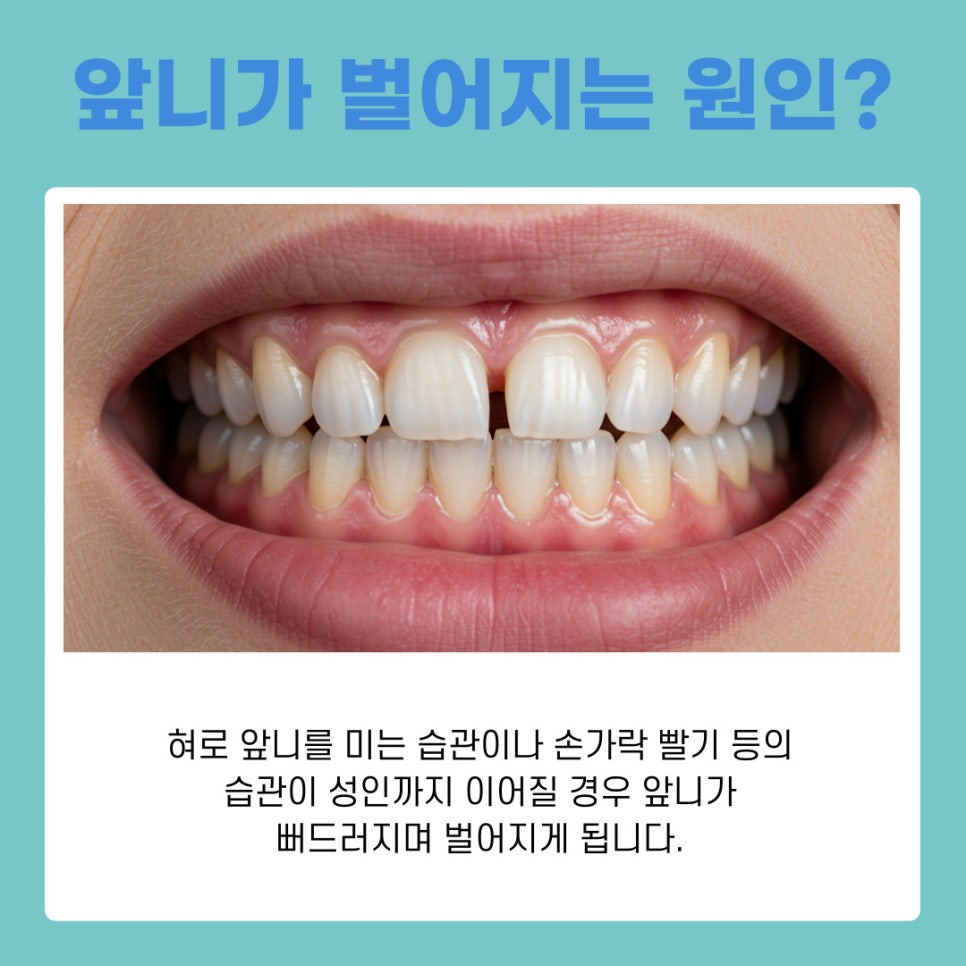
Bad habits
If habits such as pushing the front teeth with the tongue or thumb sucking continue into adulthood,
the front teeth can protrude and become spaced apart.
Labial frenum hypertrophy
This is when the thin band connecting the lip and gums (the labial frenum)
descends between the teeth and interferes with growth.
Resin treatment
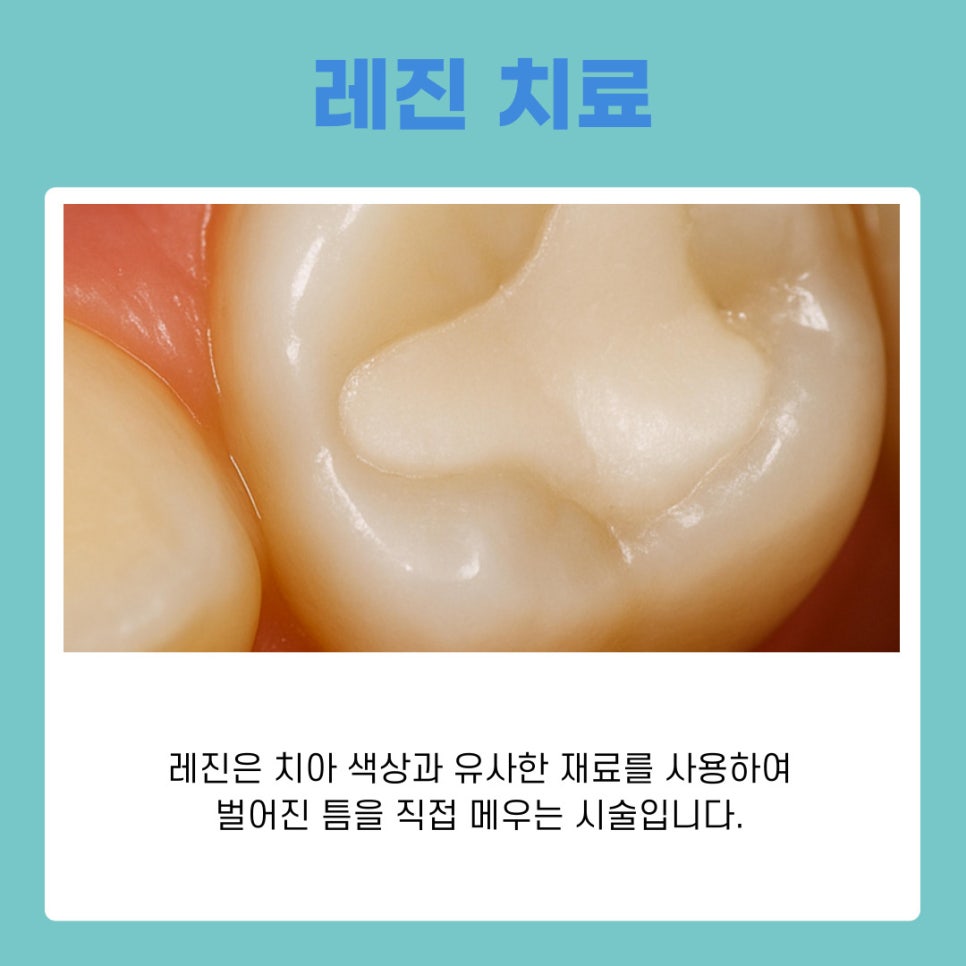
Resin is a procedure that directly fills the gap using a tooth-colored material.
Advantages: No tooth reduction is needed at all,
and the treatment can be completed in a single day.
It is also more economical than orthodontics or veneers.
Disadvantages: Discoloration may occur over time,
and there is a risk of detachment or chipping when chewing hard foods.
Recommended for: People whose gaps are very small
and who want improvement quickly and at a lower cost.
Permanent alignment improvement
Partial orthodontics
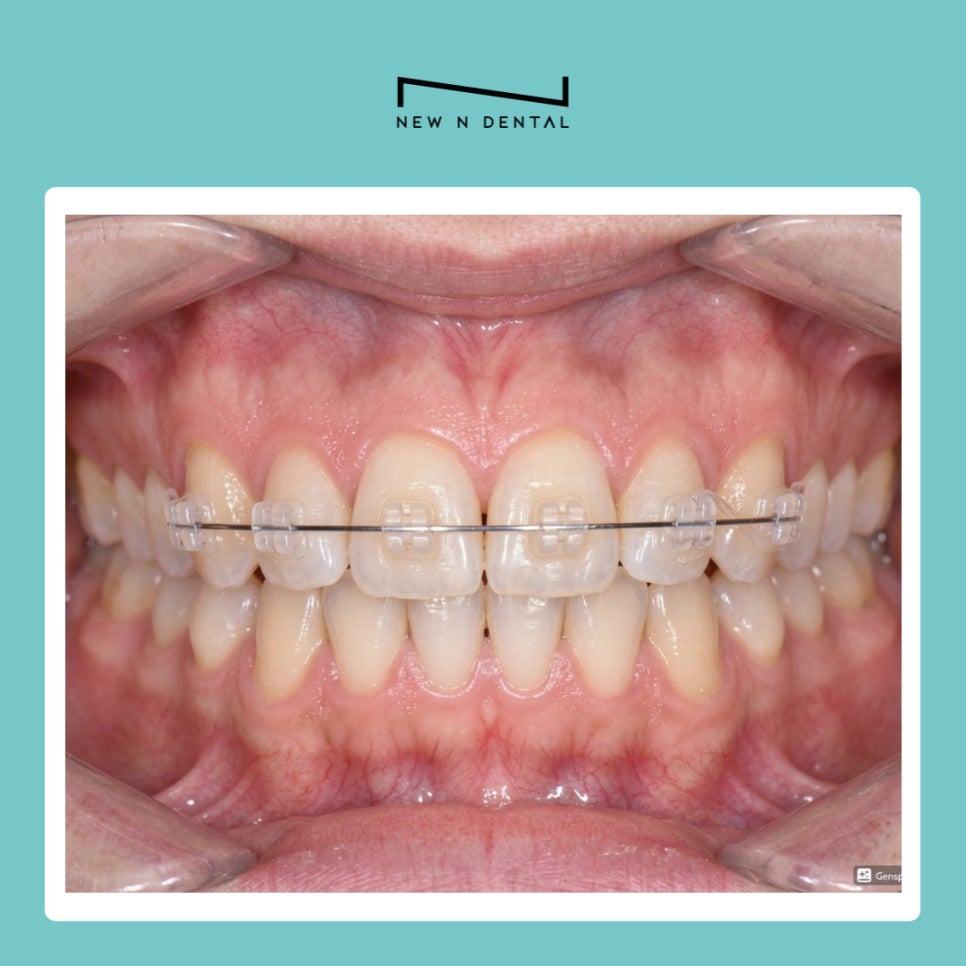
If the teeth themselves are not structurally problematic but have become spaced due to alignment issues,
orthodontic treatment with brackets is the most standard approach.
Principle: Rather than attaching appliances to all the teeth,
appliances are placed on about 6 to 8 front teeth only
to close the gap.
Advantages: Because the teeth are moved to their original positions without any shaving,
it is the most conservative treatment.
It is very effective when the molar bite is normal and only the front teeth are spaced apart.
Duration and cost: While full orthodontic treatment takes 1 to 2 years,
partial orthodontics can be completed in 3 to 6 months.
The cost is also reasonable compared with full orthodontic treatment.
Disadvantages: Aesthetic appearance may be reduced while the appliance is worn,
and the treatment period is longer than with resin or veneers.
Veneers
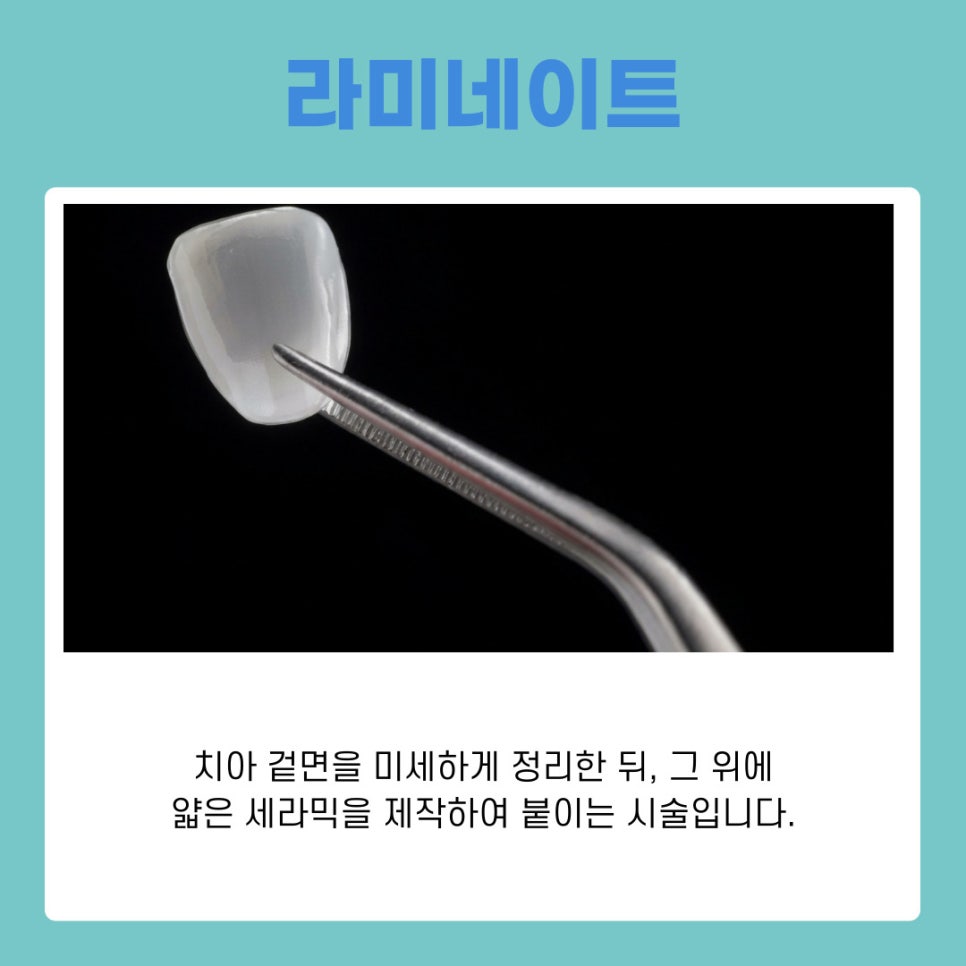
This is a procedure in which the outer surface of the tooth is minimally prepared,
and a thin ceramic shell is fabricated and bonded on top.
It is similar in principle to applying artificial nails.
Advantages: It not only fills the gap,
but can also improve the tooth’s shape, size, and color at the same time.
Its aesthetics are excellent enough to be called a celebrity-style correction,
and there is almost no concern about discoloration.
No-prep veneers: Recently, no-prep/minimal-prep veneer techniques have advanced,
allowing the teeth to be left almost untouched or trimmed by only a very small amount,
which has greatly reduced concerns about damage to natural teeth.
Treatment options suitable for me
Things to consider when choosing
Check the bite
If the issue is not just a gap but also a problem with how the upper and lower teeth fit together (the bite),
full orthodontic treatment may be needed rather than partial orthodontics.
Tooth shape
If the teeth themselves are too small or their shape is not aesthetically pleasing,
veneers may offer much higher cosmetic satisfaction than orthodontics.
Maintenance feasibility
It should be understood that resin may require retreatment later if discoloration or detachment occurs,
and orthodontic treatment requires wearing a retainer after completion.

Q. If the gap between the front teeth is filled, won't my pronunciation become slurred or will the foreign-body sensation be severe?
A. After the adjustment period, it quickly feels natural.
Those who had difficulty speaking because air escaped through the gap may actually find that their pronunciation becomes clearer after treatment.
However, during the process of a slight increase in tooth volume or movement, the tongue may feel the teeth in an unfamiliar way for about 1 to 2 weeks.
In particular, resin and veneers are carefully shaped to match the oral structure, so there is almost no foreign-body sensation, and partial orthodontics also does not interfere with daily life once the adaptation period for the appliance has passed.
Our mouths are highly adaptable, so there is no need to worry too much.