This post was written directly by Gangnam New N Dental Clinic and
strictly complies with
Article 56 of the Medical Service Act and the related regulations on medical advertising review
and provides medical information through clinic and hospital blog content
that may be helpful to an unspecified number of patients.
Please Check Before Going to the Dentist
A Step-by-Step Guide to Cavity Treatment
| Summary |
|---|
| 1. Cavities are a progressive disease, so early response is the most important thing. |
| 2. At the early enamel stage, they can be managed sufficiently with resin or fluoride application alone. |
| 3. As cavities get deeper, sensitivity appears, and because more tooth structure must be removed, durability should be improved through inlay treatment. |
| 4. The late stage causes unbearable pain, and as a last resort to preserve the natural tooth, root canal treatment and a crown are performed. |
| 5. If treatment is delayed, it can lead to extraction and then implants, increasing cost and time, so resolving problems early through regular checkups is more economical. |

Hello.
This is New N Dental Clinic.
Many people visit the dentist only after they start feeling pain in their teeth, but in fact, feeling pain is a sign that the cavity has already progressed quite a bit. Today, we will organize information on what condition your teeth are currently in and what treatment is needed at each stage.




Previous image
Next image
Enamel cavity
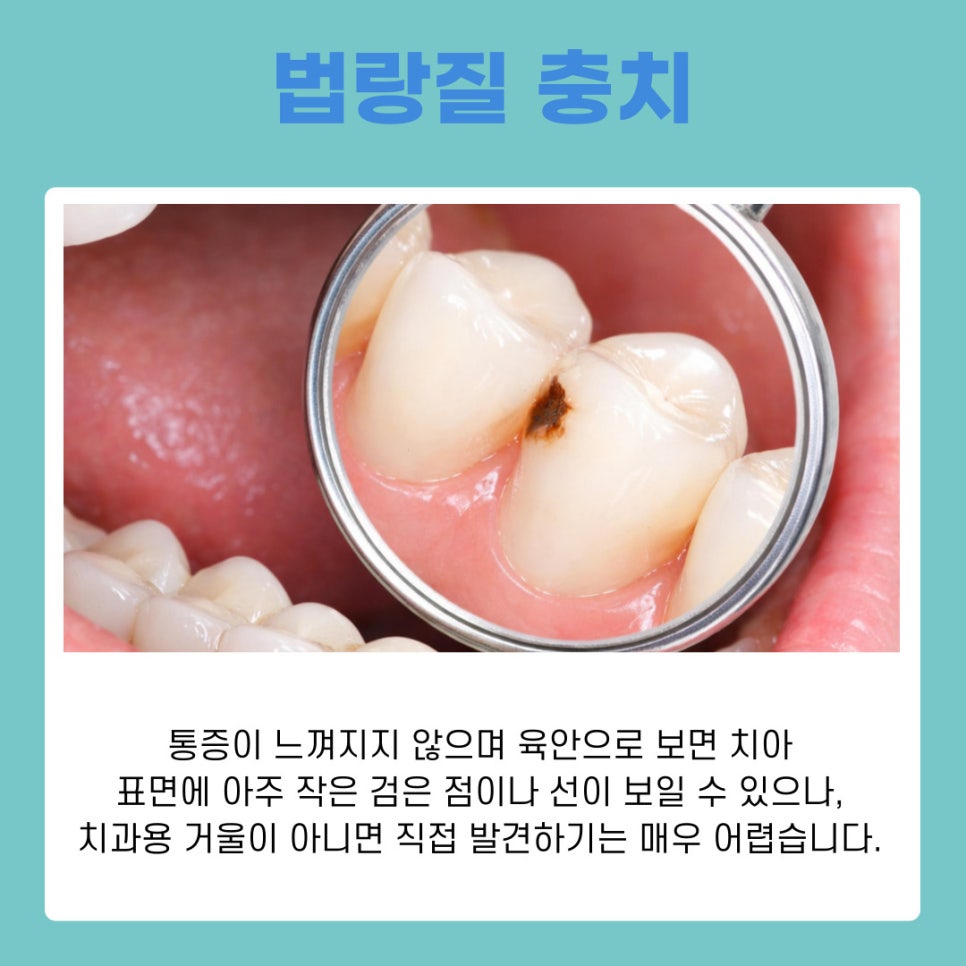
The outermost layer of our teeth, which appears white and is the hardest part of the human body, is enamel. If a cavity is limited to the enamel, that is a very fortunate situation.
Condition and symptoms: There is no pain, and to the naked eye, a very small black dot or line may be visible on the tooth surface, but it is very difficult to find directly unless a dental mirror is used.
Main treatment method: If the cavity is small, the area can be slightly removed and restored the same day with resin similar to the color of the tooth. If it is a form of arrested caries that progresses very slowly, treatment may not be rushed, and the course may be observed through fluoride application and regular checkups.
Dentin cavity
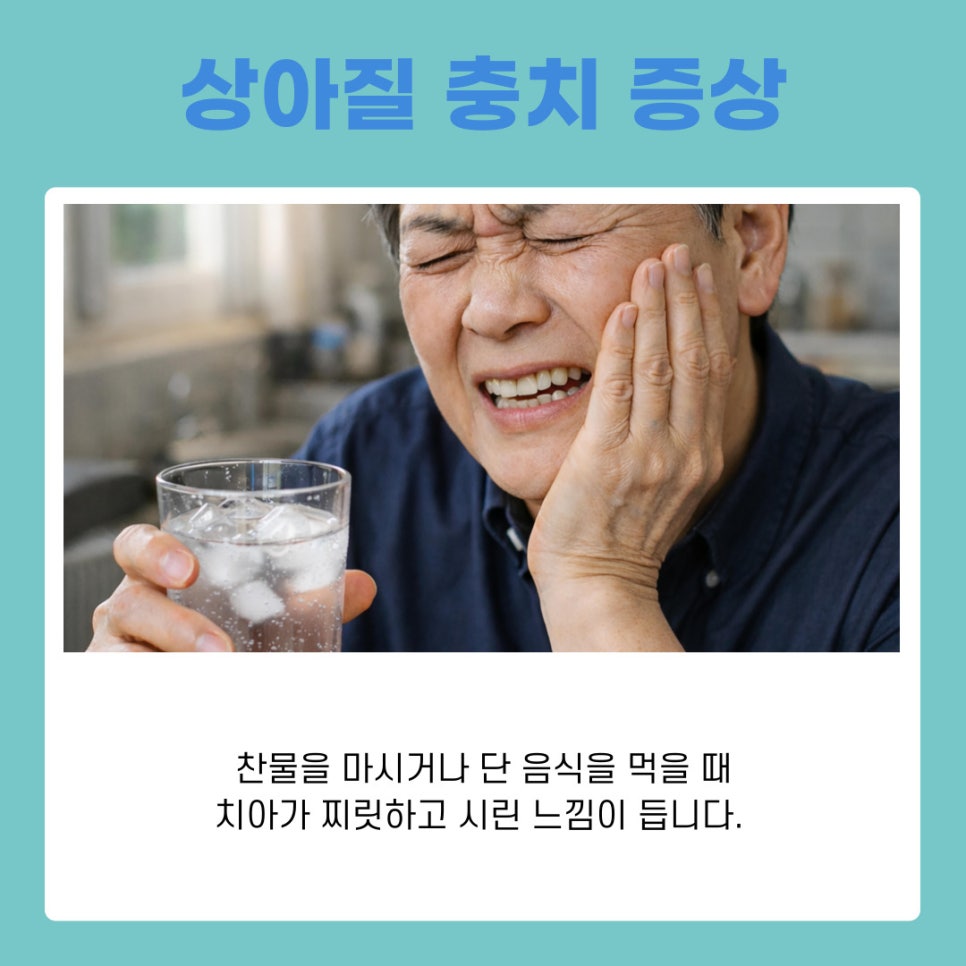
This is the middle stage, where the cavity has passed through the enamel and entered the softer inner layer, the dentin. Compared with enamel, dentin is weaker and connected to sensory nerves, so from this point the patient begins to directly notice abnormal symptoms.
Condition and symptoms: When drinking cold water or eating sweet foods, the tooth feels sharp and sensitive. Food may often get stuck between the teeth, and bad breath may persist even after brushing.
Main treatment method: Since this is the stage when the cavity area becomes larger, inlay treatment, which involves taking an impression and making a customized restoration, is usually performed rather than simple resin filling.
Pulpitis

This is the stage where the cavity has invaded the pulp, the core tissue of the tooth. Once this stage is reached, pain can become severe enough to make daily life difficult.
Condition and symptoms: A throbbing pain continues even when you are still, and it becomes especially worse when lying down at night. You may become sensitive to hot foods, and pain relievers often provide only temporary relief. This happens because inflammation inside the tooth increases pressure.
Main treatment method: Root canal treatment is performed as the last line of defense to save the natural tooth. It is a precise procedure in which all contaminated nerves are removed, disinfected, and then filled with special material. After root canal treatment, the tooth no longer receives nutrients and becomes brittle, so it must be completed with a crown that covers the entire tooth.
Care guide for preventing cavities

As important as regular dental visits is maintaining proper daily care habits. First, brush your teeth within 3 minutes after meals to reduce the acidity in the mouth, and be sure to remove tiny food particles between teeth that a toothbrush cannot reach by using dental floss or interdental brushes.
Brushing before bed is especially the most important defense against bacterial growth overnight. In addition, it is advisable to reduce the intake of sugary or sticky snacks and to use toothpaste containing fluoride, which helps harden the tooth surface.
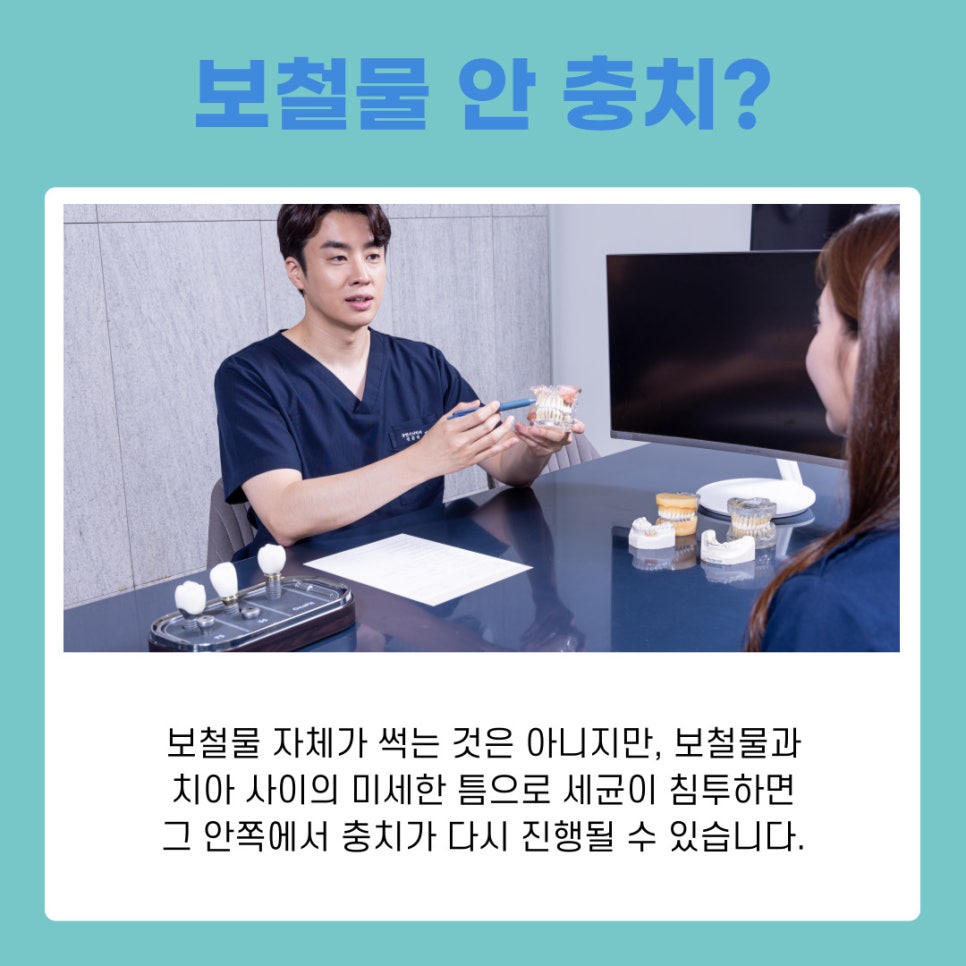
Q. After cavity treatment, I had a prosthetic placed.
Can cavities develop again inside it?
A. Yes, they absolutely can. This is called secondary caries. The prosthetic itself does not decay, but if bacteria enter through a tiny gap between the prosthetic and the tooth, cavities can develop again underneath it.
In particular, teeth that have undergone root canal treatment do not have nerves that feel pain, so even if a cavity develops, symptoms are hardly noticeable. Therefore, for teeth that have received prosthetic treatment, it is very important to brush carefully and receive regular X-ray checkups to examine the lifespan of the prosthetic and the condition inside it.