This post was written directly by Gangnam Newn Dental Clinic and
in strict compliance with Article 56 of the Medical Service Act and the related regulations on medical advertising review,
and provides medical information through hospital and clinic blog content
that may be helpful to an unspecified number of patients.
Seocho Implant Dentistry: Navigation Treatment That Reduces Pain
and Increases Accuracy
| Summary |
|---|
| 1. Navigation implants are a precise procedure that uses 3D digital technology to determine the implant position and angle in advance. |
| 2. Because computer-simulated surgery identifies the locations of nerves and bone tissue, errors can be dramatically reduced. |
| 3. With a minimally invasive approach that does not require a large incision in the gums, pain, bleeding, and swelling are reduced, allowing for faster recovery. |
| 4. Safe procedures are also possible for patients with systemic conditions such as diabetes or high blood pressure, as well as older patients with low physical strength. |
| 5. A custom guide is manufactured to shorten surgery time and increase the predictability of the procedure, which is a key advantage. |

Hello,
this is Newn Dental Clinic.
Are you considering implants after losing a tooth? In the past, implants were strongly associated with long surgery times and slow recovery. However, advances in medical technology have made it possible to place implants in the safest and strongest position using digital guides. Today, we will take a closer look at what navigation implants are exactly and why so many people choose this method.

Previous image
Next image
What is a navigation implant?
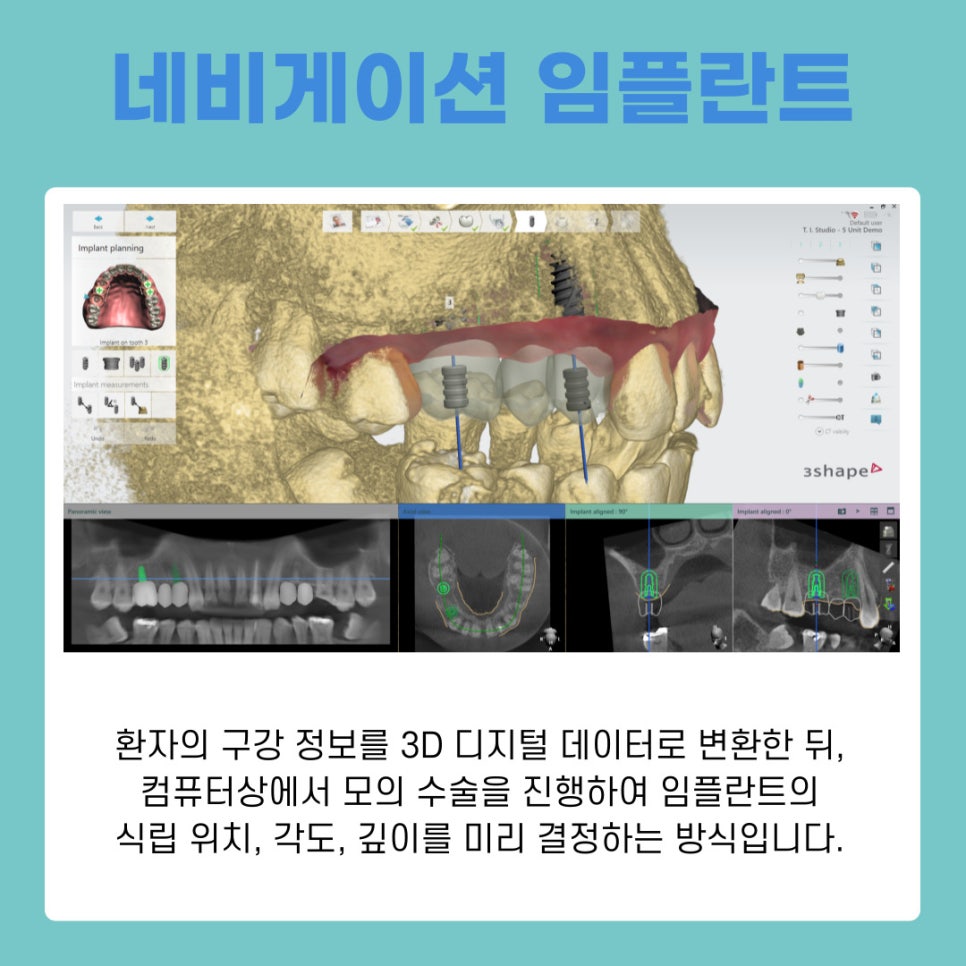
After converting the patient’s oral information into 3D digital data, a simulated surgery is performed on a computer to determine the implant’s position, angle, and depth in advance.
In the past, the method involved the dentist making an incision in the gums and placing the implant while directly viewing the bone inside. However, with the navigation method, all pathways are simulated before the procedure, and a custom surgical guide reflecting the results is manufactured and used, allowing for much more precise outcomes.
Procedure
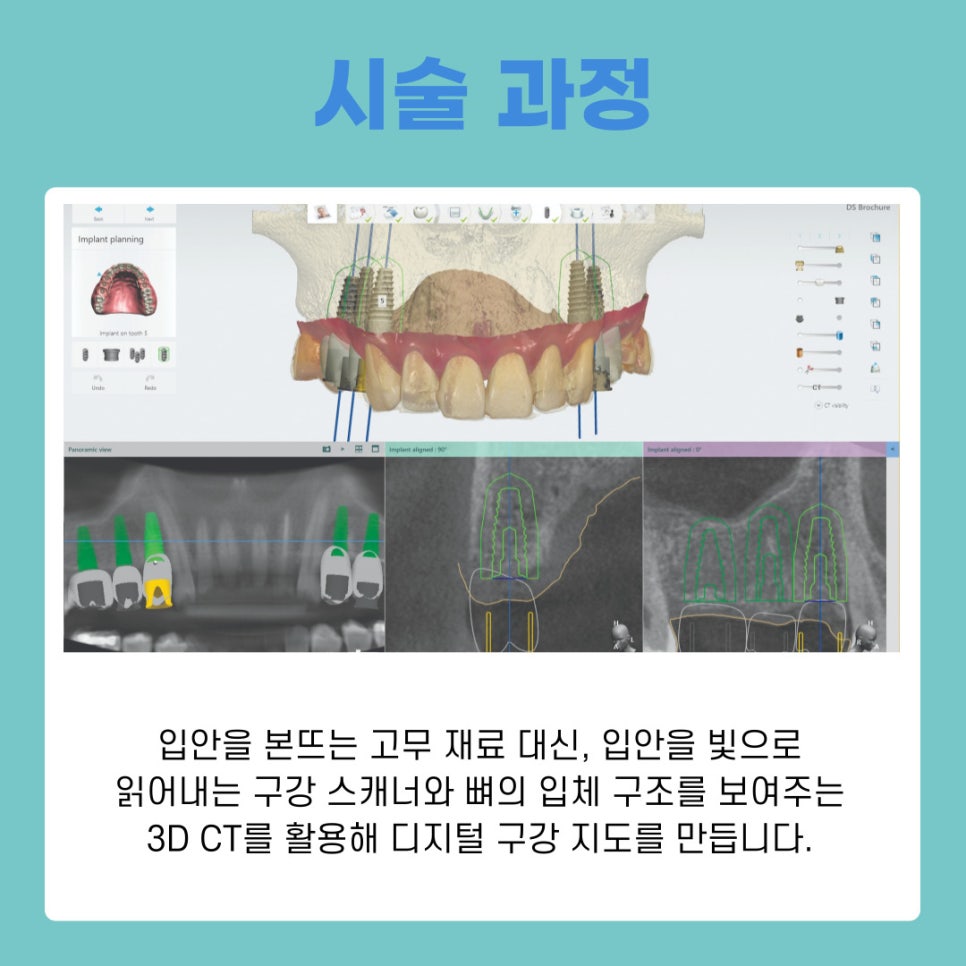
3D CT and oral scanning: Instead of using rubber material to take an impression of the mouth, a digital oral map is created using an oral scanner that reads the inside of the mouth with light and a 3D CT that shows the three-dimensional structure of the bone.
Computer-simulated surgery: Based on the collected data, the implant is virtually placed in computer software. The optimal path is determined by analyzing the location of the nerve canal, the distance from neighboring teeth, and the density of the jawbone.
Custom guide fabrication: A surgical guide with the simulation results applied is produced using a 3D printer.
Implant placement: The fabricated guide is placed in the patient’s mouth. Because the implant is inserted through the opening in the guide, accurate placement is achieved at the planned position with no minor error.
Advantages of navigation implants
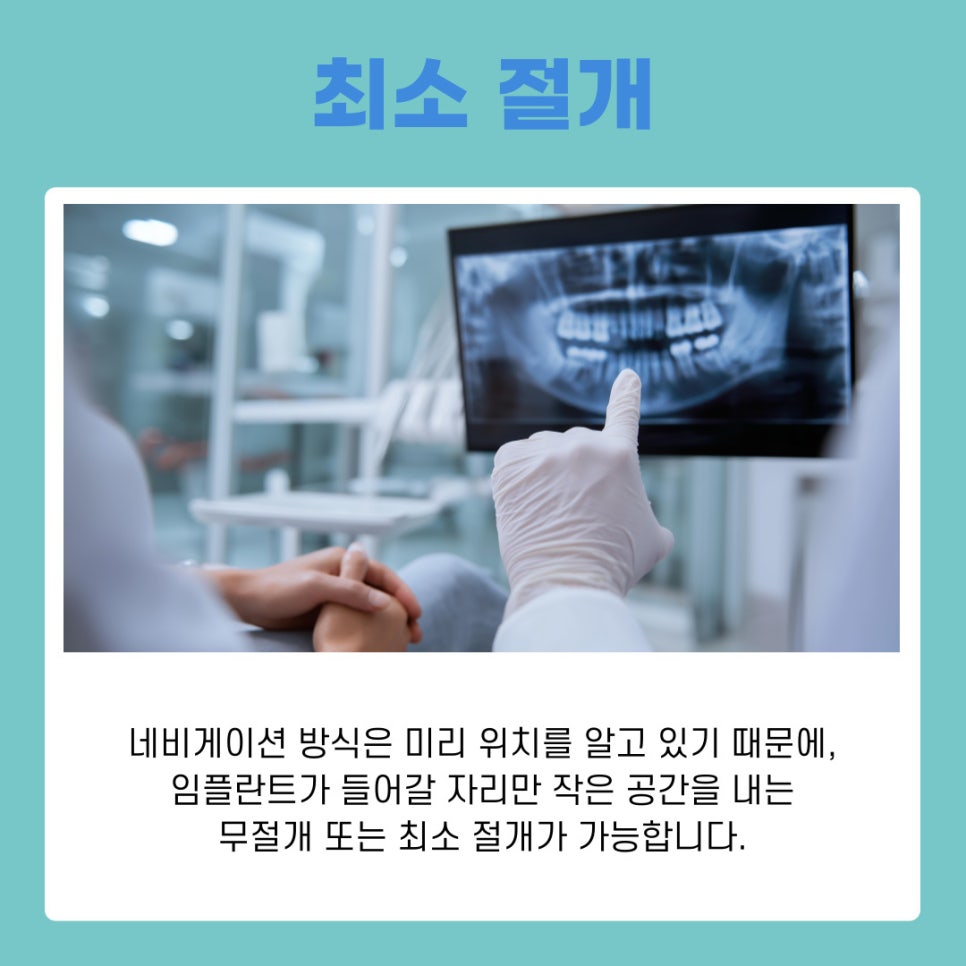
Minimally invasive incision that reduces pain and swelling
Traditional implant procedures require the gums to be widely incised to expose the bone. However, because the navigation method knows the location in advance, it is possible to use a flapless or minimally invasive approach that creates only a small opening where the implant will be placed. With a smaller incision area, bleeding and pain are significantly reduced, and postoperative swelling is less, leading to a much faster recovery.
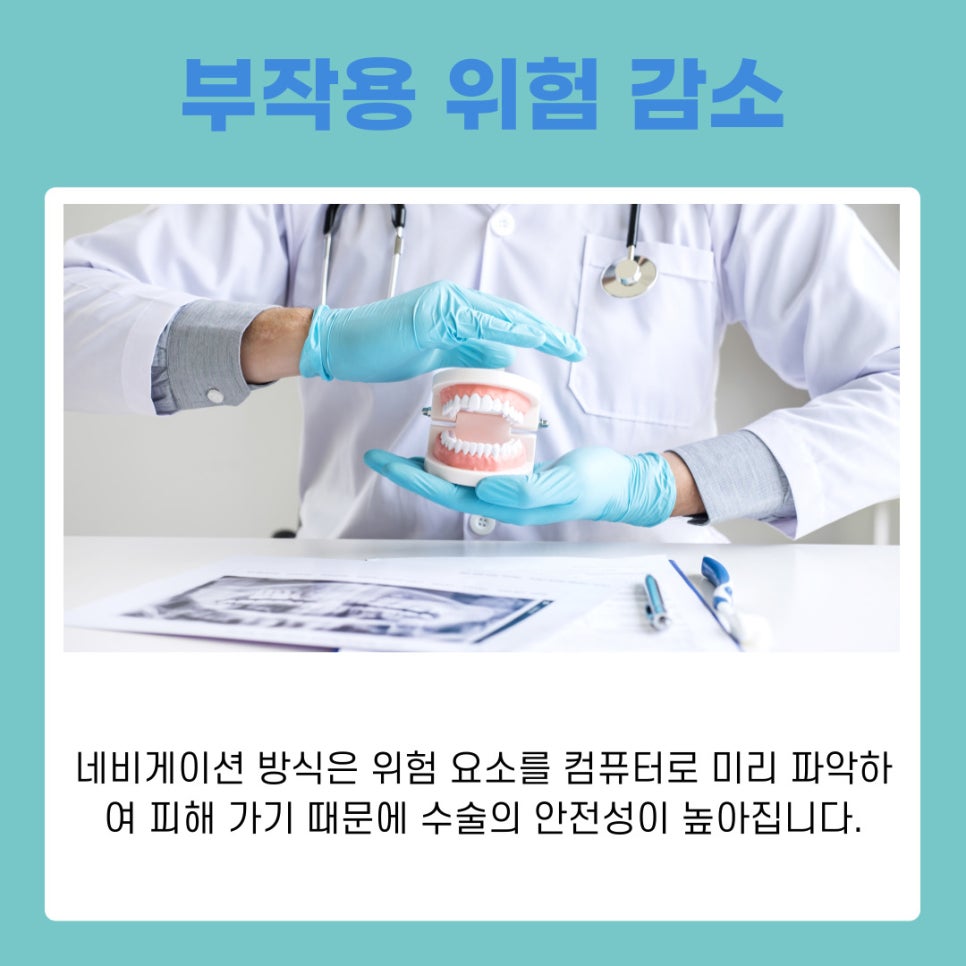
Reduced risk of side effects
Important nerve canals and blood vessels pass through our jawbone. If an implant touches them, side effects such as sensory abnormalities can occur. The navigation method increases surgical safety by identifying and avoiding these risk factors in advance using a computer. In addition, because the angle that best withstands chewing force when the prosthetic restoration is placed is calculated in advance, the implant’s lifespan itself is also extended.
Safe treatment for high-risk patients as well
People with systemic conditions such as diabetes or high blood pressure, as well as elderly patients, face a greater burden from bleeding and infection during surgery. The navigation method shortens surgery time and places less physical strain on the body, allowing these high-risk patients to undergo the procedure with greater peace of mind.
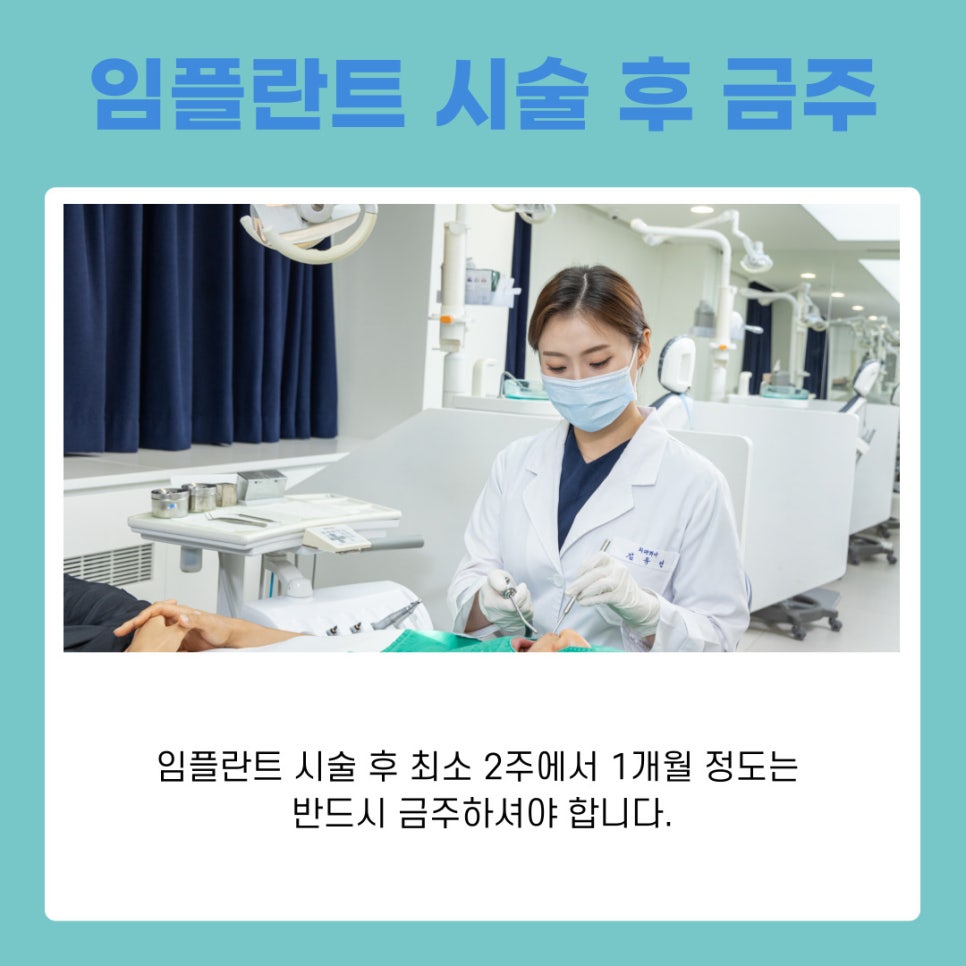
Q. How long should I avoid alcohol after implant surgery?
A. After implant surgery, you must avoid alcohol for at least 2 weeks to 1 month. In particular, during the initial 1 to 2 weeks before the stitches are removed, this is the most important period for the implant to settle into the jawbone, so complete abstinence from alcohol is necessary.
Navigation implants are a procedure designed to reduce patient discomfort and improve the quality of results. If you are currently concerned about tooth loss, we recommend that you establish a navigation treatment plan tailored to your needs through a precise digital diagnosis.