This post was written directly by Gangnam Nuen Dental Clinic and
strictly complies with
"Article 56 of the Medical Service Act and regulations related to medical advertising review."
Through our clinic blog content,
we provide medical information that may be helpful
to an unspecified number of patients.
Digital Orthodontic Guide from
Seocho Station Dental Clinic
| Summary |
|---|
| 1. Computer simulation can let you check the tooth movement process in advance, which may help increase the predictability of treatment results. |
| 2. When making clear aligners (such as Invisalign), digital data is used, so they feel less uncomfortable and are better suited for precise progress. |
| 3. Even in bracket orthodontic treatment, digital guides can be used to attach brackets in the optimal position, which can shorten the overall treatment period. |
| 4. Compared with analog methods, there are fewer errors and fewer clinic visits, making this approach well suited for busy office workers and students. |
Hello,
this is Nuen Dental Clinic.
When you think about orthodontic treatment, what image comes to mind first? It may be the sight of taking impressions with sticky material filling the mouth, or wires and brackets tangled together in a complicated way.

Previous image
Next image
However, with advances in dentistry, it has evolved into a field based on digital data. Today, let’s take a detailed look at what digital orthodontics is and why so many people choose this method.
Digital Orthodontics
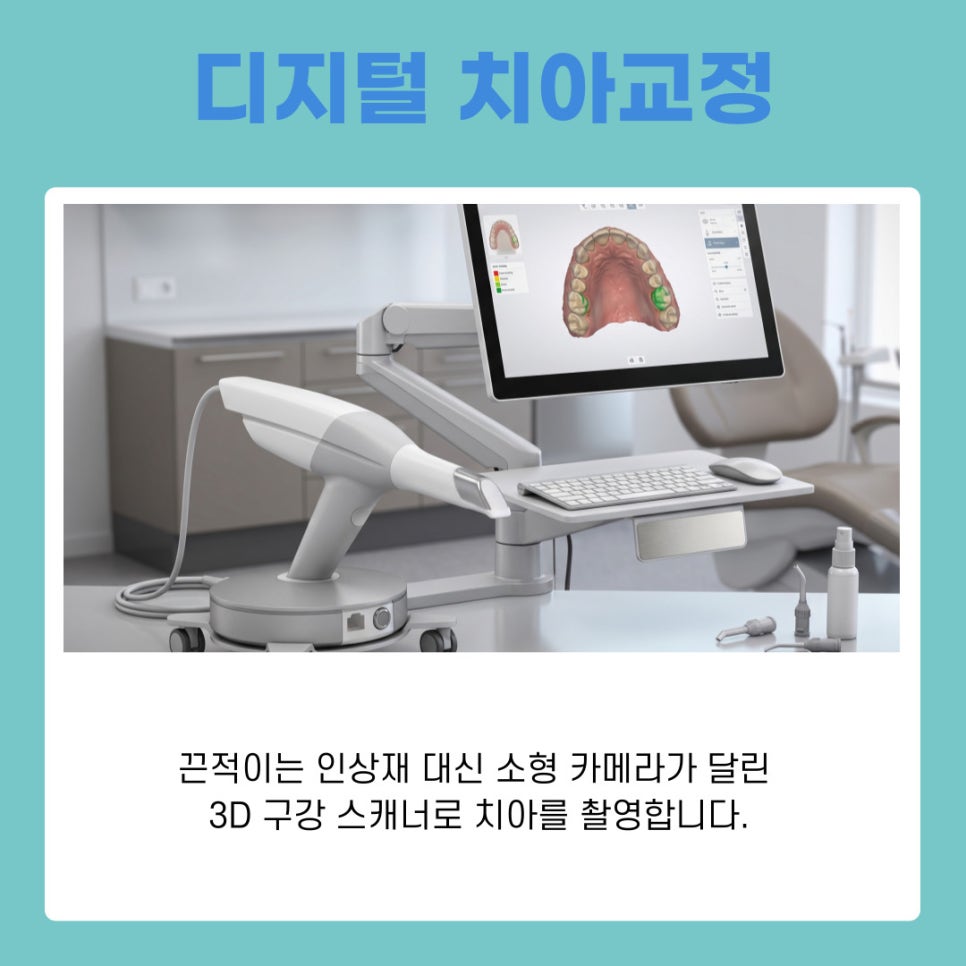
Digital scanning: Instead of sticky impression material, a 3D oral scanner with a small camera photographs the teeth. Within minutes, the inside of the mouth is rendered as a three-dimensional image on a computer screen, minimizing patient discomfort.
Detailed analysis: By combining 3D CT data and scan data, the angle of the tooth roots, the density of the jawbone, and even the position of the temporomandibular joint are analyzed in three dimensions, allowing us to identify details that are difficult to see with the naked eye.
Simulation: Dedicated software is used to simulate the process of tooth movement step by step. Patients can preview the changes after orthodontic treatment before treatment begins, which increases motivation and trust.
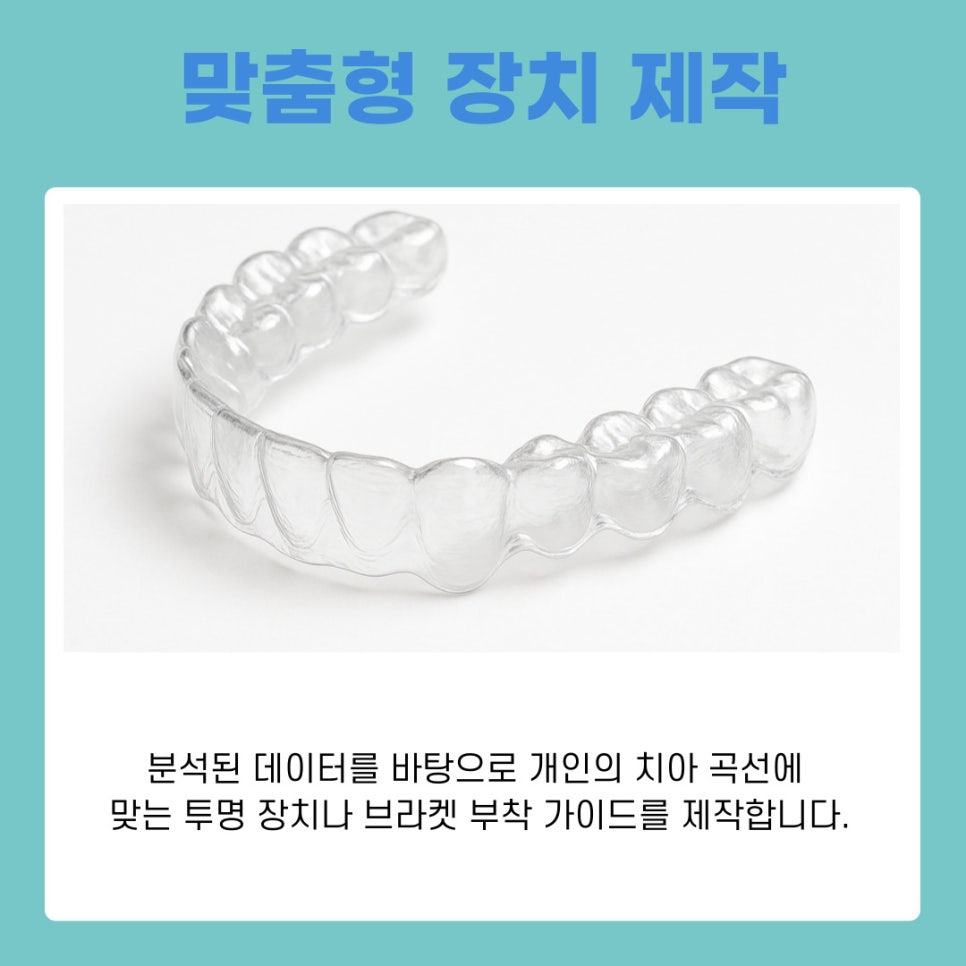
Customized appliance fabrication: Based on the analyzed data, a clear appliance or bracket placement guide that fits the individual tooth curve precisely is produced using a 3D printer or precision milling machine.
Clear aligner orthodontics: Invisalign
Teeth are moved by replacing special transparent appliances step by step. The appliance is barely noticeable and can be removed and reinserted, making eating and oral hygiene very convenient.
Digital bracket orthodontics
Even in conventional orthodontic treatment that uses wires, digital technology is utilized. Brackets are attached all at once in the optimal positions calculated by the computer, with no error. This is a key technology that maximizes the efficiency of tooth movement and shortens the overall treatment period.
Advantages of digital orthodontics

Digital data prevents minor deformation or errors that can occur when impressions are taken and appliances are made by hand.
Digital simulation calculates and disperses excessive pressure on the teeth in advance. Therefore, compared with traditional methods, the dull pain felt as the teeth move is relatively less.
Because unnecessary tooth movement paths are excluded and the teeth are planned to move along the shortest route, a shortened overall orthodontic treatment period can be expected.
Recommended for
-
Those who want to visually check how they will look after orthodontic treatment in advance
-
Those who want aesthetic orthodontic treatment with appliances that are not visible ahead of important events such as employment or marriage
-
Those who had difficulty because their gag reflex was strong when impression material was placed in the mouth
-
Office workers, students, and international students who have difficulty visiting the dentist frequently
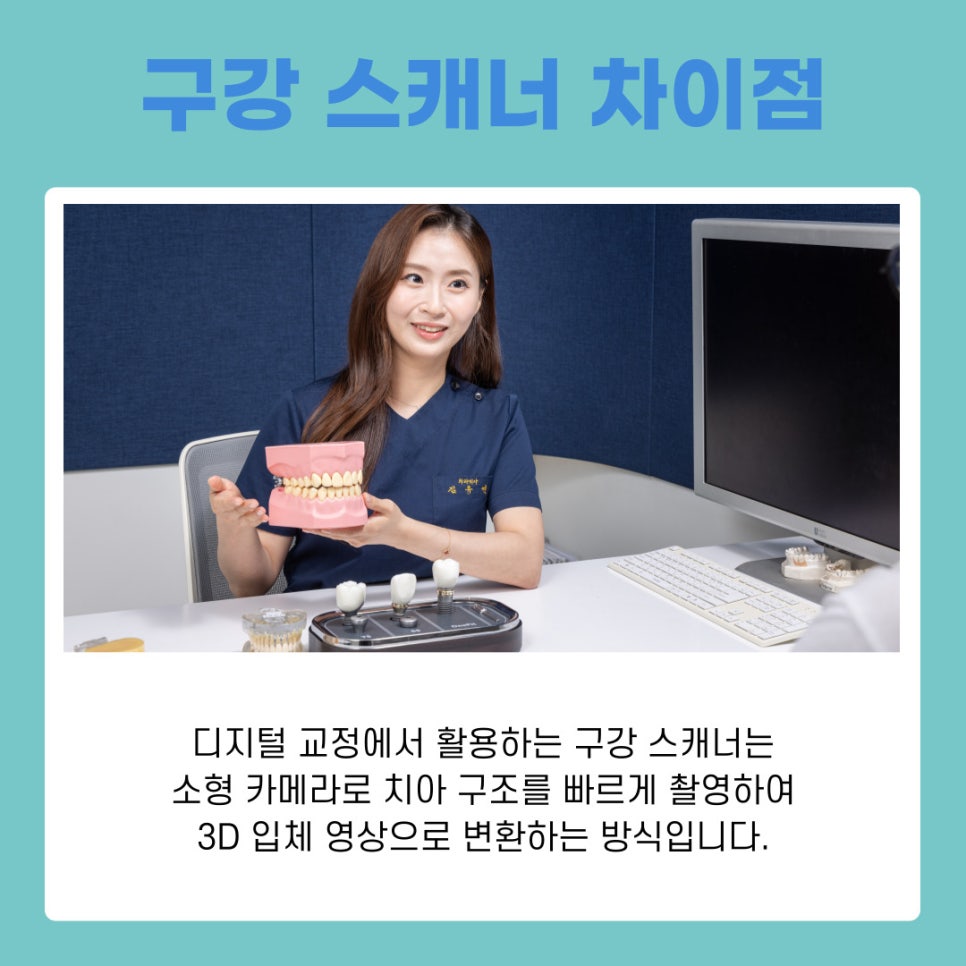
Q. How is the intraoral scanner used in digital orthodontics different from conventional impression taking?
A. With the conventional analog method, cold rubber impression material had to be placed in the mouth and left to harden, so many people experienced discomfort from a foreign-body sensation or nausea.
In contrast, the intraoral scanner used in digital orthodontics quickly photographs the tooth structure with a small camera and converts it into a 3D image.
It can accurately reproduce the oral structure without worrying about errors caused by impression material deformation, and the collected data can be used to simulate the tooth movement path on a computer in advance, making it possible to establish a more precise treatment plan.
Digital orthodontics is more than just the introduction of technology; it is a technology that changes the patient’s treatment experience itself into something more comfortable.
If you are concerned about your teeth alignment, now is the time to discuss the optimal solution suited to your oral condition with a specialist through smart digital orthodontics!