This post was written directly by Nueon Dental Clinic in Gangnam and
fully complies with Article 56 of the Medical Service Act and the regulations related to medical advertising review
and provides medical information through clinic and hospital blog content
that may be helpful to an unspecified number of patients.
Gangnam Digital Implant Dental Clinic
A Complete Guide to the Procedure
| Summary |
|---|
| 1. Digital implants combine 3D CT and an oral scanner to three-dimensionally analyze the patient’s bone tissue and nerve positions. |
| 2. Before surgery, a computer-based simulation is performed to determine in advance the optimal angle and depth for implant placement. |
| 3. The minimally invasive method, which does not require a large incision in the gums, reduces pain, swelling, and bleeding. |
| 4. A customized surgical guide is produced to place the implant at the planned position during the actual procedure without error. |
| 5. Because recovery is fast, it is an optimized procedure for older adults with systemic conditions such as diabetes or high blood pressure, as well as busy office workers. |

Hello,
this is Nueon Dental Clinic.
The biggest concerns before implant surgery are the pain and swelling that may occur during the procedure, as well as the vague anxiety about whether the implant might be placed incorrectly.
To address these concerns, the digital implant system was introduced.
Today, we will take an in-depth look at digital implants, which improve procedural accuracy while minimizing patient discomfort.

Previous image
Next image
What Is a Digital Implant?
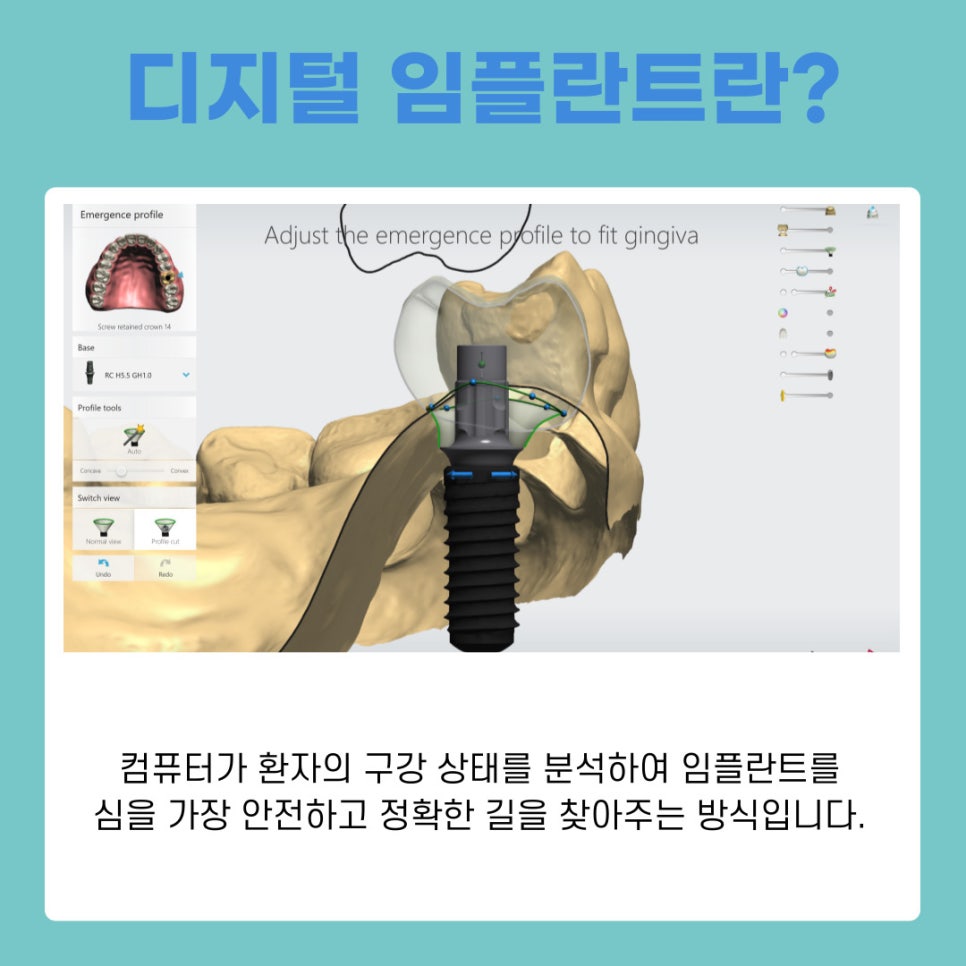
A digital implant is a method in which a computer analyzes the patient’s oral condition and finds the safest and most accurate path for placing the implant, much like a car navigation system guides you along the best route.
-
Digital diagnosis: Instead of taking impressions with sticky materials, the inside of the mouth is turned into data using a 3D oral scanner.
-
3D CT imaging: The thickness and density of the alveolar bone, as well as the location of the nerve canal, which cannot be seen from the outside, are identified in three dimensions.
-
Merging and analysis: The oral data and CT data are combined to perfectly recreate the patient’s oral structure in virtual space.
How Is the Procedure Performed?
-
Digital precision examination: The patient’s skeletal and dental information is collected through 3D CT and an oral scanner.
-
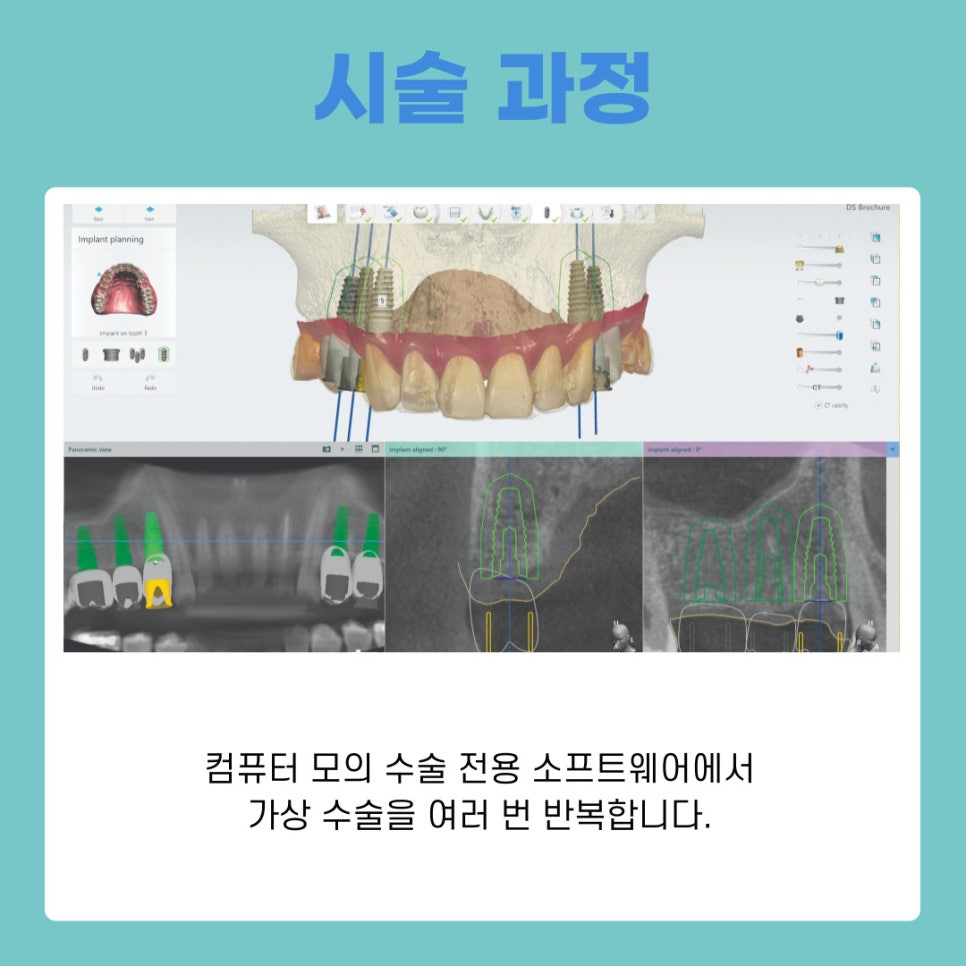
Computer simulation surgery: Virtual surgery is repeated several times in dedicated software. This determines the optimal placement position and depth where the bone is strongest and the nerves can be avoided.
-
Custom guide (stent) fabrication: Based on the simulation results, a patient-specific surgical guide is produced using a 3D printer. This guide has a precise hole through which the implant will be placed.
-
Guide placement and insertion: During the actual procedure, the guide is placed in the mouth. Because it directs the predetermined pathway, the medical team can place the implant safely at the planned position without error.
-
Prosthetic attachment: A pre-made prosthesis is connected to restore function on the same day or within a short period of time.
What Are the Advantages of Digital Implants?

A dramatic reduction in pain and swelling
Traditional methods required a wide incision in the gums to expose the bone. However, the digital method allows the guide to indicate the position, so only a minimally invasive opening is needed just large enough for the implant.
This reduces bleeding and pain, and because suturing is omitted or minimized, there is little to no swelling after surgery.
Prevention of nerve damage side effects
Many nerves and blood vessels pass through the inside of the jawbone. By fully identifying their pathways through virtual surgery and avoiding them, the risk of nerve damage such as numbness is prevented in advance.
Shorter overall treatment time and fewer clinic visits
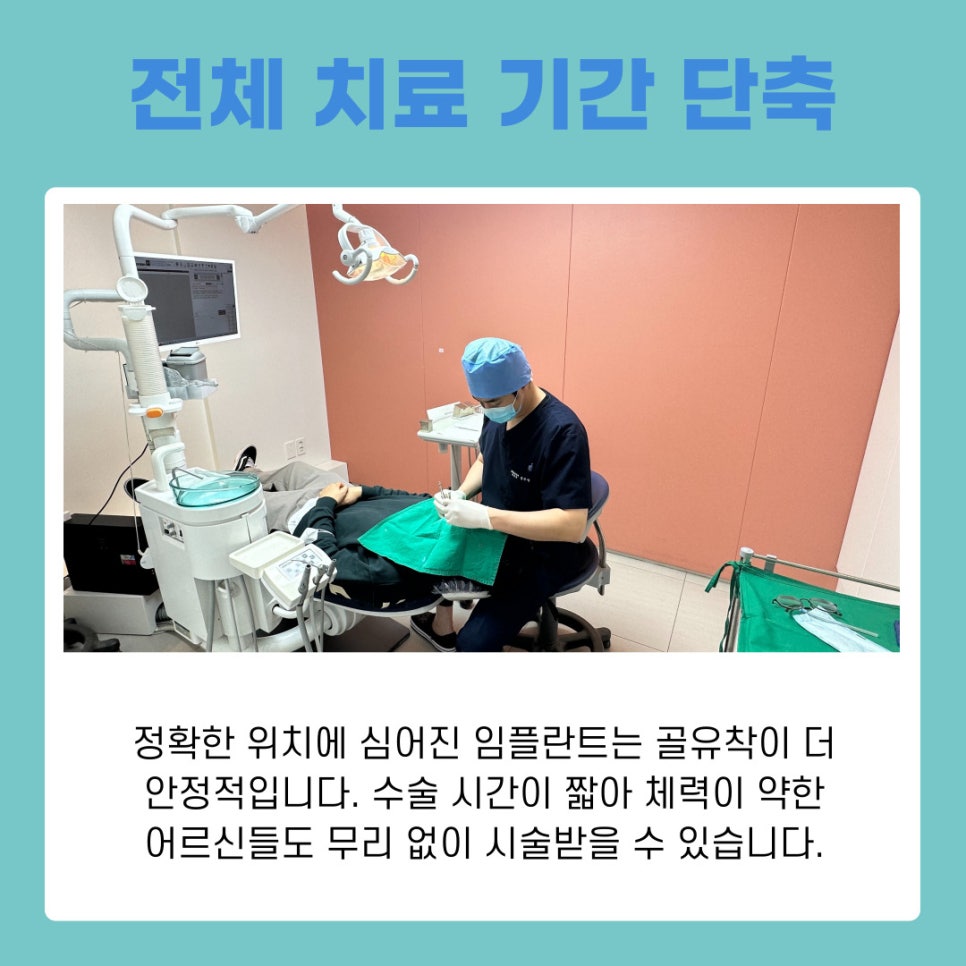
An implant placed in the correct position achieves more stable osseointegration, the process by which it bonds with bone. Because the surgery time is short, even older adults with less physical strength can undergo the procedure without strain.
Improved durability of the prosthesis
If the implant is placed at the ideal angle that best withstands vertical load, the force generated when chewing is distributed evenly. This helps prevent future problems such as prosthetic fracture or screw loosening, thereby extending the life of the prosthesis.
Who Is It Recommended For?

-
Patients with systemic conditions such as diabetes or high blood pressure: The minimally invasive method, which involves less bleeding and a lower risk of infection, is very safe.
-
Elderly patients: The surgery time is short and recovery is fast, so the physical burden is reduced.
-
People with dental anxiety: Because the procedure is simpler and less painful, psychological stress can be eased.
Precautions for Digital Implants
Just as important as advanced equipment is the ability of the medical staff operating it.
-
Experienced clinical expertise: The doctor’s skill in translating the optimal path suggested by digital data into the actual surgery is key.
-
Precision equipment infrastructure: Check whether the clinic has a well-established digital system in-house, including 3D CT, an oral scanner, and a 3D printer.
-
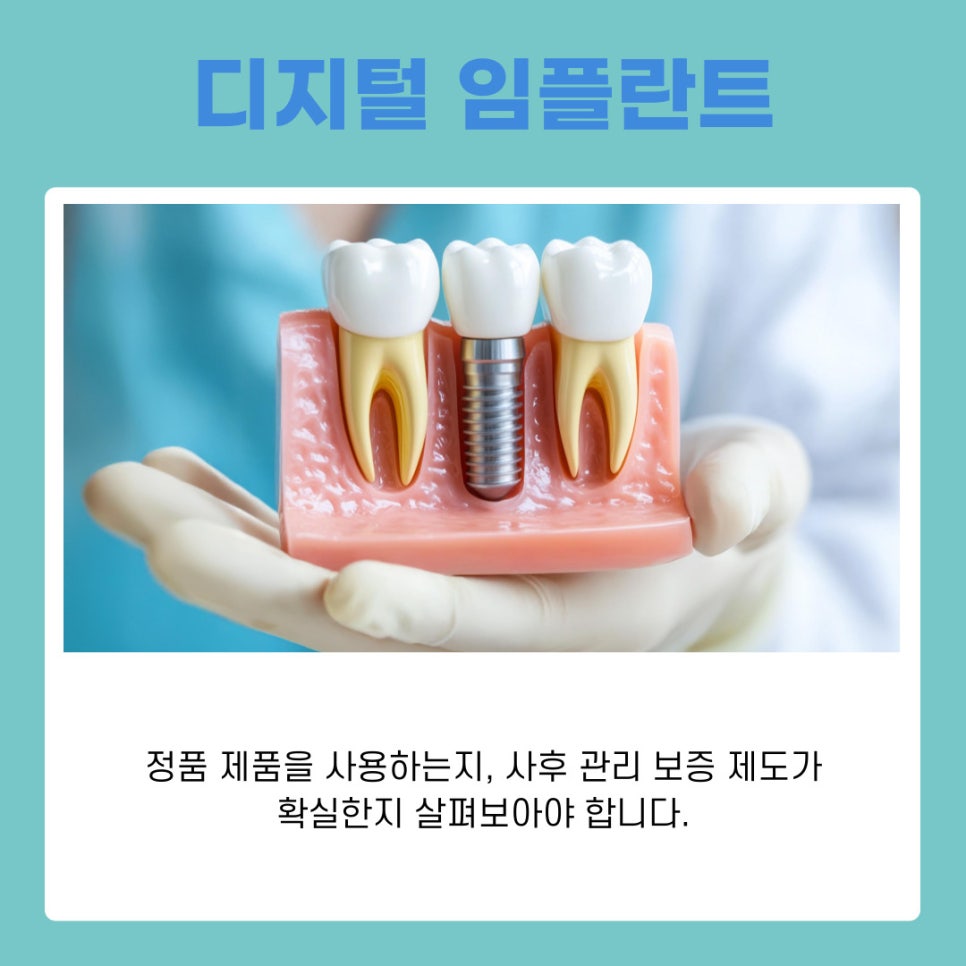
Use of genuine products and warranty: You should confirm whether genuine products approved by the Ministry of Food and Drug Safety are used and whether a solid aftercare warranty system is in place.
Q. I am sensitive to pain and also have diabetes. Is digital implant treatment possible?
A. Regular implants require a wide incision in the gums to expose the bone before placement, so pain and bleeding are unavoidable. In contrast, digital implants are performed using a guide device and a minimally invasive approach that makes only a small opening where needed.
This method not only reduces postoperative swelling and pain, but also allows patients with diabetes or high blood pressure, who are more vulnerable to infection risk, to receive the procedure safely.
In addition, because the location of the nerve canal is identified in advance at a very fine level and avoided, the risk of accidents during surgery can also be prevented beforehand.