This post was written directly by Gangnam Newen Dental Clinic and
strictly complies with 「Article 56 of the Medical Service Act and regulations related to medical advertising review」
by providing medical information through dental clinic blog content
that may be helpful to an unspecified number of patients.
Smile Design
Completed with Front Teeth Veneers
| Summary |
|---|
| 1. Front teeth veneers are an aesthetic treatment that improves the shape and color of the teeth in a short period by minimally preparing the teeth and attaching thin ceramic tips. |
| 2. They are recommended when a small portion of a tooth is fractured, the teeth are irregularly aligned, or severe discoloration cannot be resolved with teeth whitening alone. |
| 3. Recently, no-prep or minimal-prep veneers have been preferred based on precise examinations. |
| 4. By using materials with translucency and strength similar to natural teeth, it is possible to create a natural-looking and highly aesthetic smile. |
| 5. After treatment, avoiding biting hard or chewy foods and maintaining oral hygiene and regular checkups can help extend the lifespan of the veneers. |
Hello,
This is Newen Dental Clinic.
When speaking or smiling brightly, the first place people naturally look is the front teeth. The shape, alignment, and brightness of the front teeth play a very important role in determining a person's first impression and overall image.
Veneers are a representative aesthetic prosthetic treatment that precisely corrects issues with the shape and color of the front teeth in a relatively short period and creates an even, radiant smile.



Previous image
Next image
It may be easiest to understand veneers as similar to the principle of nail art, in which a thin artificial nail is attached to the end of a natural nail to improve its appearance.
After precisely preparing the surface of the front teeth that detracts from their aesthetics, very thin ceramic plates that function like artificial teeth are firmly bonded to improve the teeth's shape, proportions, and color.
Recommended Candidates for Front Teeth Veneers
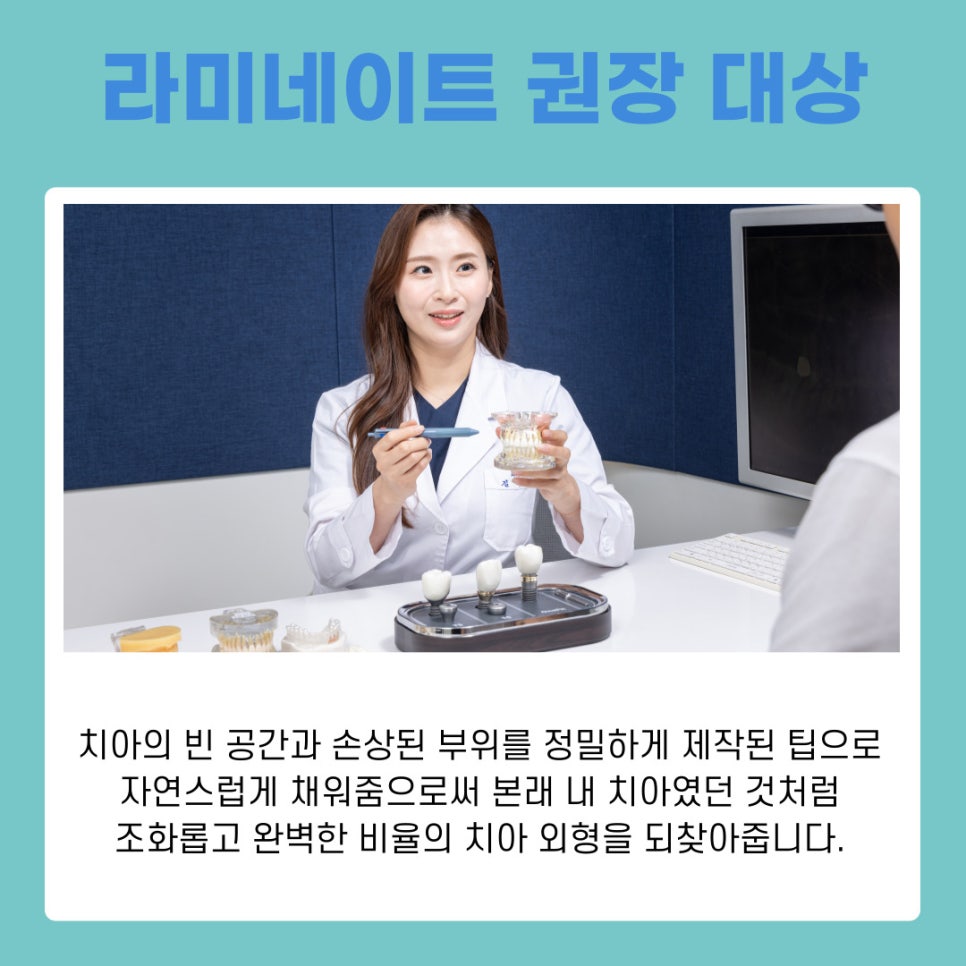
They are recommended when small gaps between the teeth cause air to escape during speech, or when the teeth are slightly misaligned and the line appears uneven when viewed from the front.
They can also be useful when the tip of a front tooth has been slightly chipped due to an unexpected impact, or when a person has naturally small teeth that appear pointed because they are noticeably smaller than average.
By naturally filling gaps and damaged areas with precisely fabricated tips, veneers restore a harmonious tooth appearance with well-balanced proportions, as if it were the person's original teeth.
No-Prep Veneers
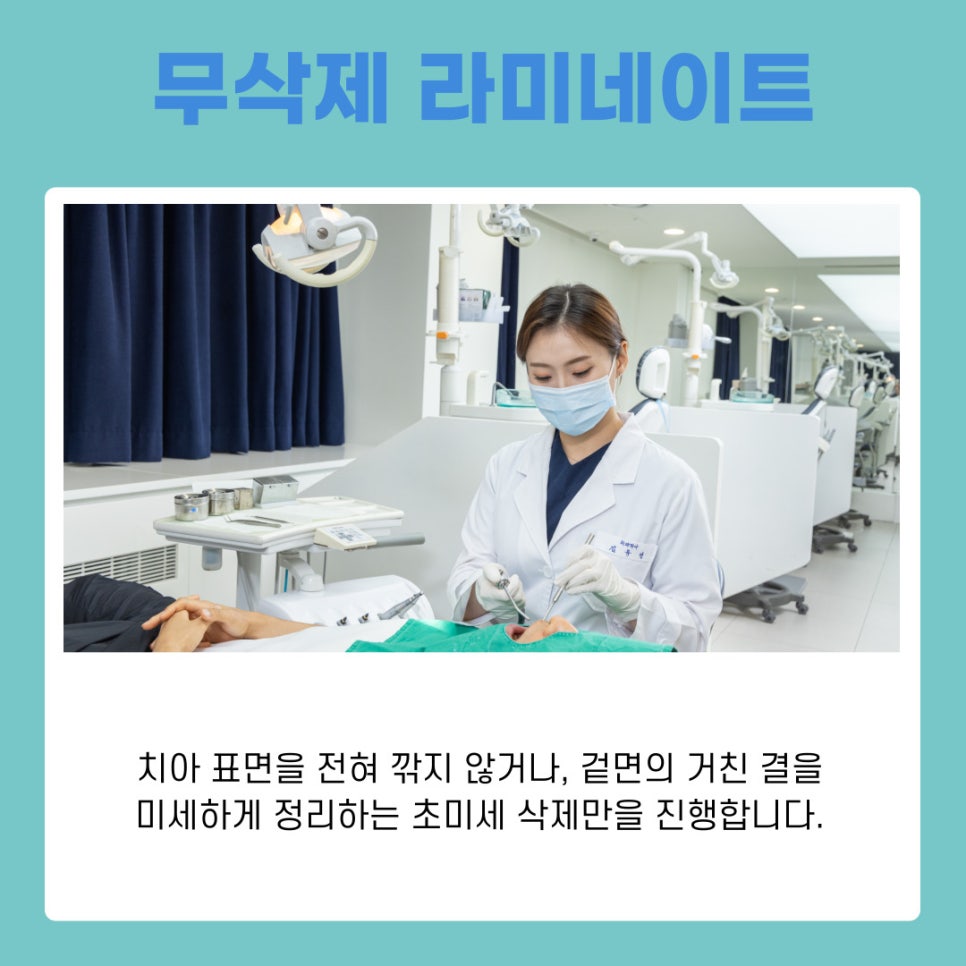
The recent trend is toward no-prep or minimal-prep veneers, which aim to preserve as much of the patient's valuable natural tooth structure as possible.
Using a 3D intraoral scanner and an ultra-precise computer graphics program, the curves and thickness of the patient's teeth are analyzed down to minute details.
Based on this analysis, the tooth surface is either not reduced at all or undergoes only ultra-minimal preparation to gently smooth the rough texture of the outer surface.
Because thin, high-strength ceramic tips—similar in thinness to contact lenses—are closely bonded to the surface, the procedure does not irritate the nerve tissue inside the natural teeth. As a result, postoperative sensitivity is rare, while the original teeth's strength and health can be preserved.
Step-by-Step Procedure for Front Teeth Veneers
Through one-on-one customized examination and design consultation, the patient's facial shape and lip movements when smiling are precisely photographed, and the inside of the mouth is captured with a digital scanner.
Within a no-prep or planned minimal-prep range, small protruding areas on the tooth surface are trimmed to create space for the artificial tips.
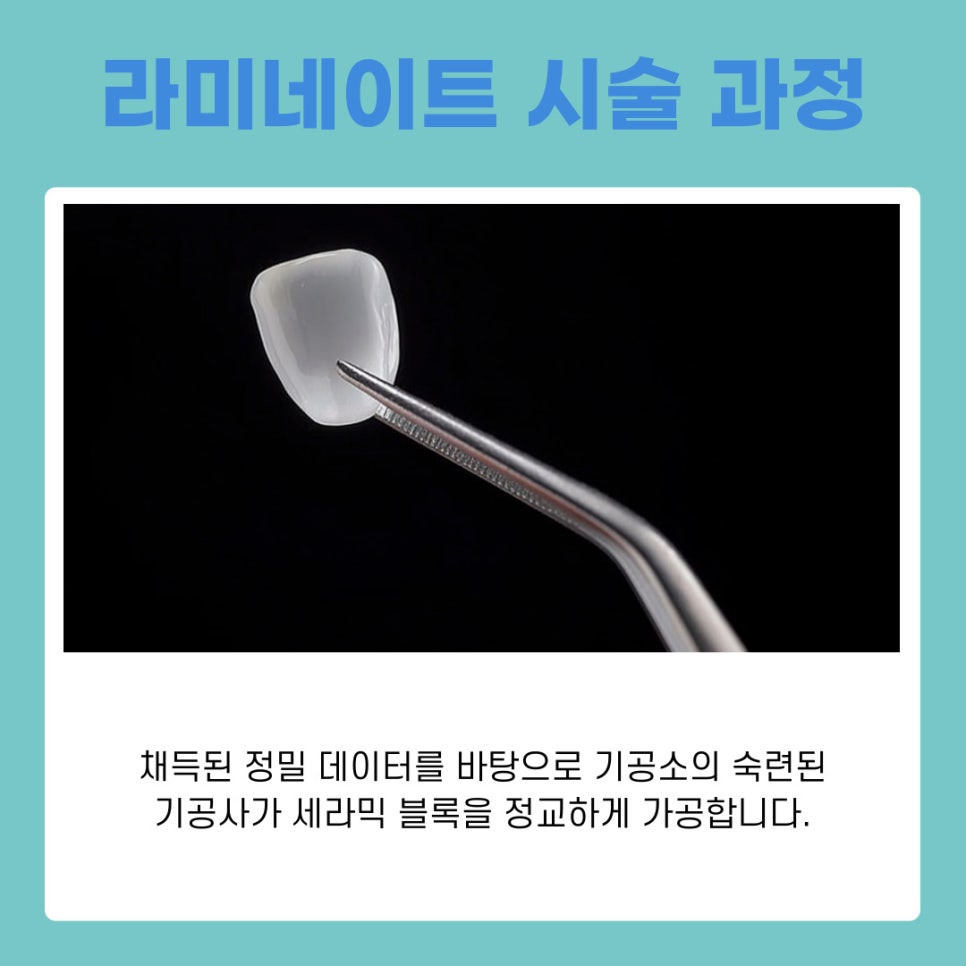
Based on the precise data collected, a skilled dental technician at the laboratory carefully shapes the ceramic blocks.
The tips undergo heating and finishing processes that reproduce the subtle translucency and texture unique to natural teeth, as well as the refraction of light, while providing sufficient durability to withstand the impact generated when chewing food.
Once fabrication is complete, the finished ceramic tips are gently placed on the patient's front teeth, and their shape, color, and occlusion with the adjacent teeth are carefully checked to ensure a precise fit.
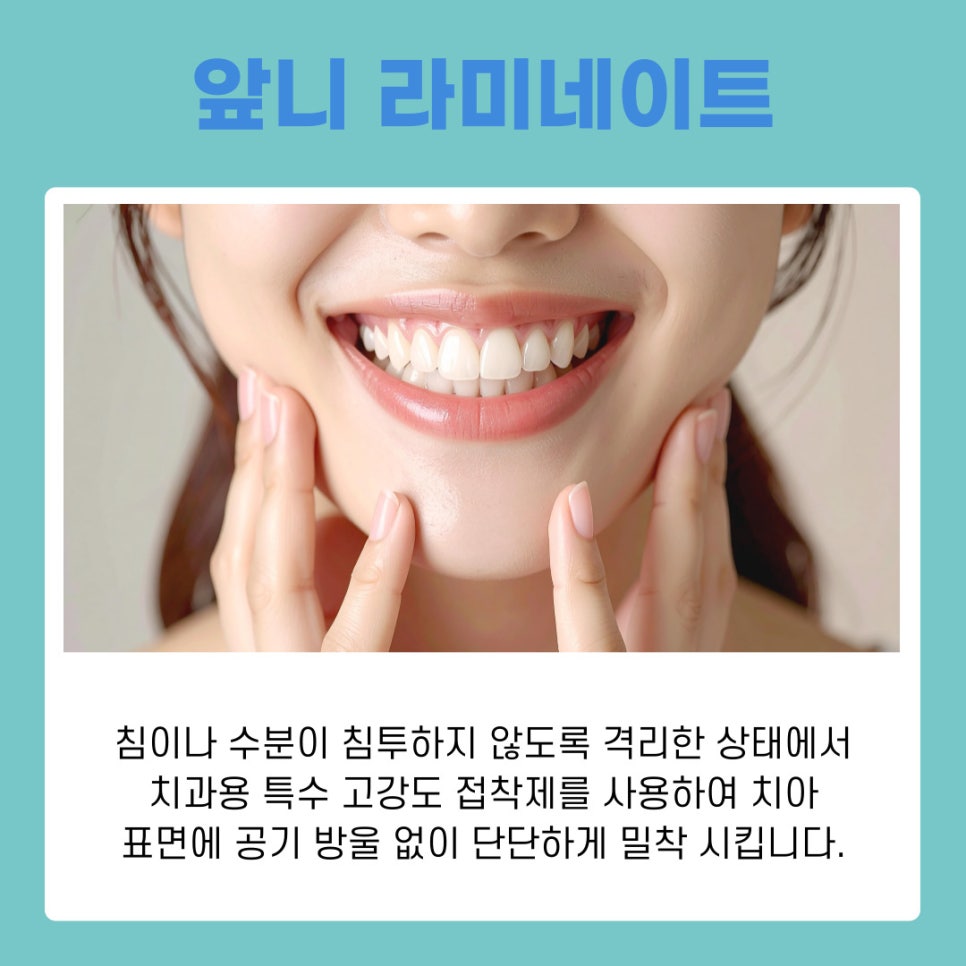
With the area isolated to prevent saliva or moisture from penetrating, a special high-strength dental adhesive is used to firmly bond the tips to the tooth surface without air bubbles.
After any remaining adhesive is neatly removed and the veneers are fully cured with a light-curing unit, a beautiful front-tooth line is complete.

Q. Aftercare and Precautions for Maintaining Veneers for a Long Time
A. The most important precaution is to avoid forcefully biting hard or chewy foods with the front teeth. When eating, it is advisable to use the molars whenever possible and cut large foods into small pieces beforehand to protect the prosthetic restorations safely.
Thorough toothbrushing three times a day is essential to prevent discoloration and inflammation. You should also use dental floss correctly every day to keep between the teeth clean.