This post was written directly by Newen Dental Clinic and provides medical information that may be helpful to a broad range of patients through hospital and clinic blog content, in strict compliance with
「Article 56 of the Medical Service Act and regulations related to medical advertising review」.
Interdental Brush Sizes
How to Choose the Right Size for Your Gums
| Summary |
|---|
| 1. An interdental brush is an oral care product that cleans the blind spots between teeth that a regular toothbrush cannot reach, helping prevent gum disease and cavities. |
| 2. Because the width of the spaces between teeth varies from person to person, it is important to choose and use the size that best suits your oral condition. |
| 3. To maintain healthy, firm gums, use an interdental brush correctly every day and combine this with regular professional dental scaling. |

Hello,
This is Newen Dental Clinic.
When using an interdental brush for the first time or looking through the products available on the market before making a purchase, many people are surprised by the wide variety of options.




Previous image
Next image
In particular, because interdental brush sizes are divided into many grades, ranging from extremely fine to thick, according to the specifications marked on each product, many people have difficulty choosing because they do not know which size is right for them.
Using the wrong size may instead place stress on the tissues in the mouth. Today, we will take a detailed look at the criteria for choosing the right size and how to use it—things you should know to maintain a healthy oral environment.
Types of Interdental Brush Sizes and the Importance of Choosing the Right One

Interdental brush specifications are generally classified systematically, from small to large, based on the thickness of the inner wire to which the bristles are attached, also known as the passage diameter.
Although labeling may vary somewhat by brand, products are generally divided into approximately five to seven or more sizes, from SSSS to L.
There is a clear reason why you need to precisely select the diameter that suits you from among these subdivided interdental brush sizes.
If you choose a size that is excessively larger than the space between your teeth and force it in without a smooth motion, the strong friction may injure delicate gum tissue, causing it to bleed easily and potentially leading to chronic inflammation.
How to Find the Right Interdental Brush Size for You
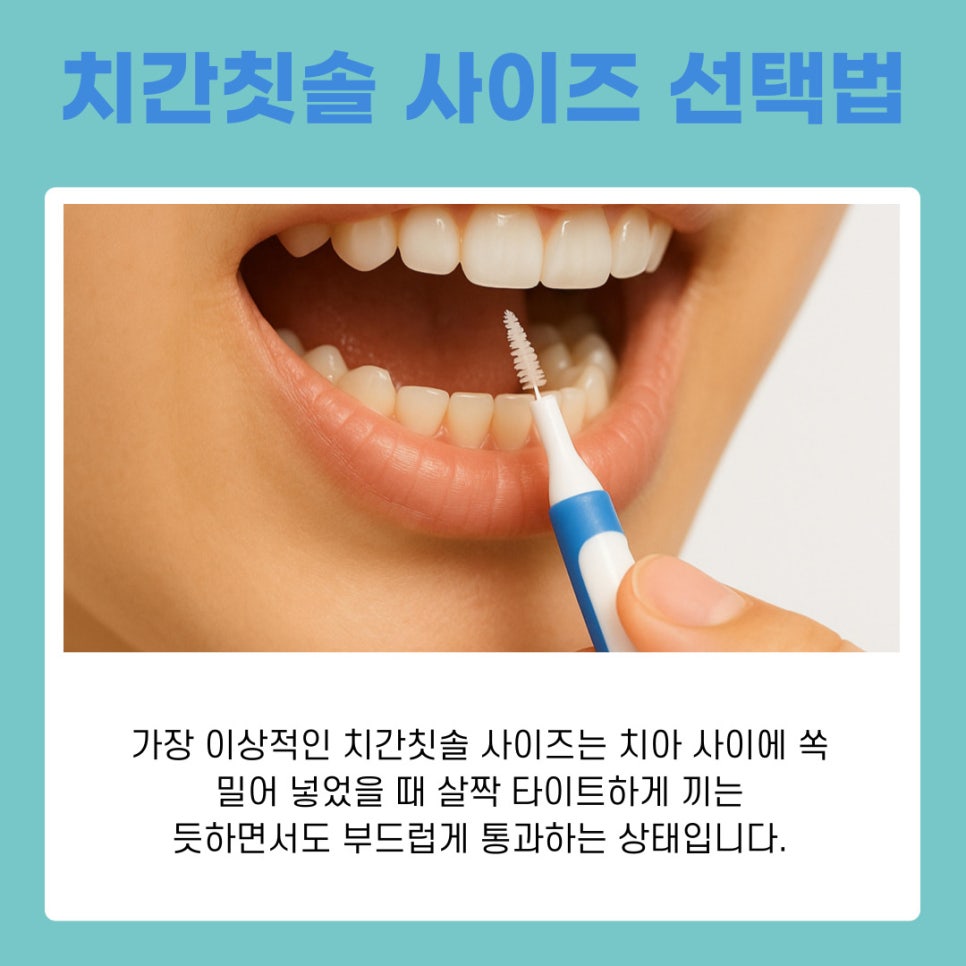
When you gently insert the brush into the space between your teeth, if it passes through too loosely without any resistance, try moving up one size to a thicker brush.
Conversely, if the wire bends during insertion or you feel strong pressure or pain in your gums, do not force it in; stop immediately.
The ideal interdental brush size fits slightly tightly while still passing through smoothly when inserted into the space between your teeth—not so tightly that it feels painful.
In other words, the optimal size is one in which the bristles pleasantly brush against the left and right surfaces of the teeth, creating a mildly stimulating and refreshing massage-like sensation.
How to Use an Interdental Brush Correctly
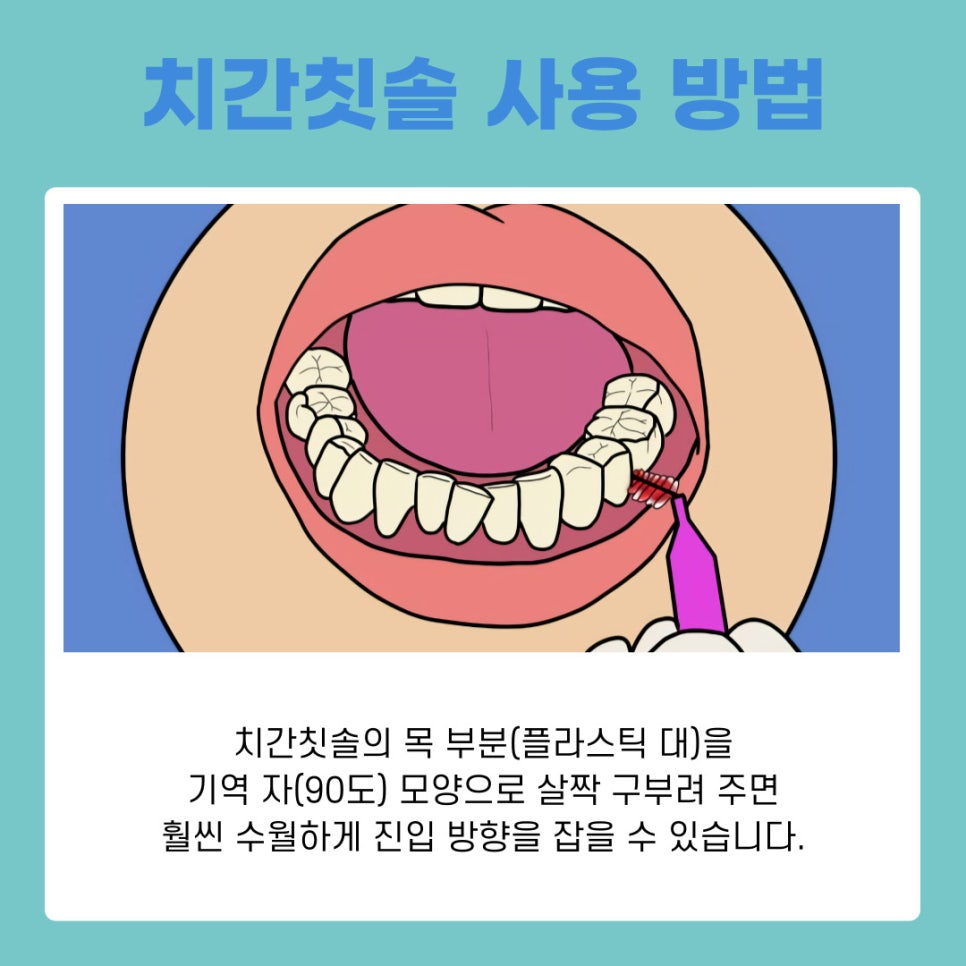
Look in a mirror to identify the space between the teeth you want to clean. When cleaning the front teeth, you can use the brush in its straight position. However, when cleaning the inner areas of the back molars, gently bend the neck of the interdental brush—the plastic shaft—into an L shape, or 90-degree angle. This makes it easier to set the insertion direction without the brush catching against the cheek.
At this time, be careful not to bend the metal wire section too often, as it may break. Adjust it gently by handling the plastic connecting section instead.
Lightly place the interdental brush horizontally in the triangular open space where the teeth and gums meet. Do not force it in as if probing. Instead, gently rotate the brush and guide it diagonally inward until it passes smoothly toward the opposite side of the mouth.

Once the brush is positioned between the teeth, gently move it back and forth three to four times. The technique is to make slight angle adjustments while brushing so that the bristles evenly contact the front and back surfaces of the teeth and sweep away plaque.
After cleaning one area, remove the brush, lightly rinse the debris from the bristles under running water, and then move on to the next space between the teeth.
The used interdental brush should be thoroughly rinsed under running water to remove any remaining bacteria or debris, then stored in a dry, well-ventilated place for good hygiene.
If the bristles become excessively disheveled or the inner wire becomes bent, replace the brush with a new one without hesitation to help prevent gum injuries.

Q. What is the difference between dental floss and an interdental brush?
A. Dental floss and interdental brushes serve the same purpose of removing debris between the teeth, but they have distinct roles depending on the area being treated and the condition of the mouth.
The two devices complement rather than replace each other. Therefore, the proper hygiene practice is to use dental floss in tightly spaced areas and select an appropriately sized interdental brush for wider spaces, using both according to the area to help remove bacteria in the mouth as thoroughly as possible.