This post was written directly by Gangnam Newen Dental Clinic and
provides medical information through hospital and clinic blog content that may be helpful to an unspecified number of patients,
in strict compliance with Article 56 of the Medical Service Act and
related regulations on the review of medical advertising.
Sinnonhyeon Station Implant Surgery
Management Methods to Prevent Peri-Implantitis
| Summary |
|---|
| 1. Leaving a missing tooth untreated for an extended period may cause changes to the overall oral structure, such as collapse of the surrounding alignment of teeth and resorption of the alveolar bone. |
| 2. Implant treatment involves combining an artificial tooth root made of highly biocompatible titanium, a patient-specific abutment, and a crown prosthesis designed with both aesthetics and strength in mind. |
| 3. It is important to carefully plan the implant placement position, depth, and angle based on a three-dimensional, precise diagnosis using 3D CT and an intraoral scanner. |
| 4. Applying a digital guide method that involves computer-simulated surgery can reduce the extent of the incision, lessen the burden of bleeding and pain, and support faster recovery. |
| 5. Even after surgery is completed, thorough hygiene care to prevent peri-implantitis and regular checkups are essential for a favorable long-term prognosis. |

Hello,
This is 뉴엔치과의원.
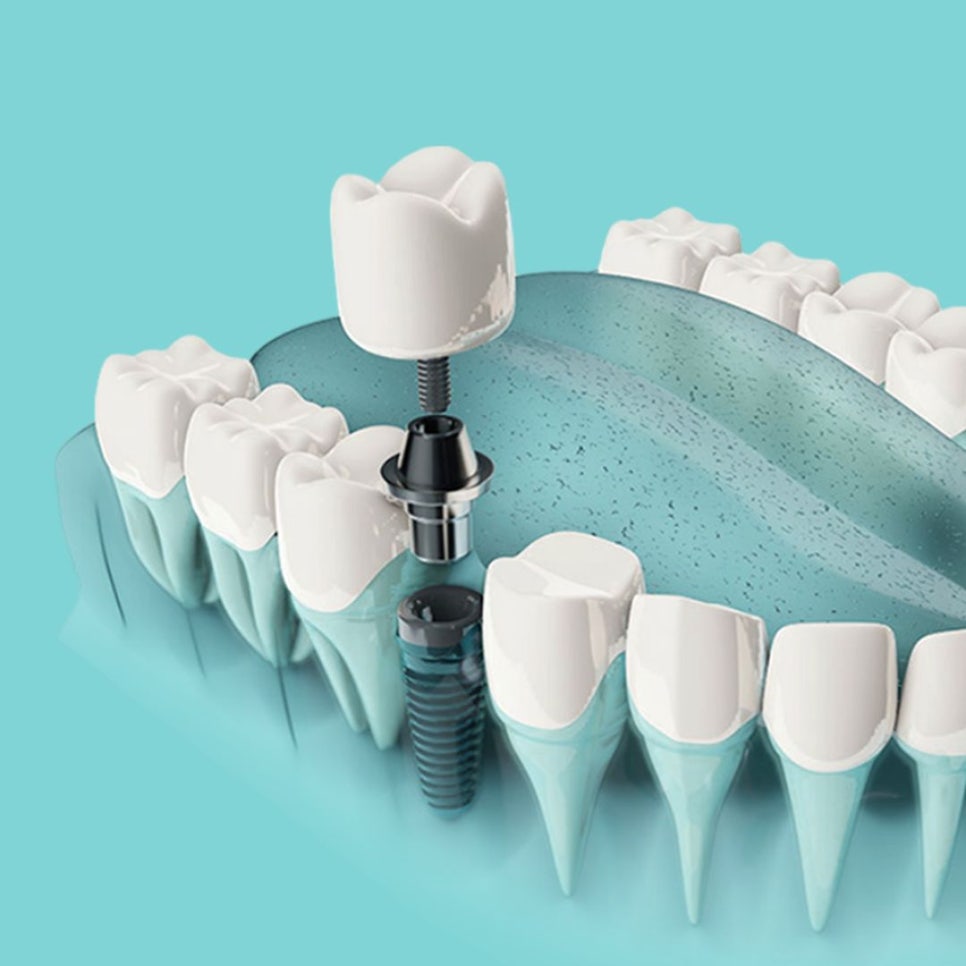
Implant surgery involves placing an artificial tooth root (fixture) made of biocompatible titanium in the gum bone where a tooth is missing, and connecting an abutment and an artificial crown (prosthesis) on top of it.


Previous image
Next image
Implant Surgery Process
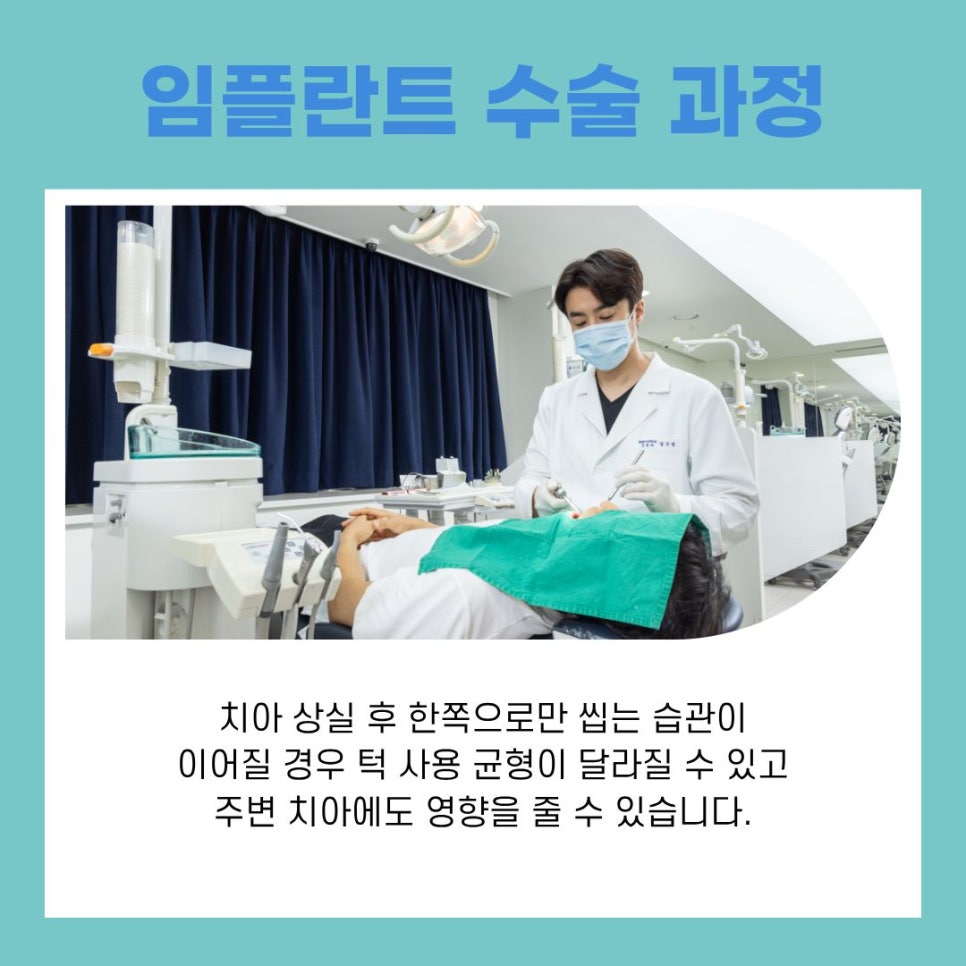
During the first step, a precise diagnosis, the patient’s overall health conditions and oral status are assessed.
If the diagnosis indicates that the gum bone is sufficient, the artificial tooth root is placed in the gum bone during the first surgery. If the gum bone is insufficient or thin, it may not be able to firmly support the implant. In such cases, additional surgical procedures, such as bone grafting or sinus lift surgery, may be performed first.
After placement, a period of osseointegration is needed for the artificial tooth root to firmly bond with the gum bone. This generally takes approximately two to six months, depending on the patient’s bone quality.
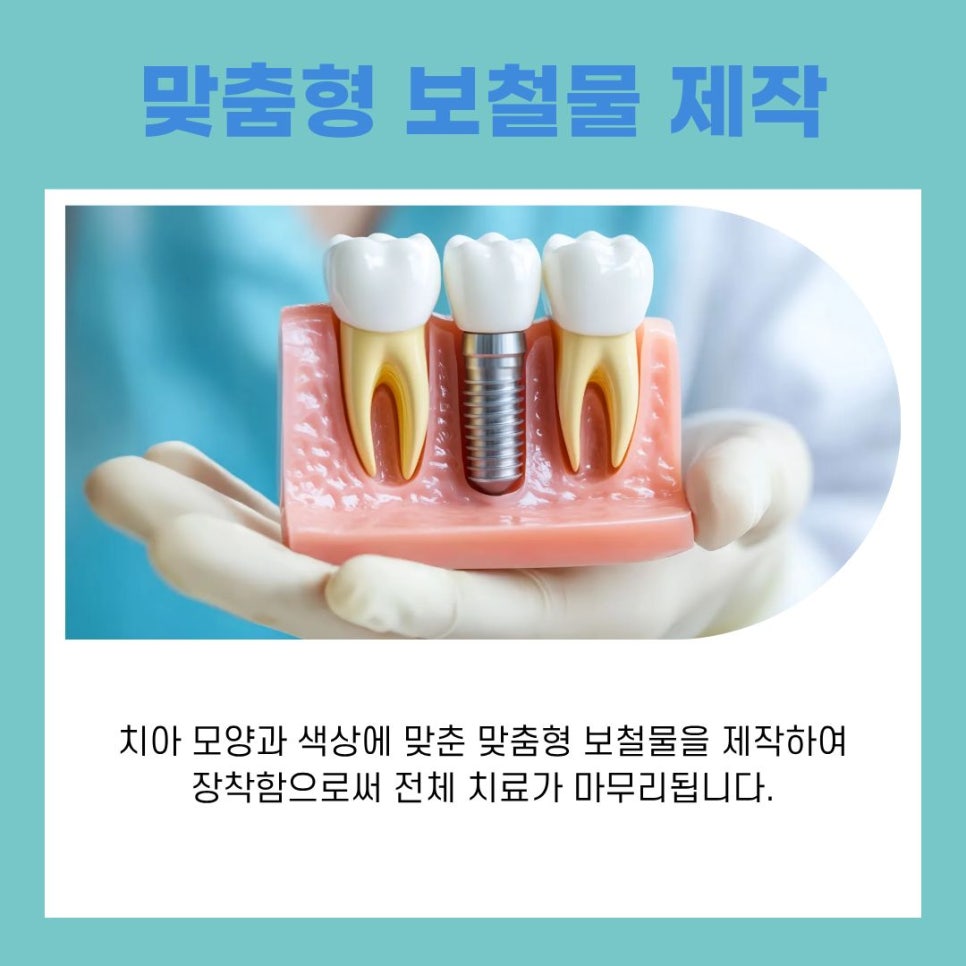
Once osseointegration has been successfully achieved, the gum is gently opened and a second surgery is performed to connect the abutment. Finally, a customized prosthesis matched to the patient’s tooth shape and color is made and fitted, completing the treatment.
Regular visits throughout the entire surgical process are required, and carefully following the medical team’s instructions is a way to reduce complications.
Post-Implant Care Methods

Although the implant itself does not develop cavities, the gums and gum bone surrounding it remain vulnerable to bacterial infection.
In particular, unlike natural teeth, implants do not have nerve tissue or periodontal ligaments that help prevent bacterial penetration. As a result, inflammation may cause no pain at all in its early stages.
If this is left untreated, peri-implantitis may occur as the gum bone is destroyed, eventually causing the implant that was placed with difficulty to become loose or fall out.

In addition to brushing your teeth normally three times a day, you should use interdental brushes, dental floss, and an oral irrigator (Waterpik) to thoroughly remove tiny food particles and plaque trapped between the implant and gums and between the teeth.
You must also stop smoking before and after surgery, as smoking constricts blood vessels, interferes with blood circulation in the gums, and inhibits osseointegration.

Above all, even if you have no particular symptoms, you should make scaling and regular dental checkups part of your routine by visiting the dentist every three to six months to have the implant’s stability, prosthesis wear, and gum health examined.
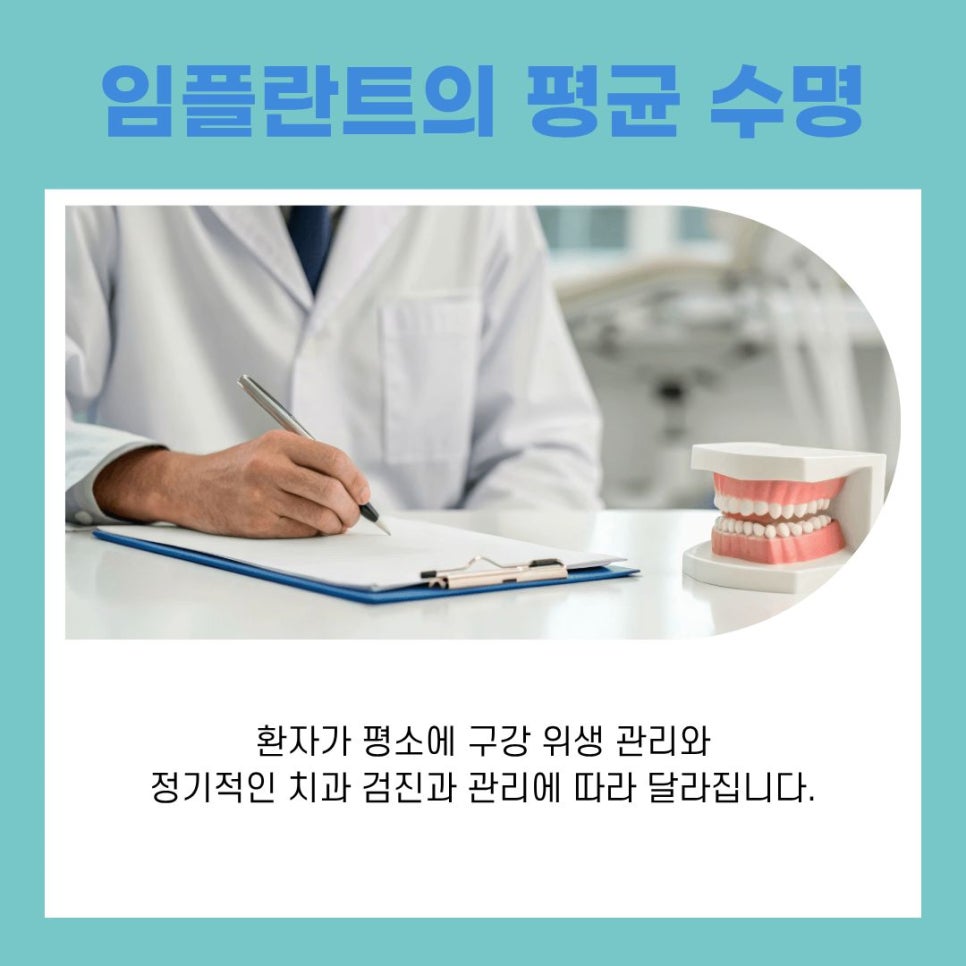
Q. What is the average lifespan of an implant?
A. In general, implants are known to last approximately 10 to 15 years. However, this is only an average figure. Depending on how diligently the patient maintains their oral hygiene in daily life,
and on regular dental checkups and care, implants may be used for more than 20 years or even semi-permanently. Conversely, inadequate care may result in the need for repeat surgery after only a few years of use.
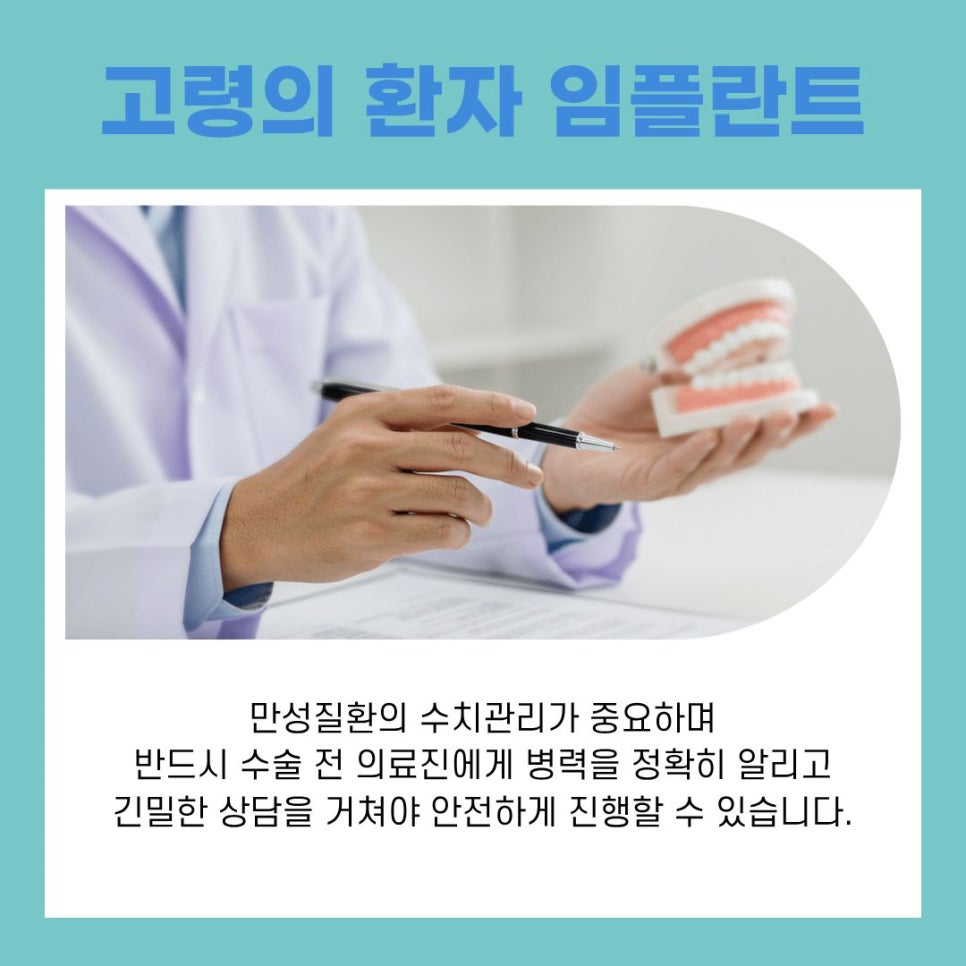
Q. Can elderly patients with diabetes or high blood pressure undergo implant surgery?
A. With advances in medical technology and equipment compared with the past, people with chronic conditions such as diabetes or high blood pressure can generally undergo surgery if their levels are well controlled.
Because the surgical plan may vary depending on the medications being taken, such as blood pressure medication, anticoagulants, or osteoporosis medication, patients must accurately inform the medical team of their medical history before surgery and undergo close consultation to proceed safely.