This post was written directly by Gangnam Newen Dental Clinic and
provides medical information through a hospital and clinic blog that may be helpful to a wide range of patients,
while strictly complying with Article 56 of the Medical Service Act and
regulations related to medical advertising review.
Dry Mouth Upon Waking
and Its Causes
| Summary |
|---|
| 1. Dry mouth during sleep (dry mouth while sleeping) is more than simply a feeling of insufficient water; it is a symptom that causes physical discomfort and oral disease. |
| 2. Saliva production naturally decreases during sleep, while mouth breathing and taking certain medications can worsen the symptoms. |
| 3. Saliva plays a key role in suppressing the growth of bacteria in the mouth and protecting the teeth, so leaving dry mouth untreated can greatly increase the risk of cavities and gum disease. |
Humans spend about one-third of the day asleep. During this time, the body undergoes important recovery processes, such as regenerating cells and maintaining the immune system.
However, many people experience the discomfort of waking up with their mouth completely dry in the morning or being awakened during sleep by an extreme feeling of dryness, as if their tongue were sticking to the roof of their mouth.




Previous image
Next image
This dry-mouth phenomenon may be more than temporary thirst; it can be a typical sign of dry mouth, which threatens oral health and sleep quality.
Problems Caused by Mouth Breathing

Normal breathing should take place through the nose, where the air gains appropriate humidity and temperature as it passes through the nasal passages.
On the other hand, when the nose is blocked by rhinitis, chronic sinusitis, a deviated nasal septum, or similar conditions, or when a person has sleep apnea or snores, they may unconsciously sleep with their mouth open in order to obtain oxygen.
At this time, dry air entering and leaving through the airway quickly evaporates saliva throughout the mouth, causing severe dry mouth.
Effects on Oral Health
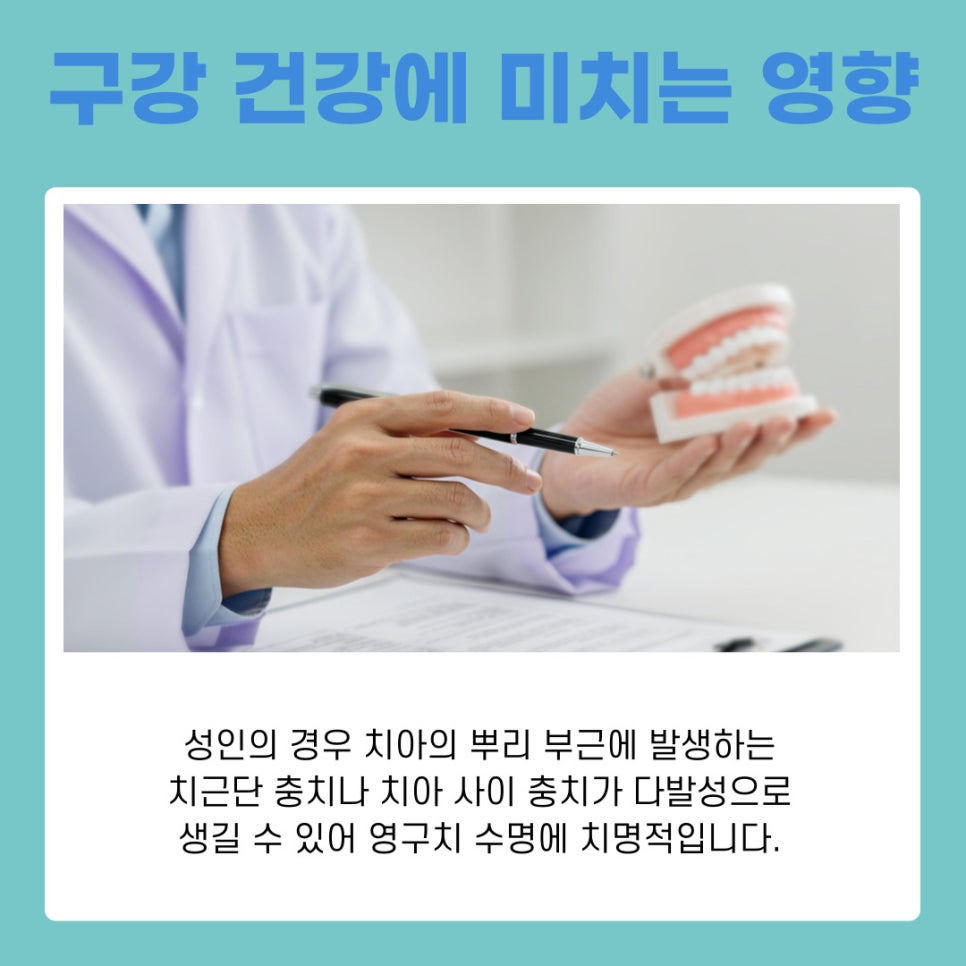
The incidence of cavities (dental caries) increases dramatically. Saliva washes away food particles and sugars remaining on the tooth surface and supplies minerals that help remineralize microscopically damaged enamel.
When this process is interrupted by dry mouth during sleep, harmful bacteria that increase acidity in the mouth rapidly erode the teeth.
In adults in particular, root-surface cavities and cavities between the teeth may develop in multiple locations, posing a serious threat to the lifespan of the permanent teeth.
Daily Habits to Follow
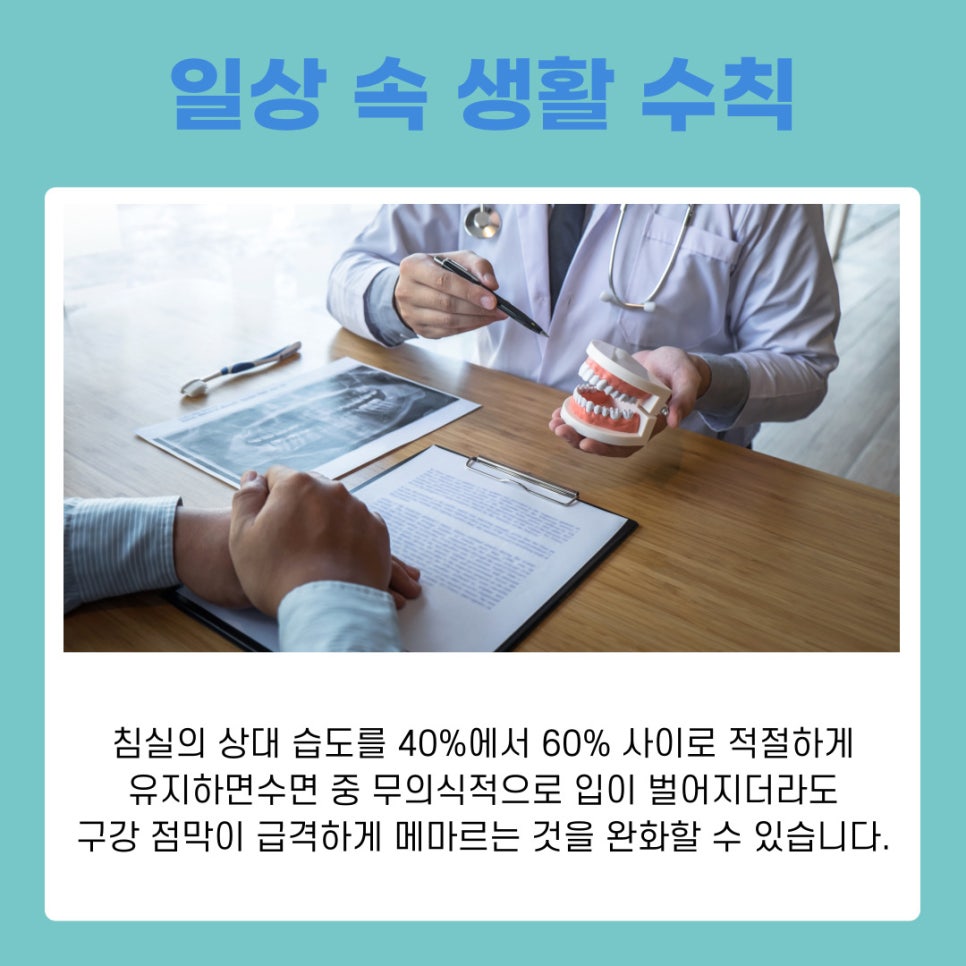
The first step is to control the humidity in the sleeping environment. Using a humidifier to maintain the bedroom’s relative humidity at an appropriate level of 40% to 60% can help prevent the oral mucosa from becoming excessively dry, even if the mouth unconsciously falls open during sleep.
If mouth breathing caused by a nasal condition is severe, treatment by an otolaryngologist should come first. In cases of habitual mouth breathing, using commercially available sleep lip tape to encourage keeping the mouth closed and breathing through the nose may be effective.
Coffee, green tea, carbonated drinks containing large amounts of caffeine, and alcohol promote diuresis, causing the body to excrete water and making the salivary glands dry. Therefore, their consumption should be strictly limited before bedtime.
The choice of toothpaste used in the morning and before bed is also important. Synthetic surfactants commonly found in regular toothpaste can make the mouth even drier, so
people with dry mouth are advised to use a non-irritating toothpaste that does not contain surfactants or uses natural ingredients as substitutes.
In addition, mouthwash containing alcohol may make the mouth feel temporarily refreshed, but it can make the mouth even drier in the long term. To protect lifelong oral health safely, choose and use an alcohol-free formulation.

Q. Why is my mouth completely dry when I wake up even if I drink a lot of water?
A. Drinking water is essential for temporarily moistening the inside of the mouth and maintaining the body’s water balance, but it does not itself improve the secretion capacity of salivary glands whose function has already declined.
In particular, if you breathe through your mouth while sleeping, the air flowing throughout the night continuously evaporates moisture from the mouth. As a result, you may feel dry again in the morning even if you drank a lot of water before bed.
In this case, rather than relying only on fluid intake, visit a dental clinic to receive moisturizing treatment that helps improve the oral mucosa’s ability to retain moisture, and identify and address the causes that interfere with nasal breathing.