This post was written directly by Gangnam Newen Dental Clinic and
strictly complies with 「Article 56 of the Medical Service Act and regulations related to medical advertising review」
by providing medical information through clinic blog content
that may be helpful to an unspecified number of patients.
The Gangnam Laminate Procedure and
Essential Care Guidelines to Follow
| Summary |
|---|
| 1. Laminate veneers are an excellent alternative for those concerned about aesthetic issues such as minor discoloration, gaps between teeth, or asymmetrical tooth alignment. |
| 2. We have organized the overall treatment process in detail, along with essential care guidelines for reducing the side effects that many people are concerned about. |
| 3 We hope this will help you establish a safe and healthy cosmetic dental treatment plan suited to you. |

Hello,
This is Newen Dental Clinic.
In modern society, a neat and well-groomed appearance often serves as a very positive factor in interpersonal relationships and social life.
In particular, the shape and color of the front teeth exposed when talking or smiling brightly have a significant impact on the formation of one’s overall image.




Previous image
Next image
Many people feel self-conscious when their teeth are severely stained, when there are small gaps between their front teeth, or when the edges of their teeth are slightly chipped or their shapes are uneven.
Laminate veneers are a treatment option that can improve these aesthetic concerns in a short period and help restore a confident smile.
The Principle and Features of Laminate Veneer Placement
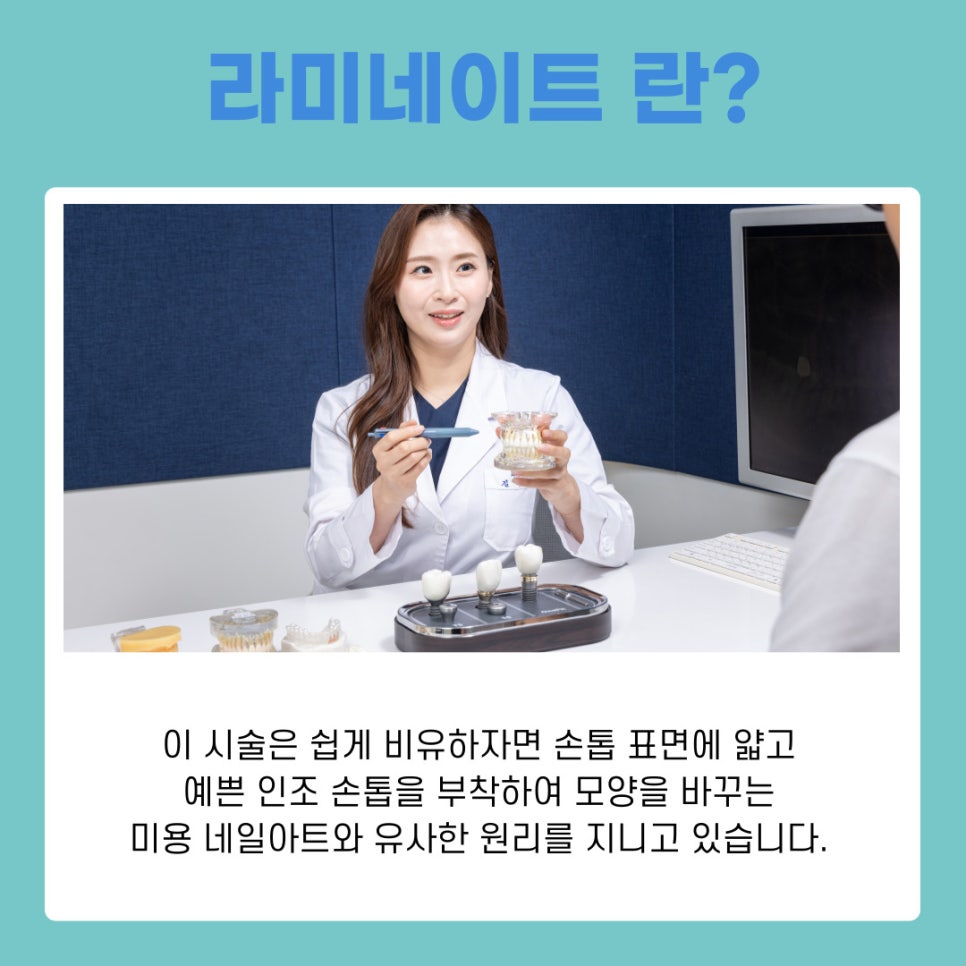
To put it simply, this procedure is based on a principle similar to cosmetic nail art, in which a thin, attractive artificial nail is attached to the surface of a natural nail to change its appearance.
The enamel surface—the outermost layer of the tooth, which contains no nerves and therefore does not sense pain—is precisely reshaped with no or minimal reduction. A thin plate made of porcelain, or reinforced ceramic, is then firmly bonded to it with a dedicated adhesive.
The ceramic material used has translucency and texture that closely resemble the way natural teeth reflect light, offering the major advantage of looking very natural without an artificial appearance.
The Step-by-Step Process from Precise Diagnosis to Final Placement
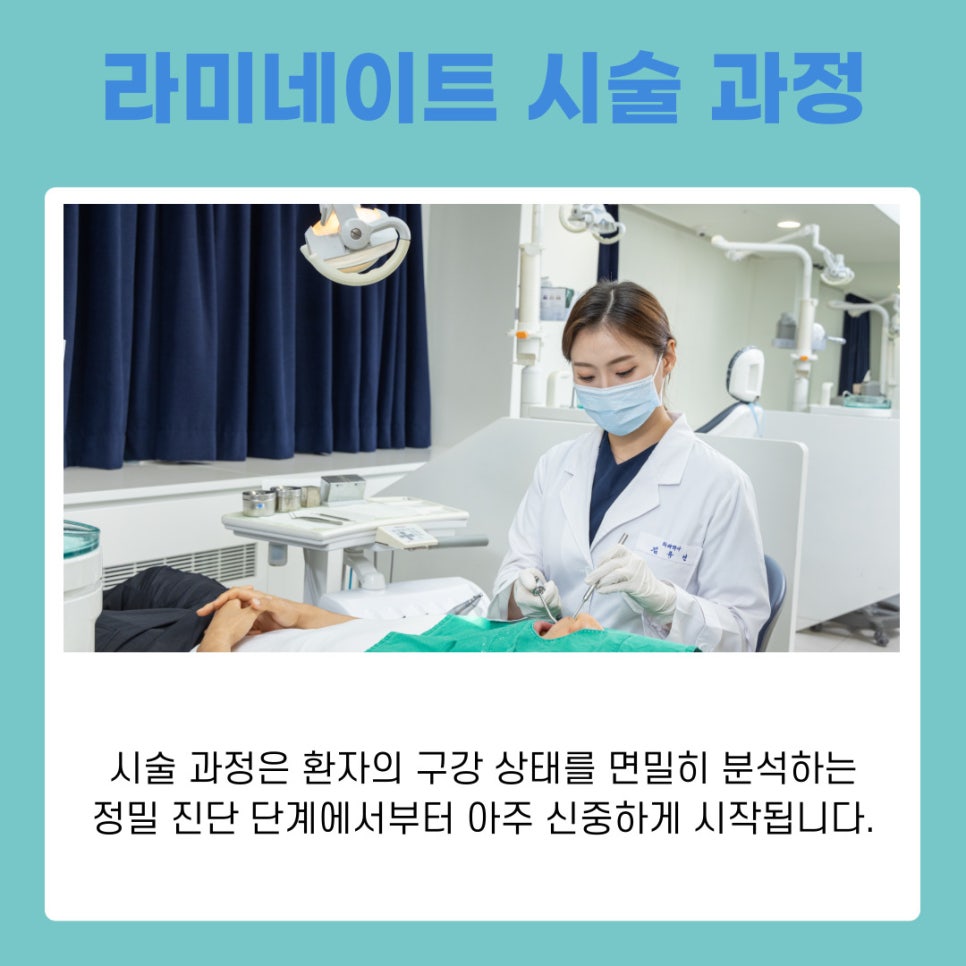
The procedure begins very carefully with a precise diagnostic stage involving a thorough analysis of the patient’s oral condition.
First, three-dimensional imaging equipment and a digital scanner are used to create a virtual design by considering multiple factors, including the alignment and size of the teeth, the gum line, and the harmony with the lips.
Once the design is finalized, the surface of the teeth is evenly reshaped to a very fine thickness to create space for the restorations.
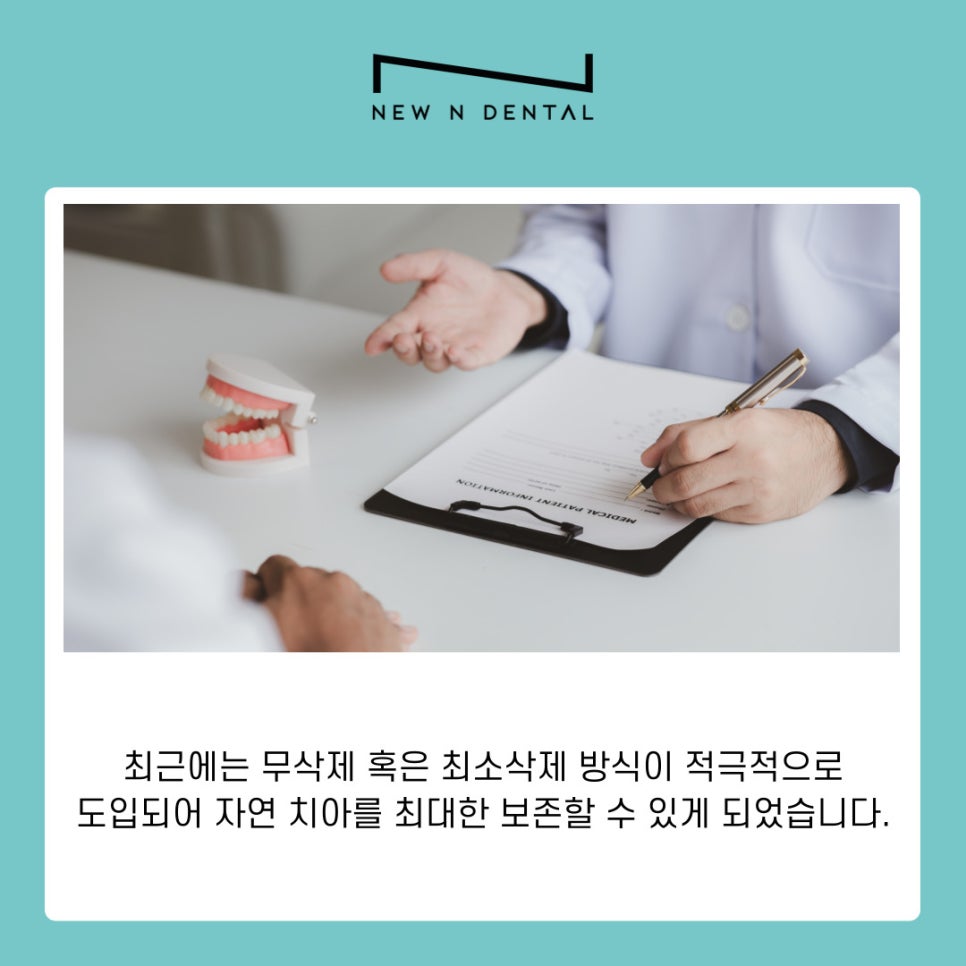
Thanks to the remarkable development of medical technology and equipment in recent years, no-preparation or minimal-preparation techniques, which reduce the amount of reshaping to nearly zero, have been actively adopted, making it possible to preserve as much of the natural teeth as possible.
After the teeth are reshaped, precise impressions are taken and custom anterior restorations are fabricated at a dental laboratory. Once fabrication is complete, the restorations are perfectly fitted to the tooth surfaces and firmly bonded, bringing the entire process to an end.
Dietary Habits You Must Follow to Maintain Long-Lasting Results
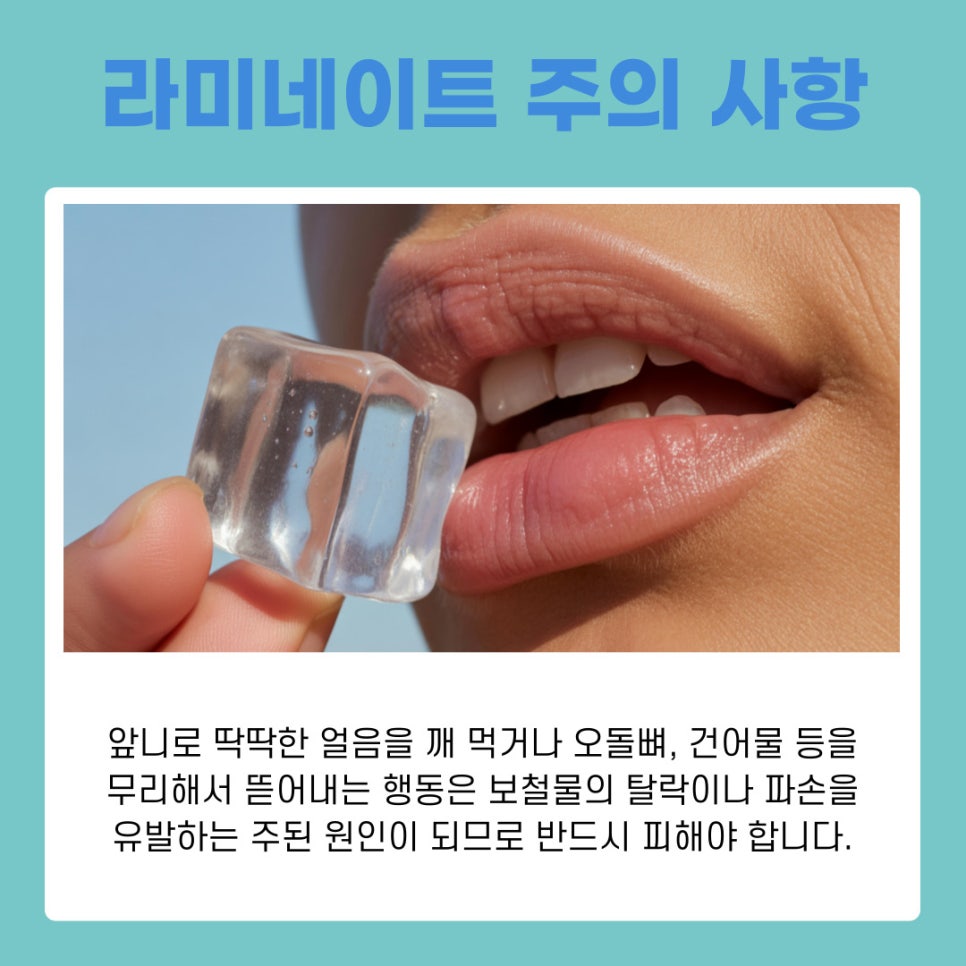
No matter how precisely and firmly a restoration is placed, its lifespan may be shortened or damage may occur if it is not supported by proper lifestyle habits.
This is because thin ceramic plates withstand vertical pressure on the teeth quite well, but may be somewhat vulnerable to twisting forces or situations in which strong impacts are concentrated in one area.
Therefore, you must avoid using your front teeth to crack hard ice or aggressively tear apart tough meat, cartilage, or dried fish, as these actions are major causes of restoration detachment or breakage.
Even when eating hard fruits such as apples or pears, it is wise to develop the habit of cutting them into small pieces with a knife and chewing them with your molars rather than taking large bites with your front teeth. This can help protect the restorations safely for a long time.
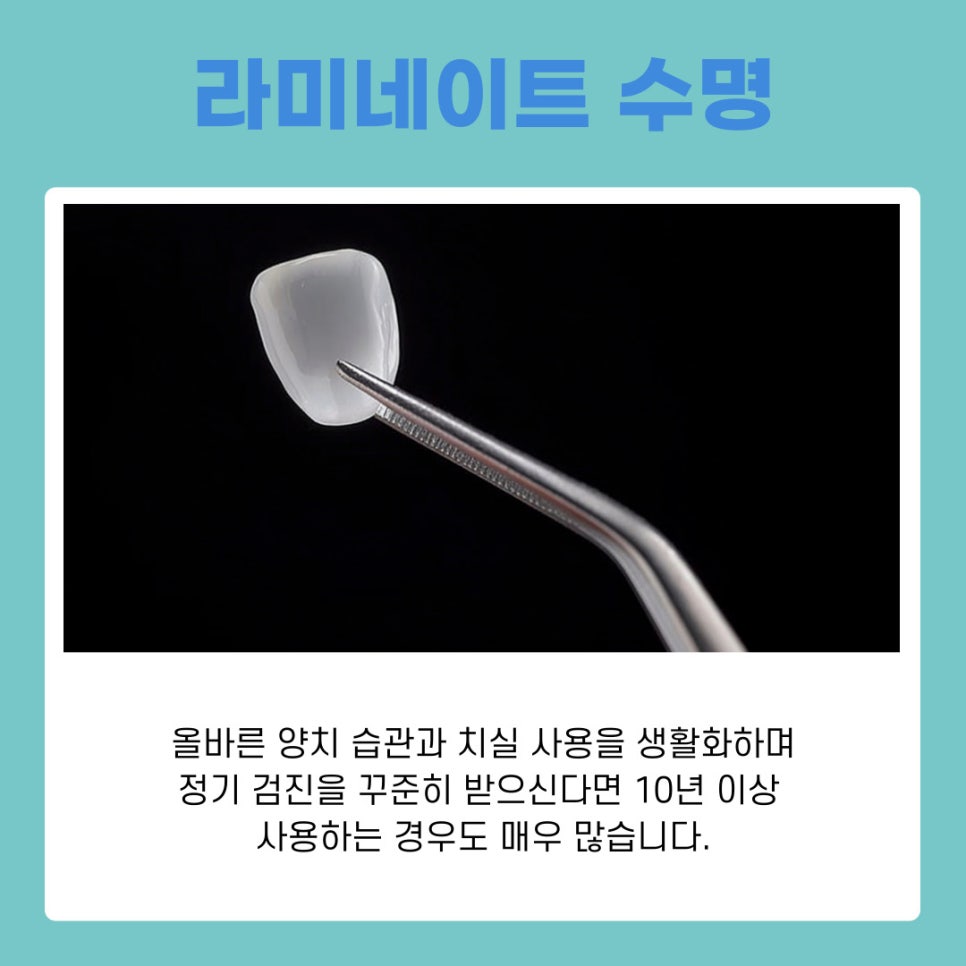
Q. How long do laminate veneers usually last after the procedure?
A. Although the duration varies depending on the patient’s care habits and oral environment, they are generally known to last for an average of about 7 to 10 years.
If you avoid tough or hard foods, make proper brushing and flossing part of your daily routine, and continue to receive regular checkups, many people are able to use them comfortably and healthily for much longer than 10 years without significant problems.