This post was written directly by Gangnam Newen Dental Clinic and
strictly complies with Article 56 of the Medical Service Act and
regulations related to medical advertising review
in providing medical information through hospital and clinic blog content
that may be helpful to patients in general.
Gangnam Scaling Frequency and
Essential Care for Preventing Gum Disease
| Summary |
|---|
| 1. Tartar that accumulates inside the mouth is not easily removed by brushing alone, making it a major cause of gum inflammation and bad breath. |
| 2. Scaling performed at a dental clinic is a procedure that safely and thoroughly removes tartar using fine ultrasonic vibrations. |
| 3. We hope you develop healthy habits that help preserve your natural teeth strongly for a long time through regular oral care. |
Hello,
This is Newen Dental Clinic.
Whenever we eat each day, a transparent, sticky film forms on the surface of our teeth as tiny food particles combine with bacteria. This is called dental plaque, or simply plaque.




Previous image
Next image
If this plaque is not removed in time and combines with minerals such as calcium and phosphorus found in saliva, it hardens into tartar, which is eventually as hard as stone.
Because tartar has a very rough surface, it provides an environment where another bacterial film can easily accumulate.
Problems Caused by Leaving Tartar Untreated
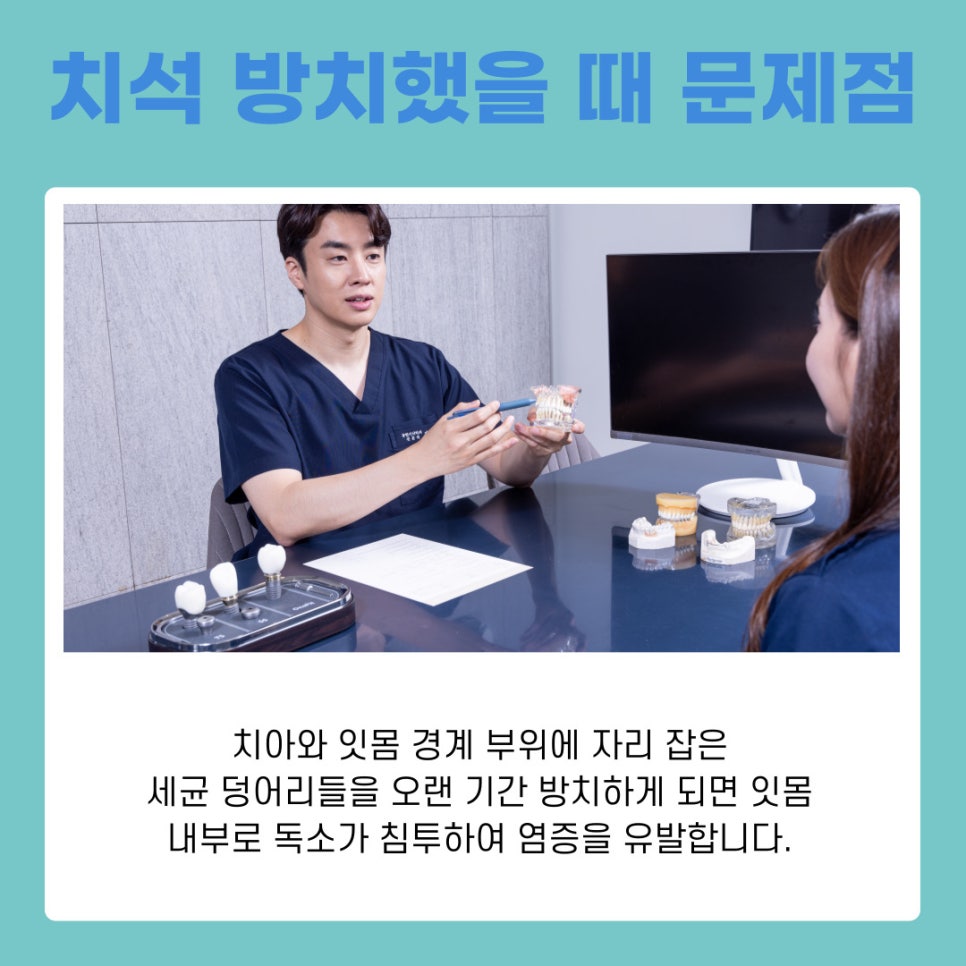
When bacterial masses located along the boundary between the teeth and gums are left untreated for a long time, toxins penetrate into the gums and cause inflammation.
Initially, this begins as gingivitis, in which a small amount of red blood may appear on the gums when brushing, or the gums may become noticeably swollen.
If this stage is missed and the inflammation progresses deeper, it can worsen into periodontitis, in which even the alveolar bone around the tooth roots—the bone that firmly supports the teeth—can be destroyed.
Safe Removal Using Fine Ultrasonic Vibrations
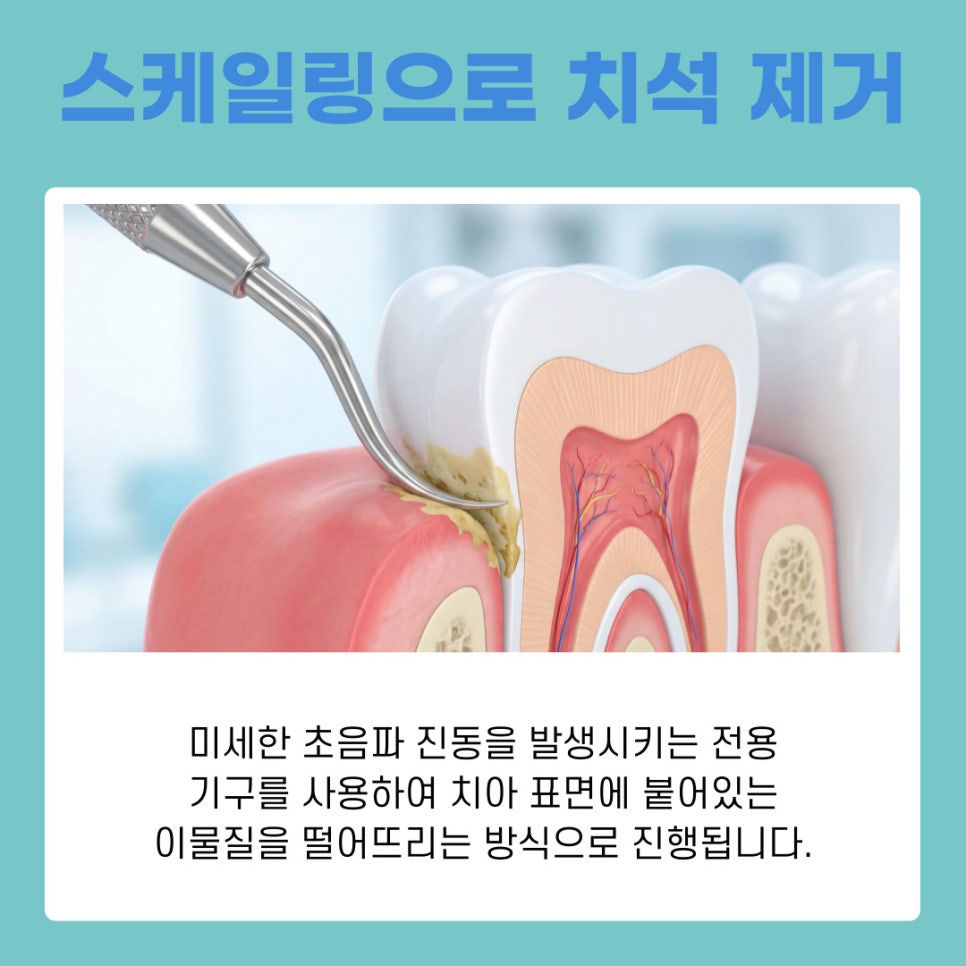
This preventive treatment, performed at a dental clinic, uses a specialized instrument that generates fine ultrasonic vibrations to detach foreign matter adhering to the tooth surfaces.
Many people mistakenly believe that the teeth are shaved or scraped with a sharp instrument, but in reality, the procedure uses fine vibrations and the pressure of a water spray to selectively separate only the hardened deposits.
Therefore, it does not damage the hard tooth itself and does not stimulate the nerves, allowing the inside of the mouth to be cleaned safely.
Temporary Symptoms After the Procedure

Immediately after treatment, many patients report that the spaces between their teeth appear noticeably open or that their teeth feel sensitive when drinking cold water.
Because of this, it is easy to mistakenly think that the procedure has damaged the teeth, but this is completely incorrect. As the large bacterial masses that had occupied the spaces between the teeth disappear,
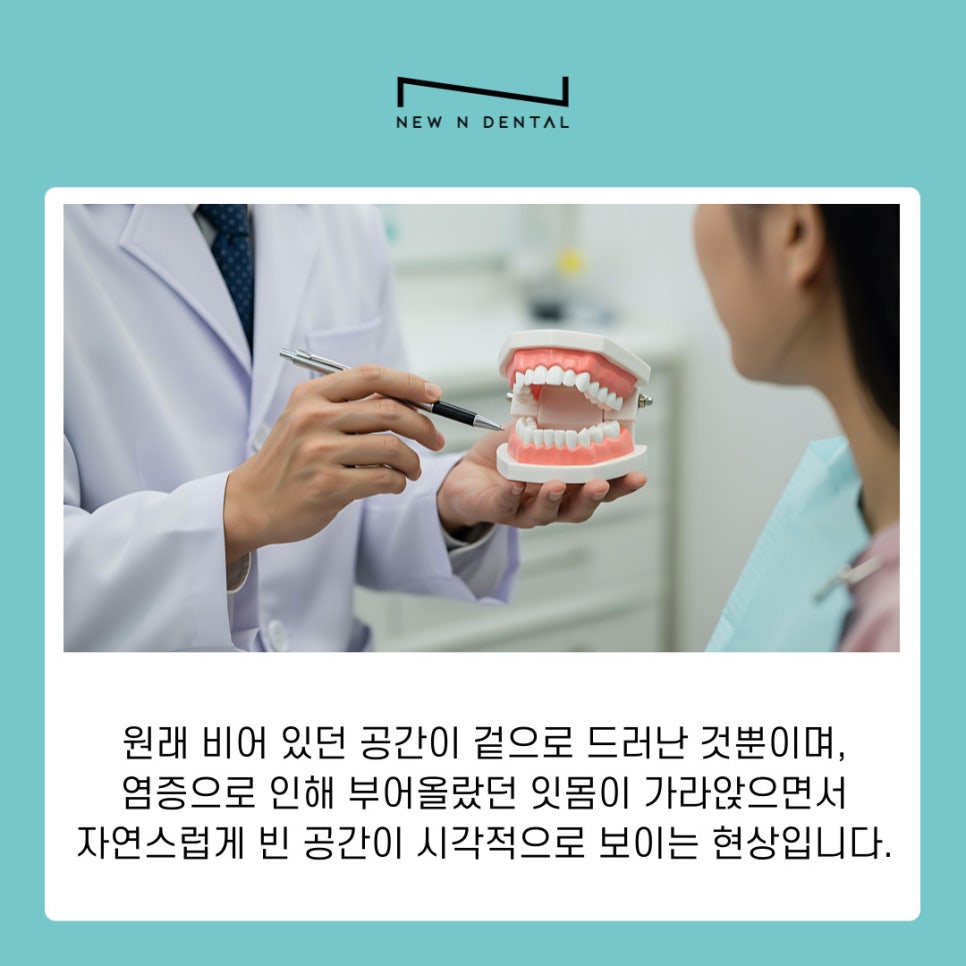
the spaces that were originally empty are simply exposed, and the gums that had swollen due to inflammation settle down, making the empty spaces naturally visible.
In addition, when the barrier of foreign matter that had thickly covered the tooth roots is removed, external temperature stimuli may be transmitted more easily to the tooth nerves temporarily, which can cause sensitivity.
These symptoms naturally disappear as the swollen tissues contract and recover over several days, and are part of a normal process.
Scaling Frequency
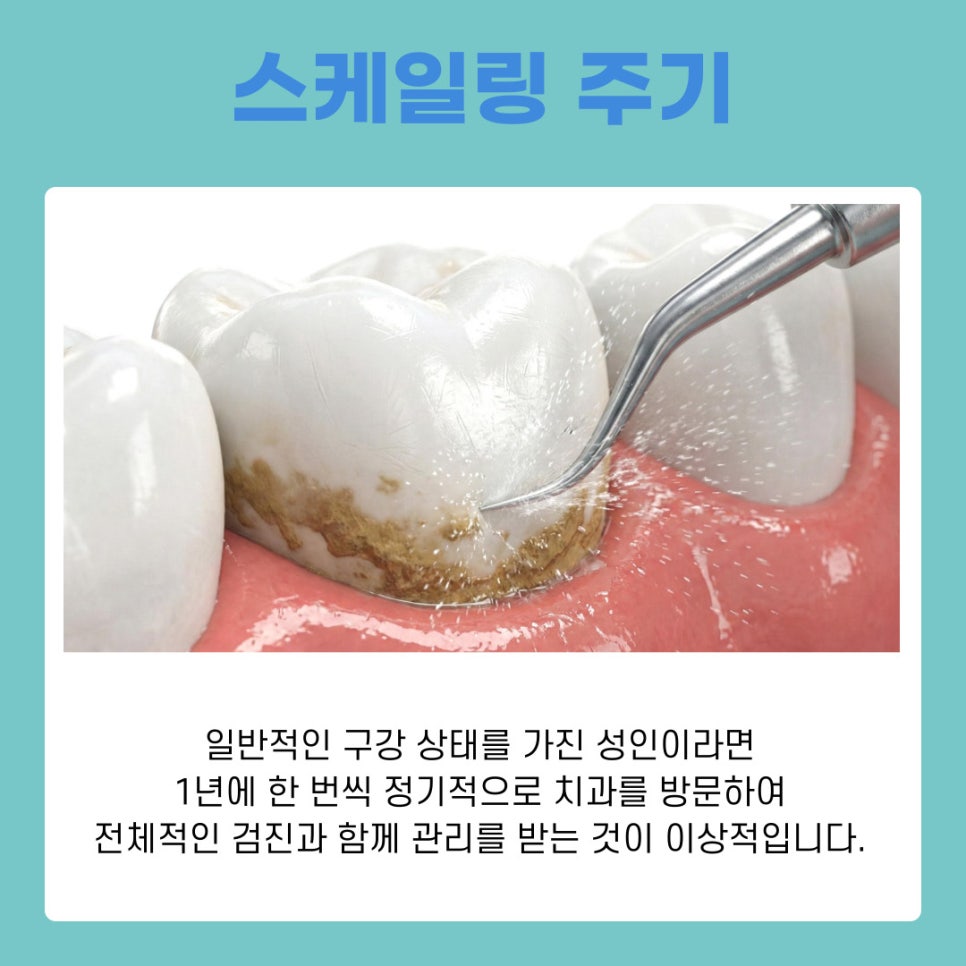
So how often should this preventive treatment be received for the greatest benefit to oral health? For adults with generally healthy oral conditions, it is ideal to visit the dentist regularly once a year for an overall examination and care.
In particular, South Korean citizens are eligible for health insurance coverage once a year depending on their age, allowing them to care for their valuable teeth economically while reducing the financial burden.
However, if you frequently smoke, have an uneven tooth alignment that causes food to become easily trapped, or naturally develop tartar faster than others due to the composition of your saliva,
it is advisable to visit every three to six months to have your condition checked and receive more frequent care.
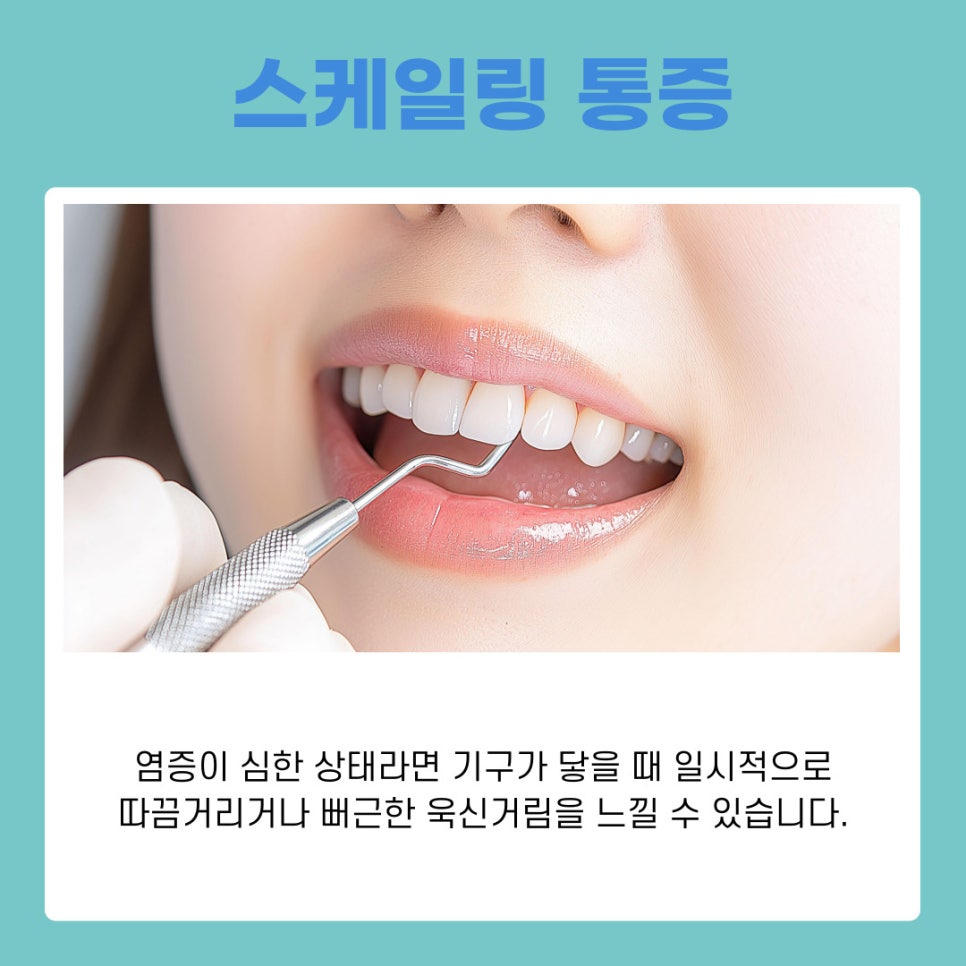
Q. I keep postponing treatment because I am very afraid of pain. Does it hurt a lot?
A. The intensity of pain varies depending on each person’s level of gum inflammation and the amount of accumulated tartar.
If deposits have penetrated deep into the gums or the inflammation is severe because you have not received care for a long time, you may temporarily feel a sharp twinge or a dull, throbbing discomfort when the instrument makes contact.
However, if you visit regularly and only a small amount has accumulated, you can usually complete the procedure comfortably and with a clean feeling, experiencing little more than a mild vibrating sensation.