An explanation of the structure of the cheekbone, which is an important area in determining the contours of the central part of our face, and to help with a proper understanding of cheekbone reduction surgery, basic knowledge is needed.
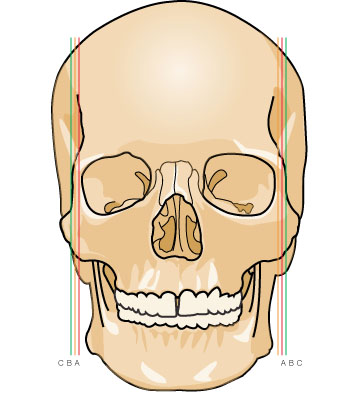
First, the "structure of the cheekbone" is made up of the following parts.
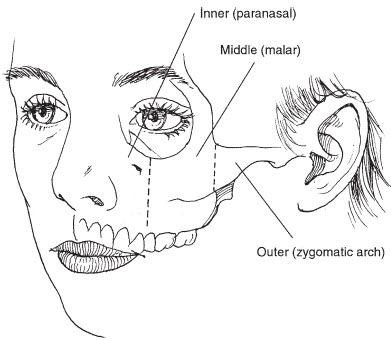
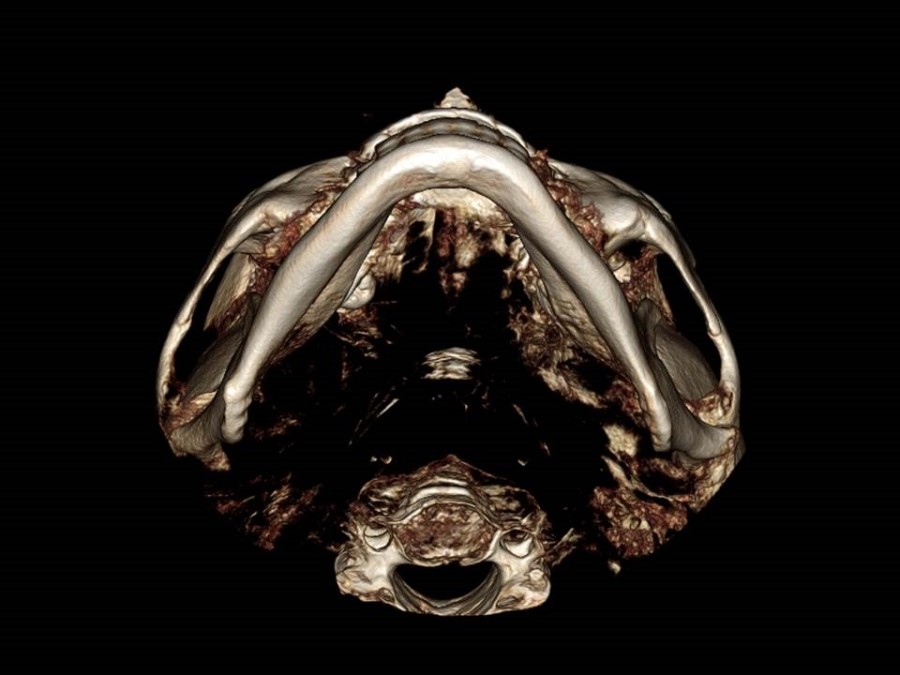
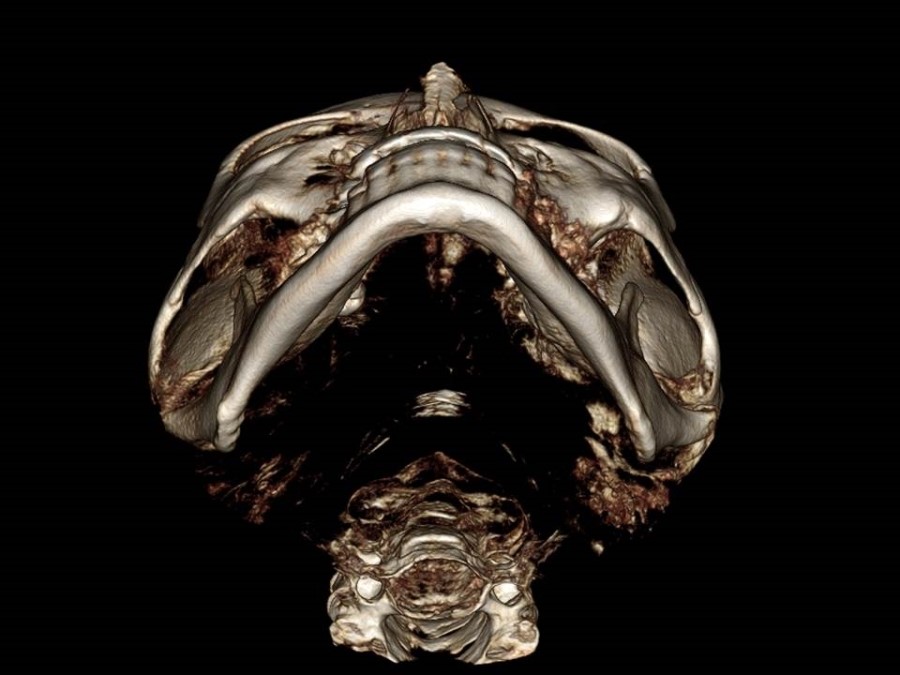
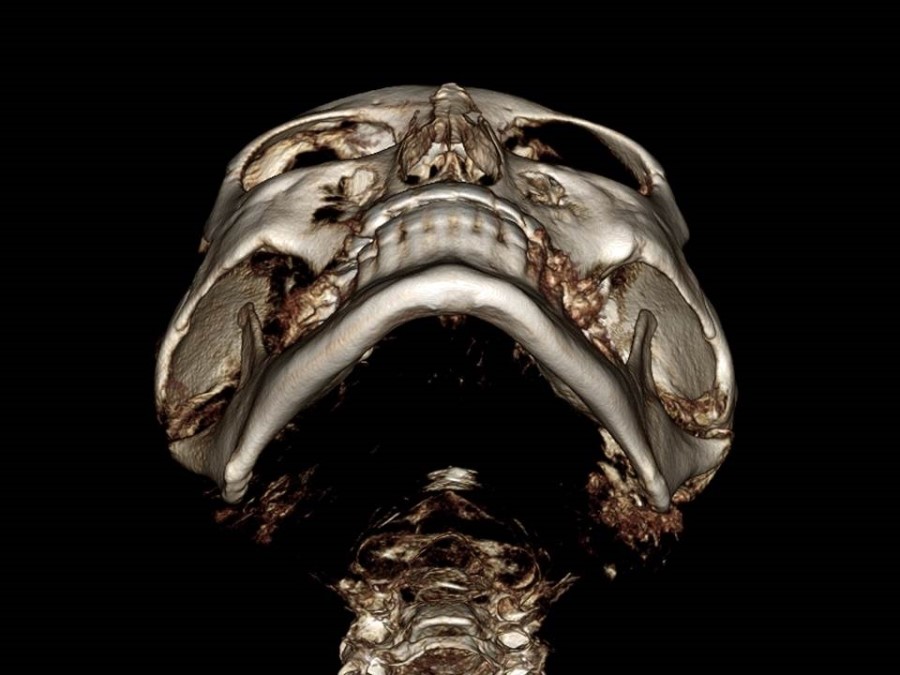
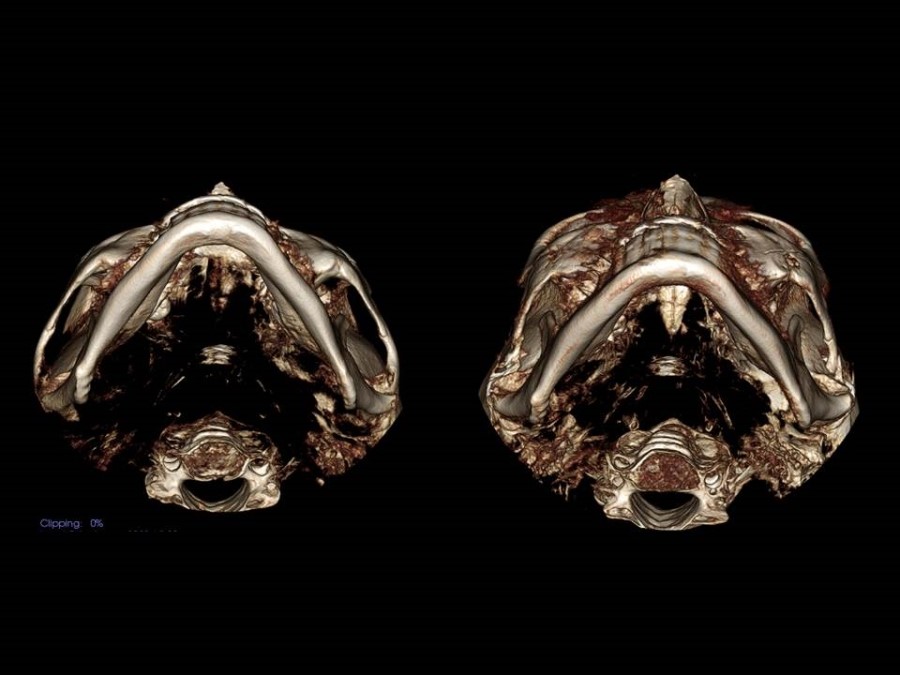
3DCT images from various angles for examining the structure of the cheekbone are as follows.
It may be difficult to understand each part, but it may help to think of it as viewing the face from various angles.
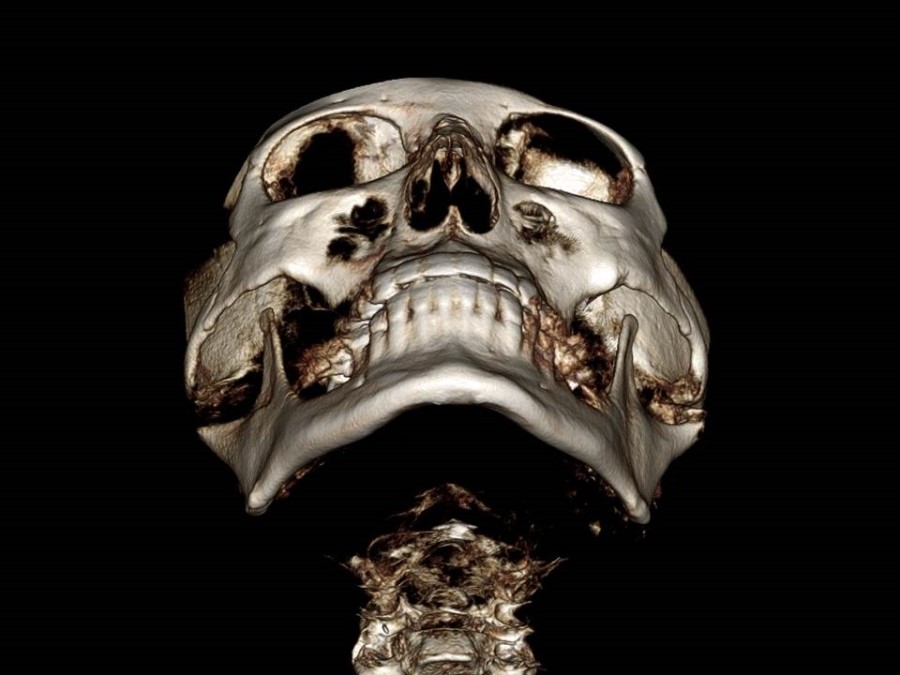
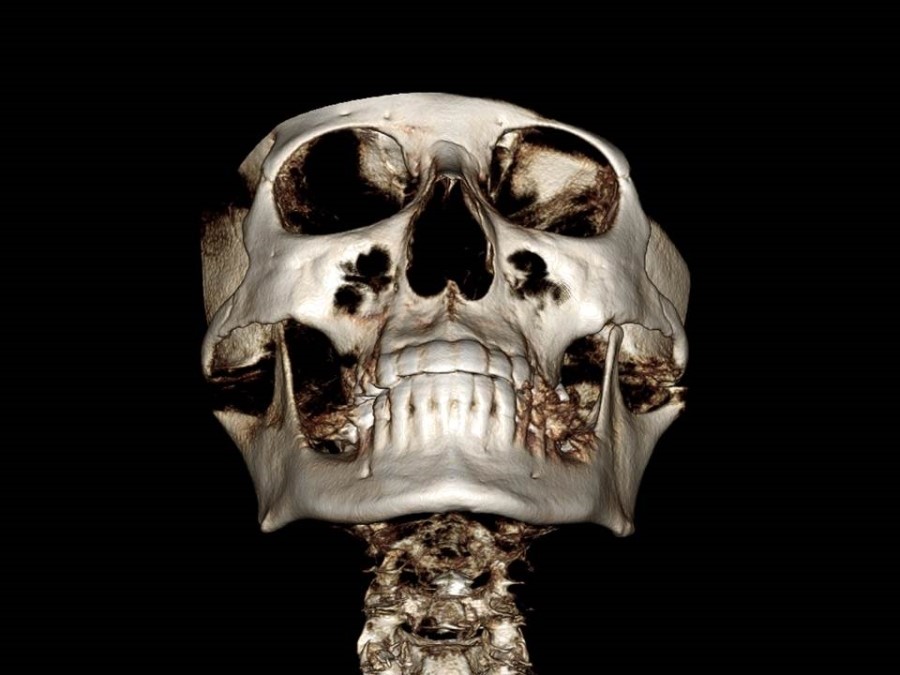
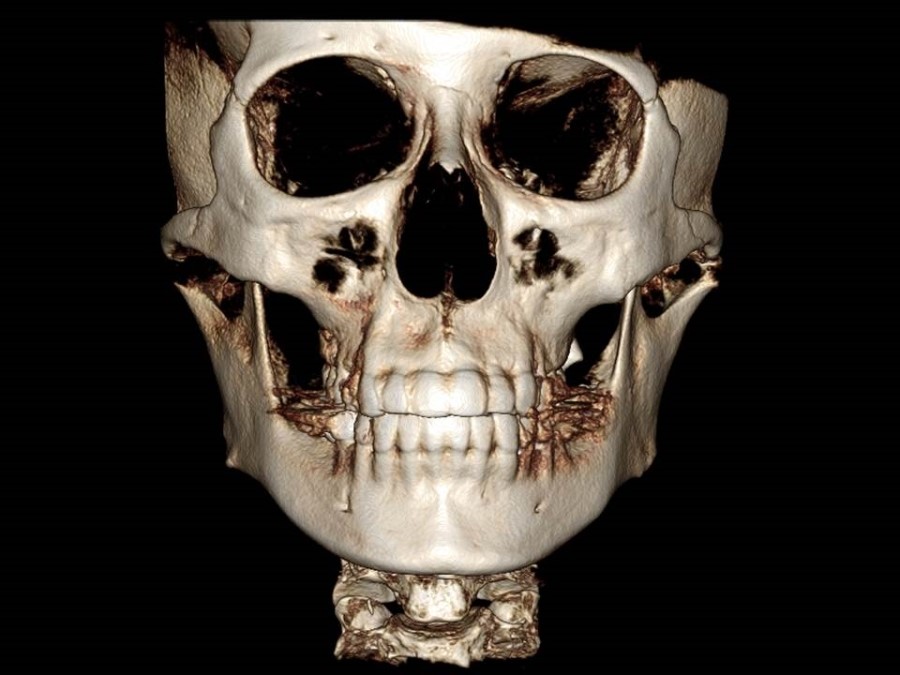
Generally, I think the main reasons for considering cheekbone reduction surgery are the following:
-
When the face looks wide from the front – for the purpose of reducing the width of the face
-
When the cheekbone below the eye area projects strongly forward, and a softer appearance is desired
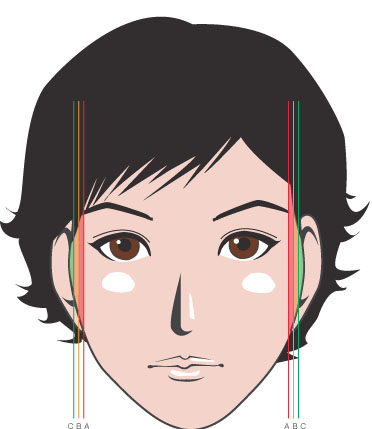
Cheekbone reduction surgery to achieve the two purposes above
should involve establishing a surgical plan in the appropriate direction depending on the face shape, and
in the postoperative appearance of the cheekbones as well, I think the most important point is to ensure that the original "continuity inherent to the cheekbone" can be maintained.
Recently, when looking at the sharply increased number of cases of "revision cheekbone surgery,"
I feel very sorry that, although this is a surgery with a very clean postoperative course and very high satisfaction when performed carefully based on principle,
there are too many cases where people are led by various clickbait-style promotions promising simple, quick surgery at a low cost and end up in an irreversible state, later regretting it.
I have already posted several times about the various cases and problems related to quick cheekbone surgery and non-fixation cheekbone surgery, so please refer to those posts if you are interested. (Blog address)
Returning to the main point, in order to meet these objectives, regarding what direction surgery should be performed in,
it is necessary to think by "correlating the externally visible facial contour with the anatomical structure of the cheekbone."
1. The most important area that determines the width of the face in the frontal view is the arch area of the cheekbone, and the cheekbone arch has a structure that spreads out like a bow, becoming wider toward the back.
Bringing this cheekbone arch inward is the most important part of reducing facial width.
2. To soften cases where the cheekbone below the eye area protrudes strongly forward and sideways,
it is necessary to use a method that reduces as much as possible the body portion of the overdeveloped cheekbone.
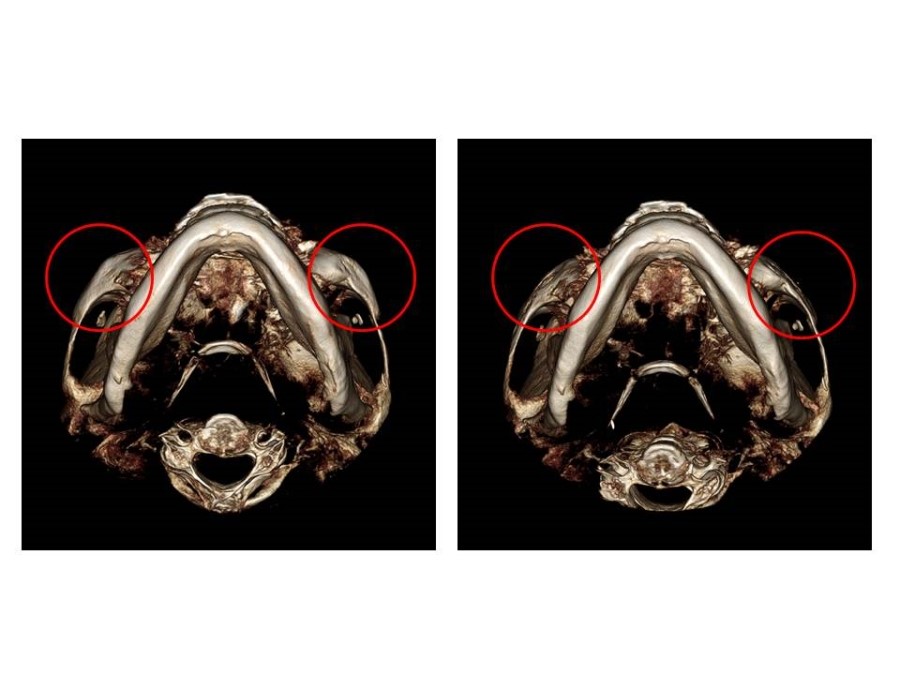
The pre- and postoperative 3DCT images above are the preoperative and 2-week postoperative CT scans of a patient who came to me to reduce the uneven contour of the cheekbone area and the bulging area of the front cheekbone after quick cheekbone surgery. By cutting only through the inside of the mouth, the volume of the front cheekbone area was reduced by 6 mm on each side. (Measurement taken directly on CT)
If I explain my surgical method, it is as follows.
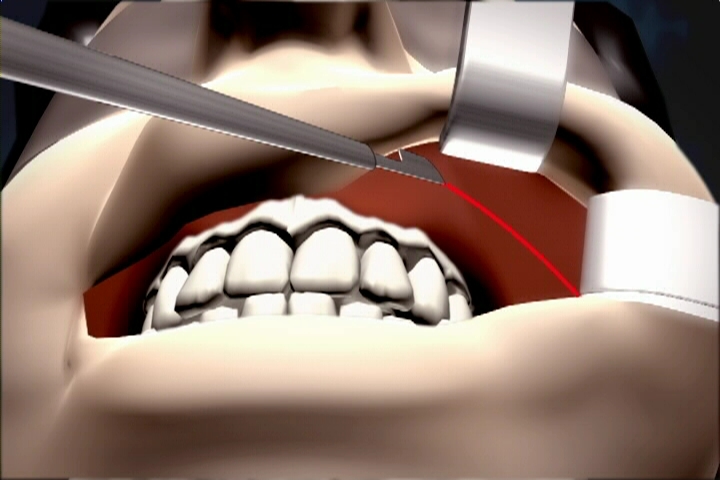
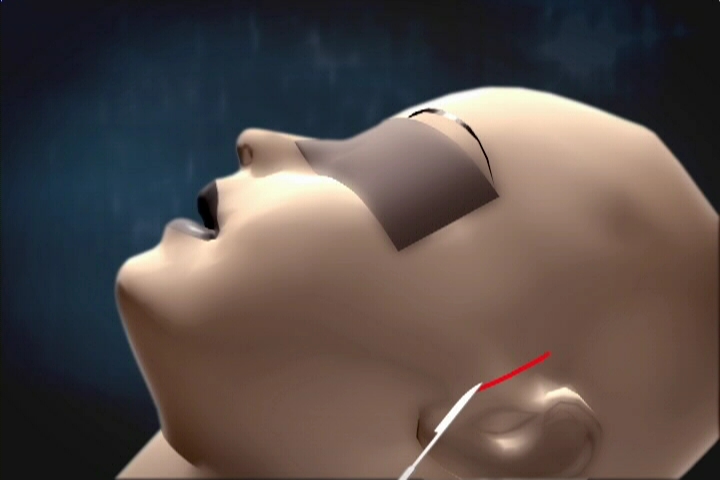
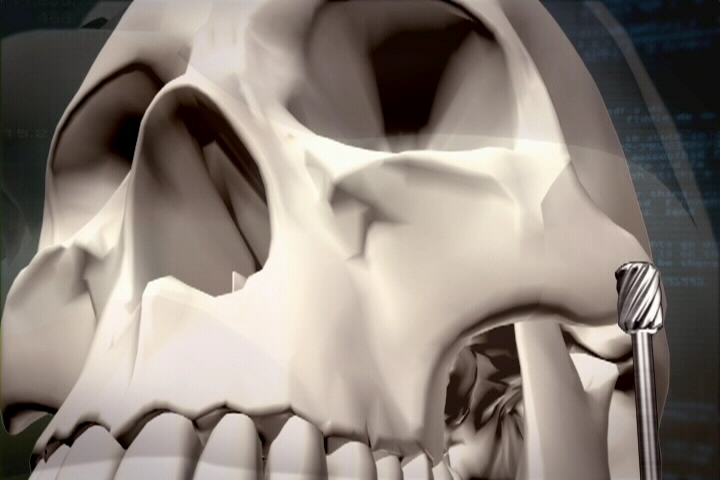
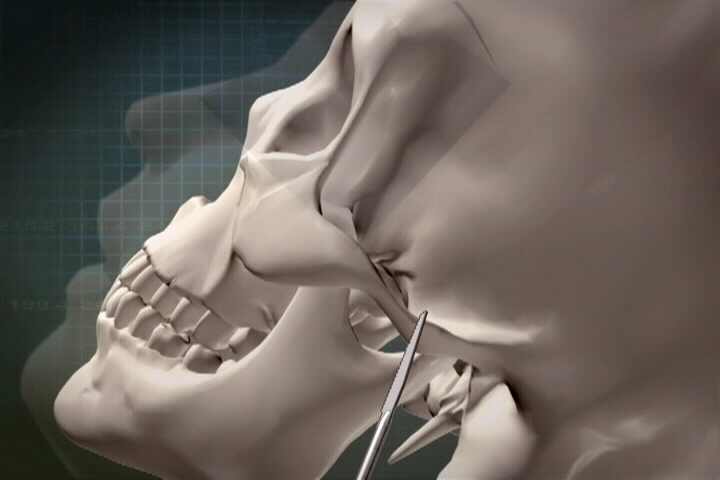
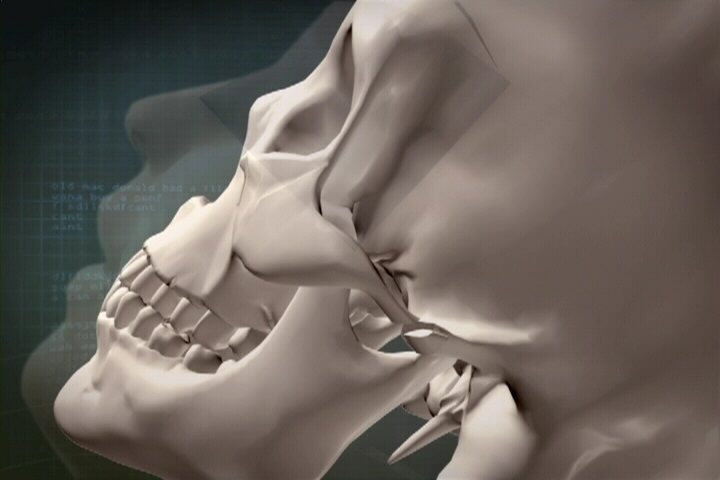
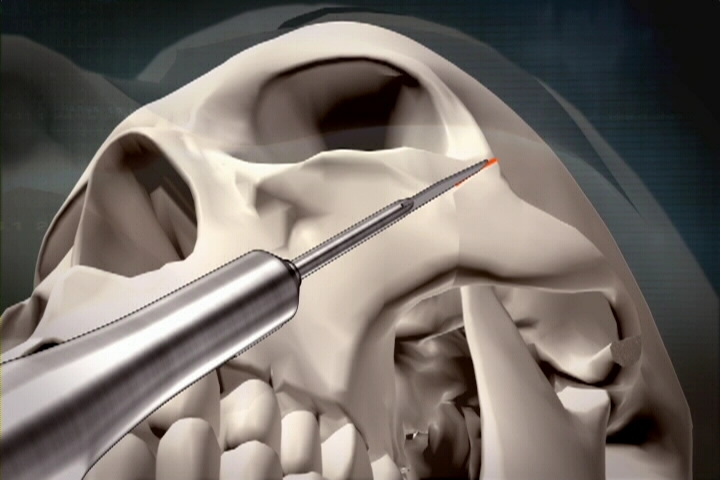
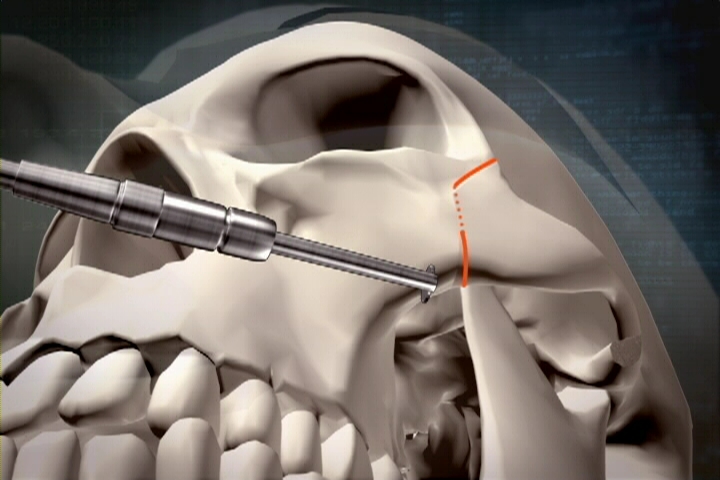
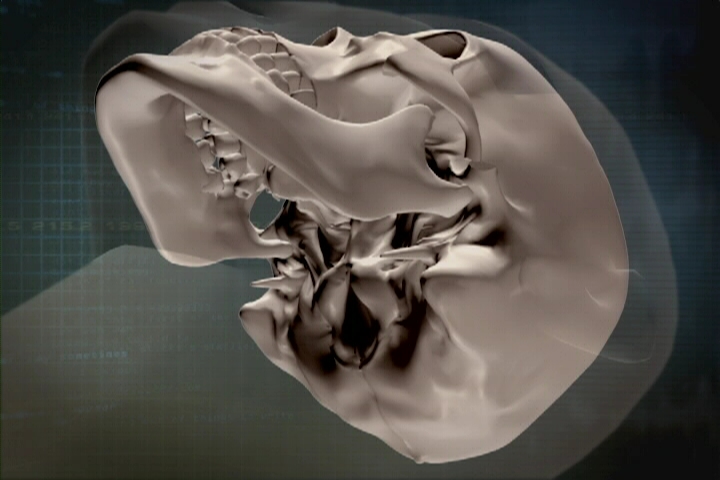
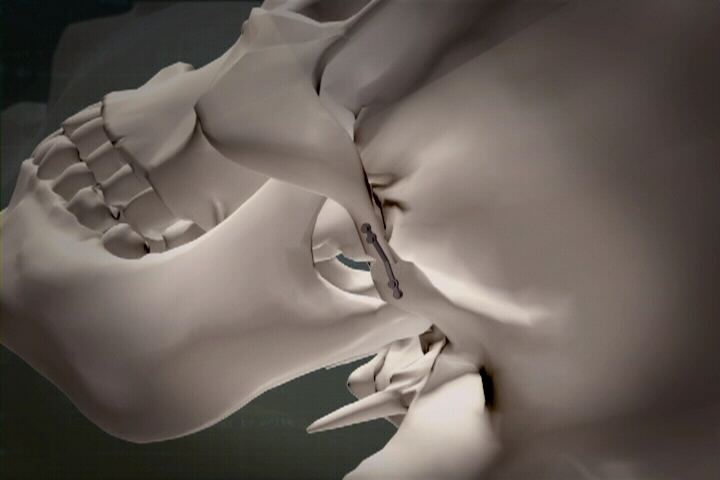
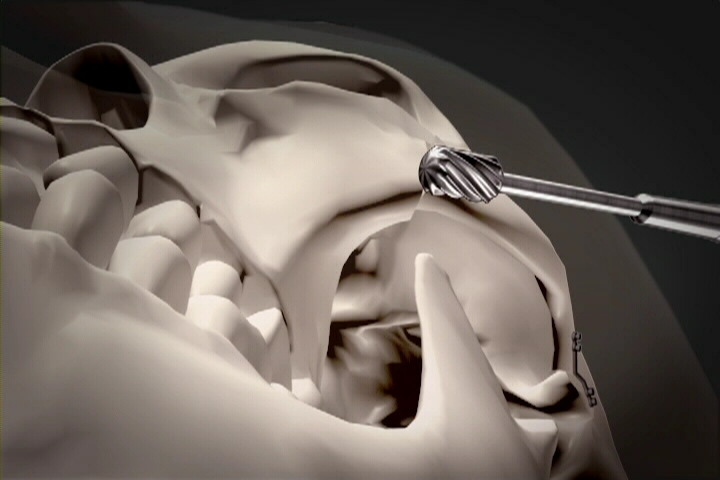
As I have gone through various changes in surgical methods for cheekbone reduction surgery,
there are several reasons why I ultimately chose my current surgical method.
In the past, 12 years ago from now,
there was a method in which the front part of the cheekbone was cut away — of course, when cutting it away, more was removed from the inner side than the outer side. A plastic surgeon presented this method about 10 years ago, and it had already been described in an older paper. Everyone is performing surgery in such a way), and surgery was performed by osteotomy behind the cheekbone arch and fixing the front and back.
Even until 4 years ago, depending on the case (when the body portion of the cheekbone was very large, and for the reason of making the operation simpler and shortening the surgery time), I used a technique in which both the front and back of the cheekbone were osteotomized and fixed at two points. (Schematic from a conference presentation 8 years ago)
However, there are two major reasons why I have recently been avoiding such methods.
First, when the front part of the cheekbone is completely osteotomized, "cheek sagging inevitably occurs and does not improve over time" — even if the cut bone is fixed as high as possible during surgery, I empirically concluded that the soft tissue covering the bone sags downward. (Blog post)
Second, the "continuity" of the cheekbone connecting the front and back becomes disrupted, so an uneven contour may appear. (Blog post)
Third, the area that becomes the high light of the central face, which I consider the most important, may sink and end up creating an irreversible "flat face" — if the starting portion of the cheekbone is removed and the spread contour of the cheekbone arch is not greatly reduced, a "pyramid-type deformity" can occur. (Blog post)
The method of cutting and fixing both the front and back of the cheekbone shortens surgery time by about 30 minutes compared with my partial osteotomy and arch fixation method, and although it is a much simpler procedure,
due to the three major reasons above and various reasons that can arise over more than a year,
I no longer use it much because the quality of the surgery is reduced.
In conclusion, cheekbone reduction surgery changes the shape of the cheekbone, which determines the contour of the central face,
so my view is that the surgery should be performed in a direction that can achieve the best results while preserving the original form of the cheekbone to some extent.
Below are cases in which, for various situations, people came to me for revision surgery after cheekbone reduction surgery performed with different methods.