When determining facial contour, the shape and position of the chin play an important role.
In general, a chin positioned too far back is referred to as a recessed chin.
To correct a recessed chin, the following methods can be considered, and each has its own advantages and disadvantages.
- Autologous fat grafting or filler injection
Procedure time - 10 minutes
This is a relatively simple method, but when the degree of recession is mild, some result can be expected. However, it is difficult to expect a large degree of correction.
Another drawback is that the volume decreases over time.
- Implant insertion
Procedure time – 10 to 20 minutes
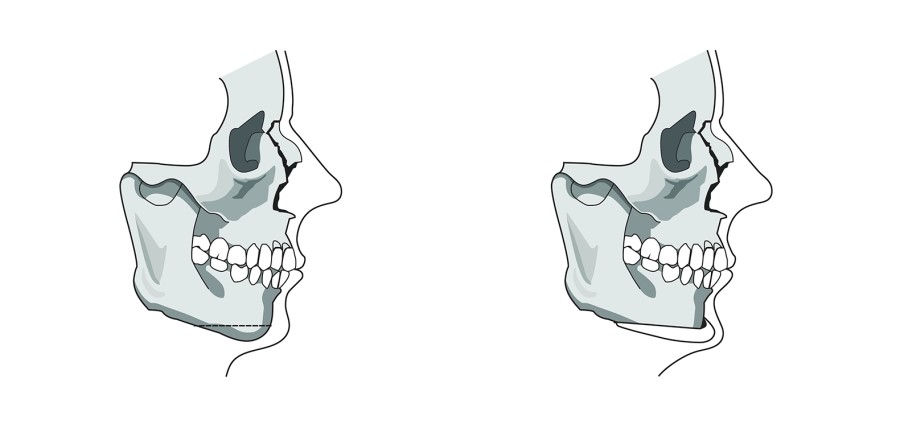
As shown in the schematic below, this is a relatively simple method in which an implant (such as silicone, Gore-Tex, or Medpor) is inserted in front of the bone in the chin area. However, if the implant is not fixed, various side effects may occur, and the frequency of side effects may differ depending on the type of implant.
- Chin advancement surgery
Procedure time – 30 minutes
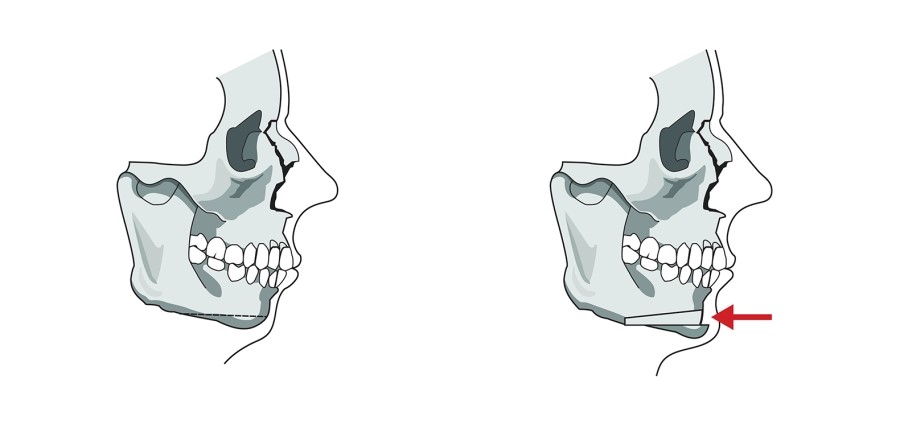
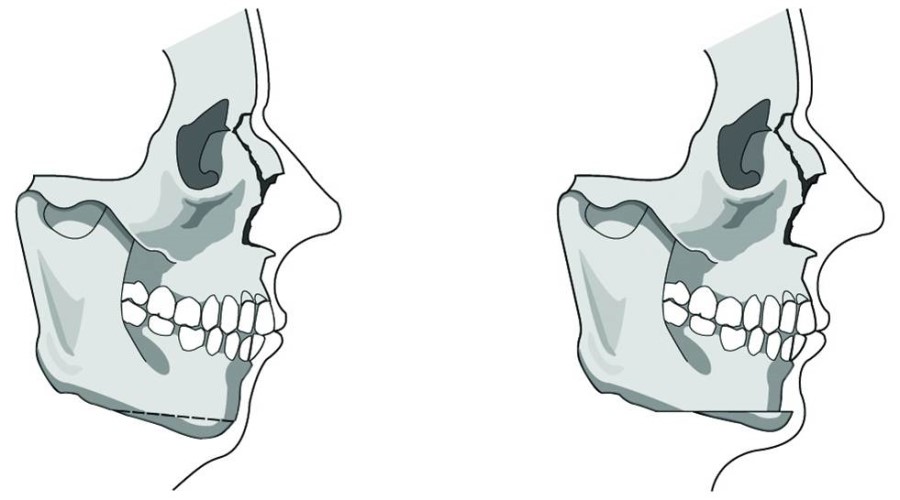
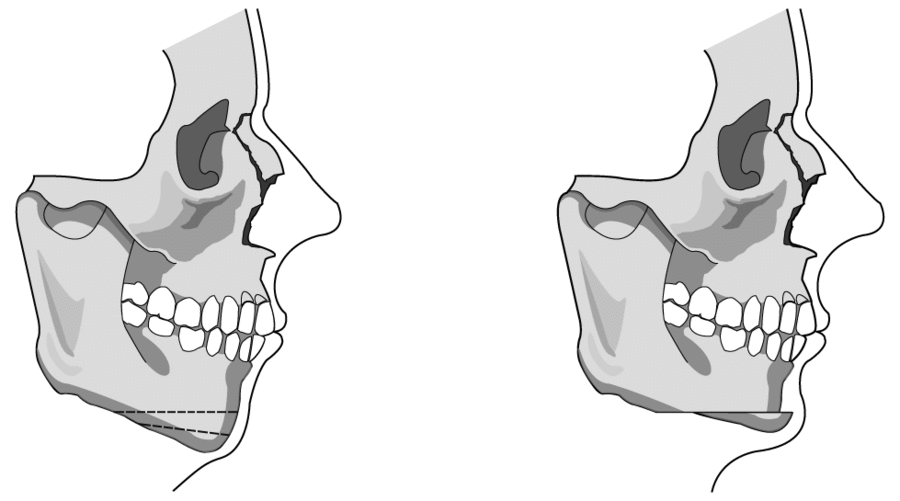
As shown in the schematic below, this method cuts the patient’s own chin bone and moves it forward. In addition to changing the position of the chin bone, I think it is the most ideal method because it can also improve the double chin appearance.
Among the various methods above, there are several points to keep in mind when performing surgery that inserts an implant.
First, over time, the implant may erode part of the bone it contacts.
Therefore, if you examine the condition of the bone after a certain period following surgery, you may find that the bone has become somewhat sunken, as shown on the CT images below.
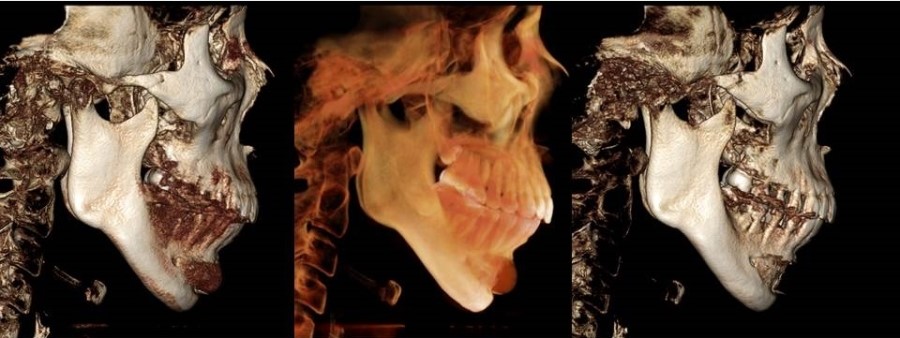
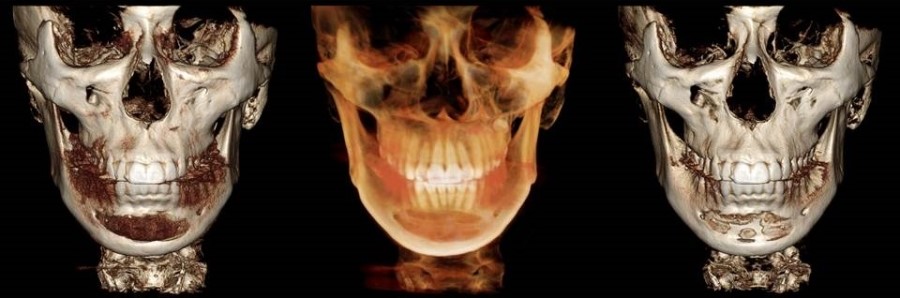
In the CT images above, the red area above the chin is the implant, and you can see in the CT image on the right that the bone has been eroded by the implant.
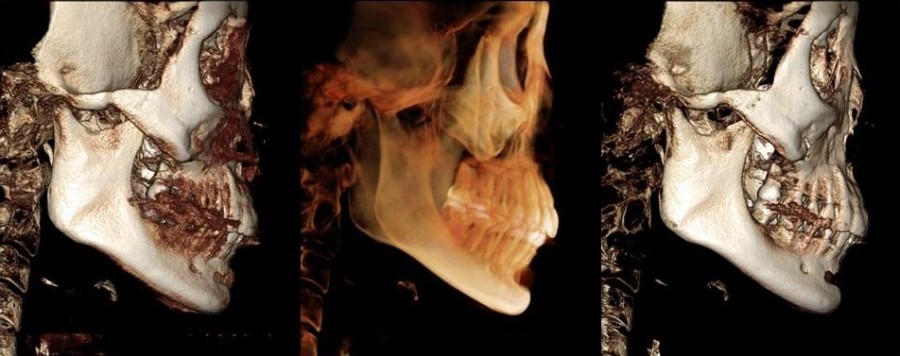
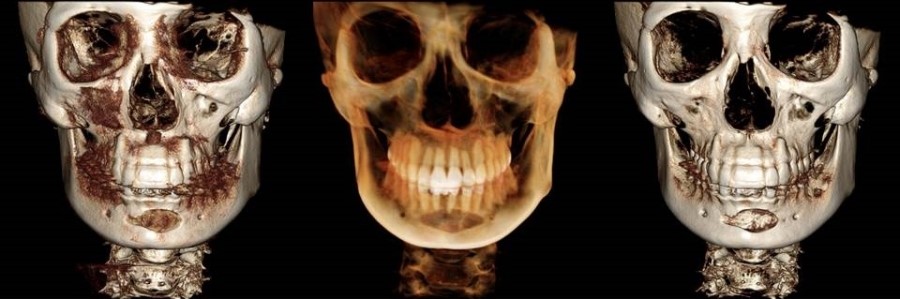
If a non-fixed implant shifts upward significantly, it may also damage the roots of the lower front teeth.
Second, if the implant is not firmly fixed, it may often be pushed upward or become displaced due to the action of the surrounding muscles.
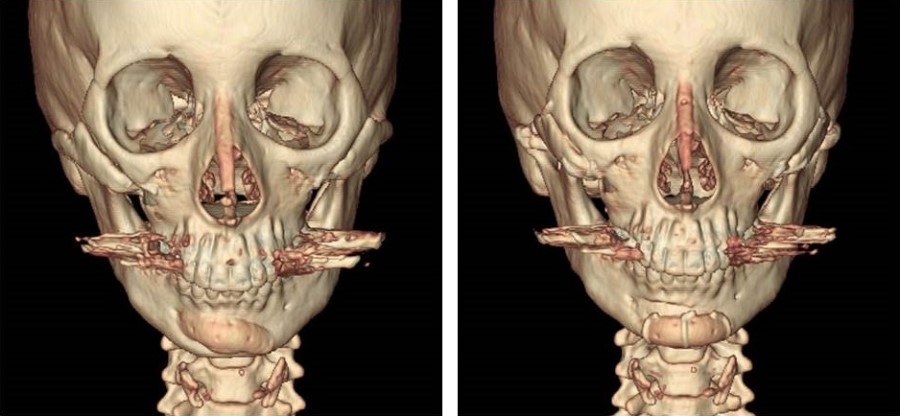
The CT images above show the preoperative and postoperative scans of a case in which the implant had shifted, so the implant was fixed to the chin bone using wire.
After surgery, you can see that the bone has been somewhat shaved away above the fixed implant.
Therefore, when inserting an implant, it is safer to secure it so that it does not shift upward or become displaced from the correct position.
In conclusion, the most ideal method for recessed chin surgery is, in my view, surgery that advances the patient’s own chin bone forward, and the changes before and after surgery can produce the following results.