Among the surgeries that change facial contouring, one of the most commonly performed procedures is square jaw surgery, which changes the contour of the lower jaw (the jawline).
When considering square jaw surgery, as with zygomatic reduction surgery, the appropriate surgical method should be chosen according to which part of the lower jaw is prominent.
The mandible, which forms the contour of the lower jaw,
consists of the angular part, the body, and the chin (mental part).
Of course, if only the angular part (the gonial angle) spreads outward and stands out prominently, square jaw surgery is the easiest and simplest, and
it can be a case with a very high level of postoperative satisfaction.
However, for most cases in which people are considering square jaw surgery, better results in the frontal view can be expected only when the body and chin are carefully refined more thoroughly than the angular part (the jaw angle near the ear).
The case below is one that can explain this view of mine more objectively, so I am posting it.
Recently, the younger sister of someone for whom I performed facial contouring surgery came to consult me about revision square jaw surgery one year after undergoing what is commonly called the three facial contour procedures (square jaw and chin T-osteotomy, zygomatic reduction) at another plastic surgery clinic.
They were biological sisters, and I think their facial contours before surgery were quite similar.
Below are the preoperative and postoperative 3D CT scans of the older sister whom I operated on.
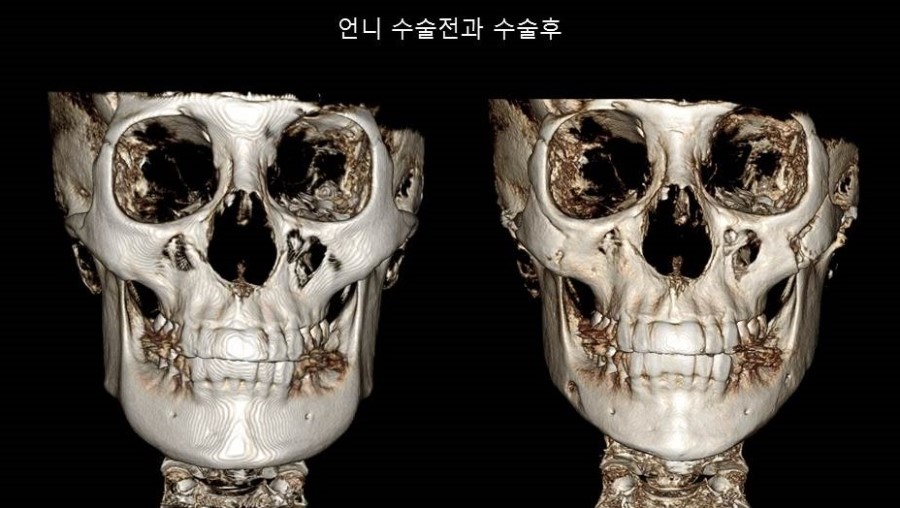
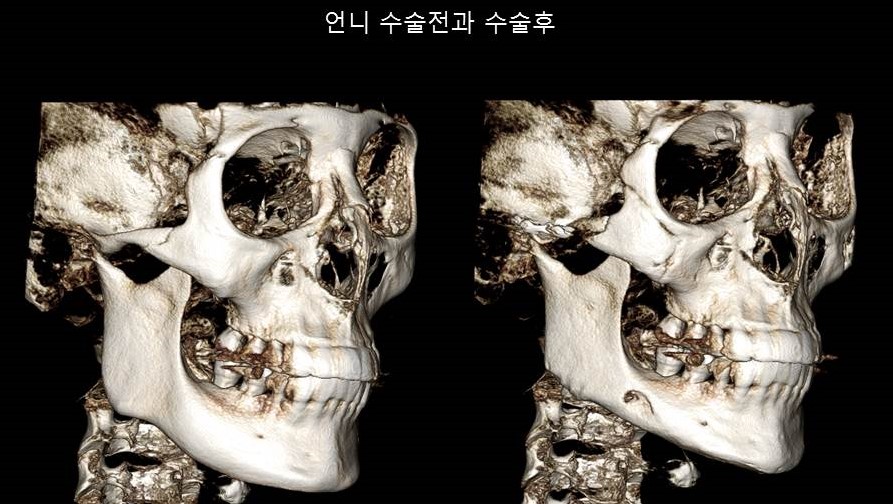
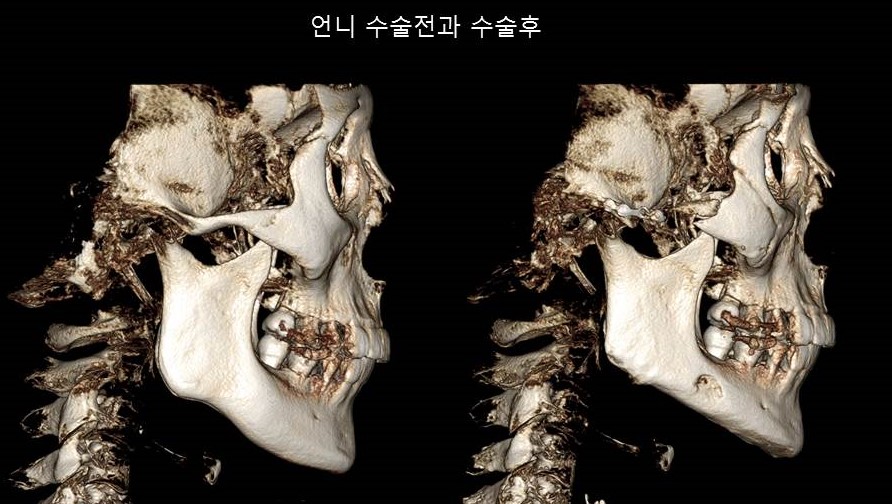
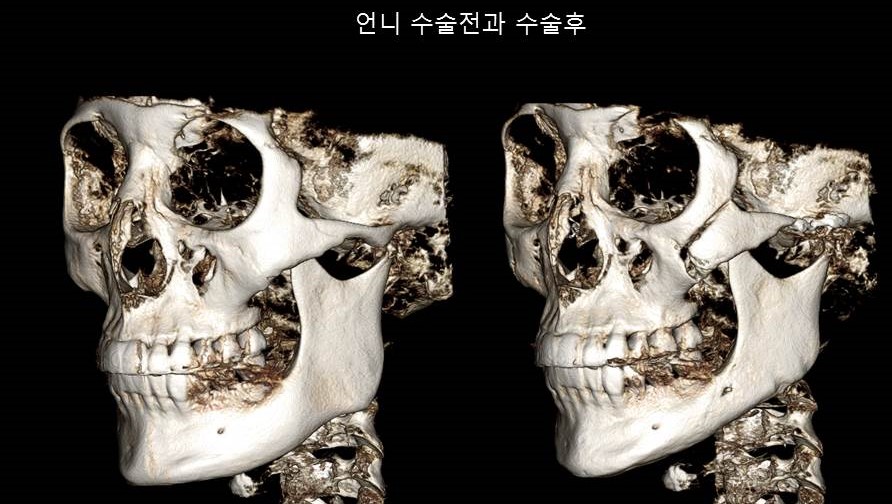
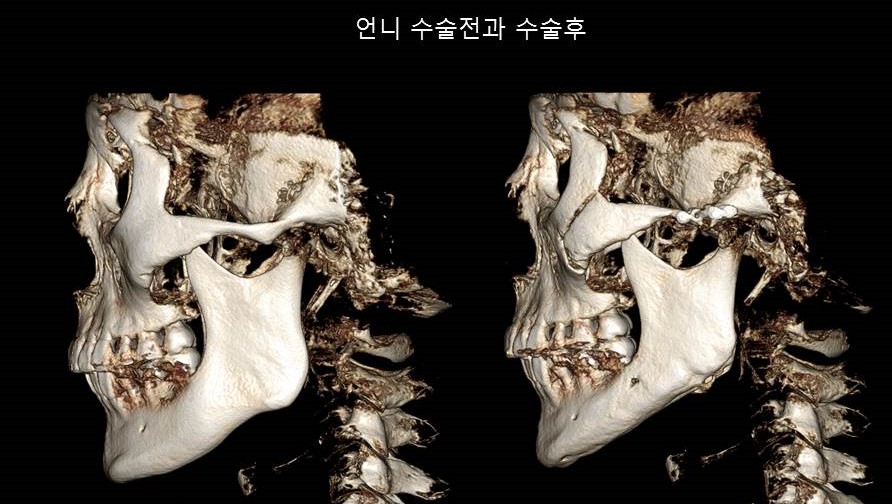
Below are comparison CT scans of the person I operated on after surgery and her biological younger sister, who had surgery at another plastic surgery clinic and came to me for revision consultation.
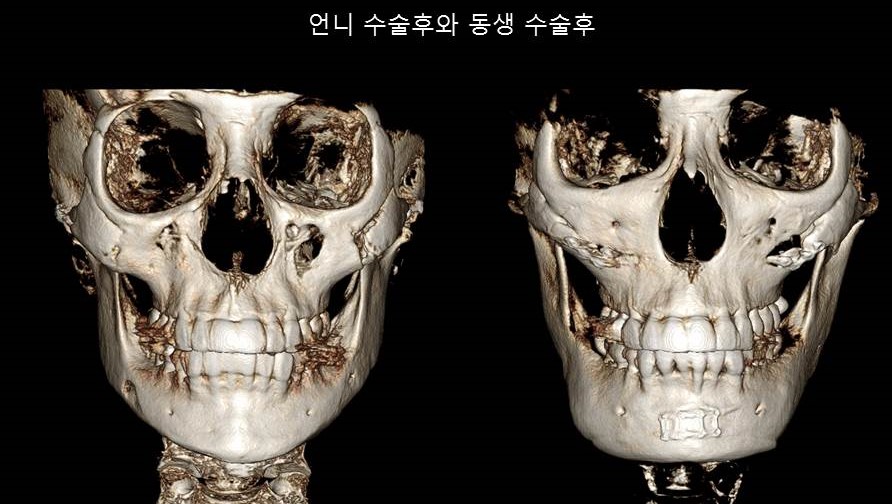
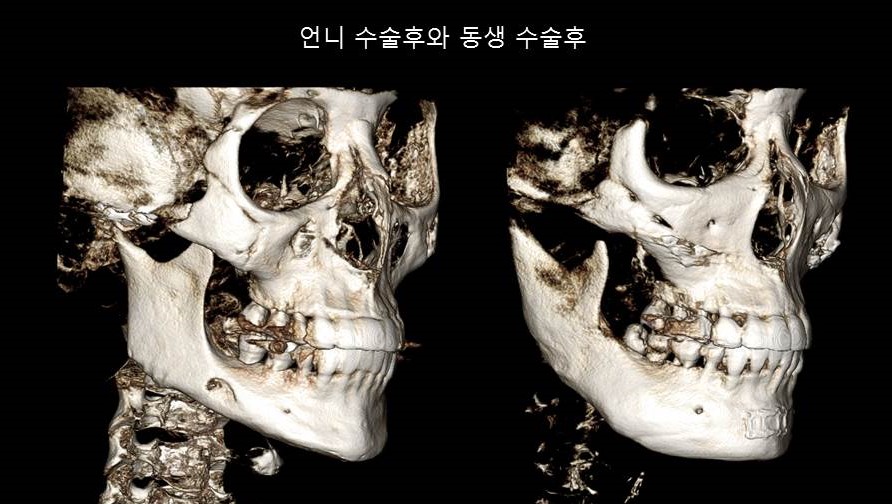
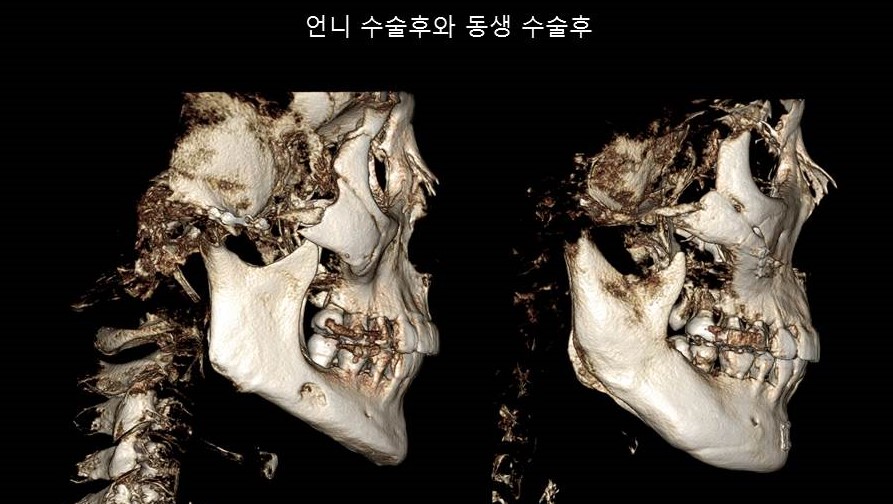
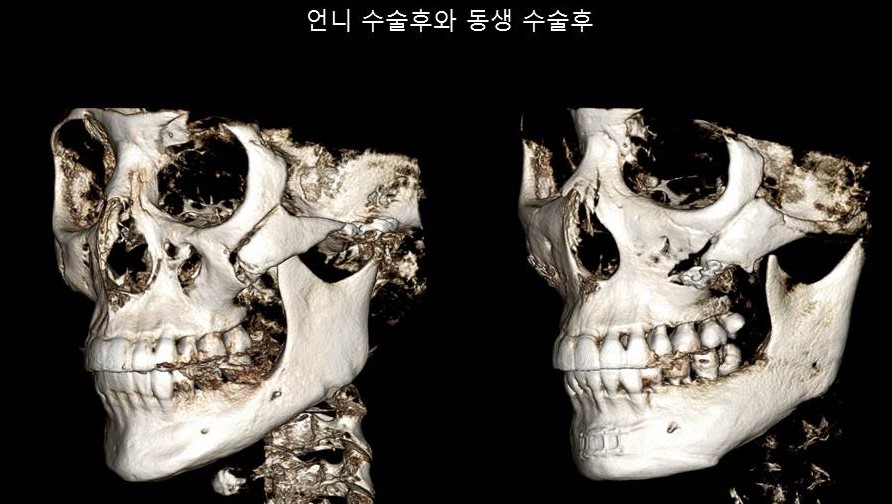
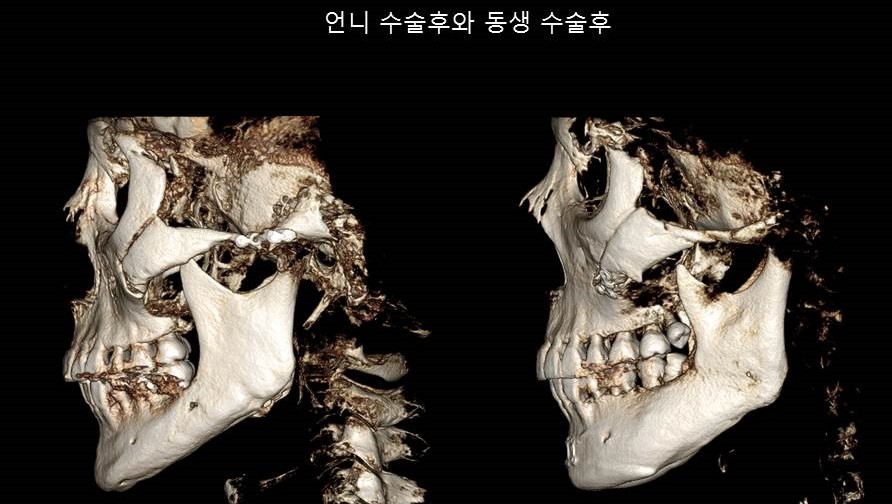
The points suggested by the CT scans above are as follows.
In square jaw surgery, which part should the cortical bone reduction be performed on,
how the contour of the body and the area around the gingival nerve should be refined in square jaw surgery,
and, when considering chin contouring surgery, whether a standardized T-osteotomy is truly appropriate.
If square jaw surgery is performed in the wrong direction, the lower part near the lips may become heavier-looking, creating a gloomy appearance in the face.