Zygoma reduction surgery aims to reduce the width of the face when the middle part of the face appears somewhat prominent, while also softly improving the contour of the front cheekbone that protrudes below the eyes.
In the past, there were places that marketed themselves with the slogan “non-fixation Quick Zygoma,” while more recently, it seems that the idea that “double fixation” is necessary for safety and strength during zygoma reduction surgery has been widely promoted.
I think that the promotional strategies of various plastic surgery clinics have played a major role in creating these perceptions and trends.
So then, in order to create the most stable condition in cheekbone surgery,
and for the most effective results,
I would like to explain what method is appropriate.
For an understanding of the method and fixation in zygoma reduction surgery, I will first explain my own surgical methods,
and then it would be better to explain, through 3D CT analysis, the postoperative bone appearance in cases operated on using various other methods.
Depending on the type of cheekbone, I use the following two surgical methods,
and when only the front cheekbone is prominent, I perform surgery by making an incision inside the mouth and shaving down the prominent body of the cheekbone.
-
When the body of the cheekbone is developed (in the figure below, the area marked with a blue circle is the body of the cheekbone)
-
When the zygomatic arch is widened (in the figure below, the area marked with a red circle is the zygomatic arch)
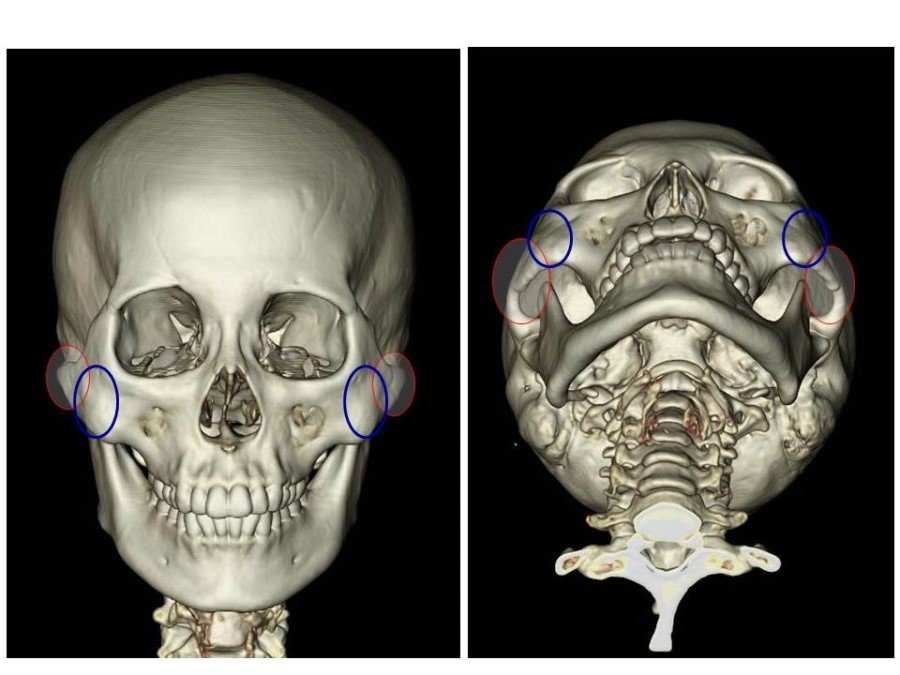
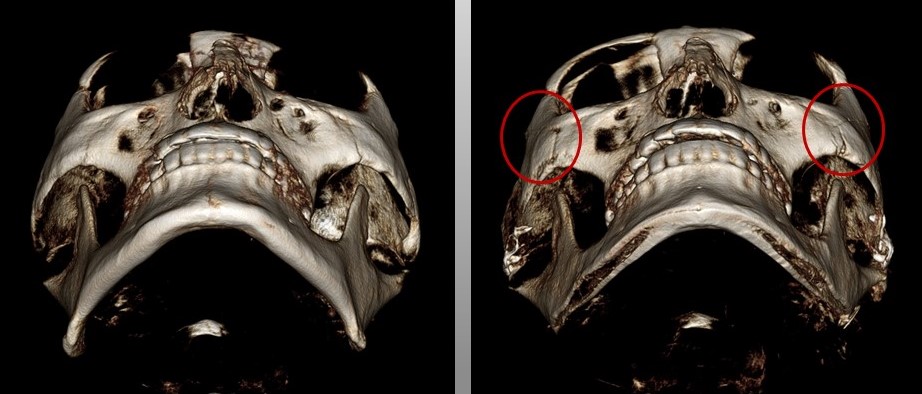
The different shapes of the cheekbone, viewed from an angle looking up at the face, are as follows.
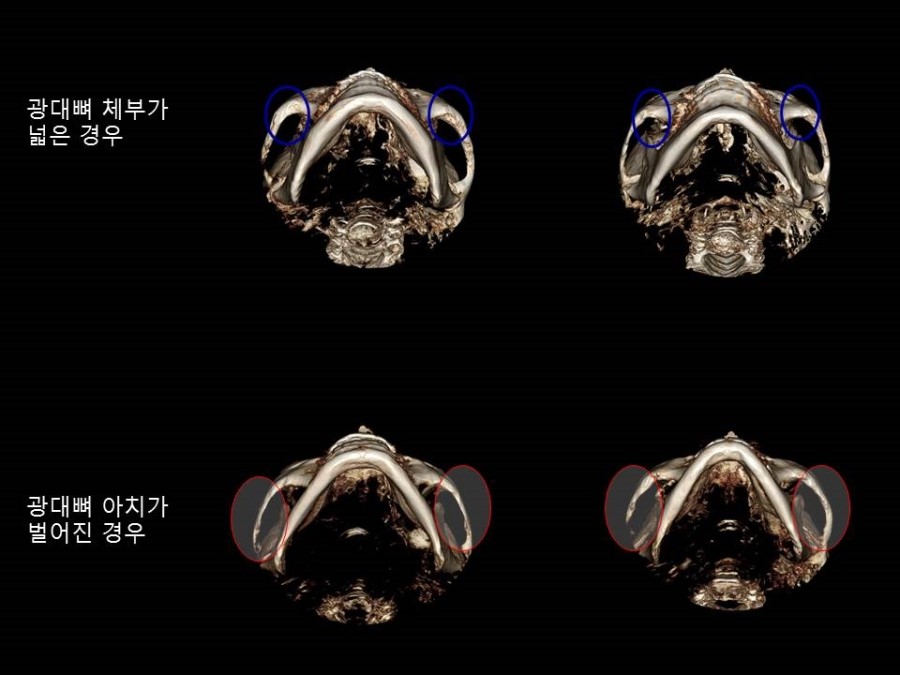
As can be seen in the CT images above,
in the upper two cases, where the body of the cheekbone is developed,
I think it is appropriate to operate by completely osteotomizing and fixing both the body of the cheekbone and the posterior part of the zygomatic arch.
In the lower two cases, where the body of the cheekbone is not prominent but the zygomatic arch is widely spread backward,
I think it is appropriate to perform surgery by making a partial osteotomy of the cheekbone body, completely osteotomizing the posterior part of the zygomatic arch, and then bringing the widened zygomatic arch inward.
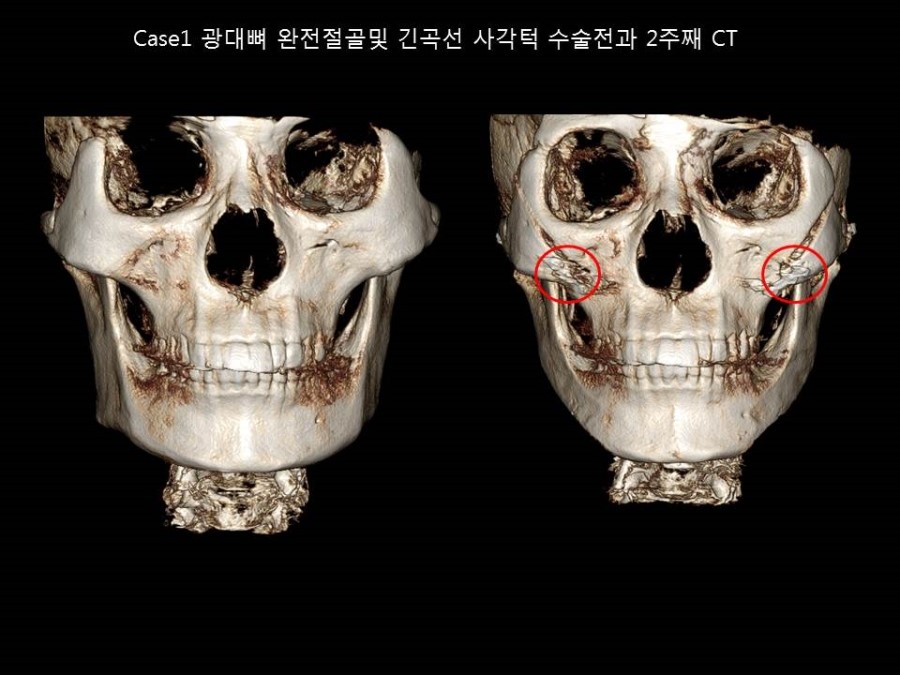
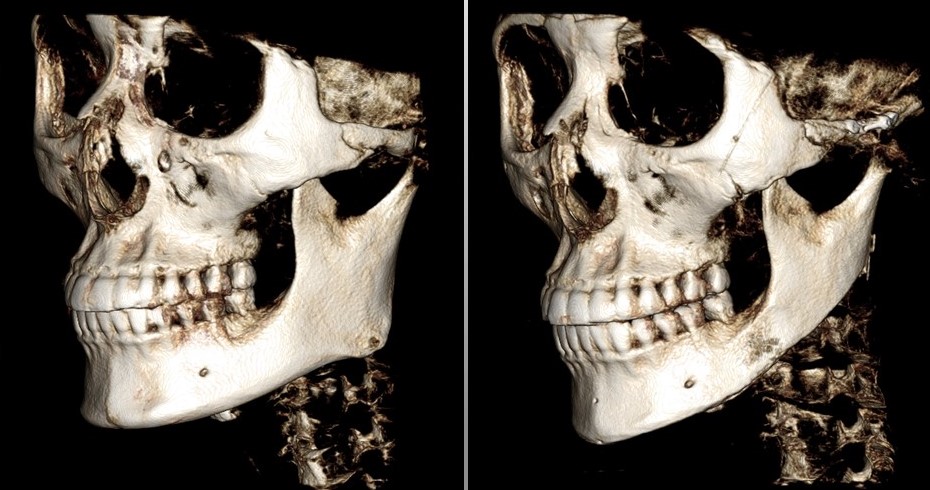
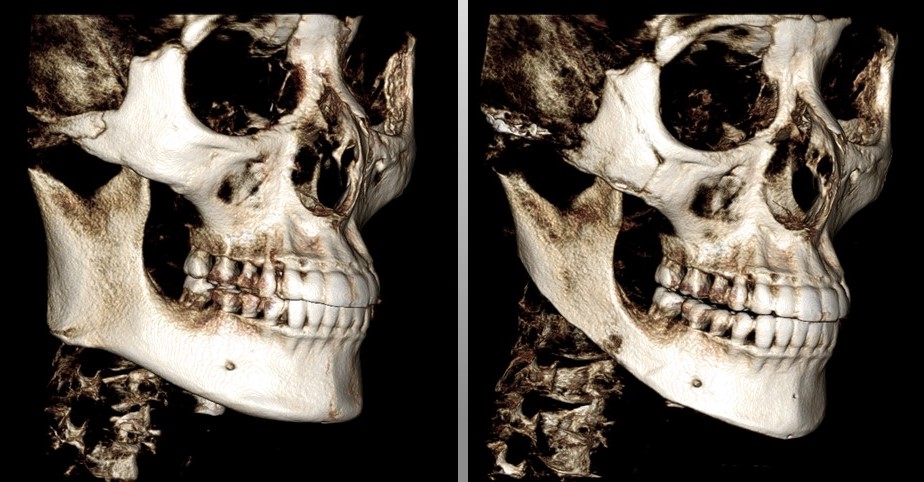
Below is a case in which the body of the cheekbone was developed, and both the body and the posterior part of the cheekbone arch were completely osteotomized and fixed (double fixation).
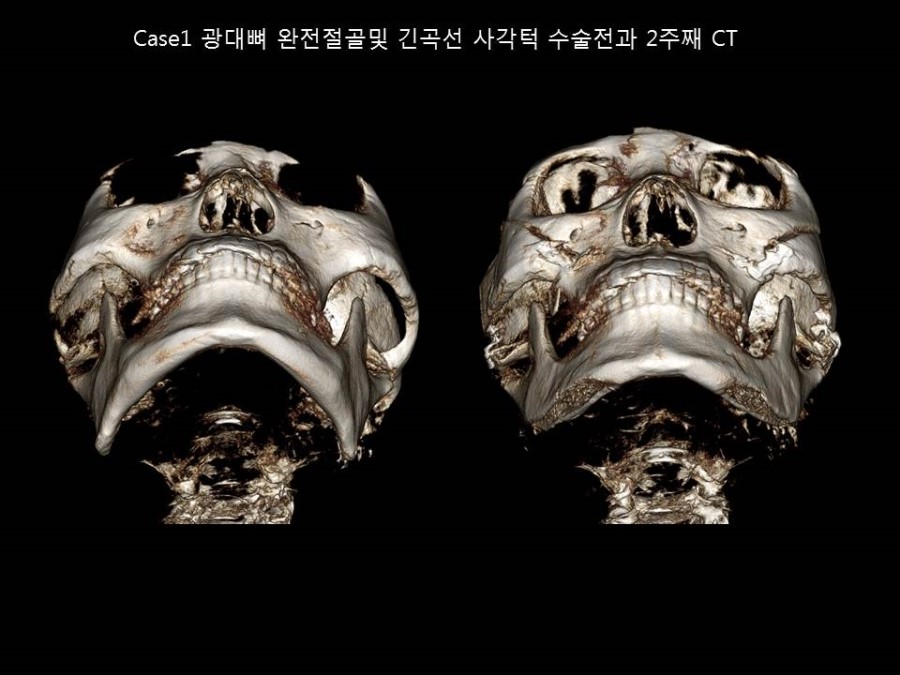
Next is a case that was operated on using an appropriate method when the zygomatic arch was widened: the body was partially osteotomized, the posterior part of the arch was completely osteotomized, and fixation was performed only at the most posterior part of the arch.
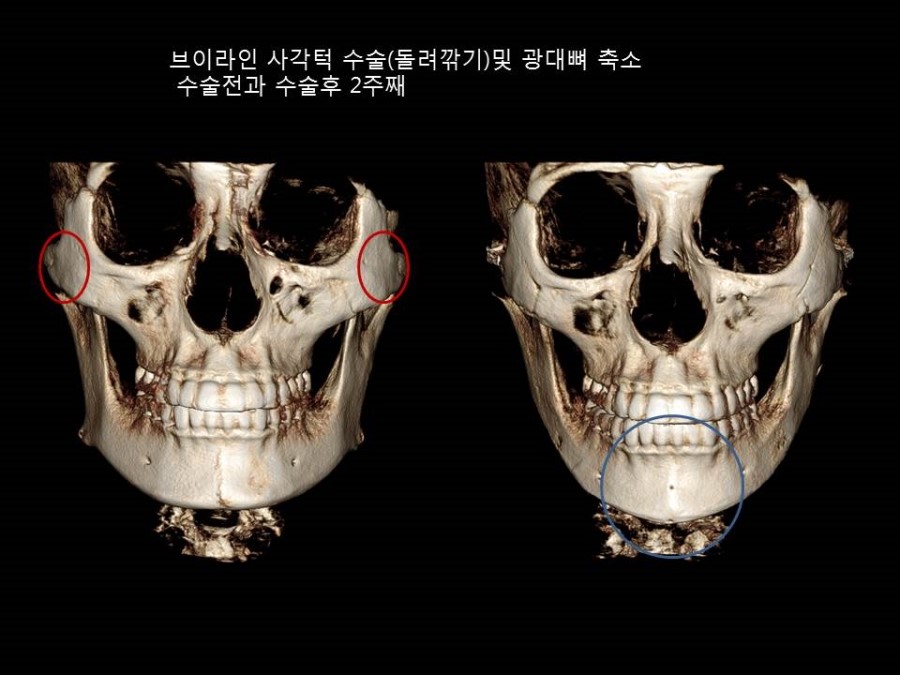
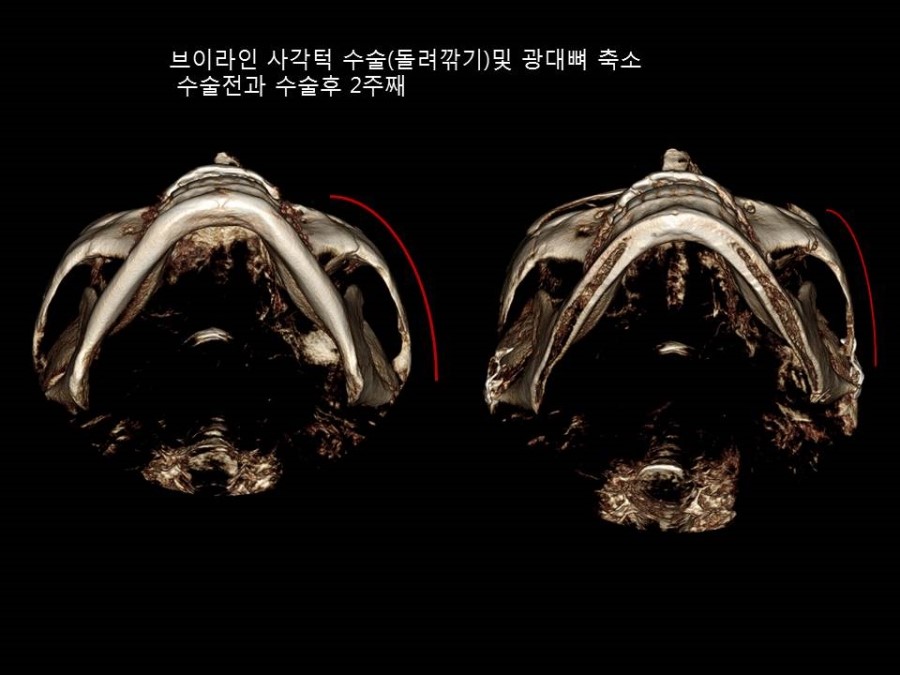
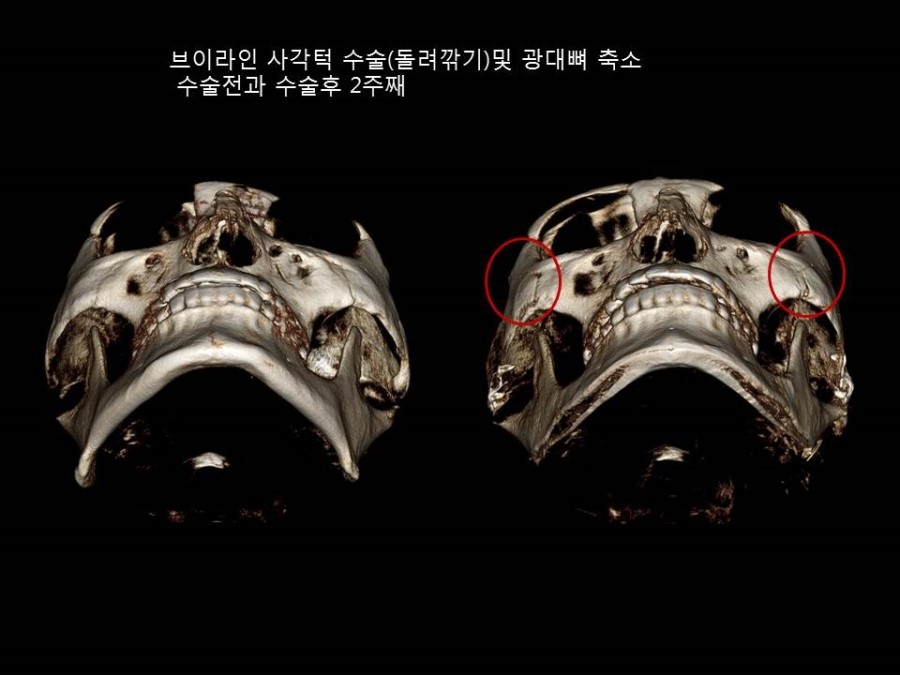
Depending on the facial shape before surgery, and depending on which area is the focus of reduction, it may be appropriate to choose the proper surgical method. However, in terms of postoperative bone safety and completeness, the method of partial osteotomy of the body and complete osteotomy of the arch, with fixation only of the posterior part of the arch, can be said to be far superior.
The basis supporting this is that,
when both the front and back of the cheekbone are osteotomized and double fixation is performed,
patients are instructed to be careful for at least one month in postoperative care.
However, when only the front part of the cheekbone is partially osteotomized and only the posterior part of the arch is fixed,
patients are told that after surgery they may sleep on their side as much as they want, and it is fine to open the mouth widely or chew hard foods.
To summarize once more, my surgical methods are divided into three types.
- When only the front cheekbone and the 45-degree cheekbone area are prominent - shaving through an incision inside the mouth only
- When the front cheekbone and side cheekbone are both prominent, and the front cheekbone area is wider than the side cheekbone - complete osteotomy of the front and back, then fixation of both the front and back (double fixation)
- When the front cheekbone is only somewhat prominent, but the contour of the side cheekbone is wide - partial osteotomy in front, complete osteotomy in back, then fixation only in the back
First, I will explain the zygoma reduction surgery method that I believe achieves the highest level of completeness.
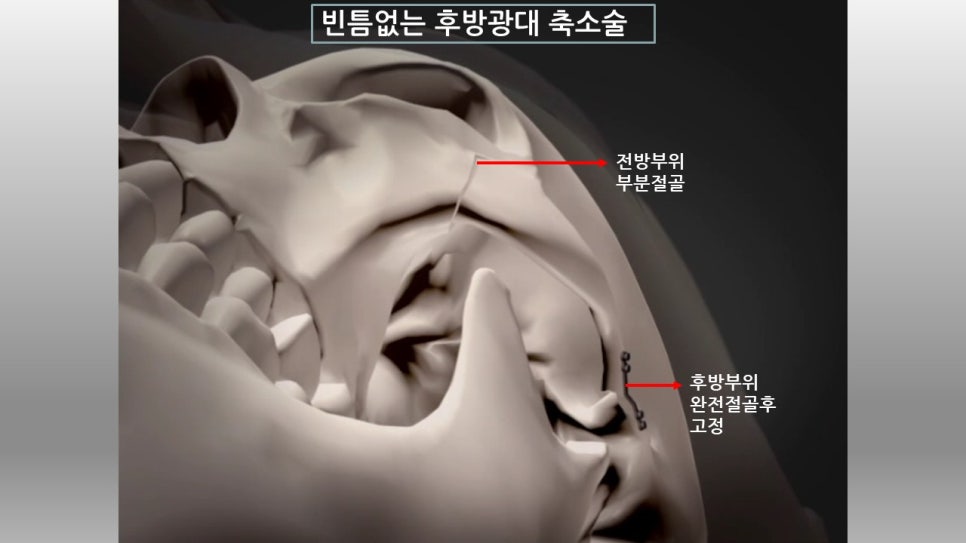
The surgery is performed through an incision inside the mouth and an incision at the sideburn area,
and after completely osteotomizing the posterior part of the zygomatic arch,
the body of the cheekbone is partially osteotomized (this process requires a very high level of skill and experience).
After bending the zygomatic arch inward (rotating it), the posterior part of the zygomatic arch is fixed.
The prominent body of the cheekbone is shaved down again.
https://youtu.be/wtQD1-xBnFM
For cases operated on using various other methods, let us check the postoperative bone appearance with 3D CT,
and consider:
-
Is fixation really necessary in cheekbone surgery?
-
In cheekbone surgery, is double fixation the best way to create the strongest condition?
-
Is fixation necessary in cheekbone surgery?
If the front and back of the cheekbone are osteotomized to narrow the width of the face or reduce the side cheekbone, fixation is essential.
However, if the protruding front cheekbone is shaved down to reduce it, fixation is not necessary.
The following is a 3D CT of patients who underwent surgery using the “non-fixation Quick Zygoma” method and later came to me considering revision surgery.
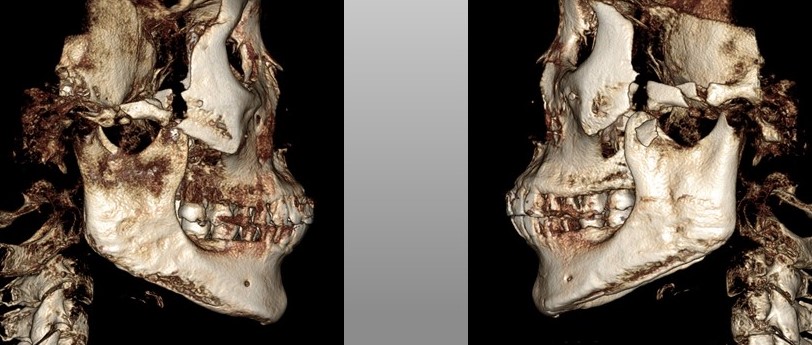
Non-fixation Quick Zygoma - You can see that the zygomatic arch area has been shattered into three or four pieces.
- In cheekbone surgery, is double fixation the best way to create the strongest condition?
When both the front and back parts of the cheekbone have been osteotomized, I believe double fixation is essential. (Of course, there are also clinics that fix only the front part and do not fix the arch area.)
However, when considering bone union, safety, and postoperative completeness, partial osteotomy of the body is clearly superior in safety and continuity.
The following are 3D CT images of patients who underwent double-fixation surgery and later came to me for revision consultation.
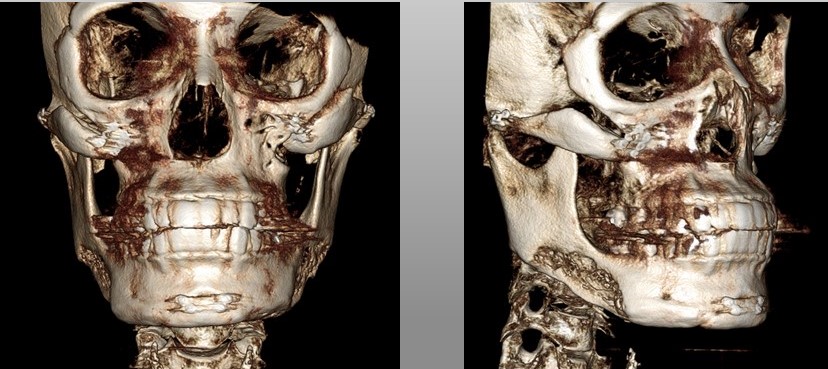
Double fixation 1 - Fixation was done both front and back, but nonunion of the front cheekbone body can be observed.
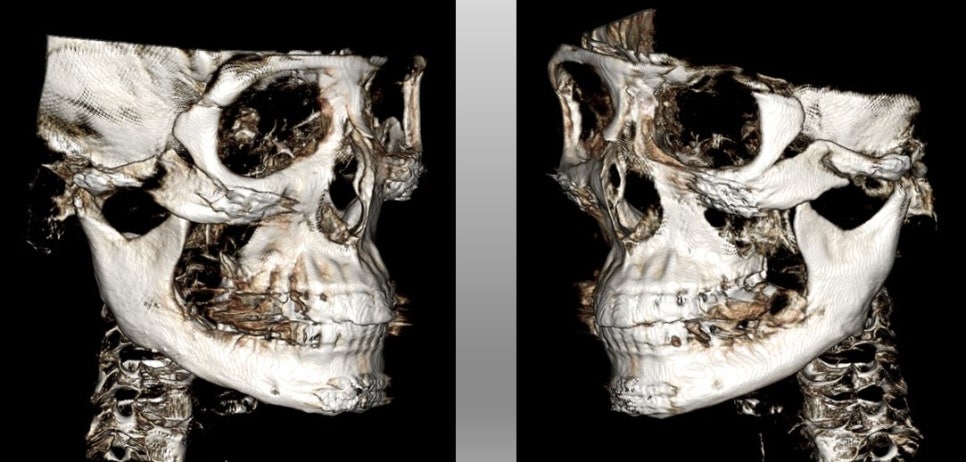
Double fixation 2 - Fixation was done both front and back, but it can be seen that the upper part of the front cheekbone osteotomy site is sunken in a V-shape.
Finally, let us check the case in which I performed partial osteotomy of the cheekbone and posterior osteotomy of the arch, and fixed only the posterior part of the cheekbone arch.
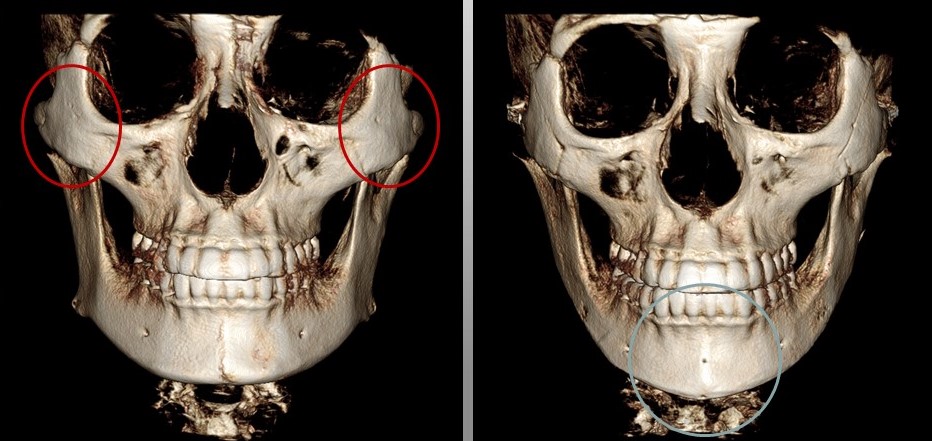
If this is difficult to understand or if the explanation is not clear, please refer to the video below for a somewhat easier explanation.
https://youtu.be/t6zi3hW2RP0
Many people ask me:
"I heard that cheekbones need double fixation to be strong~~~partial osteotomy seems a bit unstable!!!"
Then I answer like this:
"In cases of partial osteotomy, it is good to open the mouth and begin exercises to release the jaw joint as soon as possible, and there is no case where nonunion occurs because of improper postoperative care. If nonunion does occur, then it is my fault as the surgeon."