The Expansion of the Plastic Surgery Market and Changing Perceptions
Just 20 years ago, the idea of changing one’s natural appearance through surgery was considered embarrassing to reveal, so plastic surgery for improving appearance could even be seen as a kind of secret ritual.
However, as culture and social perceptions gradually changed, the concepts and approaches related to plastic surgery have also changed. These days, interest in and awareness of plastic surgery have changed significantly and become more mainstream, to the point that some people even openly promote their own surgical process.
According to The Economist, in neighboring China, the medical market related to cosmetic surgery grew at an average annual rate of 29% from 2015 to 2019, more than three times the global industry growth rate average of 9%.
It is also said that plastic surgery in China usually begins at a young age, and “61% of surgical patients last year were between 16 and 25 years old, up 13 percentage points from 48% two years earlier.”
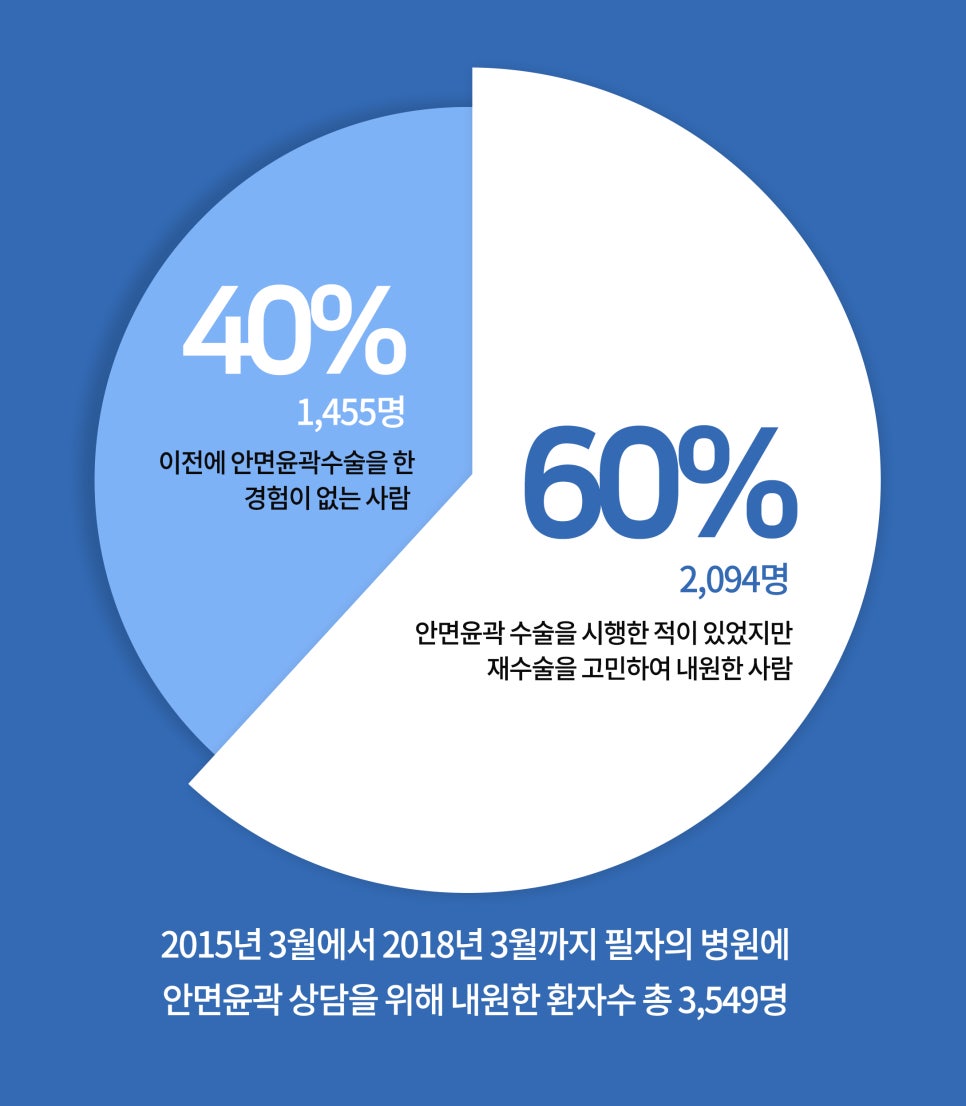
Of course, in our country, the cosmetic surgery market is already entering a mature stage compared with China, so the statistics may differ somewhat.
However, due to the gradual change in perceptions about plastic surgery, the market related to plastic surgery has expanded rapidly. The process of approaching plastic surgery has become too simple and easy, and in some cases it can create excessive expectations about somewhat exaggerated results. In some cases, it is not uncommon for people to undergo plastic surgery after making impulsive or spontaneous decisions.
This change in perception about plastic surgery, intertwined with popular culture and forming a kind of trend, has also led to a rise in the number of side effects related to overly generalized cosmetic surgery.
If you are seriously considering cosmetic surgery, the points below are things to watch out for before making a decision.
Points to Consider When Considering Cosmetic Surgery
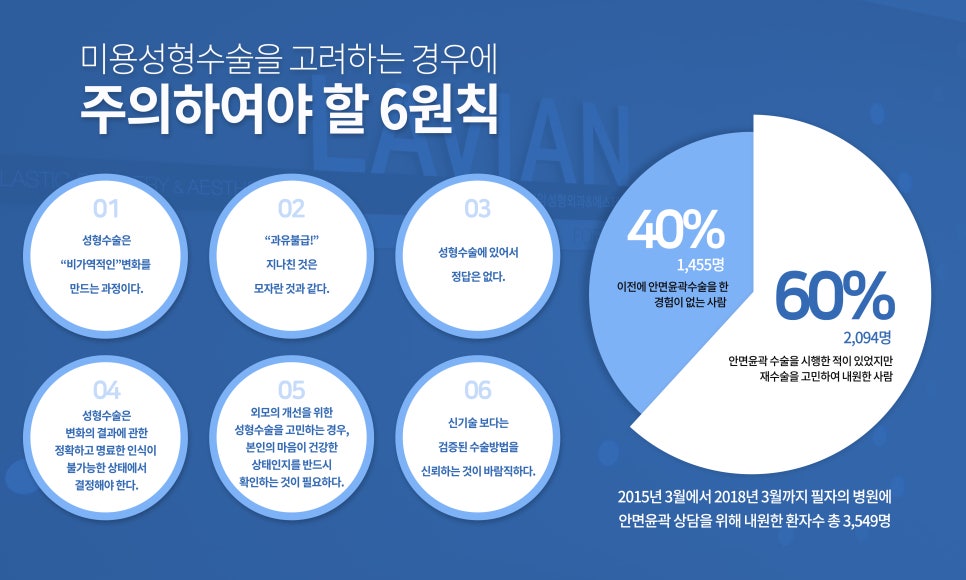
- The six principles to consider when thinking about cosmetic plastic surgery
First, plastic surgery is a process that creates an “irreversible change.”
Surgery is like crossing a river you cannot return across.
There are many ways to change your appearance or image.
Changing your hairstyle or applying makeup are reversible methods, so if you do not like them, you can return to your previous state.
However, in the case of plastic surgery, once the surgery has been performed, you must keep in mind that it is not possible to fully return to the pre-surgery state.
Second, “Too much is as bad as too little.”
One of the principles I always emphasize during consultations is precisely “too much is as bad as too little.”
Perhaps more than the literal meaning of this phrase, it is important to focus on the harm caused by excess.
The reason is that plastic surgery is inevitably a procedure that creates scars on the face or part of the body, and it is a process that causes irreversible change.
For example, in surgery to improve facial contours, if the result is somewhat insufficient, there is room to refine it further. On the other hand, if too much has been reduced, it is not easy to find one’s own tissue to make up for what is lacking, and in some cases it is almost impossible.
In surgery performed for the purpose of improving appearance, it is necessary to recognize that too much is far worse than too little.
Third, there is no single correct answer in plastic surgery.
In the medical field dealing with all diseases, there is a concept called an “indication,” which sets the standard for treatment from a medical perspective.
In the dictionary sense, an indication refers to a state in which, if treatment or surgery is performed, a clearly objective improvement in symptoms is expected.
In cases where, if left untreated due to disease, functional health problems may become serious, there is a standard that surgery must be performed properly and at the right time, even if it involves a process that leaves scars and comes with some minor partial problems. Such a standard is commonly called the “indication for surgery.”
However, in cosmetic plastic surgery for the purpose of improving appearance, the standards that form a generally accepted consensus regarding the “indication for surgery” can be very vague and subjective.
To elaborate, the standards for beauty can vary greatly from person to person, and expectations and satisfaction regarding the changes that can be achieved through surgery can also differ by individual.
Fourth, plastic surgery must be decided without a clear and precise understanding of the result of the change.
When individuals purchase a product, they sufficiently examine the form and usefulness of the finished product and then pay an appropriate price after considering how much value it has for them.
However, facial contouring plastic surgery has the special characteristic of requiring people to decide whether to spend time, pain, and financial cost with somewhat vague expectations.
Even looking back on my own experience in clinical practice, there have been cases where conflict arose due to unexpected differences in opinion.
For example, there were cases where I, as the surgeon, thought the result was good enough to be presented at an academic conference as a successful surgical case, yet it still did not meet the patient’s expectations.
On the other hand, there were also cases where, despite my own feeling that there was some room for improvement, the patient was extremely satisfied.
As experience accumulated, I came to realize that the consultation process is far more important than the technical aspects of the surgery.
Fifth, when considering plastic surgery to improve appearance, it is essential to check whether one’s mind is in a healthy state.
Among those seriously considering plastic surgery, there are rare cases in which they hope that inner pain or problems originating within themselves can be treated by improving or changing their appearance.
Of course, in most cases, they themselves are not fully aware of such inner deficiencies in an objective way.
In such cases, it may in a sense become one of the contraindications to plastic surgery.
If, in that state, a person invests time and money to make irreversible changes to the body, yet the problems stemming from inner issues do not improve, they may fall into even greater frustration.
Sixth, it is preferable to trust proven surgical methods rather than new techniques.
In many medical institutions that drive cosmetic plastic surgery, some may, for commercial differentiation, portray proven surgical methods as outdated and new surgical methods as if they are better.
Especially in the field of cosmetic plastic surgery, where there is no absolute reason to begin surgery or treatment, it is preferable to rely on proven methods.
There is no need to volunteer to be the guinea pig...
“Shut the stable door after the horse has bolted?”
If you are one of the many people considering cosmetic plastic surgery, I believe that making a careful decision while keeping the six principles above in mind can help you avoid the situation of “shutting the stable door after the horse has bolted.”
If you are considering revision surgery after having undergone cosmetic plastic surgery for various reasons, you must keep the following points in mind.
Points You Must Keep in Mind When Considering Revision Cosmetic Surgery
First, is there an objective reason and value for considering revision surgery at this time?
- Unless there are special circumstances, it is necessary to wait long enough and then decide on the timing.
When considering revision surgery, it is important to be cautious about being too hasty.
Plastic surgery, like all postoperative processes, requires a considerable amount of downtime after surgery.
Surgery is a process of artificially creating scars, and the scars that inevitably form during surgery need a certain amount of time to soften and mature.
Therefore, to achieve a reasonably stable result after plastic surgery, it is necessary to wait at least six months.
Cases in which revision surgery must be performed as quickly as possible in terms of timing are as follows:
-
When inflammation occurs in the surgical area after surgery and cannot be controlled
-
When a functional problem that occurs after surgery may worsen if the timing is delayed
As above, unless it is a case that requires urgency, the biggest reason for considering the timing of revision surgery at least six months after the previous operation is that the scar tissue formed in the soft tissues (skin, subcutaneous fat layer, muscles, etc.) that were incised and dissected during the previous surgery needs time to stabilize and soften.
Second, it is almost impossible to restore things to their original state before surgery.
The process of plastic surgery involves removing some of the body’s original tissue through procedures such as cutting the skin and soft tissues, or in some cases part of the bone, and fixing them in a new position.
Therefore, in many cases, one cannot expect to fully return to the state before the previous surgery through revision surgery.
Third, avoid the mindset that there will be no more revision surgeries and avoid unrealistic expectations about postoperative results.
Surgery inevitably involves a process of creating scars. Therefore, as the number of surgeries increases, there will be more fibrotic scar tissue, and it may become difficult to expect good results.
In Conclusion,
In cosmetic plastic surgery, the most important thing in the decision-making process is to make a careful decision.
As mentioned at the beginning, it is most important to avoid impulsive decisions due to the overly generalized nature of cosmetic plastic surgery and the various alluring advertisements that promote the idea that groundbreaking results can be achieved through new techniques in a simple and short amount of time.
“Even if you fix the stable after the cow is lost, you still can’t find the lost cow...”