It was once unimaginable to shave down the jawbone in order to change the shape of the face.
Even back when I was in medical school, shaving down the jawbone through a small opening inside the mouth was an extremely rare procedure, almost impossible to imagine.
But these days, including in Korea and across much of Asia, it has become a fairly common cosmetic surgery.
People considering jaw angle surgery do so for many different reasons. Since it is a procedure intended to improve appearance, safety must be the top priority.
[Why Jaw Angle Surgery Has Developed in Korea and Across Asia]
In fact, when speaking with Western doctors at international plastic surgery conferences, it is not uncommon for them to find the “jaw angle surgery” commonly performed in Korea and other Asian countries quite unfamiliar.
Western and Asian people differ not only in the color of their eyes, skin, and hair, but also tend to have somewhat different facial bone structures.
For example, when viewed from the front, Western facial bones tend to be relatively narrow, whereas Asian facial bones often have a shape in which the contours of the lower jaw and cheekbones spread wider to the sides.
Because of these differences, jaw angle surgery, which reduces the square, broad contour of the jawbone, has been widely performed and has become common in Korea.
Even though it is now a very common procedure, concerns and questions about satisfaction with the postoperative change and about safety still remain.
[Safety of Jaw Angle Surgery]
Having counseled and performed facial contouring surgery for more than 20 years, the most common question I receive during consultations is about “safety.”
There are not a few cases in which family members—mothers and daughters, or sisters—have undergone the same surgery at different times, and it is also fairly common for senior and junior colleagues, as well as their families, who work in the same medical field, to undergo jaw angle surgery. I believe these facts sufficiently demonstrate the safety of jaw angle surgery and the value of the procedure.
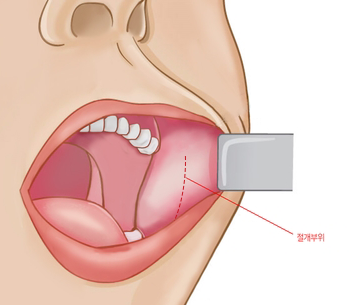
However, since jaw angle surgery is performed through the inside of the mouth, the surgeon’s experienced skill and maintaining the airway during surgery are especially important for safety.
Sculpting the jawbone in the limited field of view inside a narrow mouth, using small surgical instruments, requires extensive experience.
In particular, the surgeon must have a fundamental anatomical understanding of the course and location of blood vessels and nerves that pass around the jawbone, and because the safety of the operation is greatly affected by the surgeon’s skill in handling specialized instruments within a limited space, broad experience across different cases is necessary.
“Airway management” means safely securing the passage for breathing.
Because the inside of the mouth is connected to the airway used for breathing, safe airway management is absolutely essential to the safety of surgery performed through the mouth.
Under the close supervision of an anesthesiology specialist, it is important to safely secure and maintain the airway for breathing, then proceed with the surgery while monitoring respiration, electrocardiography, oxygen saturation, and more.
[Graceful, Natural Change from an Aesthetic Perspective]
The most difficult part when counseling people interested in jaw angle surgery is the issue of “naturalness” versus a “clear change.”
For example, people may say they want a natural contour after surgery, but in reality, their expectations for change are often unrealistically large.
Therefore, sufficient discussion and consultation must come first regarding “which areas should be reduced, and how,” in order to achieve a natural and harmonious facial contour.
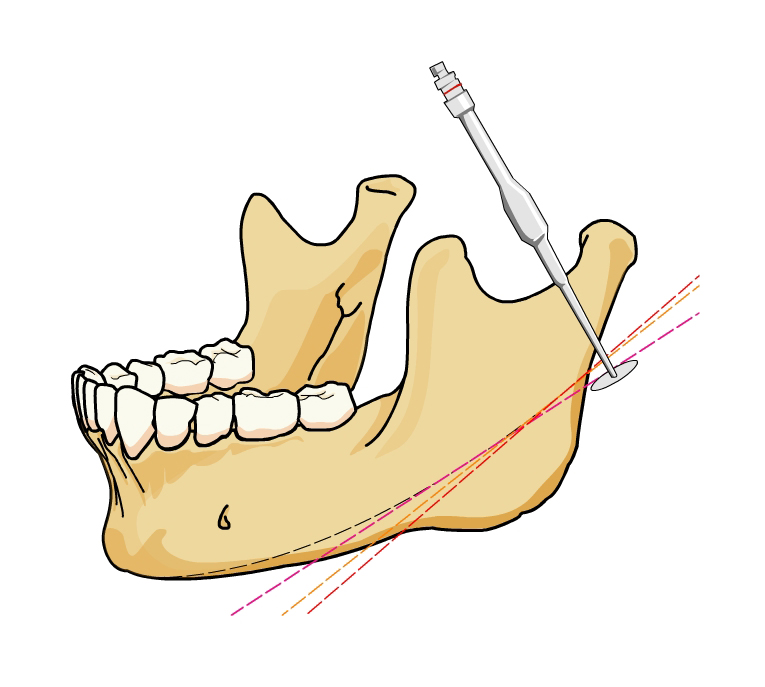
Although this may vary depending on the overall facial structure, for a natural lower-jaw contour it is important to “leave some of the angle beneath the ear,” and to “harmoniously reduce the cortical bone and length of the protruding jawbone below the so-called ‘mischief jowl’ area.”
In some cases, jaw angle surgery alone can produce enough change, but depending on the situation, refining the chin contour may be more important than jaw angle surgery.
That is because the shape of the chin—starting from the area beneath the ear angle, passing through the body of the lower jaw, and reaching the apex—determines the most important visual impression of the lower face contour.
Depending on the case, various methods may be applied to the chin area, such as moving it forward, reducing its length, gently reducing protruding areas, or narrowing a wide width.
[Postoperative Course]
The course after jaw angle surgery can vary greatly from person to person, but in general it is as follows.
Until the third day after surgery, swelling in the surgical area gradually increases, and from the fourth day onward it begins to go down. By around two weeks, the appearance can be expected to be similar to how it looked before surgery.
In fact, disappointment and anxiety among many people who undergo jaw angle surgery often begin around two weeks after the procedure.
This is because they invested a significant amount of money and time, yet even after two weeks the face still appears similar to how it looked before surgery.
However, it usually takes about 3 to 6 months after surgery for the contour of the operated area to appear changed to some degree.
Jaw angle surgery is a procedure that changes the appearance of bone located deep within the soft tissues composed of skin, fat, and muscle, so even if the bone shape changes, it takes a fair amount of downtime for the thicker soft tissues to shrink accordingly.
[How Much Effect Can Be Expected from Jaw Angle Surgery?]
It is important not to expect a “complete transformation” from jaw angle surgery.
Facial contours are not determined by bone alone.
This is because factors such as the volume of the muscles covering the bone, the proportion of the fat layer, and the thickness of the skin all contribute together to forming facial contours.
If a person has a small facial bone structure but a lot of facial fat, procedures that reduce muscle or fat may be much more effective than surgery that changes the bone structure.
There are also cases in which, two years after jaw angle surgery, the person returns for follow-up so noticeably changed that even the surgeon who performed the operation would not recognize them at first glance.
It is said that after surgery, the person lost nearly 10 kg through their own efforts.
[Where Do the Remaining Skin and Soft Tissues Go After Jaw Angle Surgery?]
Even with jaw angle surgery, many people wonder whether the skin that used to wrap around the preoperative facial bones will simply sag.
The soft tissues surrounding the facial bones are composed of muscle, fat layer, and skin.
When the size of the lower jaw is reduced through jaw angle surgery, the muscles first contract along the changed bone shape and attach in their new position.
Muscle, fat layer, and skin are connected to each other, and elastic fibers exist in the dermis.
Due to muscle contraction and the action of the skin’s elastic fibers, the facial soft tissues also shrink as swelling subsides, following the reduced bone shape.
However, if aging has begun and skin elasticity has declined, it may be necessary to consider a facelift along with surgery to reduce the facial bones.
[The Relationship Between Facial Reading and Facial Contouring]
If the facial contour changes, does destiny change too?
There was an elderly woman over seventy who came to see me wanting jaw angle surgery.
During the consultation, I discouraged contouring surgery and asked why she was insisting on jaw angle surgery at her age, over seventy.
She said that a fortune-teller had told her that all her wealth luck was gathered in the lower face, so if she reduced her lower jaw, money would leak away. So she had endured it until now. But now that she had more than enough property and no regrets, she wanted to undergo the jaw angle surgery she had long desired.
Because she wanted it so desperately, I gave in to her insistence and performed jaw angle surgery and a facelift. After that, whenever she came for follow-up over the years, I would ask out of curiosity:
“By any chance, did your fortune decrease after jaw angle surgery?”
Smiling, she would answer, “Property values went up, so I ended up having more assets.”
If I were to think about the connection between contour surgery and facial reading, I would place the emphasis on looking calm and happy to the people around you, and on increasing your own self-esteem.