Square jaw surgery, also known as jaw reduction surgery or V-line surgery, is a cosmetic procedure that aims to reshape the jawline to create a more feminine or V-shaped appearance. This surgery involves removing a portion of the jawbone to achieve a slimmer and more defined jawline.
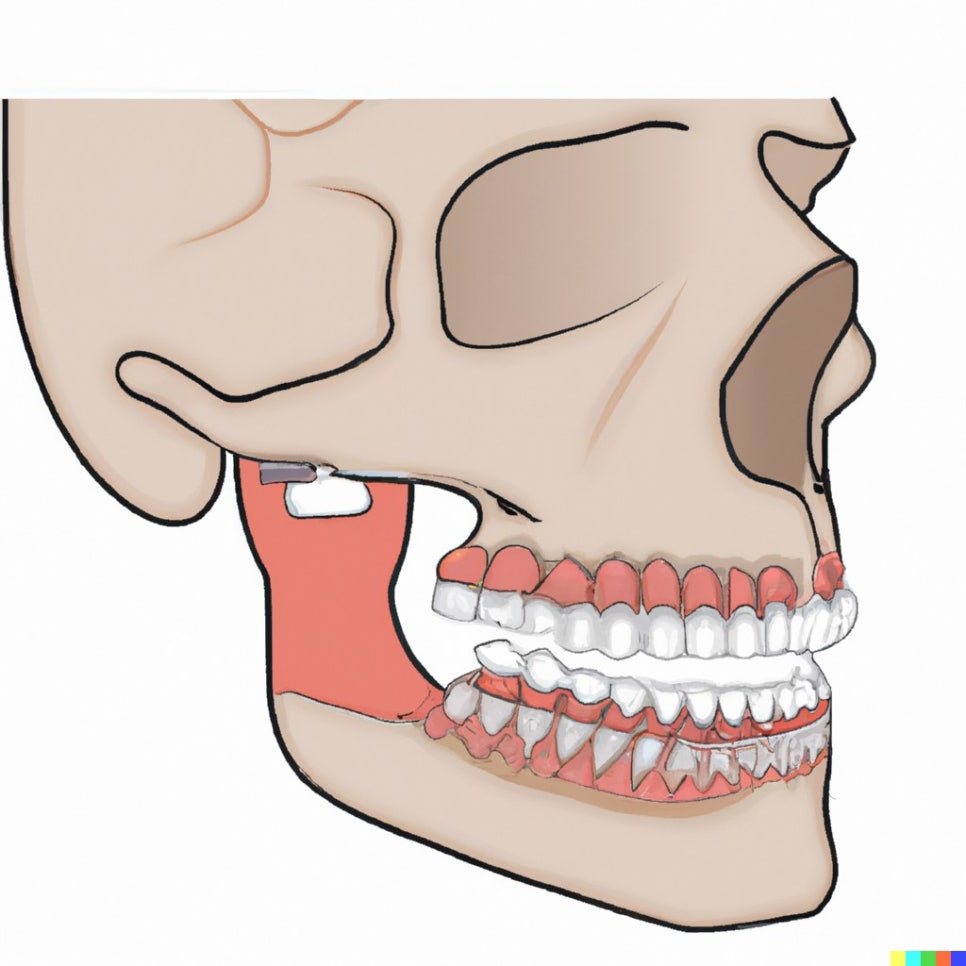
However, several years after square jaw surgery, some people visit the hospital again with concerns that the bones in the surgical areas seem to have reappeared.
After square jaw surgery, I would like to explain how the condition of the bone at the surgical site changes over time based on my experience of more than 20 years.
The parts I am explaining are some of the contents I submitted for publication as a thesis in an international journal of plastic surgery.
I will post only simple and easy-to-understand content, excluding scientific or academic parts.
After square jaw surgery, as time goes by, you can see the process of bone remodeling in the surgical area in a slightly different pattern from what is seen immediately after surgery.
Of course, these changes can vary greatly depending on the individual.
Such differences can be said to be due to the different actions of the muscles that cover the bones depending on the person.
Let's look at the first case.
The masticatory muscles covering the lower jawbone were very developed, and this is a CT scan taken one year and three years after square jaw surgery, and one year after the bones in some regrown areas were adjusted.
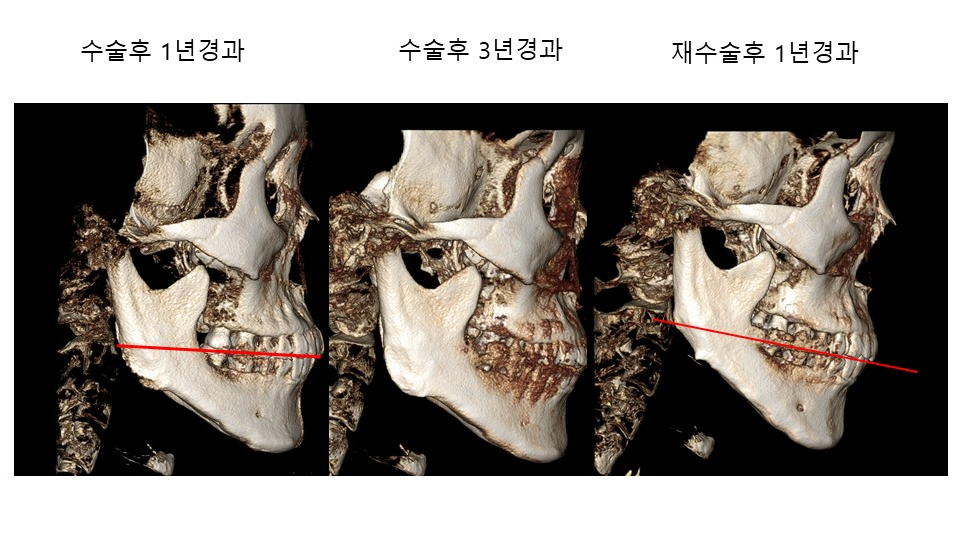
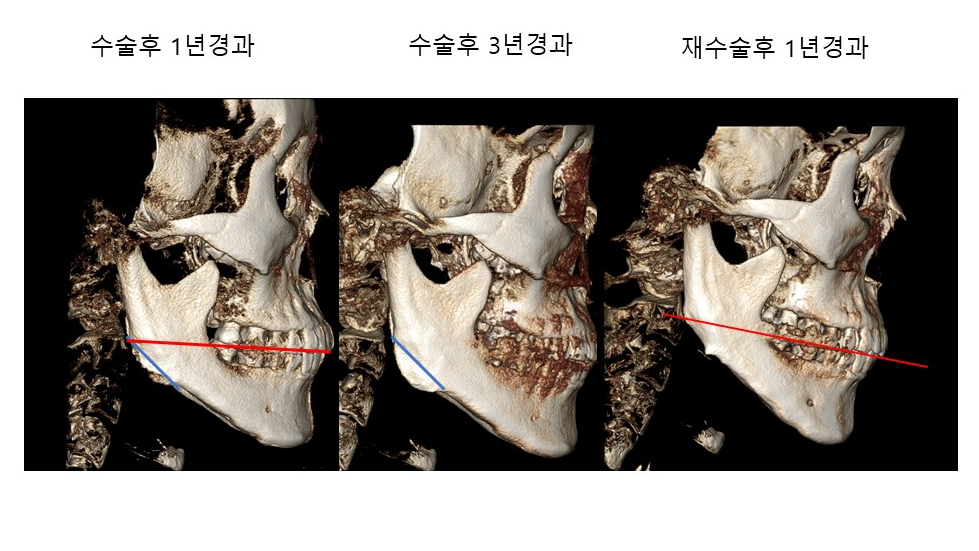
The line marked in blue on the CT scan above is the line I trimmed during surgery.
When one year has passed after surgery, it shows the state in which parts of each area are forming, and when three years have passed, you can see the state in which they are well formed.
I wanted to arrange the regenerated bone in each area, so I aligned the bones in the same line as shown in the second picture.
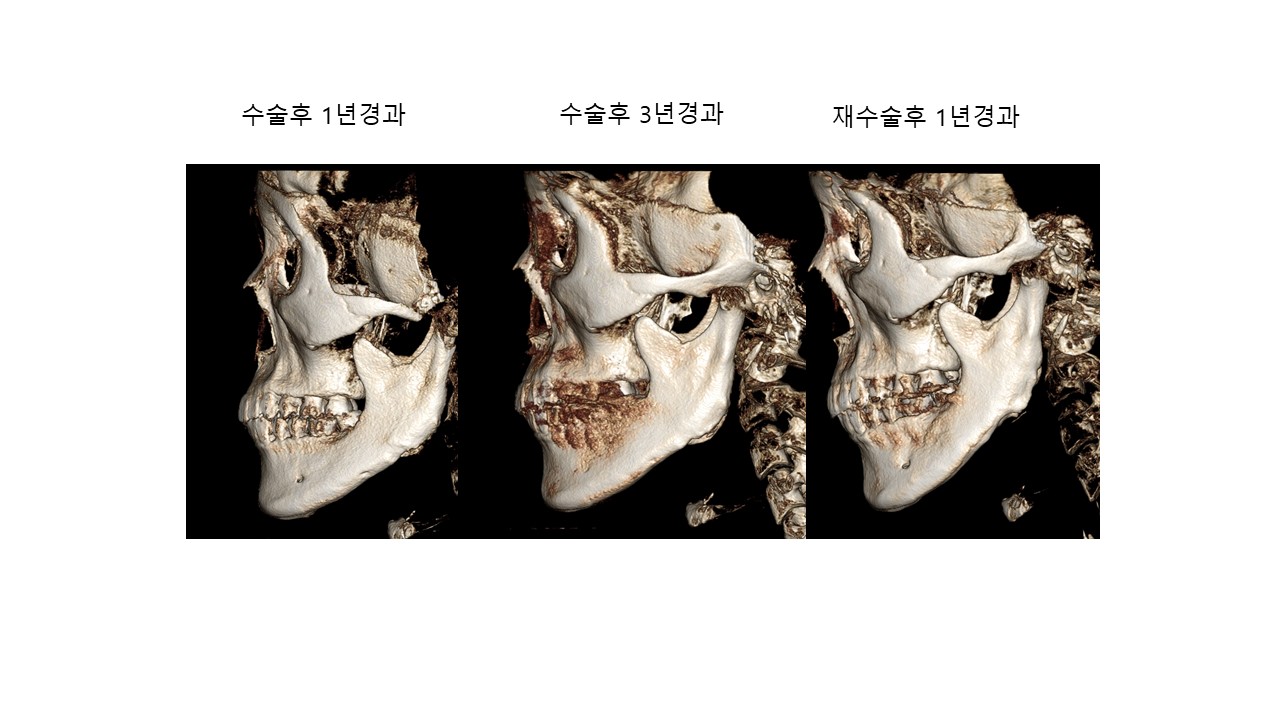
Let's look at the second case.
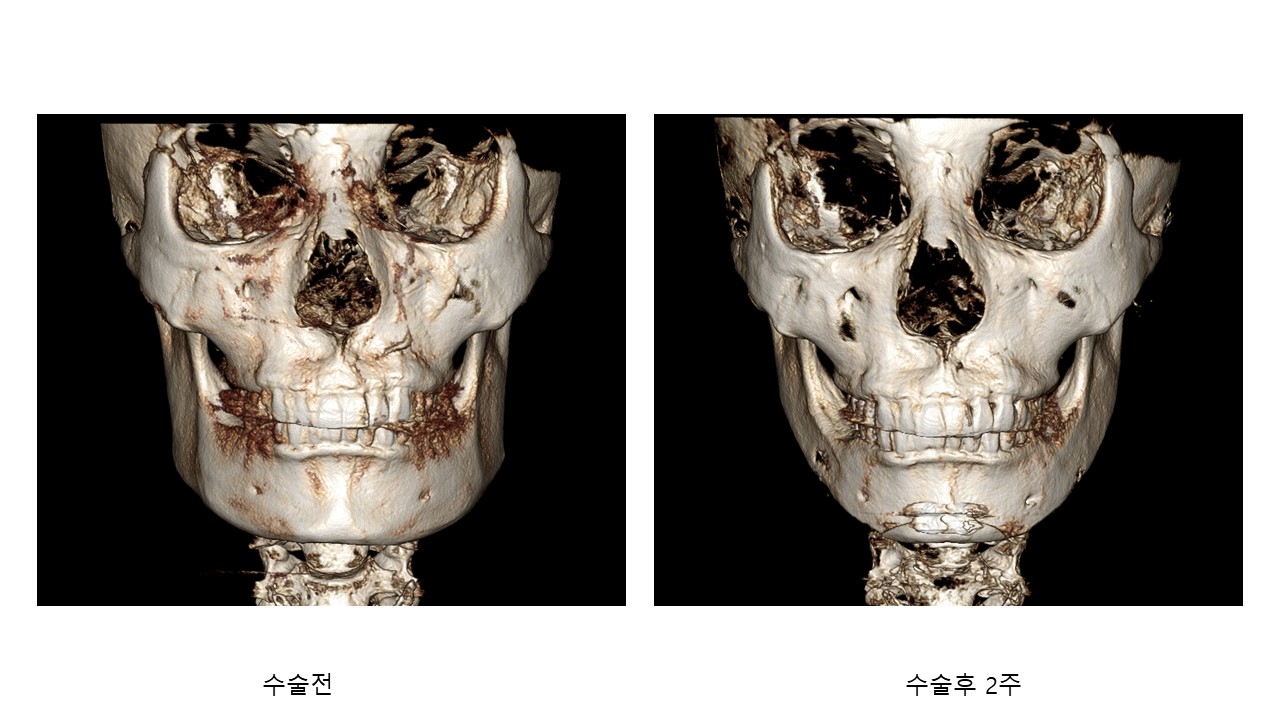
Comparing the CT scans before and after surgery, the cortical bone in the body of the lower jaw, where the cortical bone is thickest, is greatly reduced, so part of the bone looks hollow.
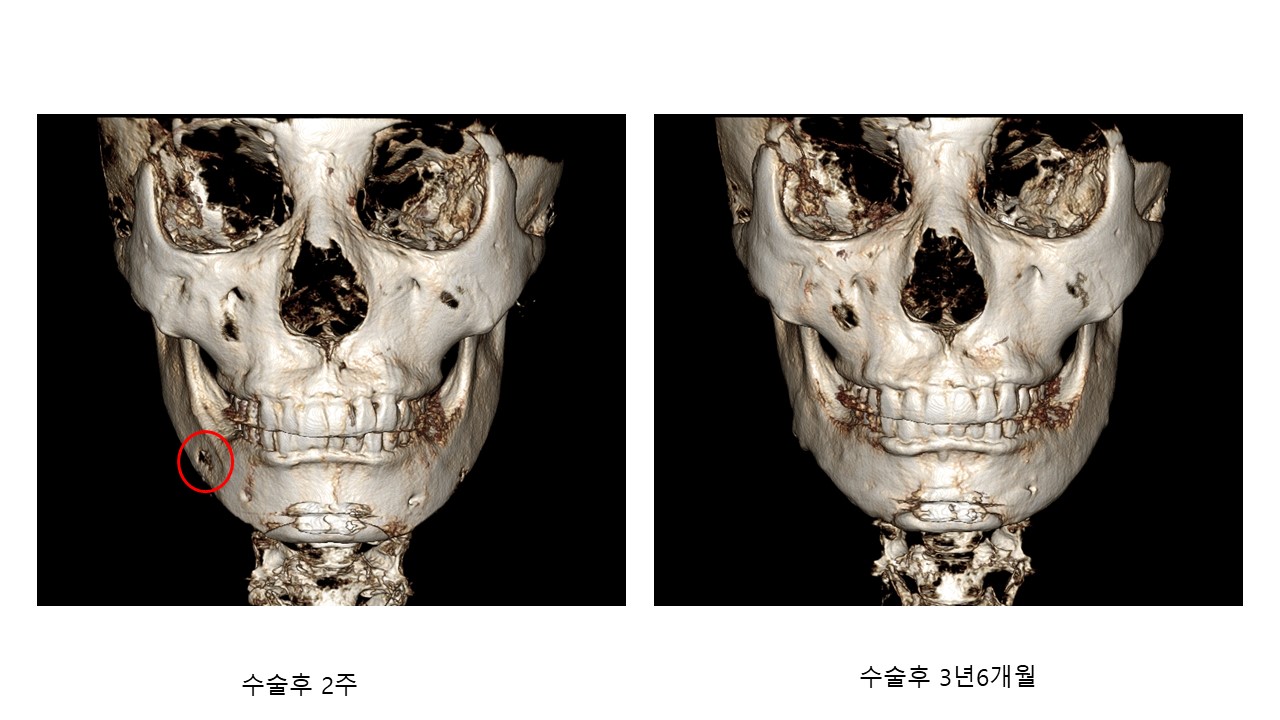
You can see that some bone has formed in each area on the left.
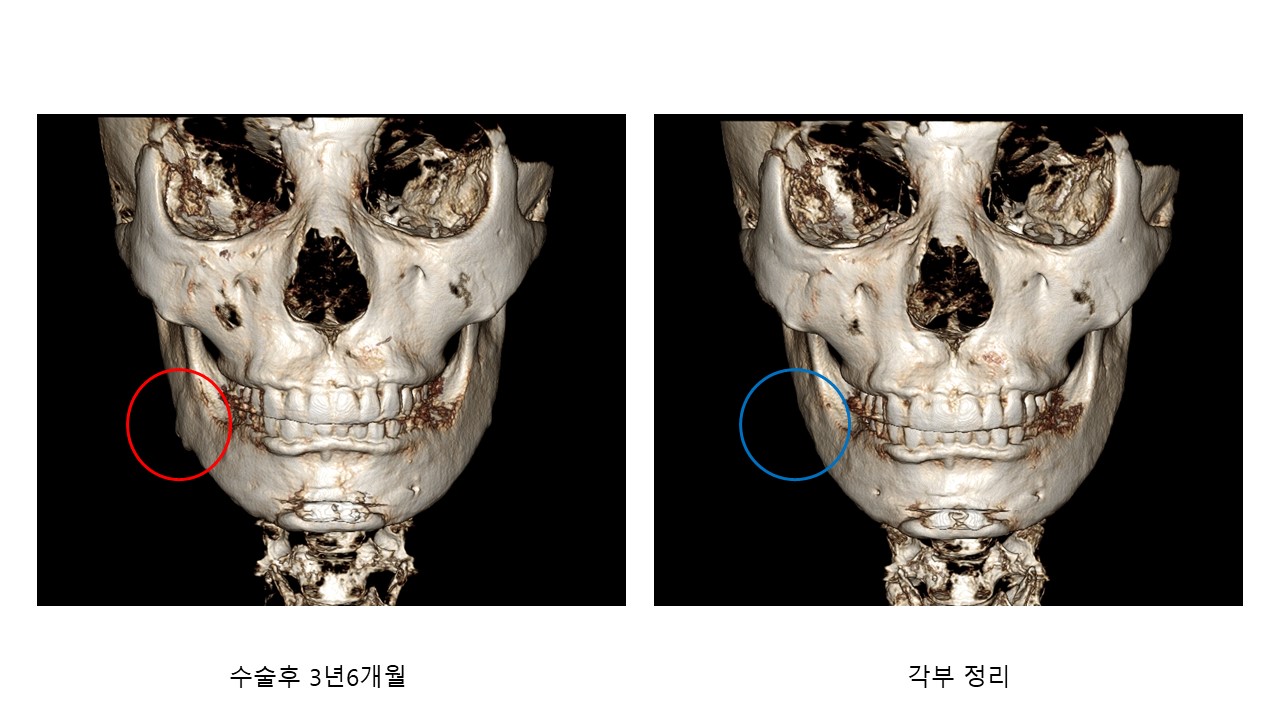
This is the CT scan taken after coming to the hospital three years and six months after surgery to trim the newly formed jaw area again.
There are many more cases to introduce, but I will end with this brief introduction because the content would become too long.
In fact, significant bone remodeling in each area after square jaw surgery does not always occur.
In many cases, it can be said that there are fewer instances where each area is newly formed than where it is not.
However, by reducing the cortical bone, you can observe that the area that looked hollow at the beginning after surgery becomes covered with white cortical bone again even after several months.