Bluetooth : Multi-Pairing Vs. Multi-point
When using Bluetooth devices, the terms multi-pairing and multi-point can be easy to confuse because they sound similar.
In addition, I think one of the big reasons this becomes even more confusing is that manufacturers also use names in a way that is very difficult to distinguish in order to overpromote their products.
However,
these two are the same in that they both “handle multiple devices,” but there is a very big difference in whether they connect “simultaneously” or not.
I’ll organize the exact definitions and differences for you.
- Multi-pairing
Multi-pairing refers to a device’s ability to remember information for multiple master devices (smartphones, laptops, and so on).
-
Definition: A function that stores in memory a list (ID) of devices that earbuds or a keyboard have connected to before.
-
Feature: It removes the hassle of deleting existing connections and registering again every time you connect to a new device.
-
Key point: It only stores the information; it communicates with only one device at a time. For example, if you use it connected to an iPhone and then want to switch to a MacBook, you have to disconnect from the iPhone and press the ‘connect’ button on the MacBook.
- Multi-point
Multi-point is a function that has evolved one step beyond multi-pairing, and it refers to a state in which a device is connected to two or more devices at the same time.
-
Definition: A function in which one Bluetooth device (such as a headset) maintains a real-time connection with two master devices simultaneously.
-
Feature: Device switching happens automatically.
-
Example: If you are watching a movie on an iPad and a call comes in on an iPhone, the headset will immediately play the iPhone’s call audio without any separate settings.
The image below was created by me.
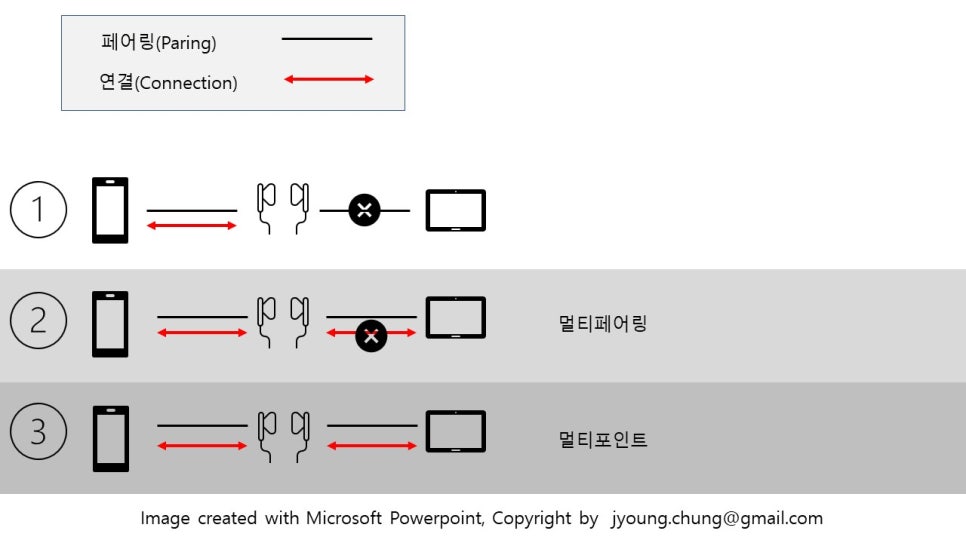
- Multi-pairing vs. Multi-point at a glance
| Category | Multi-pairing | Multi-point |
|---|
| Core concept | Memory (saving a list) | Simultaneous connection (real-time connection) |
| Number of simultaneous connections | Only one device possible | Two or more devices possible |
| Device switching | Manual (may require disconnecting the existing connection) | Automatic (switches automatically to the device making sound) |
| Main use | Cost-effective Bluetooth keyboards, mice, etc. | Higher-end wireless earbuds, headsets, etc. |
To summarize!
Multi-pairing: “I know all of you (devices). But right now, I’m only going to hang out with one person.”
Multi-point: “I’m holding hands with both of you right now. Whoever speaks first, I’ll answer right away.”