Generally, when meeting people who are considering square jaw surgery, one of the questions commonly asked is about the frontal effect after surgery.
Of course, the factors that determine facial contours are not limited to the facial skeleton; they also include soft tissues such as the muscles and fat layers surrounding the bones of the face. Therefore, the results that can be expected from reshaping the facial bones may vary greatly from person to person.
Recently, various surgical techniques for square jaw correction have been attempted, including methods that cut and reshape the bone, methods that grind it down, and methods that remove only the cortical bone.
These different surgical methods each have their own advantages and disadvantages, but they are often misunderstood, and I frequently see incorrect information being passed on to the public.
One of the most common misconceptions is that, "To improve the frontal appearance in square jaw surgery, the most effective method is to remove the cortical bone."
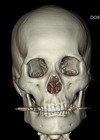
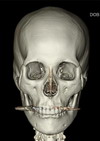
The photos below show the facial bones before and after square jaw surgery, reconstructed in 3D from computed tomography scans, so they can be said to accurately reflect the condition of the facial bones.
As shown in the photos below, if the square jaw is cut through the full thickness and carefully contoured, a sufficient effect can be expected from the frontal view.
In such cases, if only the cortical bone is removed, it would at best be difficult to expect a reduction effect of more than 5 mm on one side.
Of course, even when the bone is cut through the full thickness, it is essential to grind down the cortical bone of the remaining area as smoothly and carefully as possible.
This is because if the cortical bone is removed, there is a risk that the surface may become uneven, and the nerves that had been protected by the cortical bone may become exposed, leading to long-term pain and abnormal sensations.