The purpose of zygoma reduction surgery is largely twofold.
First, to make the face narrower and softer by reducing the lateral cheekbone, which determines the width of the temple area and the middle part of the face.
Second, to smooth the contour of the cheekbone that protrudes at a 45-degree angle, softening the strong appearance of the cheekbones from the front and from a 45-degree angle.
With this effect of lateral cheekbone reduction in zygoma reduction surgery, it is possible to expect a reduction in facial width of up to about 15 mm on one side.
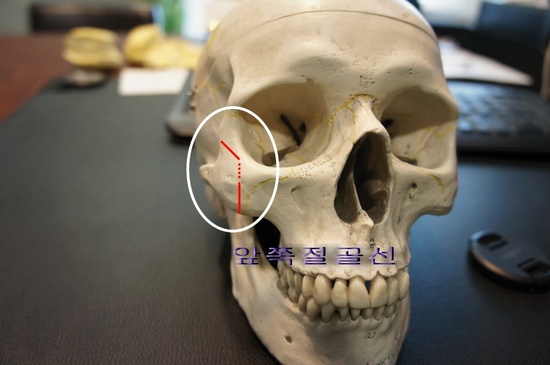
As shown in the figure above, if the lateral cheekbone is moved inward based on the front osteotomy line and fixed in the correct position, consistent and predictable results can be expected.
However, depending on the surgical method, if the bone is not cut at the exact area or the fixation is not done properly, the following results may occur.
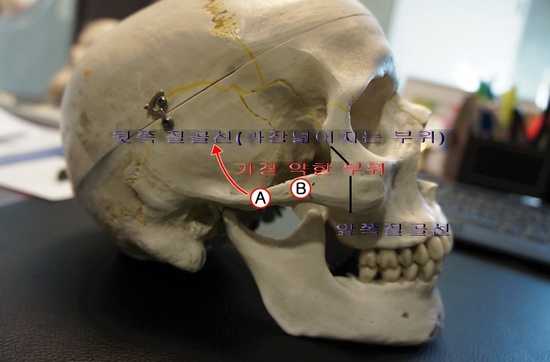 First, if the front osteotomy is not performed correctly and accurately, the postoperative result may be little different from the preoperative state.
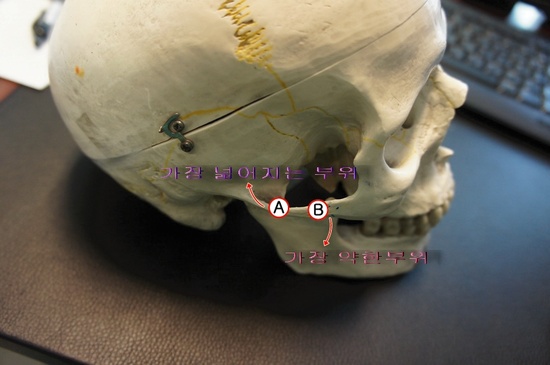
Second, since the widest part of the lateral cheekbone contour is the A area, if the posterior osteotomy line is not set accurately and is pressed down inaccurately by hand, the B area, which is the weakest part of the cheekbone, may break, leading to unfortunate results.
In such cases, the face may appear stepped as it moves backward, and the two sides may show a severe difference. In bad cases, revision surgery may become almost impossible.
Third, if fixation is not performed while the front and back have been osteotomized, the cheekbone area between the osteotomized parts may sag downward, causing nonunion and creating a high risk that the face will appear sagging.
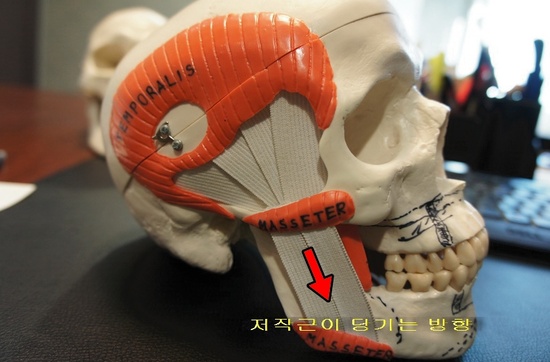 If the front and rear osteotomy lines of the cheekbone are not cut properly, the postoperative result will only be little different from before surgery. However, if the front and back portions where the masticatory muscle (the part marked MASSETER) is attached are osteotomized and then not fixed in the correct position, the bone will sag downward in the direction of the pull of the masticatory muscle.