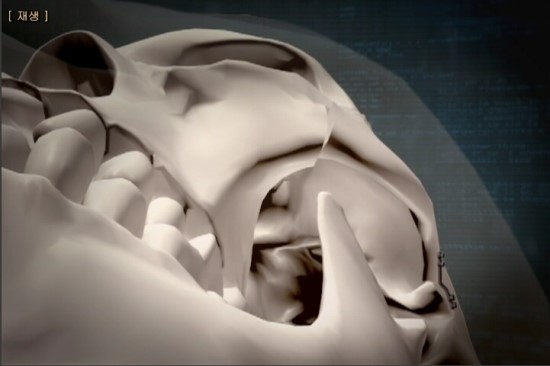
In zygoma reduction surgery, it is necessary to refine the front cheekbone (45-degree cheekbone) and the side cheekbone into a smaller, smoother contour.
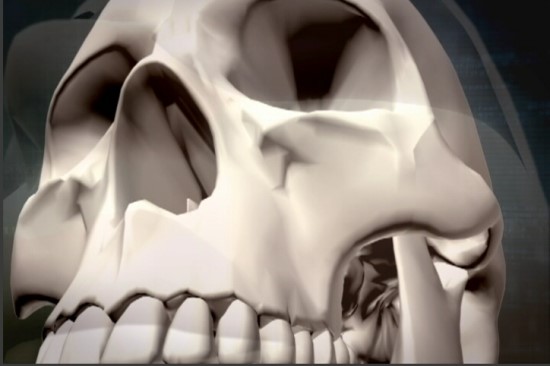
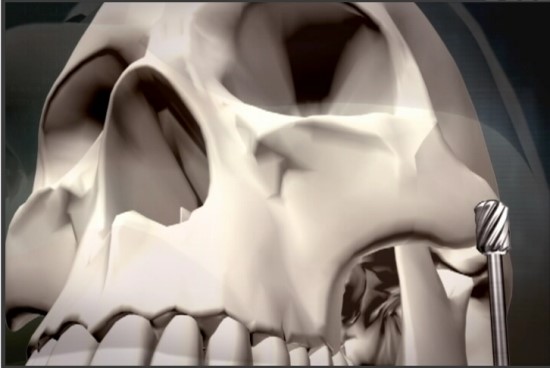
In this kind of zygoma surgery, a method is used to reduce the side cheekbone by moving the zygomatic arch, which determines the contour of the side cheekbone, inward.
When reducing the side cheekbone, the term “non-fixation surgery” is sometimes used. In my view, this means that after moving the cheekbone, not fixing it is an irresponsible approach.
When zygoma surgery is promoted as a non-fixation procedure, the reason given for not fixing it is sometimes that the periosteum remains intact, so fixation is not necessary. The problem with that explanation is as follows.
The reasons why fixation is absolutely necessary in zygoma surgery for side cheekbone reduction are as follows.
- In order to move the side cheekbone inward, the front and back portions of the zygomatic arch that form the shape of the side cheekbone must be properly osteotomized so that the cheekbone can move inward sufficiently, and the effect of reducing the side cheekbone can be expected.
If the osteotomy is not done properly, then although the chance of nonunion of the cheekbone is low, there will be no effect at all in reducing the side cheekbone.
- Simply shaving only the 45-degree cheekbone without osteotomy does not produce any side cheekbone reduction effect.
Of course, in my own practice, there are rare cases in which only the front cheekbone is reduced, and in those cases I also use a method of shaving only the 45-degree cheekbone.
In such cases, the surgery takes about 40 minutes, the procedure itself is very simple, and swelling is minimal. It can also be understood as a very simple and comfortable surgery that poses no major difficulty even for a board-certified plastic surgeon with little experience in zygoma reduction surgery, and there is no need to worry about complications.
- In the case of side cheekbone reduction surgery to reduce facial width, the claim that fixation is unnecessary because the periosteum remains intact after osteotomizing and moving the zygomatic arch inward is a greatly exaggerated excuse. You may understand it that way.
The reasons are as follows.
First, the periosteum is a very thin tissue that surrounds the bone and has almost no elasticity.
In order to move the side cheekbone inward by nearly 10 mm on one side, or up to 15 mm, the periosteum cannot maintain continuity as it is.
Second, if the periosteum remains intact and fixation is unnecessary, then there would also be no need to fix the bone when osteotomy is performed on any part of the body.
The idea of performing osteotomy while preserving the periosteum goes somewhat beyond common sense.
If you decide to undergo surgery after hearing such an explanation, it is safest to have a 3D CT scan of the cheekbone condition before and after surgery at a radiology specialty clinic, and then proceed with the surgery.
If you are not going to have side cheekbone reduction surgery using a clear and proven method, I also think it may be better not to have the surgery at all.