If you want to reduce the width of the face from the front and change to a smaller, more three-dimensional facial shape, it is necessary to consider lateral cheekbone reduction.
Of course, if the soft tissue covering the cheekbone is relatively thick, it may also be helpful to consider fat-dissolving injections such as the so-called "cheekbone injection," which change the condition of the soft tissue.
However, to change the fundamental support structure, it is necessary to precisely bring the zygomatic arch, which is responsible for the lateral cheekbone contour, inward.
Lateral cheekbone reduction surgery must create a change to a three-dimensional cheekbone shape without breaking the continuity of the cheekbone.
If, after cheekbone reduction surgery, a gap forms at the surgical site or the cheekbone sags downward, it can lead to unsatisfactory results.
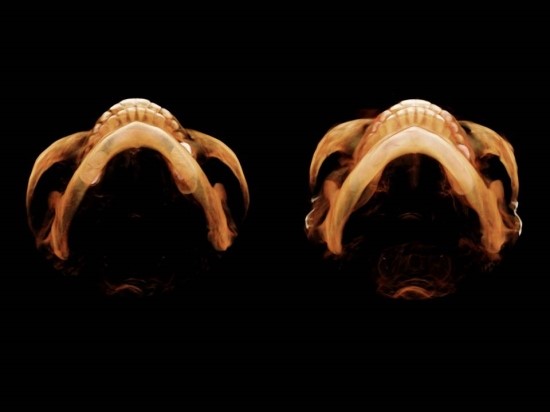
The above 3D-CT image shows the change in the appearance of the cheekbones before and after surgery for a person who underwent lateral cheekbone reduction.
You can understand it as an image of the cheekbones viewed from the jaw side with the neck tilted backward.
You can see that the position of the cheekbone arch, which was broadly spread outward before surgery, has been brought inward after surgery.
In addition, it is essential to maintain the continuity of the cheekbone from the front to the back.
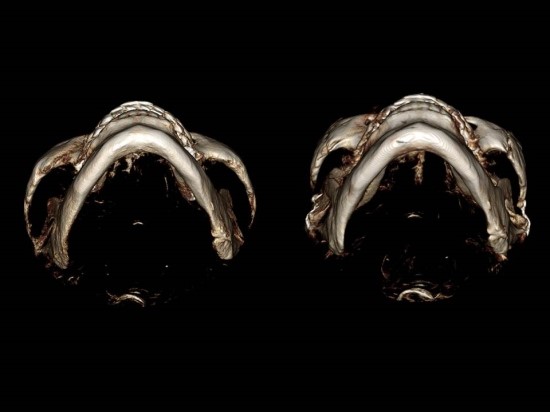
This is a 3D CT reconstruction of the same person's bones.
When lateral cheekbone reduction surgery is performed using the method above, it is possible not only to achieve the effect of narrowing the width of the face by bringing the widened lateral cheekbones inward, but also to expect a change to a three-dimensional and lively image by preserving the volume of the front cheekbones.