There are three areas that determine the width of the face when viewed from the front: the cheekbones, the angular area of the lower jaw, and the temple area.
As described earlier in Reducing Broad Facial Width-1,
When reducing facial width, it may be necessary to additionally consider methods that change other conditions, not only methods that reduce the width of the cheekbones.
The lateral cheekbone area, which is the widest part of the face, can be narrowed through lateral cheekbone reduction surgery, and
the lower jaw area can be reduced through square jaw surgery or V-line square jaw surgery.
Then, how should the width of the temples be reduced? Let’s look at temple reduction.
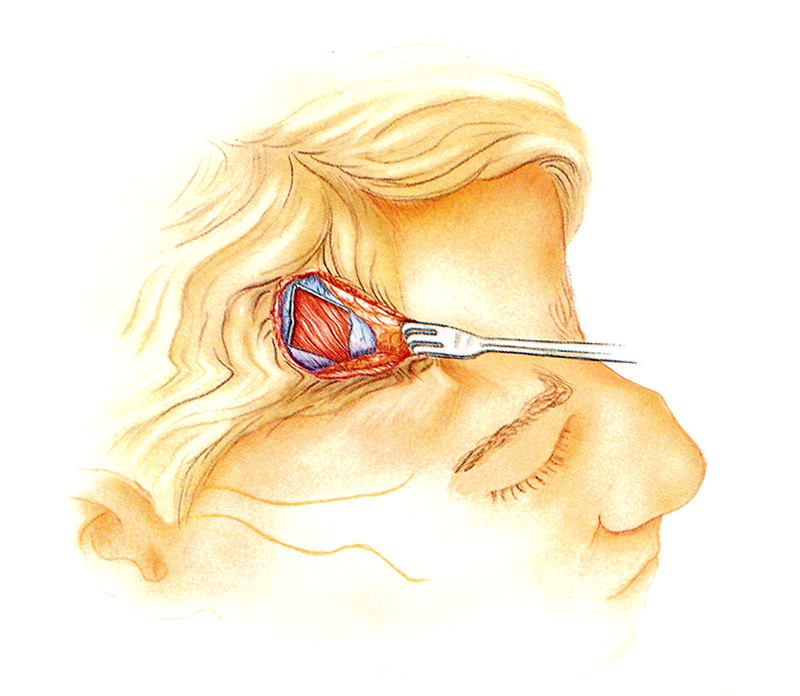
As shown in the figure, the temple area is thickly covered by the temporalis muscle and the fat pad in the temple area.
Therefore, to reduce the temple area,
it is appropriate to use procedures that reduce the volume of the fat pad in the temple area and the temporalis muscle.
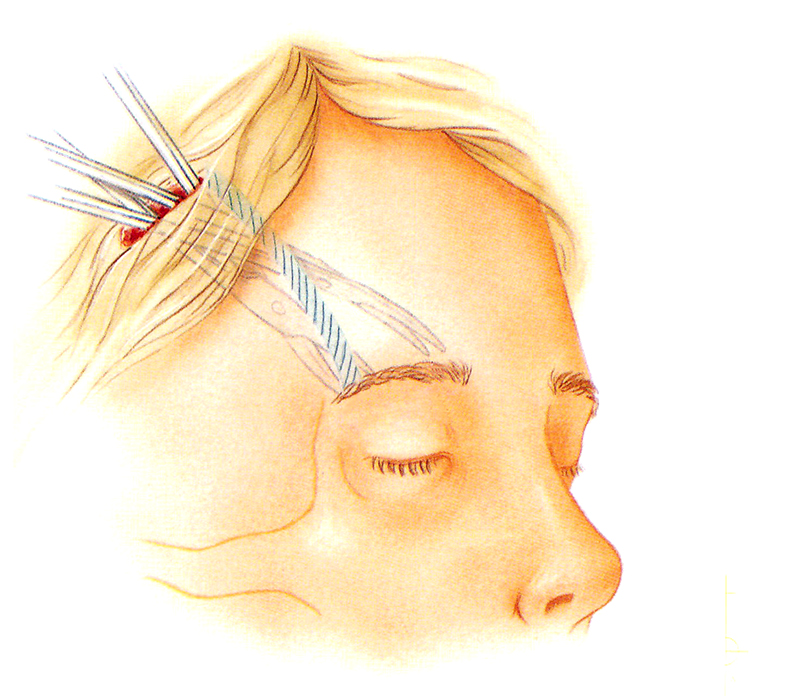
The temple fat pad area can be removed through a small incision, and
the volume of the temporalis muscle can be reduced by partially cutting off the muscle’s origin.
This temple reduction procedure can be performed under sedation anesthesia or local anesthesia,
and the surgery time takes about 30 minutes per side,
and the surgery cost is around 2 million KRW for both sides.
However, the temples play a somewhat secondary role in determining facial width compared with the contours of the cheekbones and lower jaw area.
Therefore, if you want to reduce facial width, it is appropriate to first analyze which area should be corrected first.