If you want to change the contour of your face without altering the shape of the facial bones,
You can consider methods such as facial cheek fat removal, masseter muscle reduction, or subcutaneous liposuction.
When considering procedures that change the soft tissue conditions of the face,
it is necessary to clearly distinguish between the deep buccal fat (buccal fat) that forms the rounded fullness of plump cheeks and
the sagging skin that occurs as the retaining ligaments inside the facial skin weaken.
Of course, in middle age, both phenomena can occur together,
but it is important not to make the mistake of deciding based only on vague ideas when trying to improve the facial contour in the desired direction.
If you do not have a specific and clear consultation with the doctor in charge of the procedure,
you may be disappointed by results that differ from your expectations after surgery.
As described above, deep buccal fat (buccal fat) is
fat tissue located deep in the skin of the rounded area of the cheek outside the lips and surrounded by a fat pad.
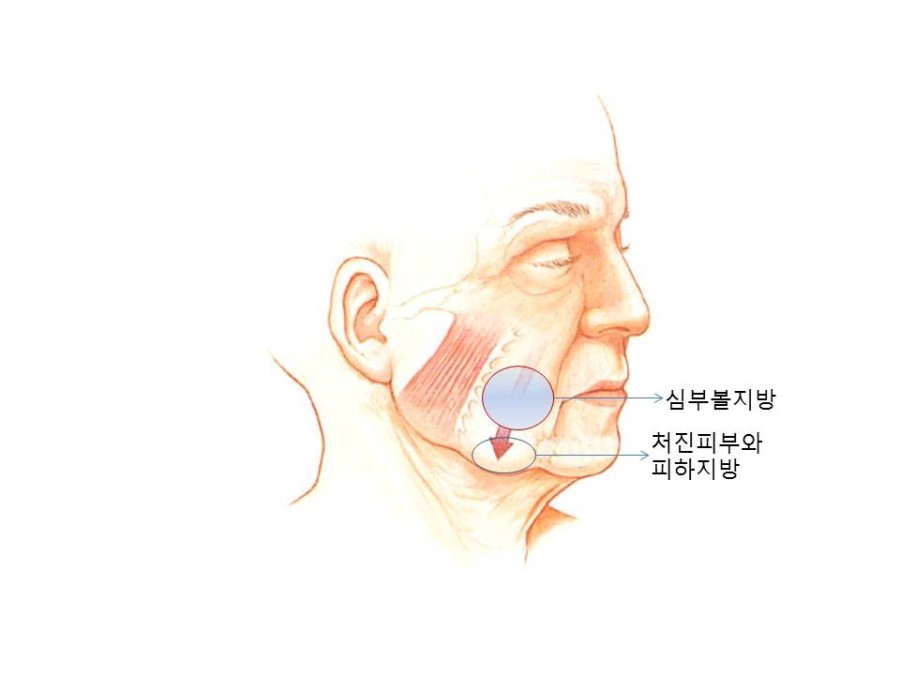
On the other hand, the sagging skin that occurs as the skin’s retaining ligaments weaken with age is
a area that appears to sag downward from the middle of the jawline.
If deep buccal fat is removed, you can expect the fuller area on the outer cheek to look somewhat flatter,
but it may not help improve the shape of the area that appears bulging downward due to sagging skin.
Deep buccal fat removal surgery (cheek fat removal surgery) is a relatively simple procedure, but
it is better to perform it after determining the proper indication (whether it can produce the desired area change).
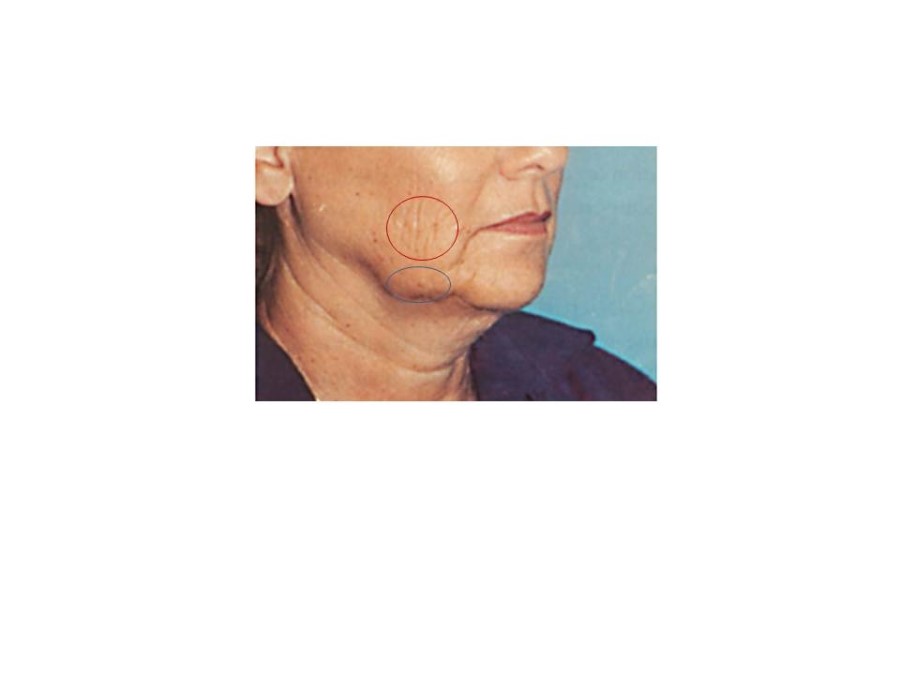
If, for improving your facial contour, you want to improve the outline of the area that appears to sag downward from the jawline,
it is advisable to consider a facelift procedure along with a method of suctioning the fat located beneath the sagging skin.