After double jaw surgery, many people worry about sagging cheeks. I have often seen cases where people repeatedly underwent procedures such as PDO thread lifting, Ulthera, and Aculift, only to be disappointed. From my perspective, it is fair to say that I am quite skeptical about the effects of the above procedures — PDO, Aculift, and Ulthera.
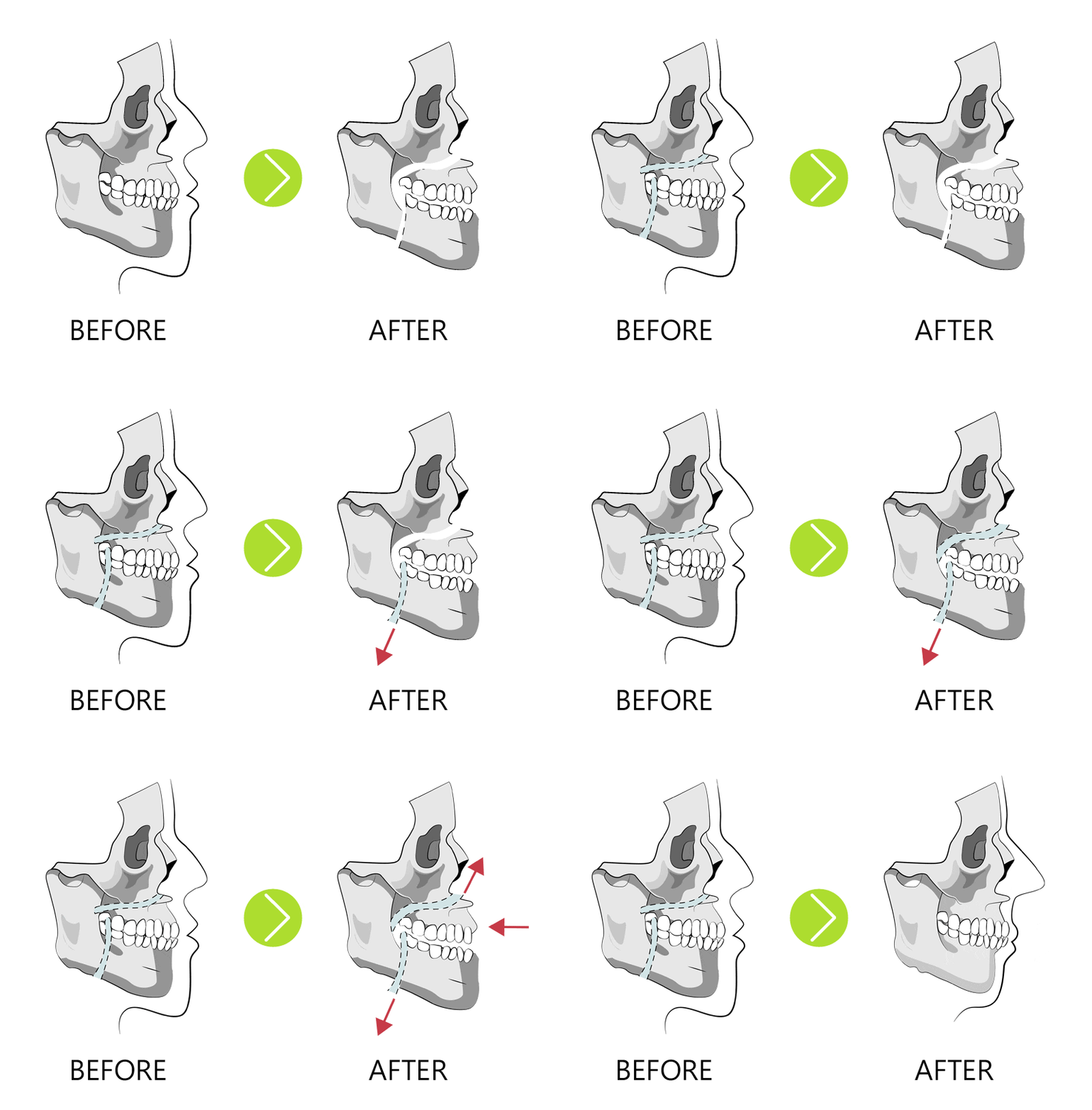
The cause of sagging cheeks after double jaw surgery is that the direction and amount of movement of the facial bones are not properly followed by the soft tissues (the muscles, fat, skin, and other tissues covering the bones).
The direction of double jaw surgery
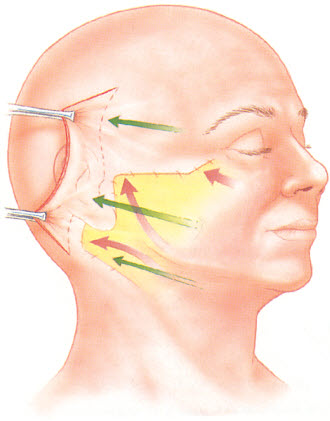
Therefore, for a fundamental correction, the traditional facelift — which cuts the skin and pulls it tight — is the most reliable solution.
Facelift
However, considering that most people who undergo double jaw surgery are young and unmarried, performing a facelift that leaves surgical scars on the face is quite impractical.
There were quite a few people who, due to sagging cheeks after double jaw surgery, underwent various procedures several times and then asked about buccal fat removal surgery. During consultations, I explained the uncertainty of the corrective effect of buccal fat removal surgery and lowered expectations considerably, but in many cases, I heard from people who had the surgery that the results were much better than other procedures.
For those who have previously undergone double jaw surgery or facial contouring surgery and are considering buccal fat removal, the following points should be taken into account:
-
If you have previously undergone double jaw surgery or facial contouring surgery, it is advisable to analyze the condition of the facial bones and the soft tissue conditions through 3D CT before performing buccal fat removal surgery.
-
If double jaw surgery was performed previously, buccal fat removal may be somewhat more difficult due to adhesion of the soft tissues in the surgical area and scar formation, so it is necessary to consult an experienced, skilled specialist.
Detailed information about buccal fat removal surgery is as follows.
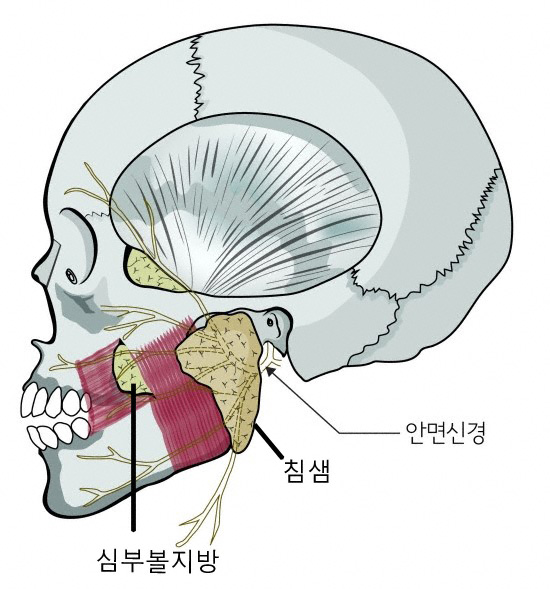
Location of the buccal fat
Most facial fat consists of subcutaneous fat between the skin and muscles, but buccal fat is located deeper than the muscles, and can be thought of as divided into a body and three tail portions.
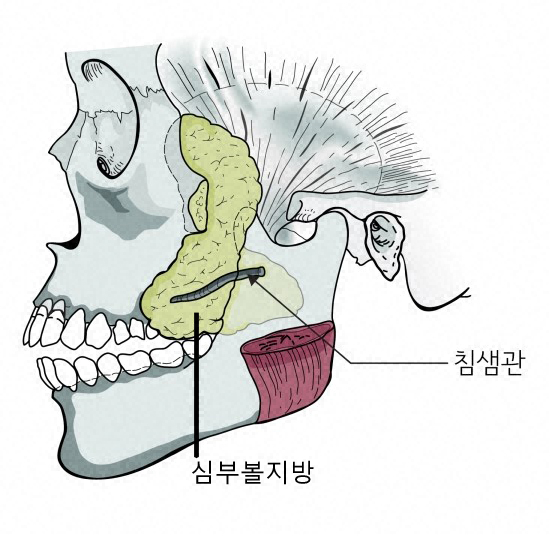
Surgical method
Subcutaneous fat in the chin area or cheeks is treated by suction using a thin cannula, but buccal fat cannot be removed by liposuction because it is a large mass of fat accumulated in a pouch.
Buccal fat removal surgery is a procedure in which the cheek fat pad is removed through a small incision inside the mouth (5–10 mm). It is performed simply under local anesthesia or sedation, and the surgery takes about 10 minutes.
You can return to daily life immediately after the surgery.
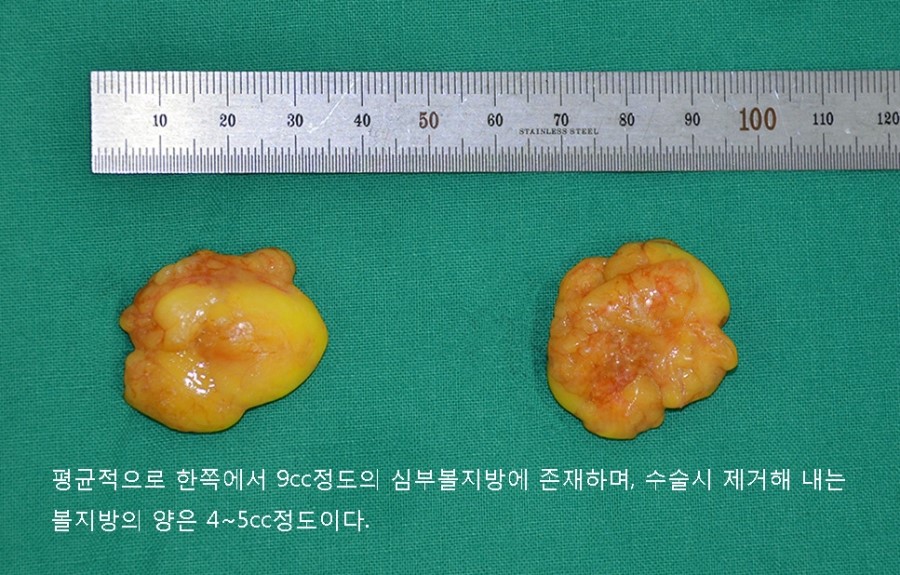
Actual appearance of the removed buccal fat