Commonly, when the cheeks are full, the facial fat that does not decrease even after weight loss is buccal fat.
When many people visit for consultation because they are considering buccal fat removal surgery to improve facial contours, it is often the case that they expect the location of the buccal fat and the contours of other areas to improve as well.
I believe that accurately understanding the location of buccal fat and the areas that can be improved through buccal fat removal surgery is the most important part of deciding on surgery.
The location of buccal fat is broadly distributed, as shown in the figure below.
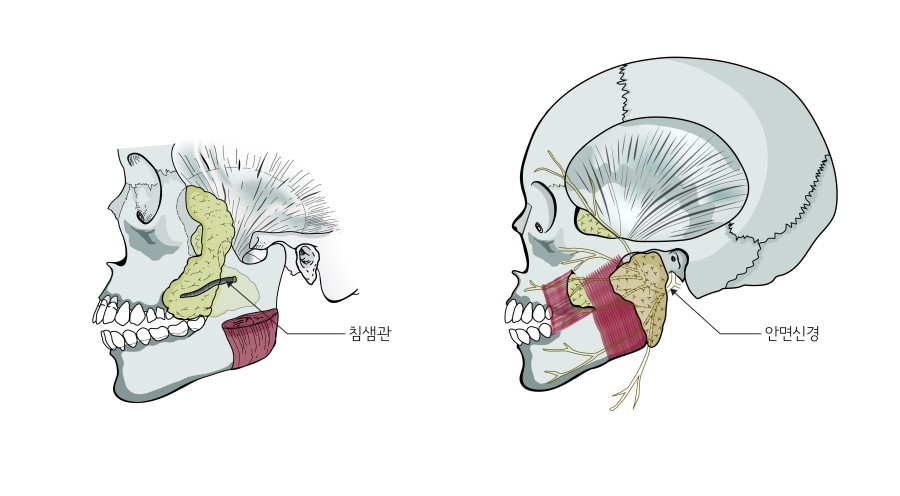
As shown in the figure above, buccal fat is located deeper than the masseter muscle, and extends upward to the temple area and backward to the inner area of the jawbone.
In general, the buccal fat removed through the inside of the mouth is the portion of the overall buccal fat that bulges toward the cheek.
If buccal fat in this area is removed, you can expect a contour-reducing effect in the area shown in the figure below (marked in red).
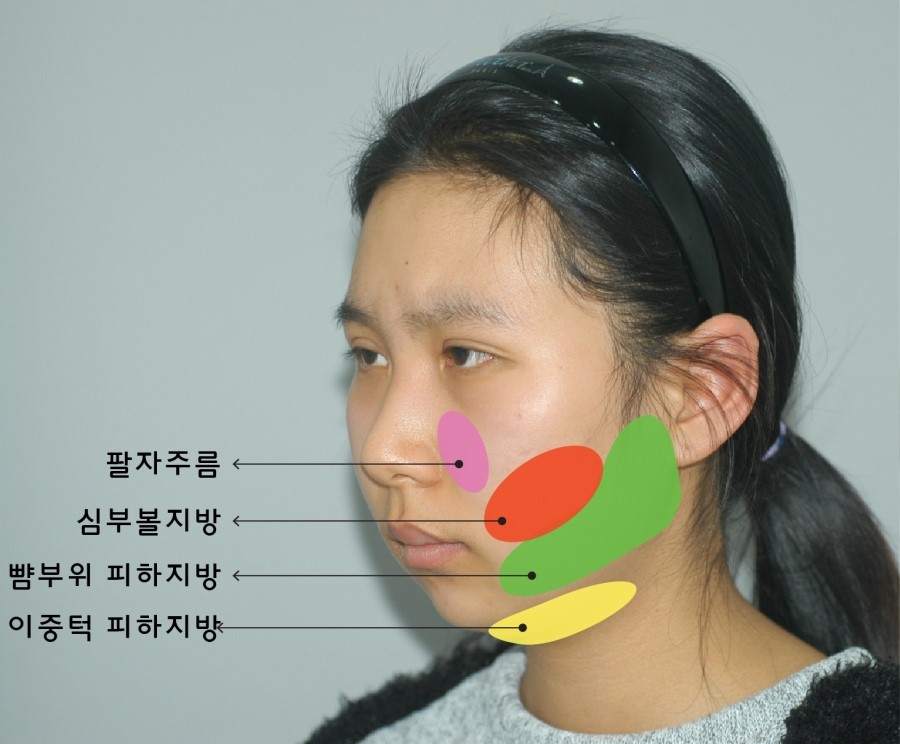
On the other hand, the area marked as subcutaneous fat in the cheek area or the subcutaneous fat area under the chin can have their contours improved through subcutaneous fat liposuction.
The bulging fat in the area that forms the nasolabial folds beside the nose does not improve with subcutaneous fat liposuction or buccal fat removal surgery; fat-dissolving injections are effective.
Director Jeong Jae-young, Buccal Fat Clinic