Many people who have been considering square jaw surgery have asked me about cortical bone resection for a long time.
Based on my experience, one mistaken belief is that, in square jaw surgery, cortical bone resection is the most important factor for changes in the frontal view.
In my view, in square jaw surgery, reducing the cortical bone is one of the procedural steps that should naturally be performed during the course of the operation.
There are two methods for reducing cortical bone: trimming (grinding it down) and resection (similar to a sagittal split osteotomy).
When looking at the 3D CT scans of people who came to see me because of poor results after cortical bone resection following square jaw surgery, the following two problems are typical.
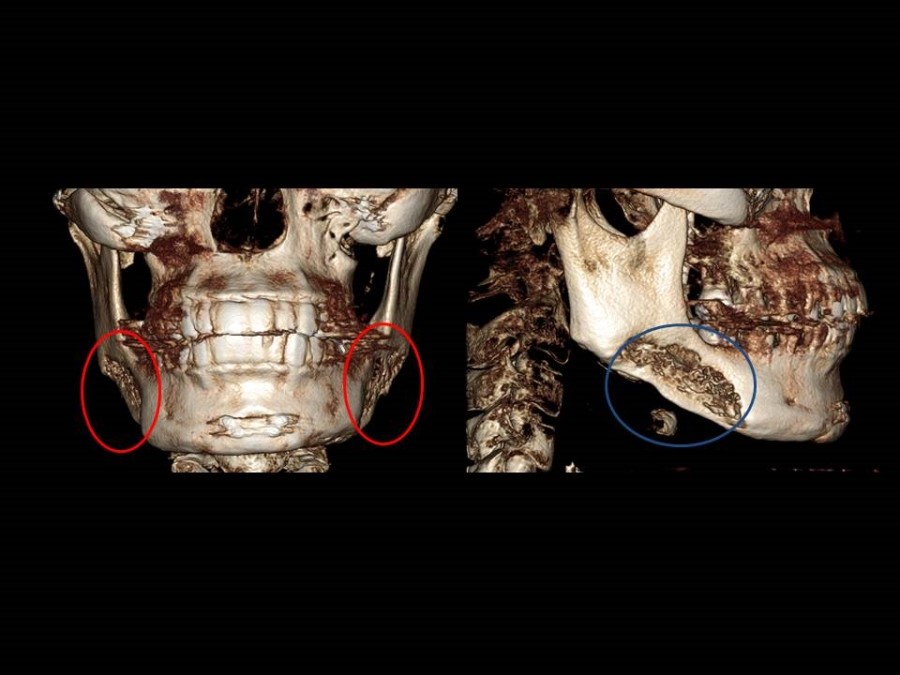
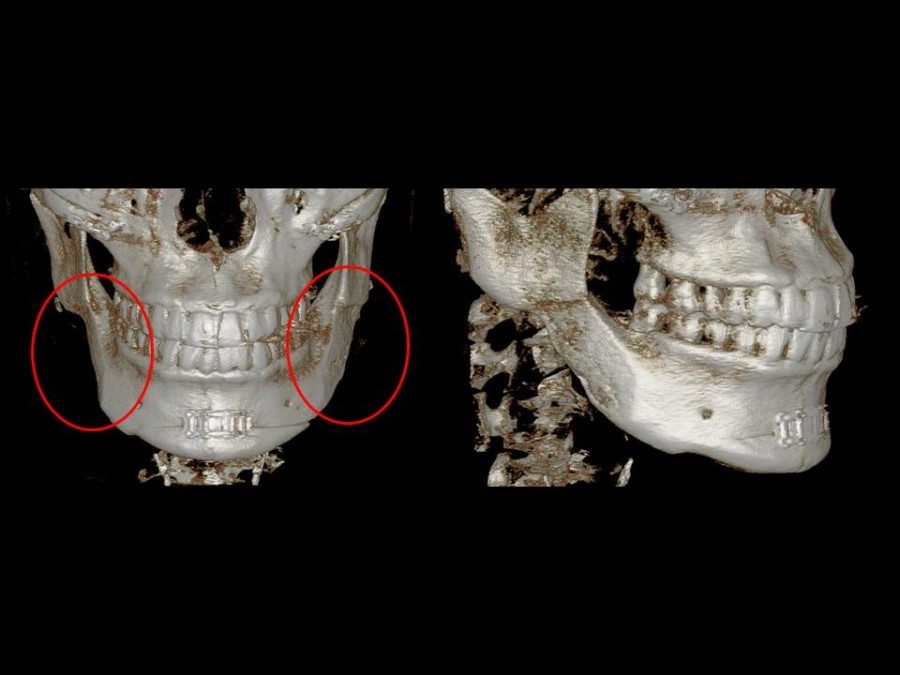
In the photos above, the areas marked with red circles show part of the lower jaw bone that was removed through cortical bone resection.
The most important area for the frontal view of the face after square jaw surgery is not the angular portion of the lower jaw, but the smooth contour of the area extending forward toward the lips. However, cortical bone resection can, unfortunately, produce the opposite result by exposing a rough contour.
In addition, as can be seen in the 3D CT image on the right, cortical bone resection may expose or damage the nerve running inside the lower jaw bone, which can lead to complaints of abnormal sensation.
While meeting many people who have a lot of concerns about square jaw surgery, one thing that is frustrating and upsetting is that too many people misunderstand cortical bone resection as a separate procedure in square jaw surgery. The truly important point in square jaw surgery is that, over time after surgery, the appropriate areas of excessive cortical bone should be carefully reduced to create a smooth and comfortable contour.