Hump Nose Correction
Addressing Problems According to the Cause
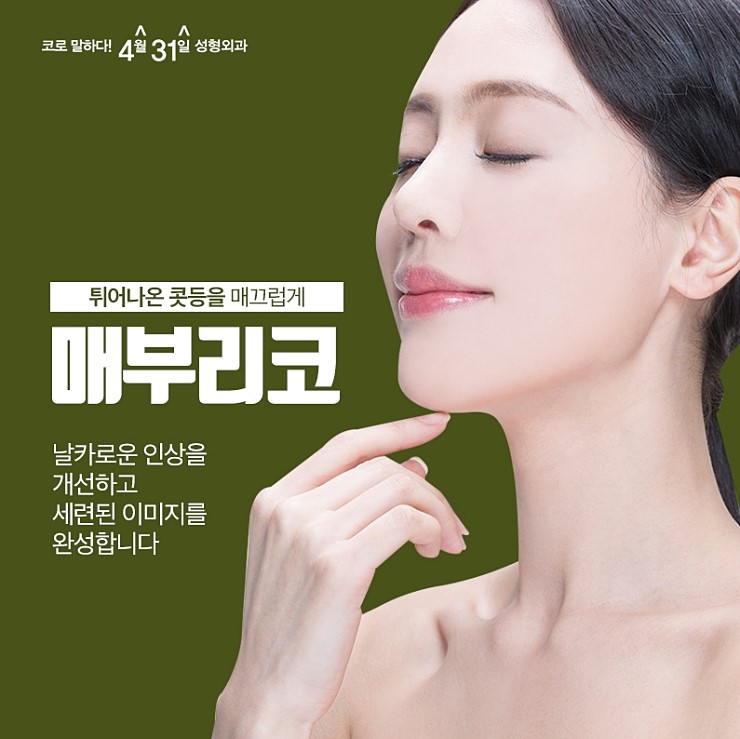
We think that the line of the nose is a key point that creates beauty.
When looking at attractive and beautiful people,
overall balance of proportions is important, but in many cases the line of the nose is also beautiful.
However, if the line of the nose is crooked or misaligned,
the balance is broken, so beauty is often created through other methods.
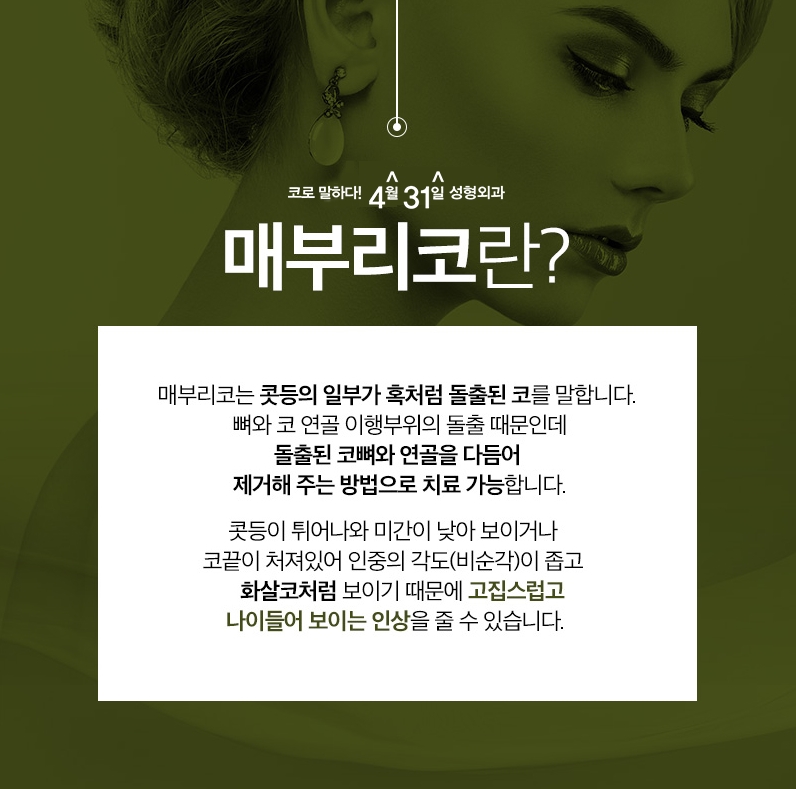
If there is a protruding bone in the middle of the nose, commonly called a hump nose,
a more masculine image may be created,
and a soft impression is not formed.
In such cases, the usual approach is either to remove only the protruding hump
or to increase the height of the nose further.
Rather than proceeding this way, it is better to consider the overall balance of the face
and create a natural shape by taking into account the existing height of the nasal bridge,
as well as the forehead line and the tip line of the nose.

At April 31 Plastic Surgery, hump nose correction is used to create a line
that changes a sharp and refined image.
Problems caused by protrusion at the transition area between the bone and nasal cartilage
are addressed by refining the nasal bone and cartilage.
If this area is not corrected,
it can make the nose look like an arrow-shaped nose,
creating a stubborn and aged impression.
The hump nose correction method involving nasal bone osteotomy was
quite difficult and complicated in the past.
However, at April 31 Plastic Surgery,
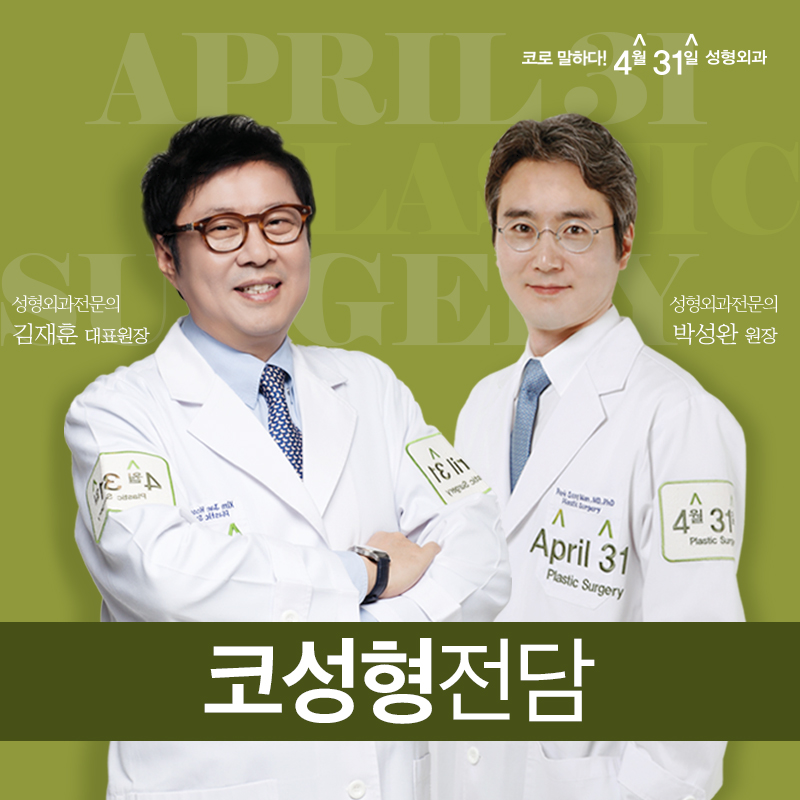
Chief Director Kim Jae-hoon, a plastic surgery specialist in rhinoplasty,
and Director Park Seong-wan, a plastic surgery specialist,
perform the procedure directly, using a simpler method.
This makes it possible to create beauty without having to invest a long time.

The shape can develop for congenital reasons,
and it can also occur due to acquired reasons.
At April 31 Plastic Surgery, which carries out procedures using a precise
and safety-oriented system, the method used for hump nose correction may vary depending on the case.
Because there are various reasons, such as a low glabella, a moderately high glabella,
a severe hump, or a drooping nasal tip, the first step is to identify the cause
and proceed in a direction that can solve the problem.
The goal is to prevent secondary problems from occurring.
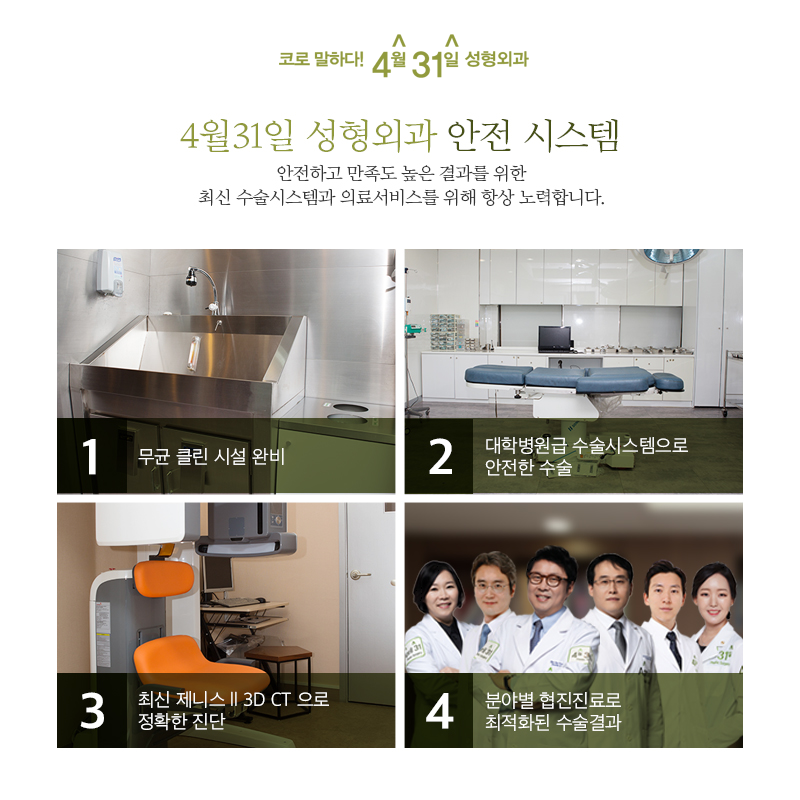
If you are considering hump nose correction, why not receive a consultation from
Chief Director Kim Jae-hoon and Director Park Seong-wan,
who have exceptional skills gained through diverse experience?