When thinking about breasts, you may have only considered wanting them to become larger because they are small.
However, there are people who struggle with the opposite situation.
They feel uncomfortable because their breasts are large,
but they often hear unpleasant remarks as if they are bragging.
For some, it may be a source of envy, but for others, it can be a source of stress.
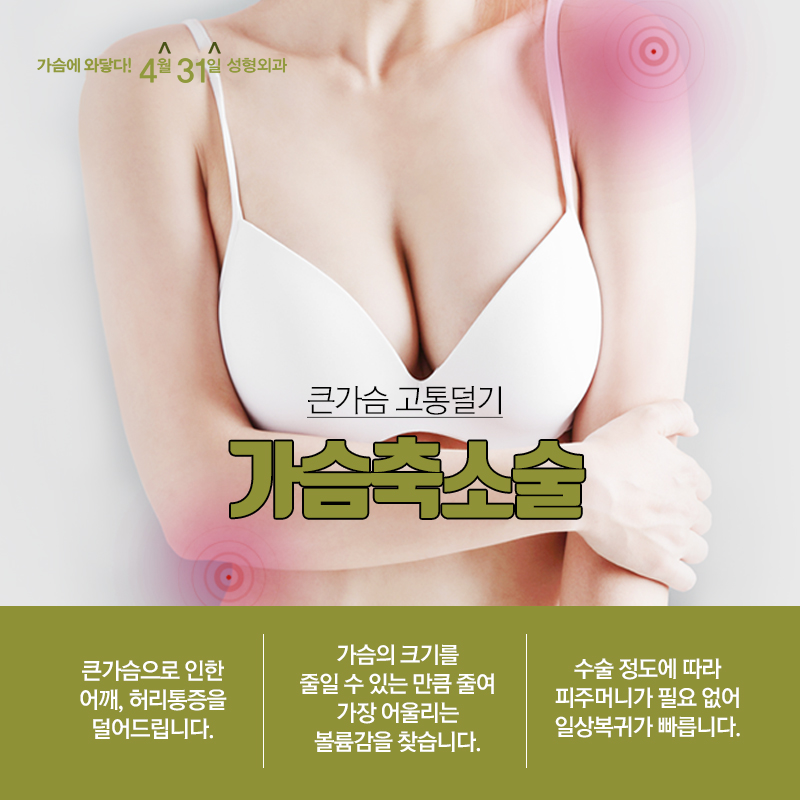
When breasts are large, people often complain that they are heavy and cause back or shoulder pain.
In addition, there is also the problem that breasts can sag easily,
which is why many people want to improve this.
However, while it is commonly known that inserting an implant is a way to increase breast volume,
many people do not know how to improve breasts when they want to reduce them.
For those people, we would like to explain breast ptosis surgery and breast reduction surgery.
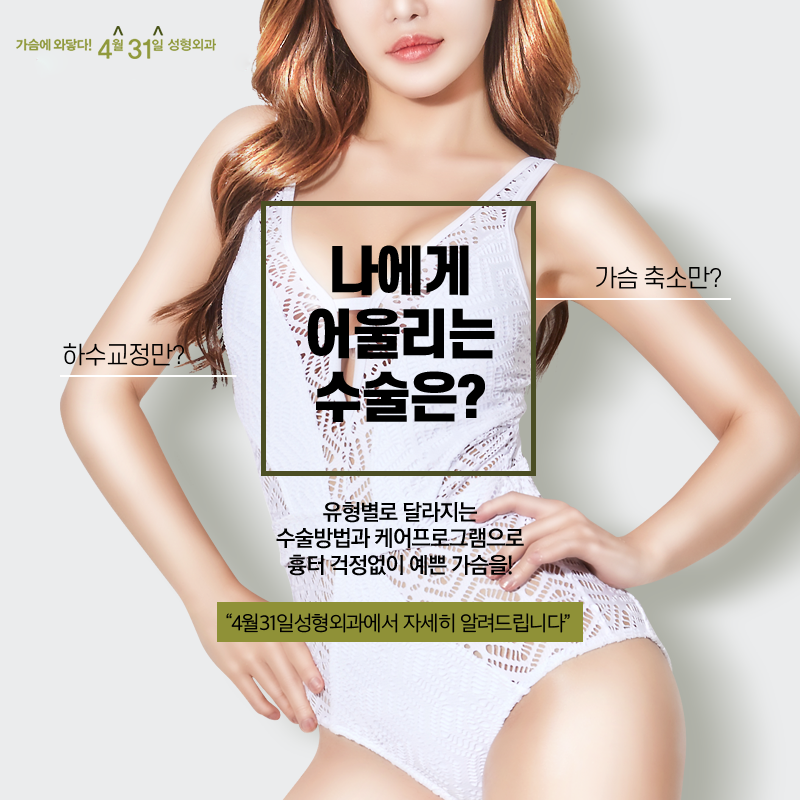
In fact, the two methods are surgeries that share many similarities.
However, in order to explain them according to patients’ wishes,
we have divided the explanation into two categories.
Simply put, if you are not dissatisfied with breast volume
but want to improve a sagging shape,
we recommend breast ptosis surgery as the solution.
On the other hand, if you want your breasts to become smaller because the volume is large,
we recommend breast reduction surgery.
Also, with breast reduction surgery, you can generally expect an improvement in the sagging shape as well.
Because each person does not have exactly the same characteristics,
it is not appropriate to proceed with a uniform method.
It is advisable to establish an improvement strategy according to the type of breast.
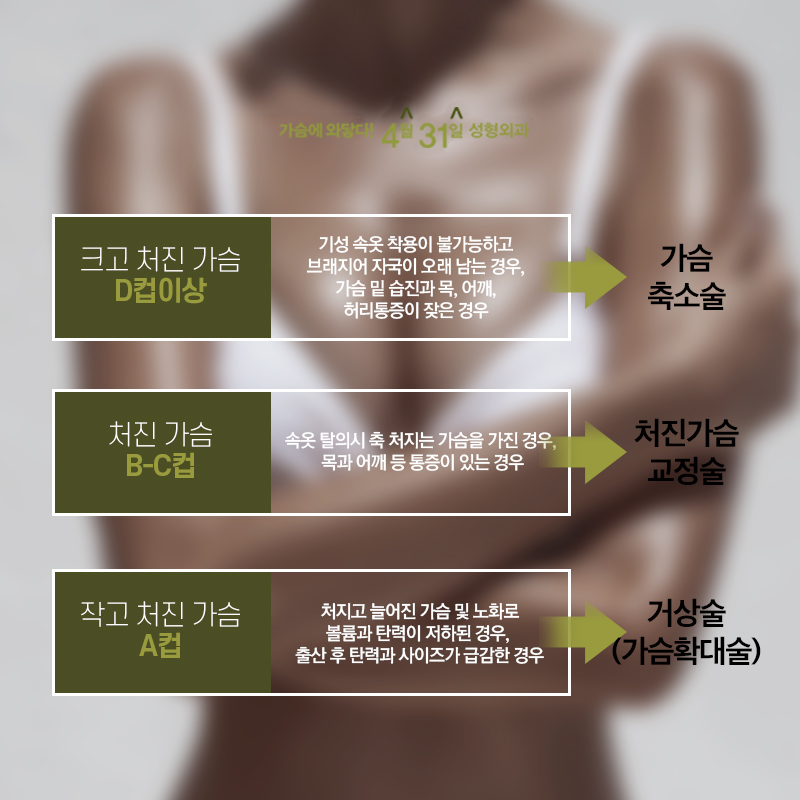
First, in the case of large, sagging breasts of D-cup or larger,
not only is it impossible to wear ready-made bras,
but bra marks may remain for a long time,
pain may occur in the neck, shoulders, and back,
and eczema may develop under the breasts due to sagging.
For those with these symptoms and concerns, we recommend breast reduction surgery.
And for those with sagging breasts from B cup to C cup,
when removing underwear, the drooping breasts, neck, shoulder, and back pain,
and eczema under the breasts caused by sagging breasts may have been a concern.
For such cases, we recommend ptosis correction surgery.
On the other hand, if the breasts are small but sagging, such as A cup or smaller,
you may have wondered what should be done.
Breasts do not only sag when they are large.
Due to aging, volume and elasticity may decrease,
or after childbirth, size and elasticity may drop sharply,
leaving the breasts sagging and stretched,
which can also be a concern for some people.
In such cases, we help improve them through a breast augmentation procedure using a lift.
People with sagging breasts often express concern after childbirth.
Because of this, some ask whether surgery is possible even though not much time has passed since giving birth,
saying their breasts have become too large too quickly.
However, if milk is still being produced,
it is advisable to take medication to dry up the milk before undergoing surgery.
You can receive a detailed explanation about the timing of surgery and medication during the preoperative consultation.
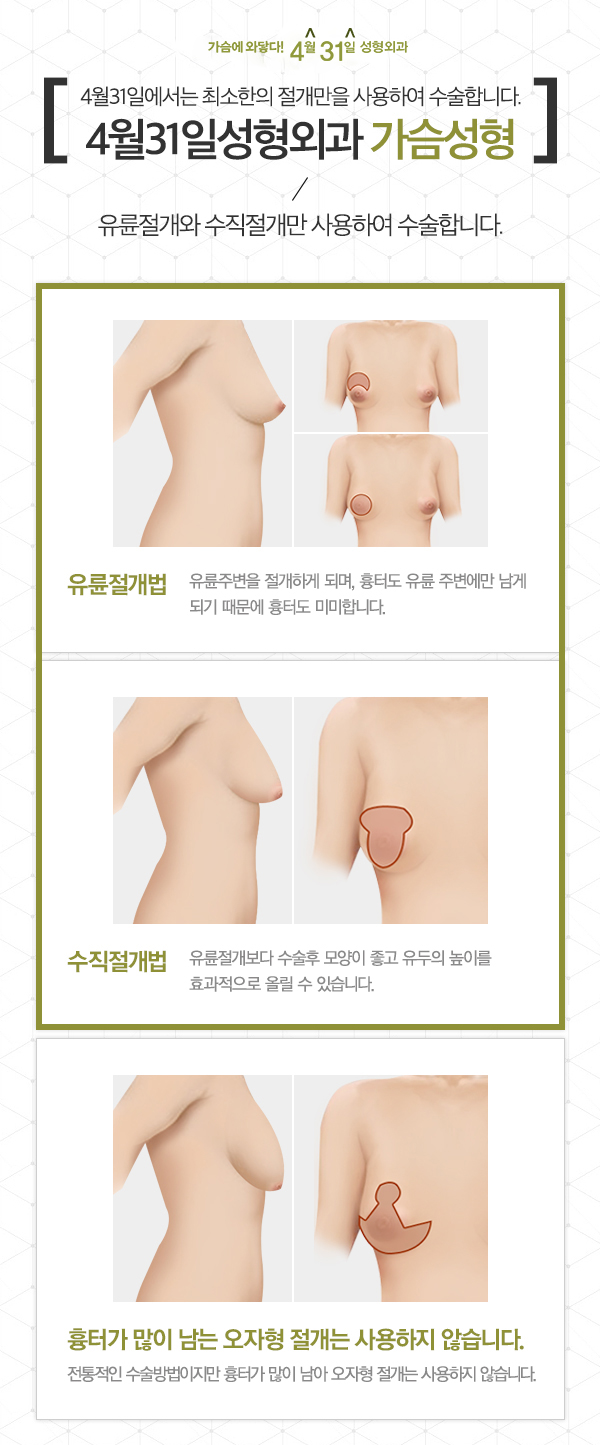
In the past, breast reduction surgery often used an inverted-T incision,
so some people may have worried about leaving many scars.
However, breast reduction surgery includes not only the inverted-T incision method but also the periareolar incision method and the vertical incision method.
The periareolar incision method involves making an incision around the areola, and the scar remains only around the areola,
so the scar is minimal.
And the vertical incision method provides a better postoperative shape than the periareolar incision
and can effectively raise the nipple position.
At our clinic, we use only the periareolar incision method and the vertical incision method to reduce concerns about scarring.
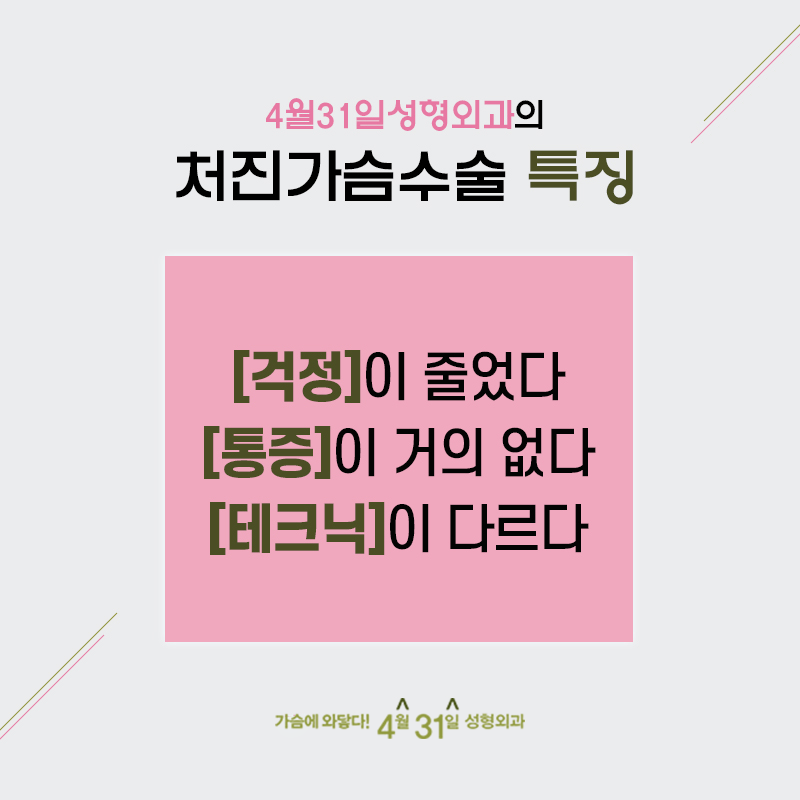
In addition, during surgery we minimize incisions in the surgical area,
close the wound with sterile, body-friendly Dermabond,
and inject Botox to do our best to prevent scarring.
After surgery, taping and basic laser treatment are performed,
and if some scars become prominent,
we operate a scar clinic to actively provide additional laser treatment, injection treatment, medication treatment, and treatment using silicone sheets.
Also, some people worry about pain.
Many patients worry a lot about pain before surgery,
but in fact, many say that after surgery it is much more manageable than they had feared.
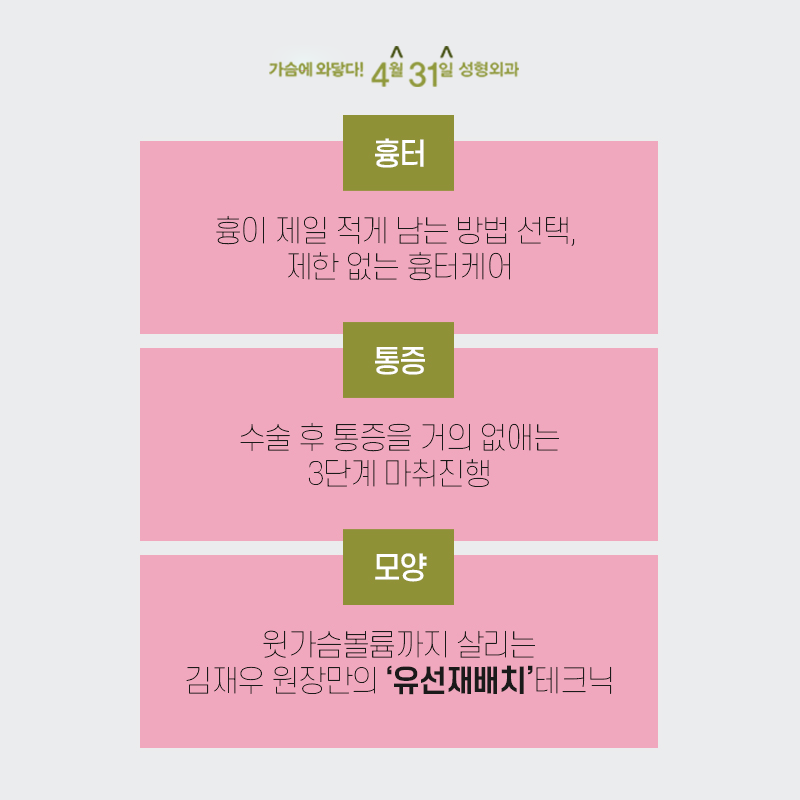
At our clinic, to minimize pain,
we perform surgery carefully to avoid damaging the breast nerves,
and before finishing the operation, we inject an intercostal anesthetic that lasts about 8 to 12 hours around the breast nerves
to reduce pain immediately after surgery.
In addition, to ensure patient safety,
we have not only heart rate and oxygen saturation monitoring and an air warmer to maintain body temperature,
but also a defibrillator and emergency medications on hand,
and we have established an emergency system with a university hospital
so that we are thoroughly prepared even for unexpected situations.
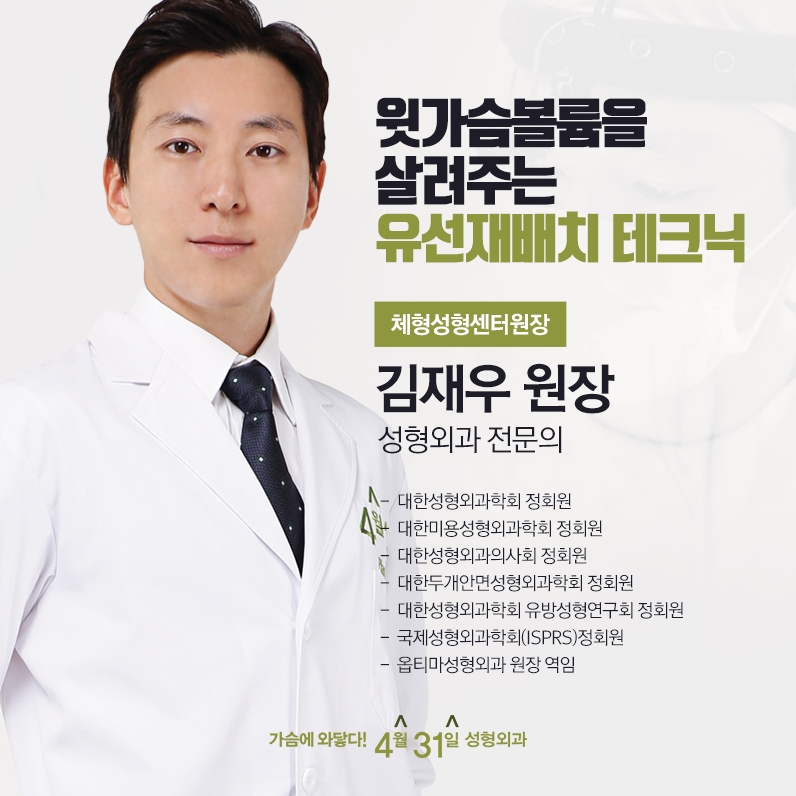
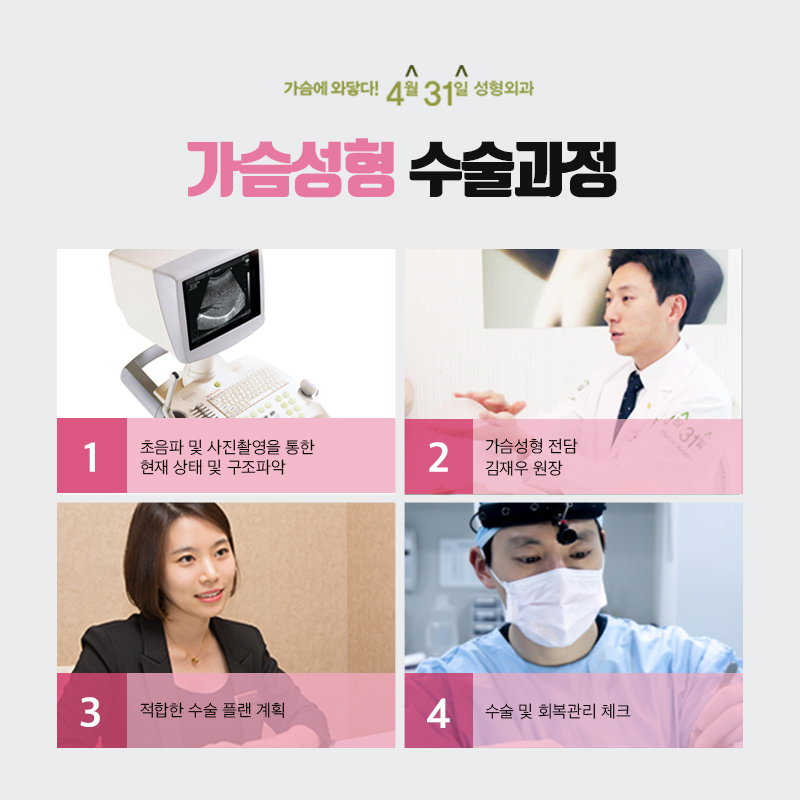
There is not only a dedicated operating room nurse for breast surgery,
but also Director Kim Jae-woo, a board-certified plastic surgeon specializing in breast surgery,
who handles consultations, customized surgery, and recovery management checks,
so we believe you can look forward to the results you want.
For detailed inquiries and consultation requests, please click the link below.

▲ You can check the real story of breast ptosis surgery ▲