
We tend to overlook things that have become too familiar to us.
For most people, skin is simply thought of as the surface of our body,
but skin is the largest organ in the human body.
In terms of weight, it is about twice as heavy as the brain, and its surface area is also very large.
Human skin not only serves as a protective barrier, but also plays various roles, such as allowing us to feel sensation.
Because skin is visible at a glance and plays an important role in determining first impressions,
more and more people are making efforts to care for their skin.
When caring for the skin, there are many factors to manage,
but one of the areas many people pay attention to is pores.
Pores originally refer to hair follicles, the spaces where hair grows, and because they are also connected to sebaceous glands,
sebum produced by the sebaceous glands comes to the skin’s surface through the pores.
Pores exist all over the body except on the palms, soles, and lips,
and because they are mainly distributed across the face, they are even more noticeable.

So why do these pores widen in the first place?
The reasons pores widen can be divided into two categories.
First, the reason most people know about for enlarged pores is
overproduction of sebum.
As mentioned earlier, because pores are connected to sebaceous glands,
pores serve as channels through which sebum comes out.
For that reason, when sebum is excessively produced, pores may become enlarged.
In addition, when sebum and various waste substances mix and block the pores,
this can remain trapped in the pores and also cause them to widen.
Another reason pores may enlarge is decreased skin elasticity.
The skin is divided into several layers,
and among them, the layer responsible for skin elasticity is the dermis.
The dermis is mainly composed of collagen,
and if collagen gradually decreases and moisture is reduced due to ultraviolet rays or various other factors,
the skin loses elasticity, and not only wrinkles but also pore elasticity decreases.
As a result, pores become larger.

Depending on their shape and cause, pores can be divided into two types:
horizontal pores and vertical pores.
Horizontal pores are those that mainly appear in the teens to mid-20s,
and refer to pores that widen due to excessive sebum production.
Horizontal pores are characterized by expanding into a round shape.
Vertical pores are those that mainly appear after the mid-20s,
and refer to pores that widen due to aging, when skin elasticity decreases.
Vertical pores are characterized by stretching and widening into an oval shape.

When choosing a pore-reduction laser to reduce pores in the past,
Fraxel was often selected.
Fraxel was a method that treated the skin by ablating it
by directing a thin laser beam.
It can be seen as a method of removing the skin,
but in the case of Fraxel, even if the procedure is performed after applying numbing cream, the pain is severe,
and because it can cause red marks on the skin along with facial flushing and a feeling of heat,
returning to daily life immediately after the procedure is difficult.
In this respect, many people may have wondered whether there is a pore-reduction laser that can overcome the drawbacks of Fraxel,
and for those who have had this concern, today I would like to introduce the pico laser.

The pico laser is a method that incorporates the ultrashort PICOSECOND, which is one trillionth of a second.
Because it delivers a shorter duration than before, it is a method that applies higher energy.
This works on a principle similar to narrowing the outlet when spraying water,
which makes the water pressure stronger.
You may find it easier to understand if you think of it as a principle in which stronger energy is delivered as the duration becomes shorter.
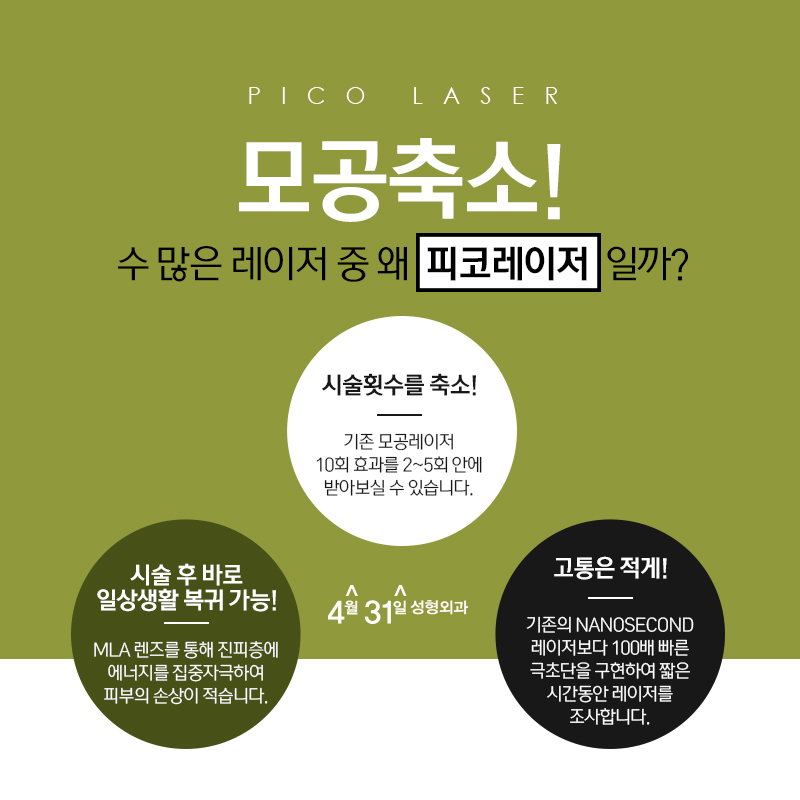
Then you may be wondering why the pico laser is recommended instead of Fraxel.
First, the pico laser achieves an ultrashort duration that is 100 times faster than the NANOSECOND used by conventional pore-reduction lasers,
so the laser is applied for a shorter time and the procedure is less painful.
Also, as mentioned, the pico laser applies a stronger laser in a faster time,
which means that the effect you could get from 10 sessions of a conventional pore laser can be achieved in 2 to 5 sessions,
so it has the effect of reducing the number of procedures.
In addition, because it focuses energy stimulation on the dermis through an MLA lens,
there is less damage to the skin,
so you can return to daily life immediately after the procedure.
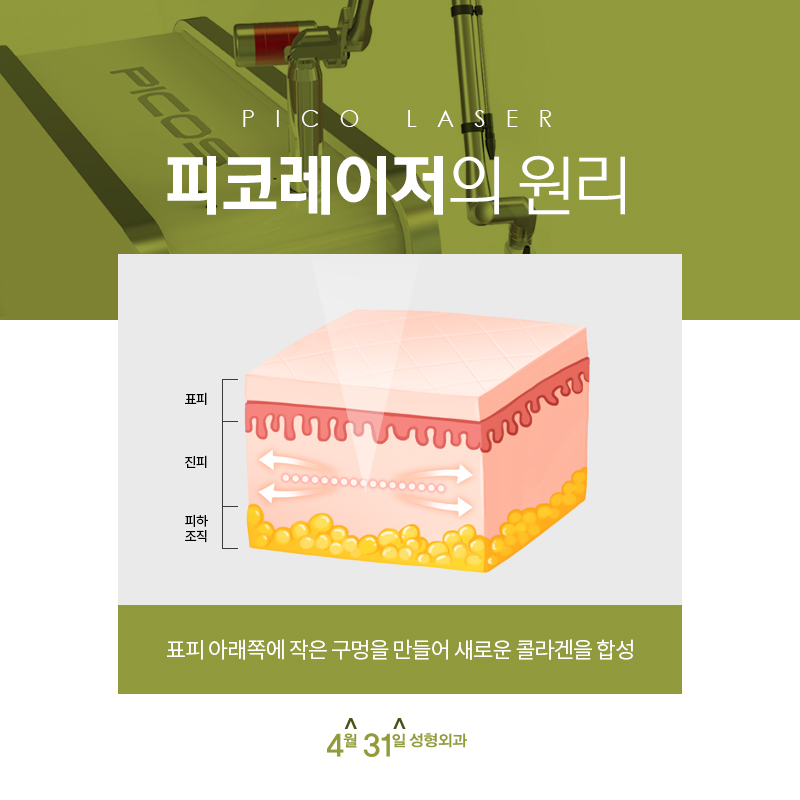
The pico laser does not ablate or cut the skin; instead, it works by filling it.
The pico laser works on the principle of creating tiny holes below the epidermis and synthesizing new collagen.
Through this, it fills the skin with new collagen.
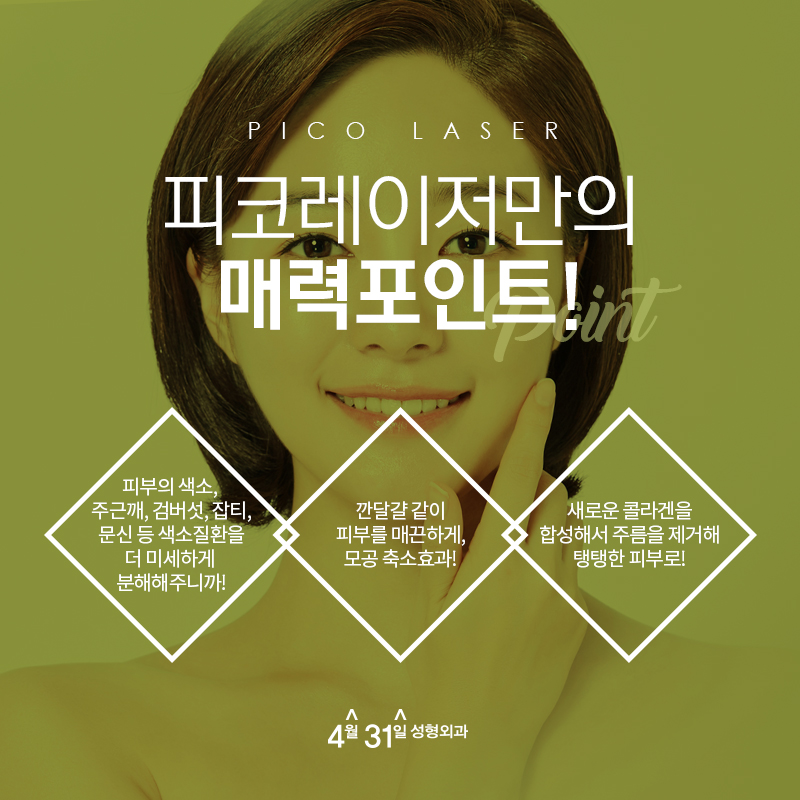
Also, through this principle, you can expect not only a pore-reduction effect but also improvement in pigment conditions such as freckles, age spots, blemishes, and tattoos,
as well as wrinkle improvement.

When choosing the pico laser over Fraxel as a pore-reduction laser,
you may also be curious about the cost.
At our clinic, we run the Thursday and Friday Day event every Tuesday and Thursday,
which offers discounts on all petit procedures,
so please keep this in mind when visiting, as you may be able to use it at a more reasonable price.
If you would like more detailed information or need a consultation, please click the banner below.