
As people get older, a variety of physical changes appear due to aging.
The general aging changes of cells include
pigment deposition, accumulation of lipid droplets, reduction of cellular substance, and nuclear atrophy.
In this way, changes occur not only internally but also externally.
As aging progresses, the skin sags and the fat layer decreases,
causing a loss of volume that can lead to hollowing of the eyes.
To improve the problems that occur in the upper eyelid area like this,
more and more people are looking for ways to address it.
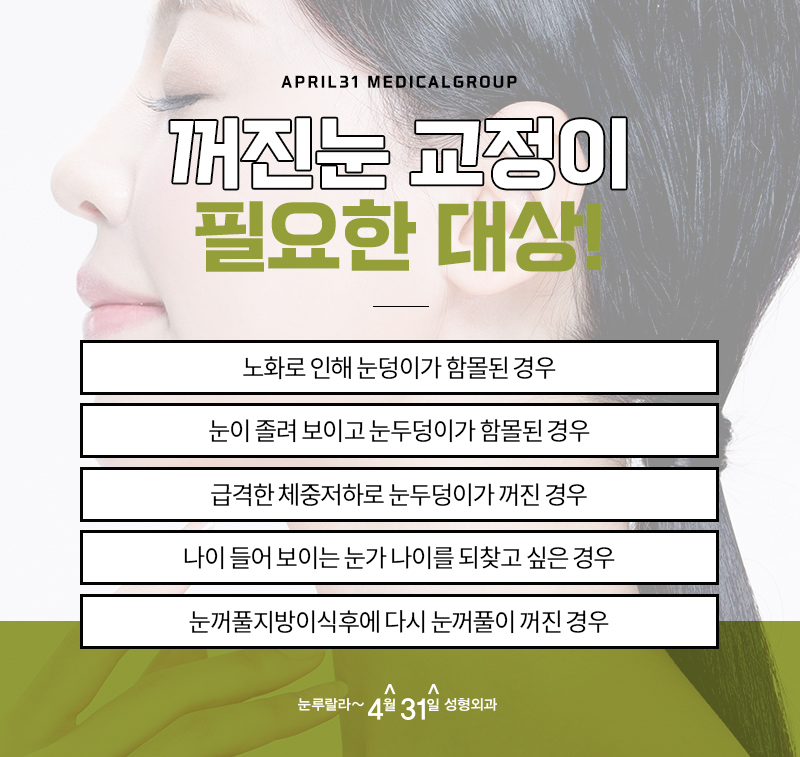
The main reason hollowing occurs is
simply the aging changes mentioned earlier.
In addition, there are cases where upper eyelid hollowing appears at a relatively young age.
In such cases, a sudden loss of weight due to excessive dieting and similar causes
can lead to a lack of subcutaneous fat and a reduction in volume.
When hollowing occurs in the upper eyelid area, externally
it can make you look older and more tired than you actually are,
as well as cause functional problems.
When the eyelid appears sunken, it is called enophthalmic eyelid.
Because enophthalmic eyelids make it difficult to open the eyes functionally,
they can cause eye fatigue, ptosis, and dry eye syndrome.
That is why improvement is an essential part of treatment.

For those who have been looking for a way to solve this concern,
today we would like to introduce eyelid volume up.
Eyelid volume up is another name for upper eyelid orbital fat repositioning surgery,
and it is a method that can improve hollowing.

Eyelid volume up refers to a method that pulls down the fat hidden behind the eyebrow
and repositions it into the sunken eyelid area.
You may wonder how volume can be added if fat is not harvested and inserted into the sunken area.
This is the part where, when you pinch the eyebrow with two fingers,
you can feel the hidden fat being gathered.
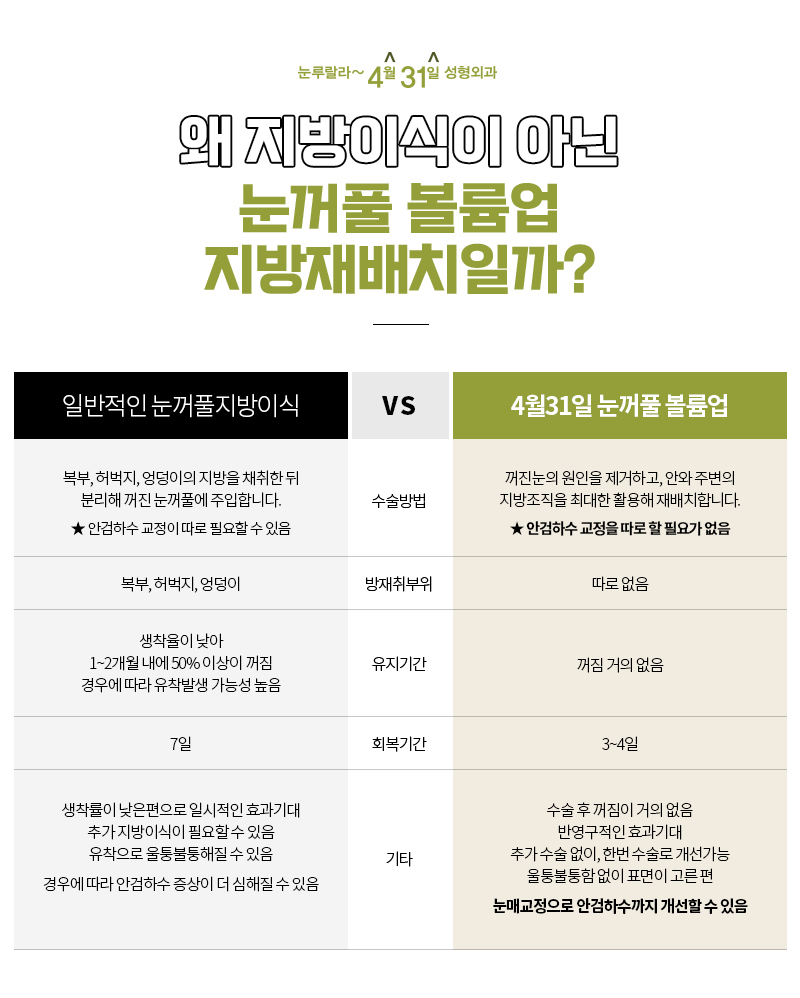
In the past, fat grafting was often performed to improve hollowing.
Upper eyelid fat grafting involved harvesting fat from areas with abundant fat such as the abdomen, thighs, or buttocks,
then separating it and injecting it into the hollowed eyelid.
With this method, the fat survival rate is low,
so more than 50% may diminish within 1 to 2 months,
and in some cases, the risk of adhesion causing an uneven surface was high.
For these reasons, additional fat grafting may have been necessary,
ptosis correction was needed separately, and in some cases the symptoms could become more severe.
By contrast, eyelid volume up removes the cause of the hollowed eye
and makes the most of the fat tissue around the orbit by repositioning it.
Because it is a method of repositioning rather than harvesting fat,
there is no need to worry about hollowing due to the survival rate,
and improvement is possible with a single surgery without additional procedures.
It also tends to leave the surface smooth without unevenness,
and it is a method that can improve ptosis through eye shape correction.
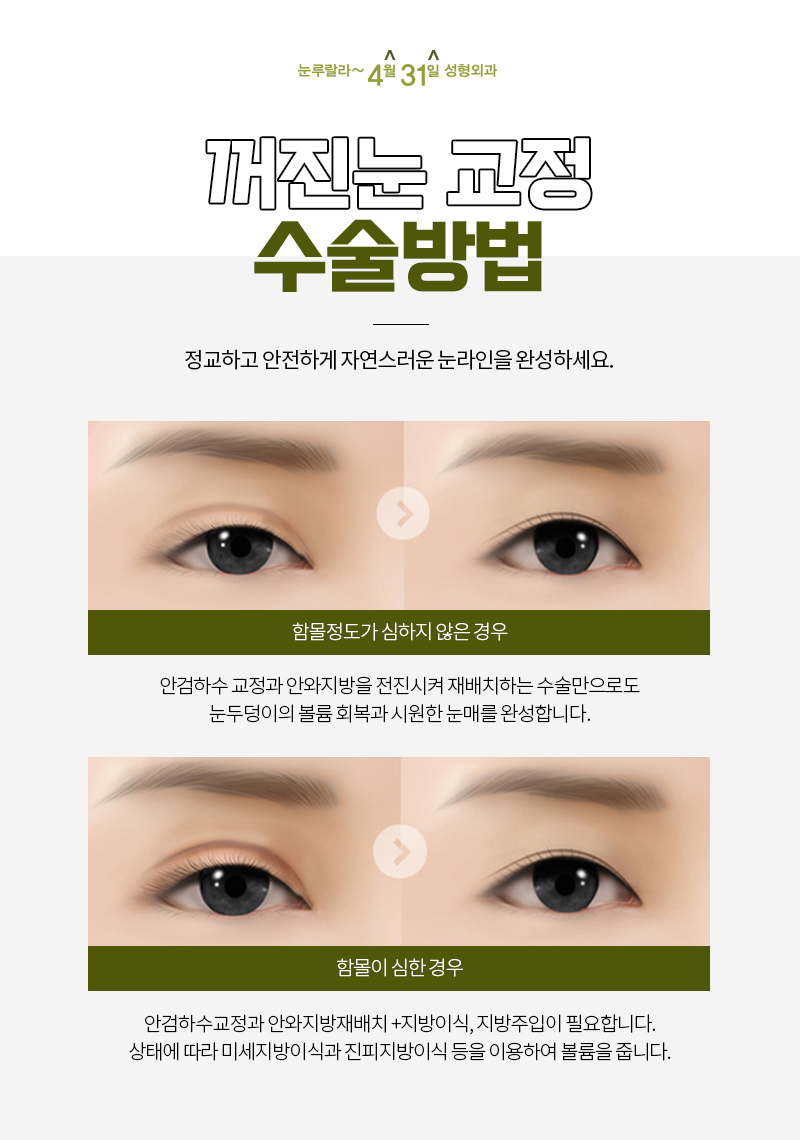
Just as each person has a different appearance and a different aging process,
the degree of eyelid hollowing can also vary.
At our clinic, we provide customized surgery depending on the degree of hollowing.
If the degree of hollowing is not severe,
volume in the upper eyelid area is restored and a refreshed eye shape is completed
with only ptosis correction and orbital fat advancement and repositioning.
If the degree of hollowing is severe,
ptosis correction, orbital fat repositioning, fat grafting, and fat injection may be needed,
and depending on the condition, we provide volume using micro fat grafting and dermal-fat grafting.
Because the eyes are an important area responsible for vision,
they are not important only from an aesthetic standpoint.
At our clinic, we proceed with a method that considers not only the aesthetic aspects of the eyes,
which determine appearance, but also their function,
so you can expect satisfying results.

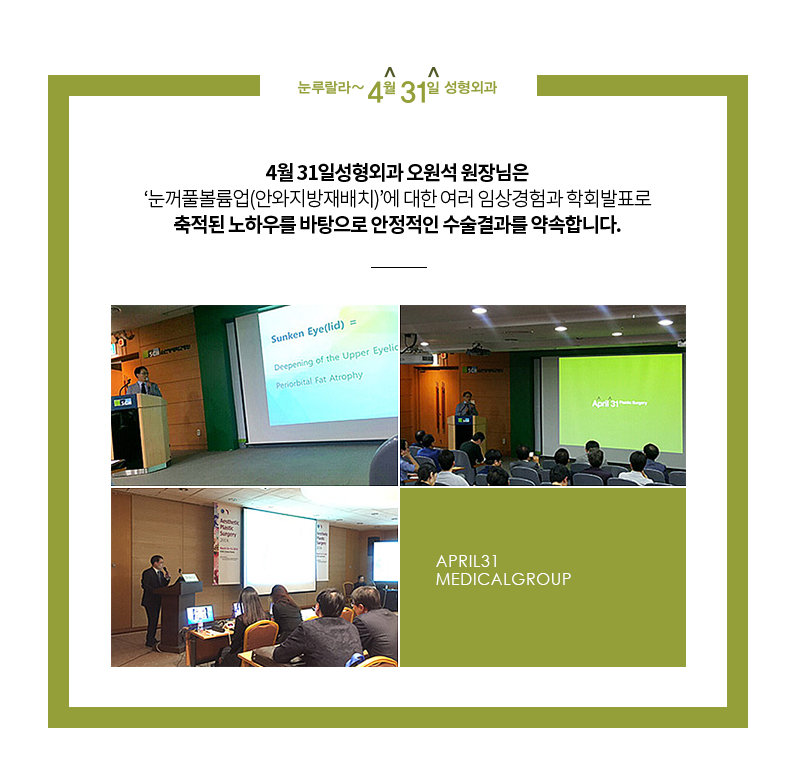
At 4월31일, Director Oh Won-seok, a board-certified plastic surgeon dedicated to eye surgery,
checks the current condition and structure through imaging and provides 1:1 consultations
to review customized surgery and recovery management.
For detailed inquiries and consultation requests, please click the banner below.