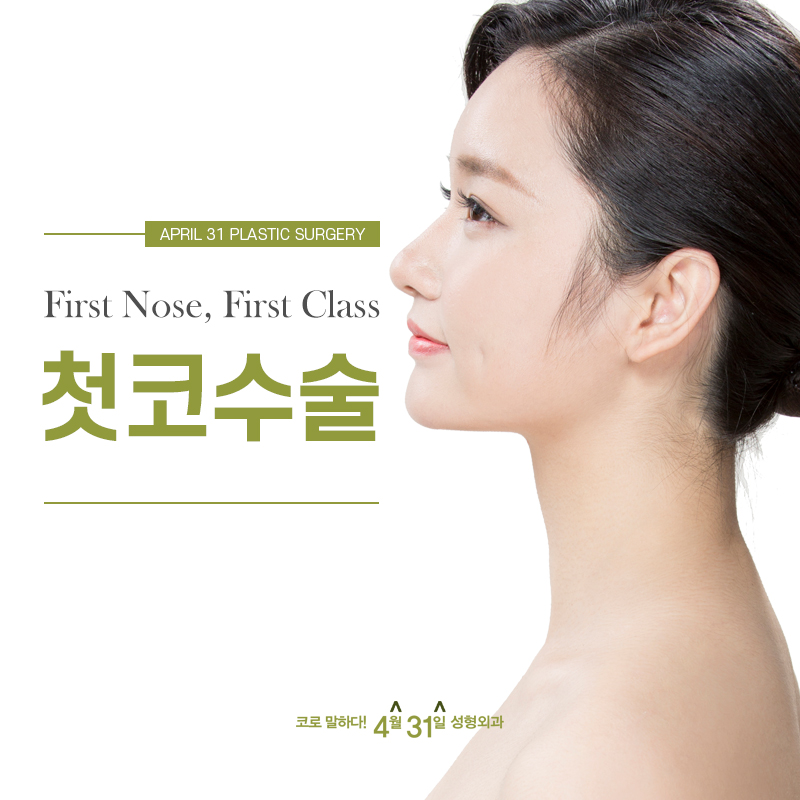
When people think of the most three-dimensional part of the face, the nose is the first thing that comes to mind.
Because the nose is the most prominent part of the face, it can determine the overall impression.
When meeting someone for the first time, people judge them based on their appearance, so many want to improve the features they are concerned about.
In particular, many people seek to improve the nose, which plays a major role in shaping one’s image.
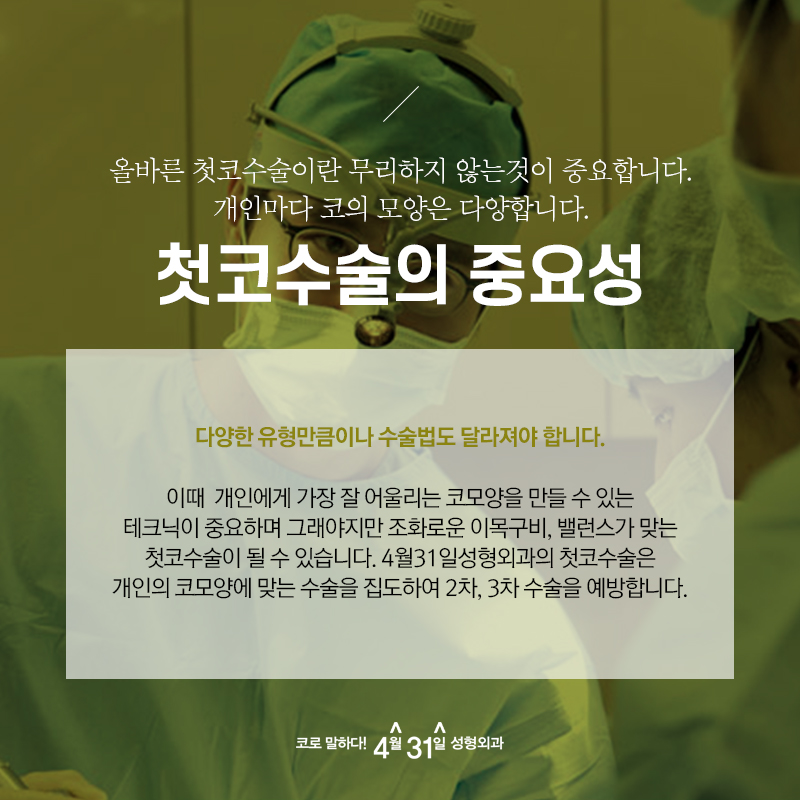
In the case of a first rhinoplasty, if you do not make a careful decision,
it may seem successful at first, but over time
the tip of the nose may turn upward or the implant may move excessively,
so it is necessary to consider several factors before proceeding.
When undergoing a first rhinoplasty, you need to think about various factors
so that you can prevent the unfortunate situation of spending more due to a failed surgery.
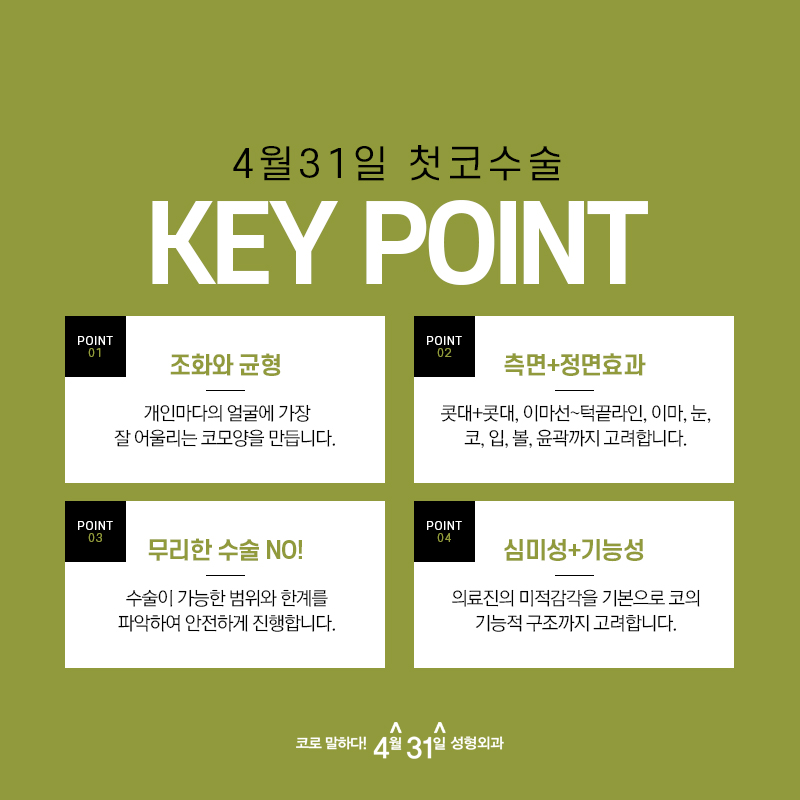
First, it is important to proceed with harmony and balance in mind.
It is important to choose a shape that best suits each individual’s face.
Second, you should consider the effects from both the side and the front.
Since the nose is the most three-dimensional feature on the face, it is important from both the front and side.
For this, you should consider the bridge of the nose, the line from the forehead to the tip of the chin, and also the forehead, eyes, nose, mouth, cheeks, and facial contours.
Third, the surgery should be performed without overdoing it.
It is important to identify the possible range and limits of the surgery and proceed safely.
Lastly, you should consider not only aesthetics but also function.
That is because the nose plays an important role not only aesthetically but also functionally.
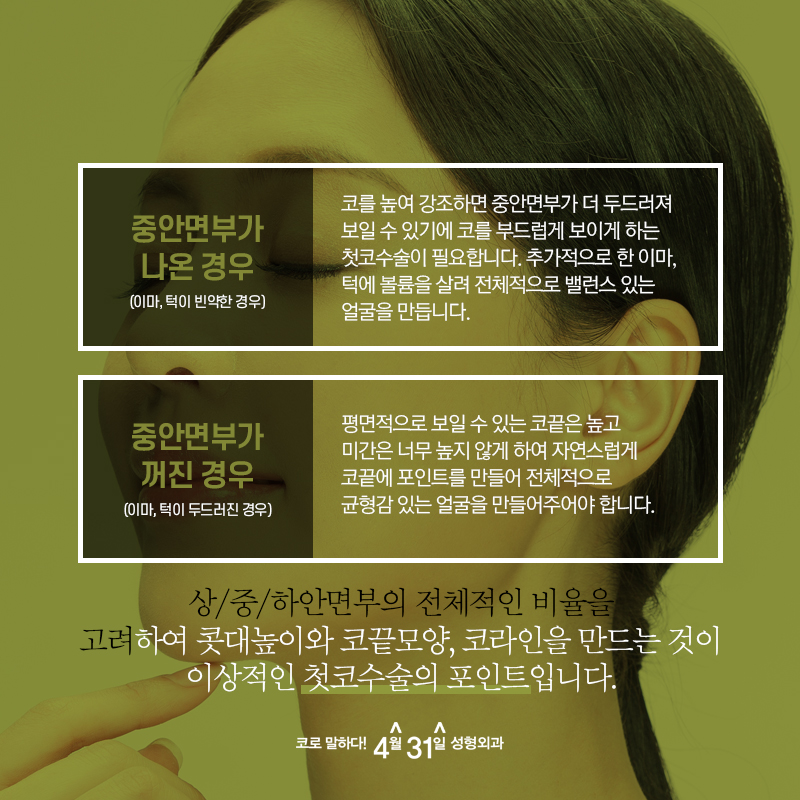
When performing a first rhinoplasty, considering the overall proportions of the upper, middle, and lower face
and creating the bridge height, tip shape, and nose line
is the ideal point and a way to prevent additional costs.
If the forehead and chin are weak and the middle face appears prominent,
raising and emphasizing the nose may make the midface stand out even more,
so a first nose surgery that makes the nose look softer is needed.
In addition, adding volume to the forehead and chin helps create a more balanced face overall.
If the forehead and chin are prominent and the midface appears flat,
the nose tip should be raised so it does not look flat, while the glabella should not be made too high,
so that a natural point is created at the tip of the nose and the face as a whole looks balanced.
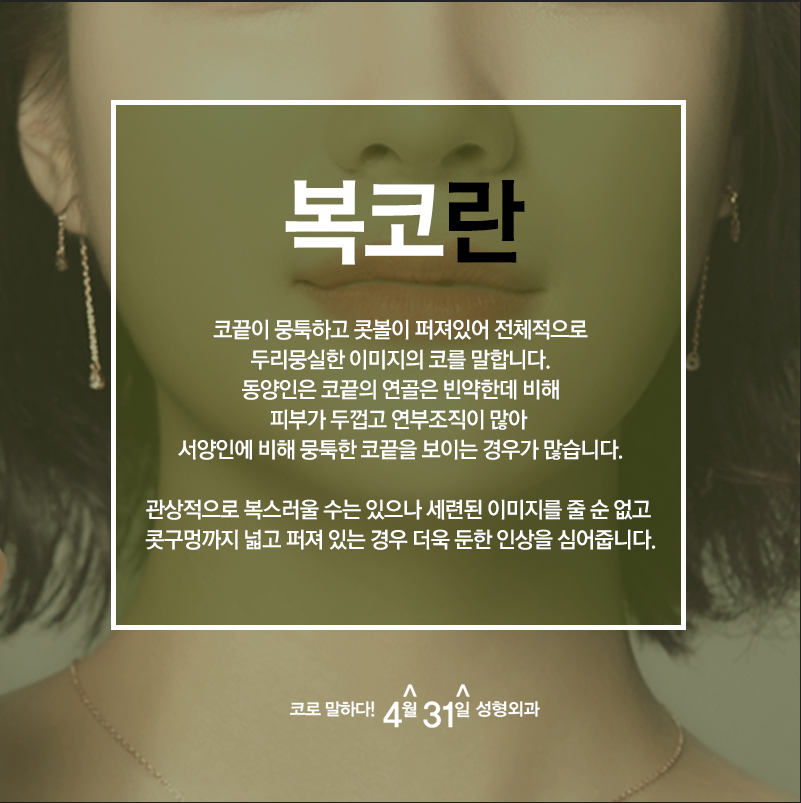
When people want a first rhinoplasty, they also often worry about a bulbous nose.
A bulbous nose refers to a nose with a blunt tip and wide nostrils,
which gives the overall impression of being round and unrefined.
In Asians, the cartilage at the tip of the nose is relatively weak, while the skin is thicker and there is more soft tissue,
so compared with Caucasians, a blunt nasal tip is more common.
Because of this, it may appear full and abundant in terms of fortune, but it does not give a refined impression,
and if the nostrils are also wide and spread out, it can create an even duller impression.
For this reason, many people want to improve a bulbous nose.
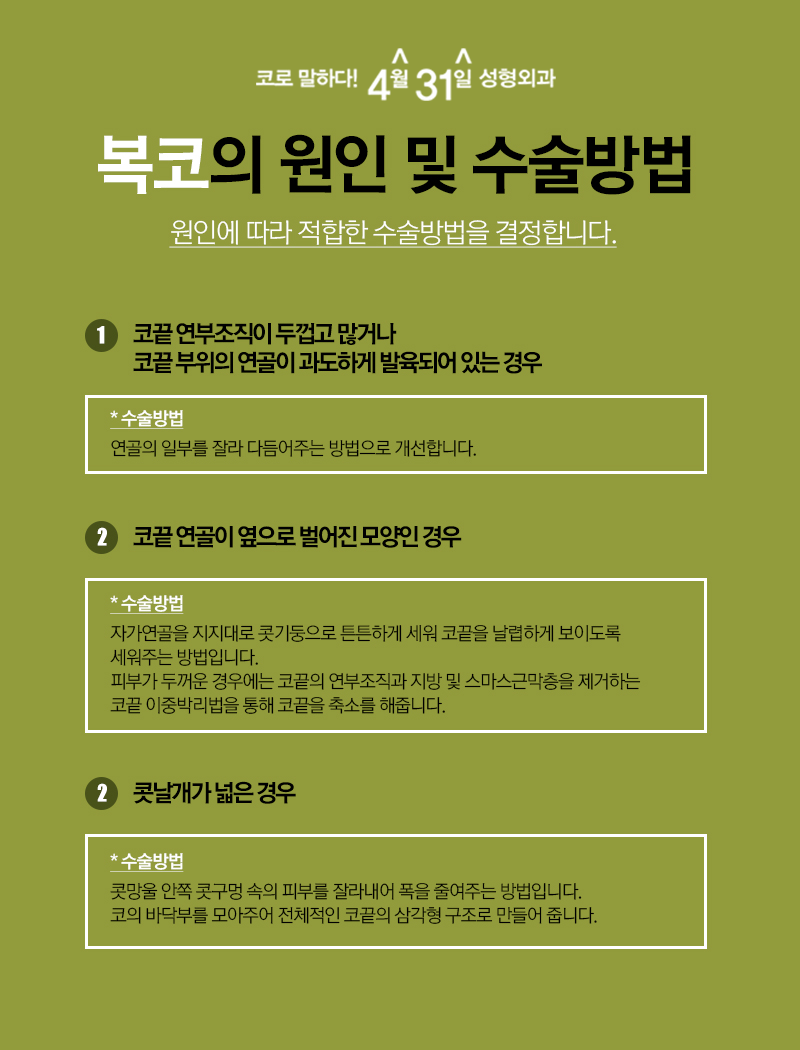
Even if a bulbous nose looks similar,
it is important to proceed with the appropriate method according to the cause.
If the soft tissue at the tip of the nose is thick and abundant,
or if the cartilage in the tip area is excessively developed,
it is important to improve it by trimming and refining part of the cartilage.
If the cartilage at the tip of the nose is spread outward,
a method is used in which autologous cartilage serves as a support to firmly build up the columella
and lift the tip of the nose so it looks sharper.
If the skin is thick,
the tip is reduced through a double-dissection method that removes soft tissue, fat, and the SMAS fascial layer from the tip of the nose.
Lastly, if the alar area is wide,
the skin inside the nostrils on the inner side of the nostril base is removed to reduce the width.
The base of the nose must be brought together to create the overall triangular structure of the nose tip.
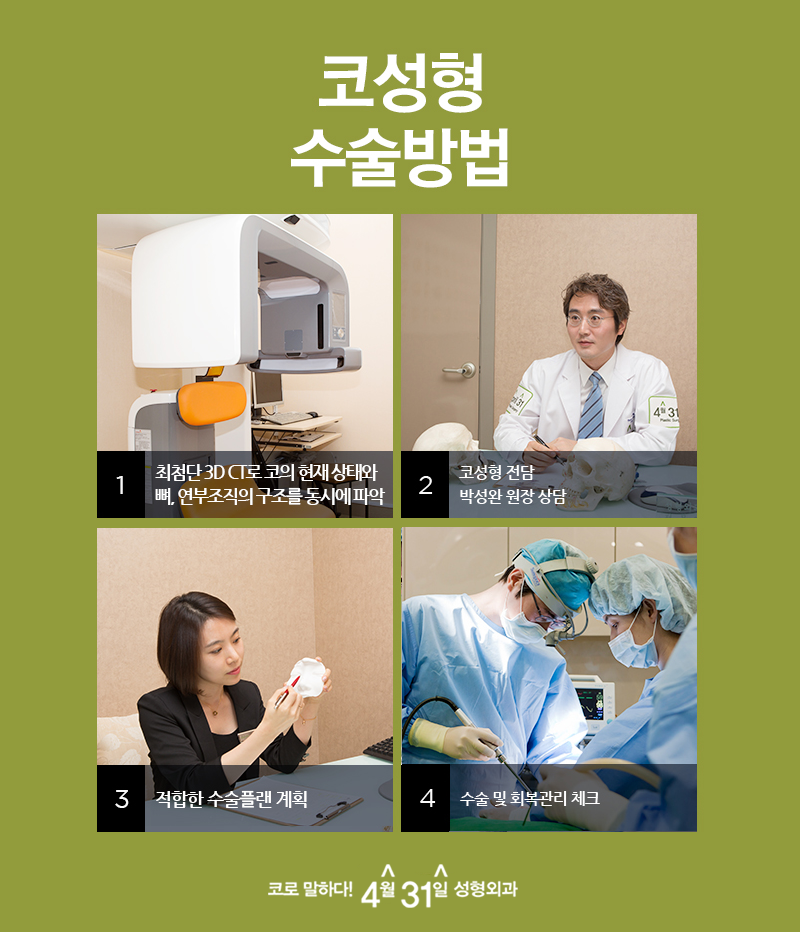
To accurately identify the cause, what matters more than anything else is
a detailed examination.
At 4월31일, for an accurate examination, we use 3D-CT
to identify the current state of the nose and the structure of the bone and soft tissue simultaneously in both 2D and 3D.
If you want to proceed with your first rhinoplasty at a reasonable cost?
For detailed inquiries and consultation, please click the banner below.