
When various important days come around,
the part we need to pay attention to is our appearance.
When meeting someone for the first time or when an important day arrives,
the first thing people notice is your appearance.
There are many aspects of appearance,
but one of the main concerns is the face.
Among the facial features, the eyes are often called the windows to the mind, so many people pay close attention to them.
For those looking into eyelid fat grafting,
many want to correct the negative impression caused by hollow eyes.
The maintenance period is also likely a concern.
Today, we will explain how to improve sunken eyelids and create a lively impression.

The most common reason for sunken upper eyelids is the aging process.
As people age, the elastic fibers and collagen fibers in the dermis change,
causing the skin’s elasticity to decrease and the volume of the face to diminish.
One of the changes that occurs as this happens is sunken upper eyelids.
In addition, even relatively young people may complain of sunken upper eyelids due to factors such as
excessive dieting for a slim body, habits like rubbing the eyes,
or genetic reasons.
Sunken upper eyelids can make a person look tired and older than they really are,
and functionally, they can make it harder to open the eyes.
This can lead not only to eye fatigue and dry eyes, but also ptosis,
so it is a condition that needs correction.

In the past, eyelid fat grafting was often planned as a solution for sunken upper eyelids,
but today we would like to introduce eyelid volume-up, a more advanced technique than eyelid fat grafting.
Eyelid volume-up is also called orbital fat repositioning surgery.
As the name suggests, it is a method that gives volume to sunken eyelids by repositioning orbital fat.
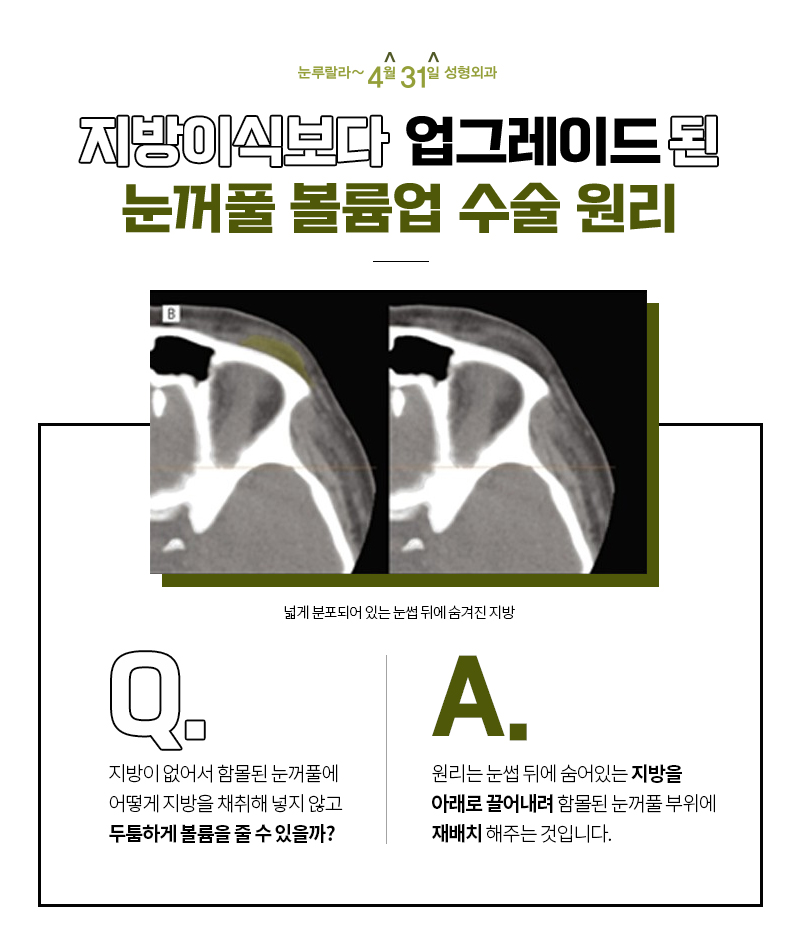
You may be wondering what orbital fat is.
Orbital fat refers to the fat around the eyes.
Eyelid volume-up is performed by pulling down the fat hidden behind the brow
and repositioning it to the sunken eyelid area.
You may be wondering why we are introducing eyelid volume-up
instead of the eyelid fat grafting that many people have traditionally undergone
to improve hollow eyes and create a lively impression.
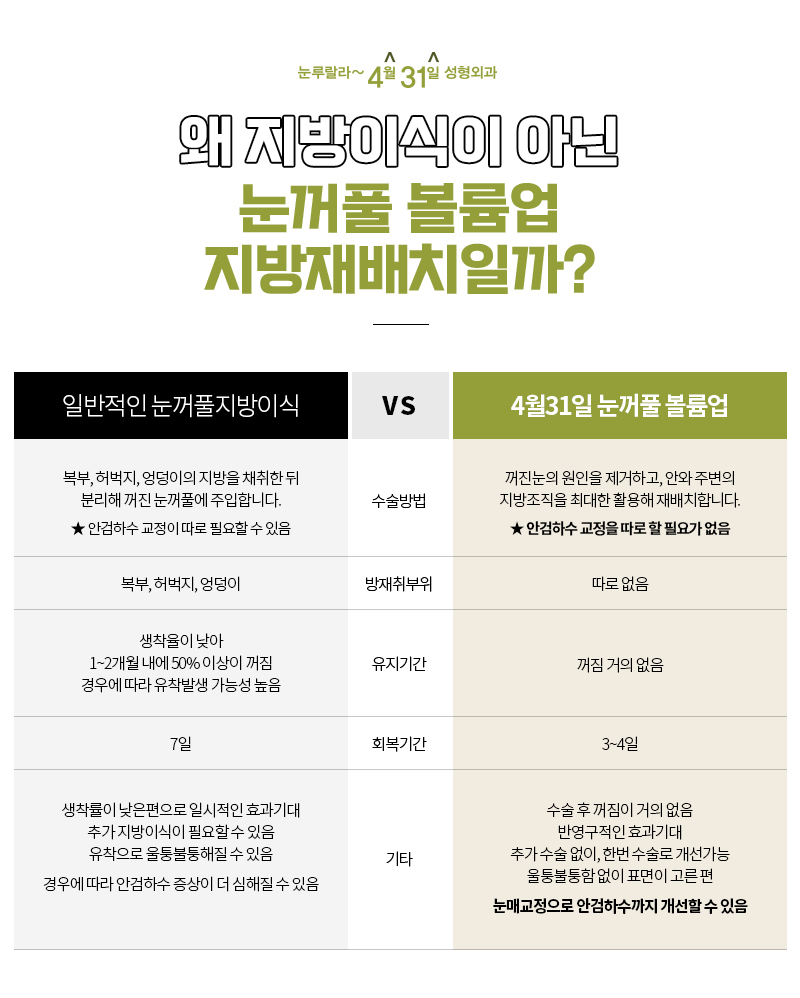
In the case of eyelid fat grafting,
fat was harvested from areas other than the eyes,
such as the abdomen, thighs, or buttocks where there is a lot of fat,
then separated and injected into the sunken eyelids.
However, because the fat is taken from another area,
the survival rate of the injected fat, known as the engraftment rate, is low,
and more than 50% can deflate within 1 to 2 months.
In some cases, there was also a high possibility of adhesions causing an uneven surface.
In addition, additional fat grafting may be needed,
and in some cases, ptosis caused by sunken upper eyelids may become more severe,
which meant there was the burden of having to undergo ptosis correction separately.
By contrast, eyelid volume-up uses as much of the fat tissue around the orbit as possible and repositions it,
so there is no need to worry about the engraftment rate.
The surface is also relatively smooth without unevenness,
the recovery period is shorter than with eyelid fat grafting,
and improvement is possible with just one procedure without additional surgery.
In particular, in cases of sunken upper eyelids, it is important to perform a customized procedure for each case.
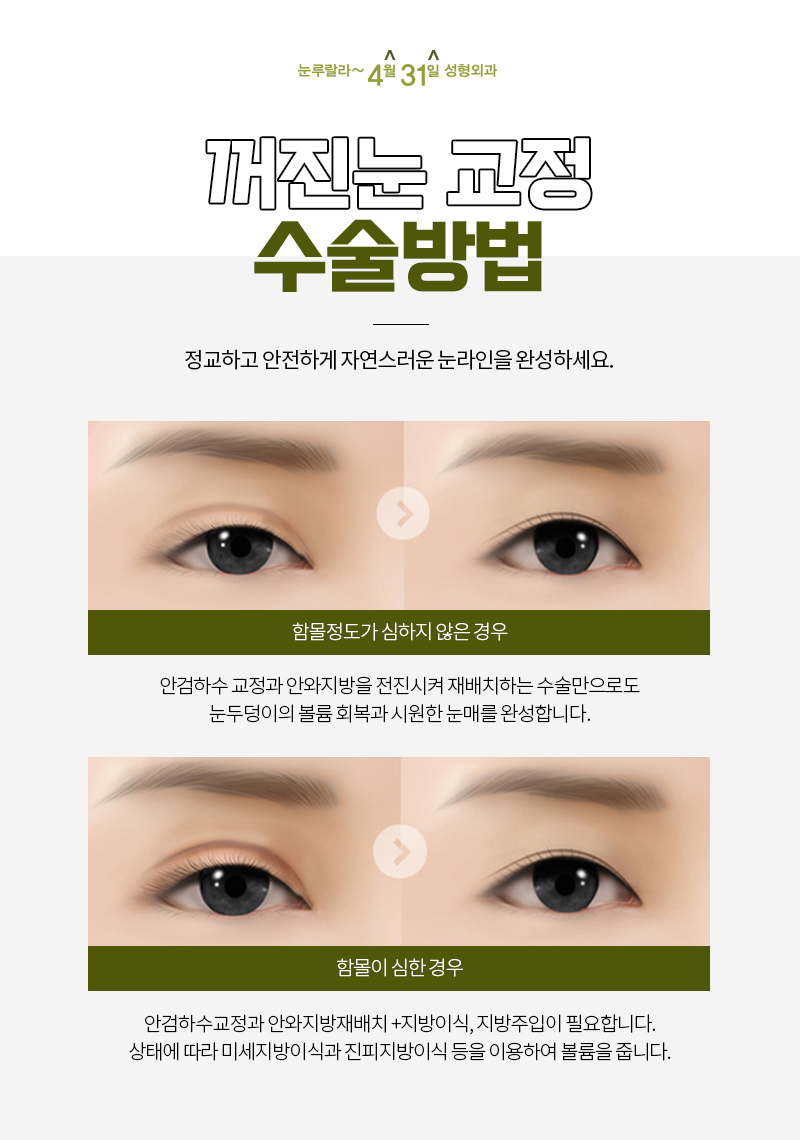
At our clinic, for a precise and natural eye line,
we proceed with different methods depending on the degree of hollowing.
First, this can be briefly summarized into two categories.
When the degree of hollowness is not severe,
restoring eyelid volume and creating a refreshed eye appearance can be achieved with ptosis correction
and only by advancing and repositioning the orbital fat.
When the degree of hollowness is severe,
ptosis correction, orbital fat repositioning, fat grafting, and fat injection are needed.
Depending on the condition, it is also important to add volume using microfat grafting and dermis-fat grafting.
It may sound very simple when explained in words,
but for the process of cleanly separating and repositioning fat to proceed smoothly,
it is important to visit an experienced medical team.
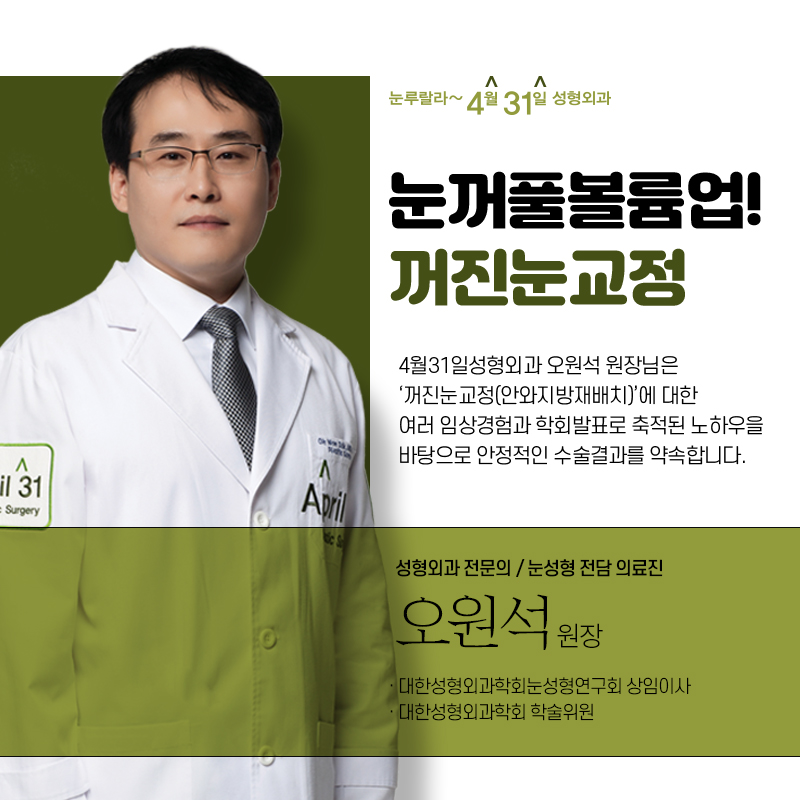
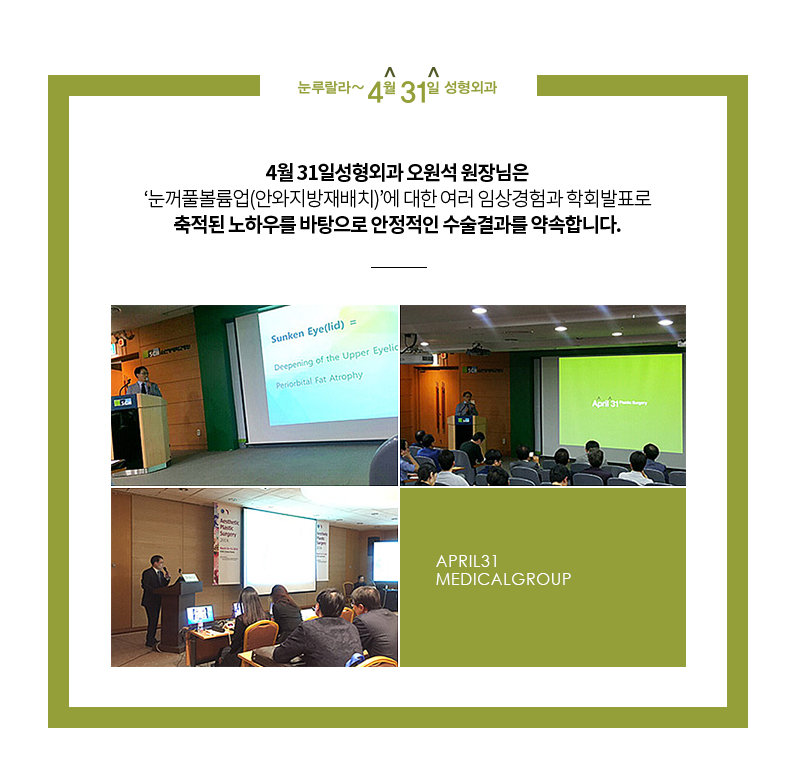
At our clinic, board-certified plastic surgeon Director Oh Won-seok, who specializes in eye surgery,
provides 1:1 consultations, customized surgery, and recovery care,
so you can expect stable surgical results.
For detailed inquiries and consultation requests, please click the link below.