Recently, not only educational background or certifications, but even appearance is being regarded as a credential,
so more and more people are paying attention to grooming their looks.
There are many areas that need attention in order to create a favorable impression
and even become more beautiful.
There are many ways to improve one’s image through the face,
but among them, many people especially think about the features.
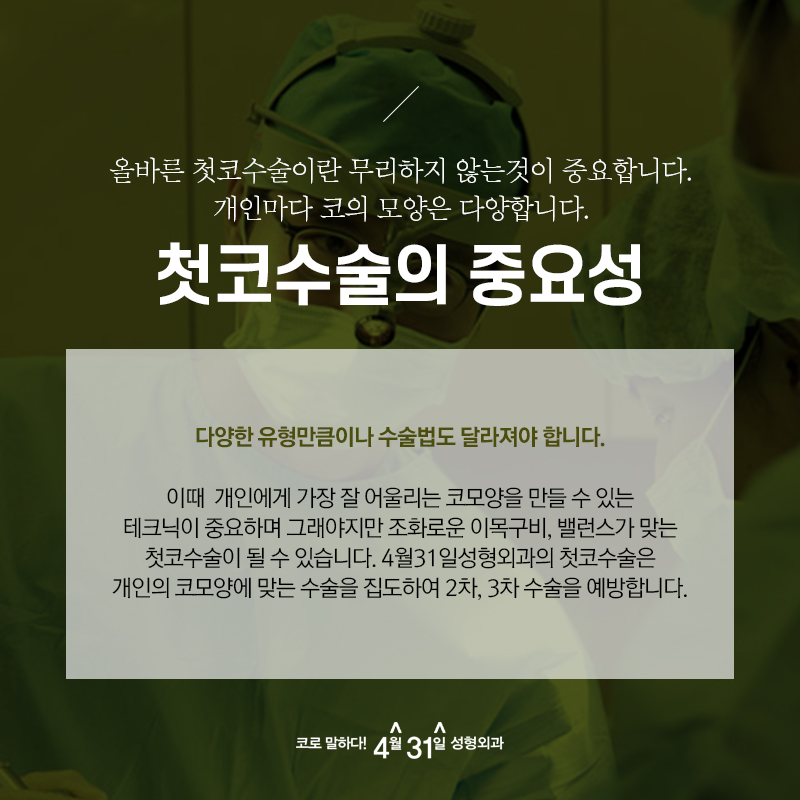
Among the facial features, the nose is not only the center of the face but also the most three-dimensional area.
For the nose, it is important to create a shape that achieves harmony and balance while considering facial proportions.
If not done well, it can disrupt the balance of the face,
and there may be cases where further improvement is needed later.
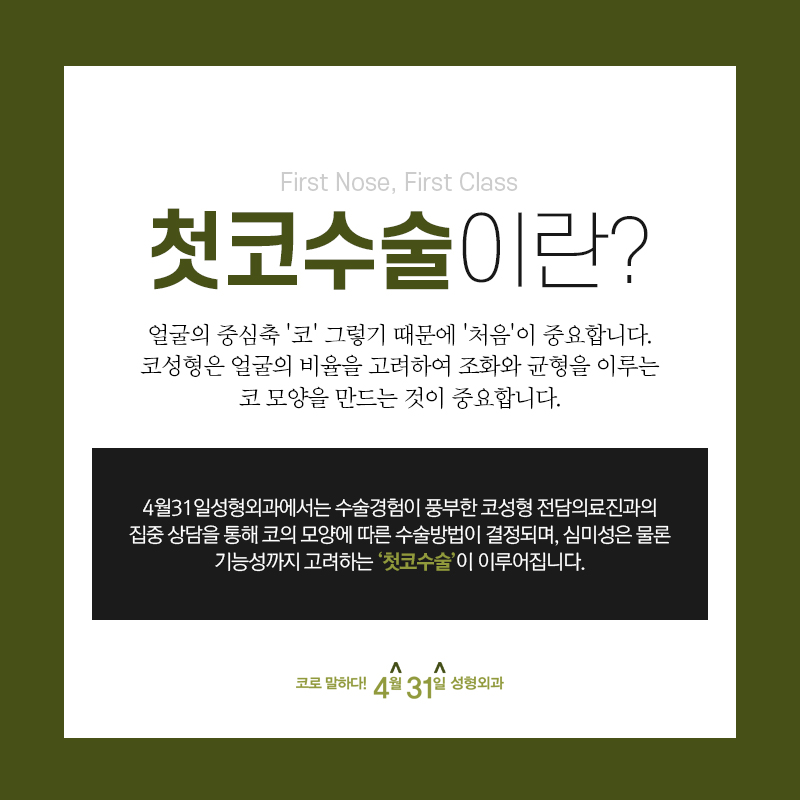
In particular, since the nose has a variety of shapes depending on the individual,
the technique of the medical team who can create the shape that suits each person best is important.
By finding a trustworthy medical team,
a harmonious set of facial features and a balanced procedure are possible.
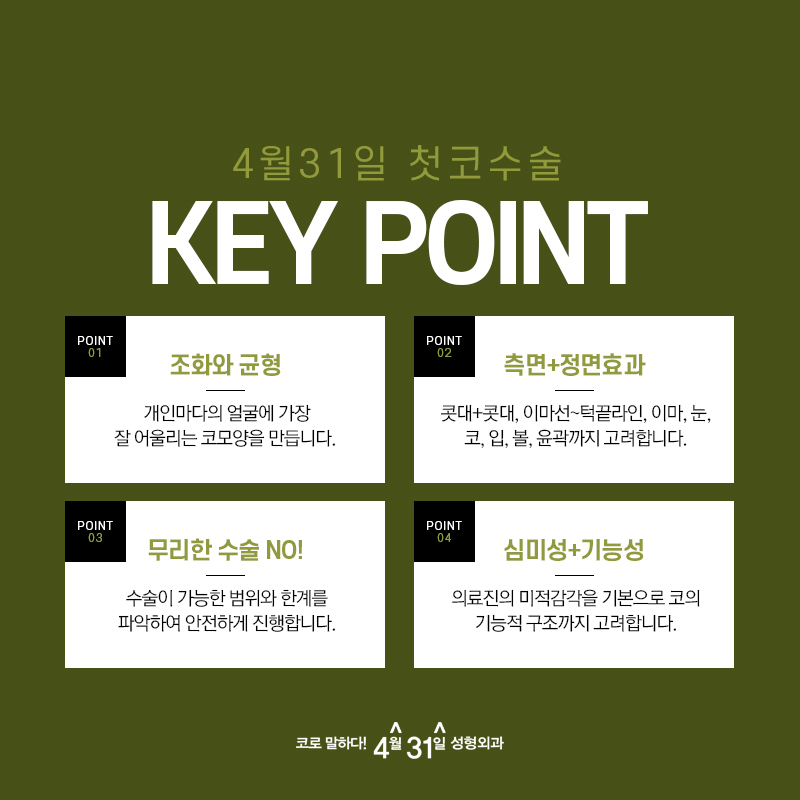
When improving the nose, there are four important points to keep in mind.
First, because there are many different shapes,
harmony and balance should be considered
and the shape that suits each person’s face best should be created.
Also, because it is the most three-dimensional part of the face,
both the side view and the front view must be considered during the procedure.
Not only the bridge of the nose, but also the forehead line to the chin tip line, the forehead, eyes, nose, mouth, cheeks, and facial contour should all be taken into account.
In the case of the nose, there are possible ranges and limitations,
so it is better to understand these and avoid forcing an excessive procedure.
The nose plays an important external role,
but
because it is also a respiratory organ and a sensory organ,
it is important to proceed while considering both aesthetics and function.
When first trying to improve the nose,
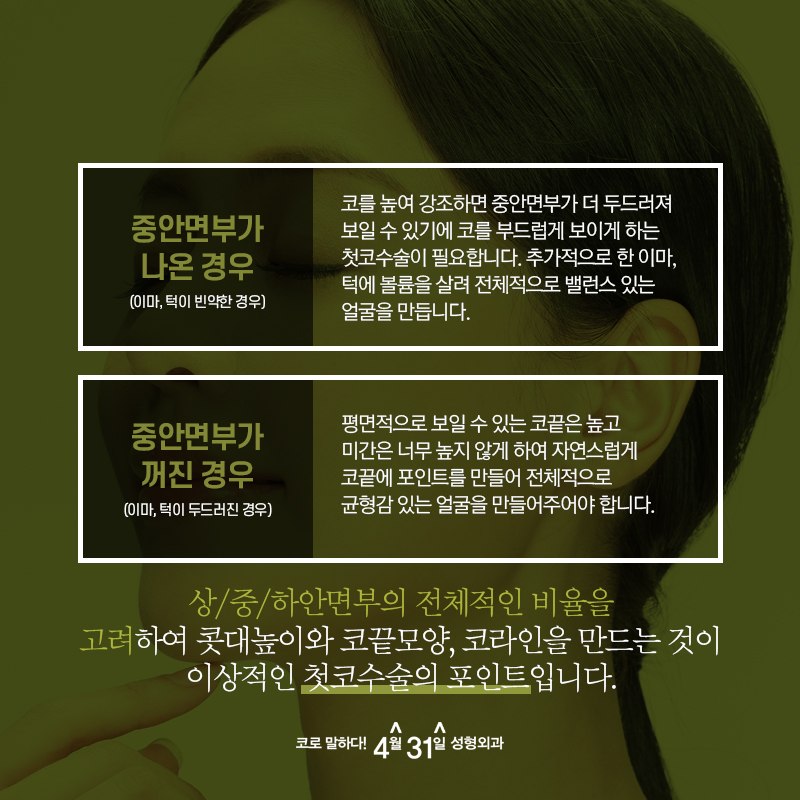
it is ideal to create the bridge height, tip shape, and nasal line
while considering the overall proportions of the upper, middle, and lower face.
If the forehead and chin are underdeveloped and the midface appears prominent,
emphasizing the nose by making it higher can make the midface stand out even more,
so the nose should be refined to look softer.
In addition, it is important to add volume to the forehead and chin
so that the face as a whole appears balanced.
If the forehead and chin are prominent and the midface appears sunken,
the nose tip, which can look flat, should be made higher, and the glabella should not be made too high,
so that a natural point is created at the tip of the nose
and the face as a whole is made more balanced.
Among the various nose shapes, many people especially look into bulbous nose surgery.
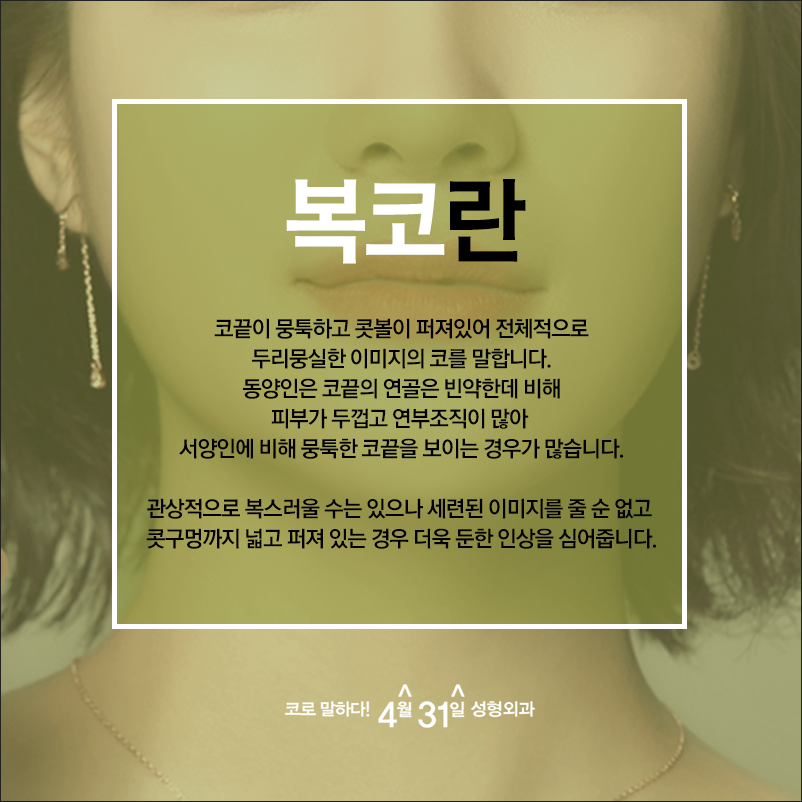
A bulbous nose refers to a nose with a blunt tip and flared nostrils,
resulting in an overall rounded and indistinct appearance.
In particular, in the case of East Asians, the cartilage at the tip of the nose is relatively underdeveloped,
while the skin is thicker and there is more soft tissue,
so compared to Westerners, the nose tip often appears more blunt.
A bulbous nose may be considered full or abundant in physiognomy, but it cannot give a refined image,
and when the nostrils are also wide and flared, it gives an even duller impression.
That is why many people want to improve the nasal line with a customized design through bulbous nose surgery.
A bulbous nose can be caused by various factors.
When performing bulbous nose surgery to improve the line in the desired design,
it is important to proceed with the appropriate method depending on the cause.
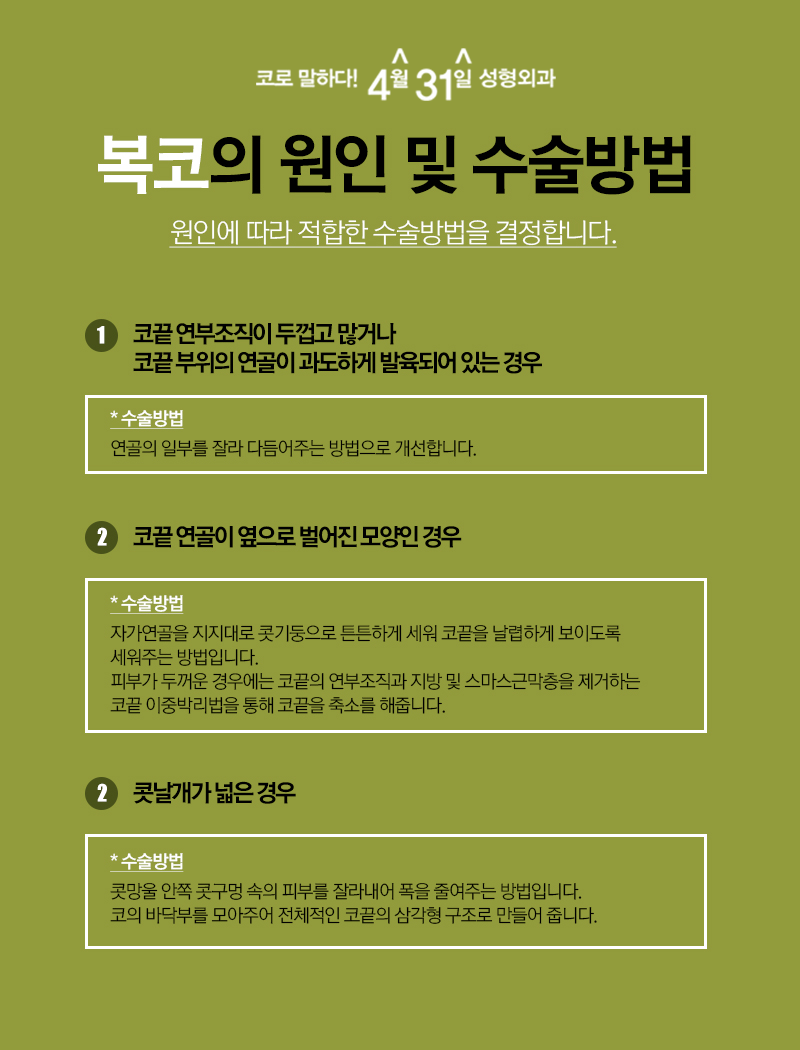
If the soft tissue at the tip of the nose is thick and abundant, or if the cartilage in the tip area is overly developed,
improvement is made by trimming part of the cartilage.
If the cartilage at the tip of the nose is spread outward,
an autologous cartilage support is firmly placed as a columellar strut
to make the tip look sharper.
If the skin is thick,
the tip is reduced through a double-dissection method that removes the soft tissue, fat, and SMAS fascia layer at the tip.
If the alae are wide,
the width is reduced by removing the skin from the inner side of the nostrils.
In addition, the base of the nose is brought together to create an overall triangular structure at the tip of the nose.
To understand each cause,
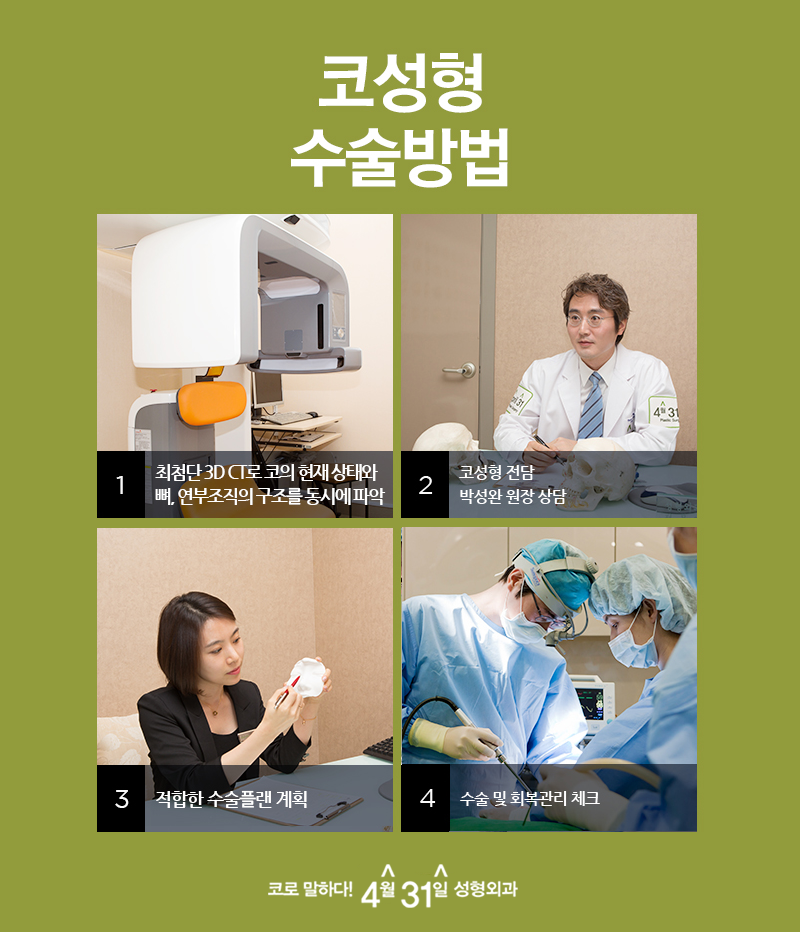
it is necessary to identify the current condition of the nose and the structure of the bone and soft tissue.
At our clinic, 3D-CT is used for this purpose.
In addition, for design improvement to achieve the desired image,
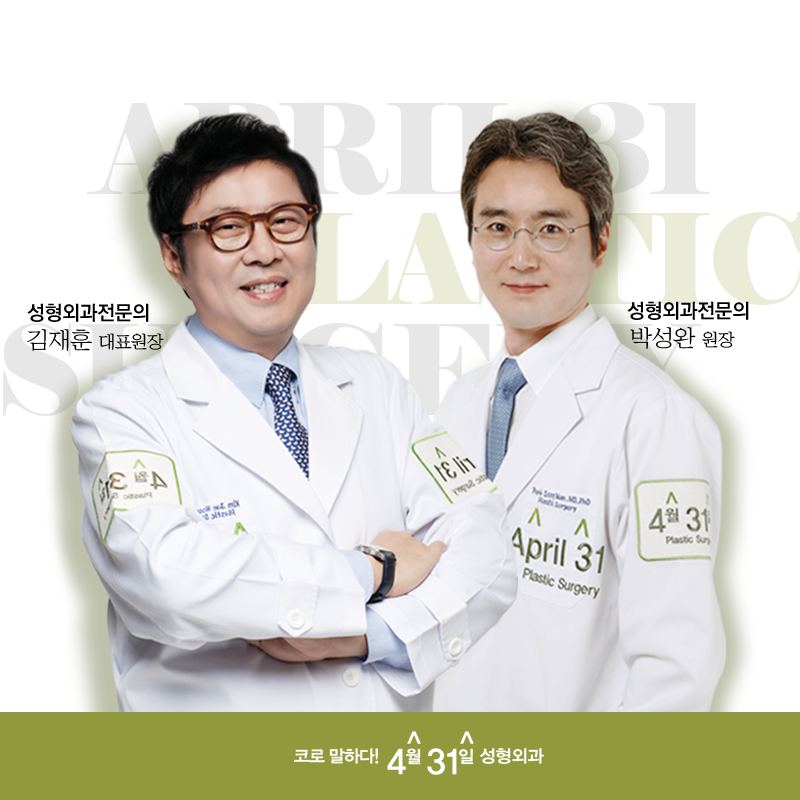
Chief Director Kim Jae-hun, a board-certified plastic surgeon specializing in nose surgery, and Dr. Park Seong-wan, a board-certified plastic surgeon,
are in charge of everything from one-on-one consultations to customized surgery and recovery care.
For detailed inquiries and consultation requests, please click the banner below.