Hello, this is Ainick.
It has already been three years since the COVID-19 pandemic began.
Still, since the outdoor mask mandate was lifted,
we have also been seeing many people without masks.
When a mask is removed, the most noticeable area
is the nose.
The nose, located at the center of our face,
has a major influence on the overall impression of the face,
which is why people undergo rhinoplasty to achieve a high, defined nose
and experience dramatic changes.
However, if there are even slight shortcomings in rhinoplasty,
side effects can become all the more noticeable.
If there are side effects after nose surgery, they can cause not only cosmetic issues
but also significant functional discomfort,
making revision rhinoplasty necessary.
Today, let’s take a look at what makes a well-known revision rhinoplasty hospital different
and how the process works, from diagnosis to solution.
When side effects occur after rhinoplasty,
because the nose is a very important organ responsible for breathing,
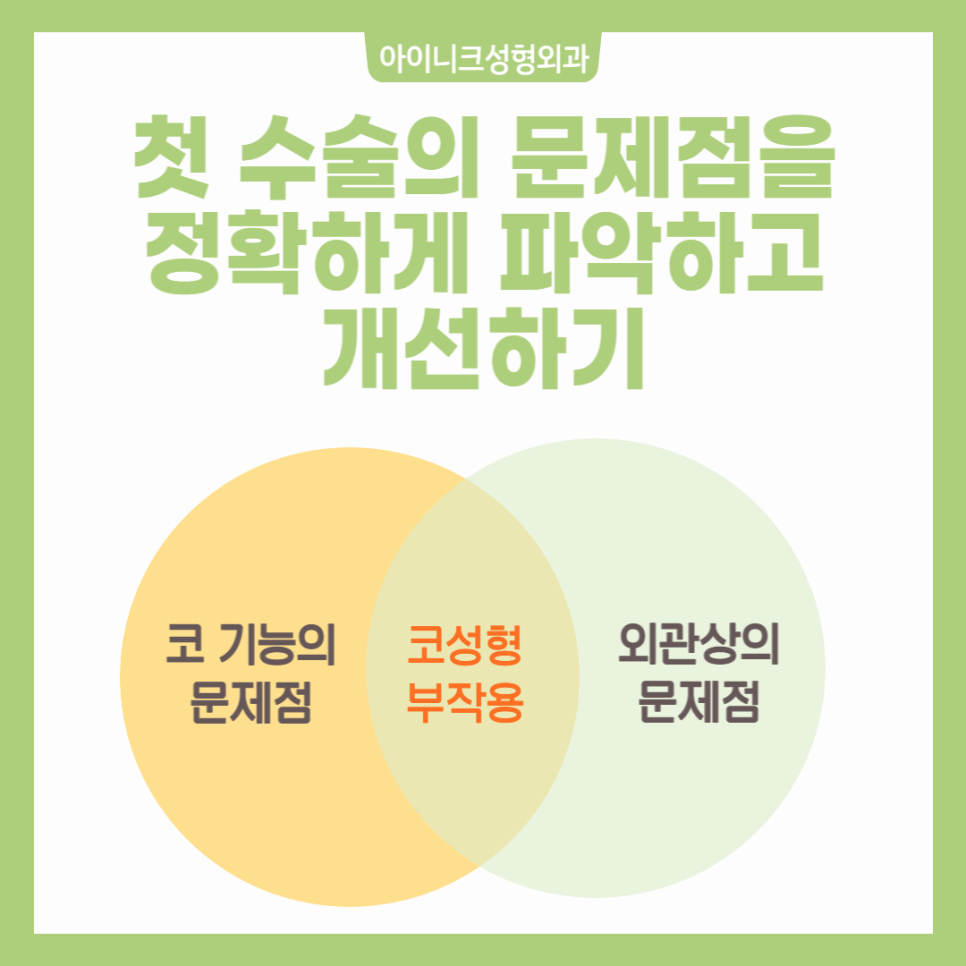
the cause and progression of the side effects must be identified accurately.
To precisely and clearly determine what problems occurred in the first surgery,
it is necessary to analyze not only the visible issues
but also to carefully examine how the nose function has been affected.
At Ainick, a well-known revision rhinoplasty hospital,
the team analyzes problems from an anatomical perspective
to accurately understand the course of rhinoplasty side effects,
and provides personalized solutions needed to restore both function and appearance.
To analyze rhinoplasty results anatomically,
it is necessary to see how the bone and cartilage tissues are positioned
through 3D computerized imaging.
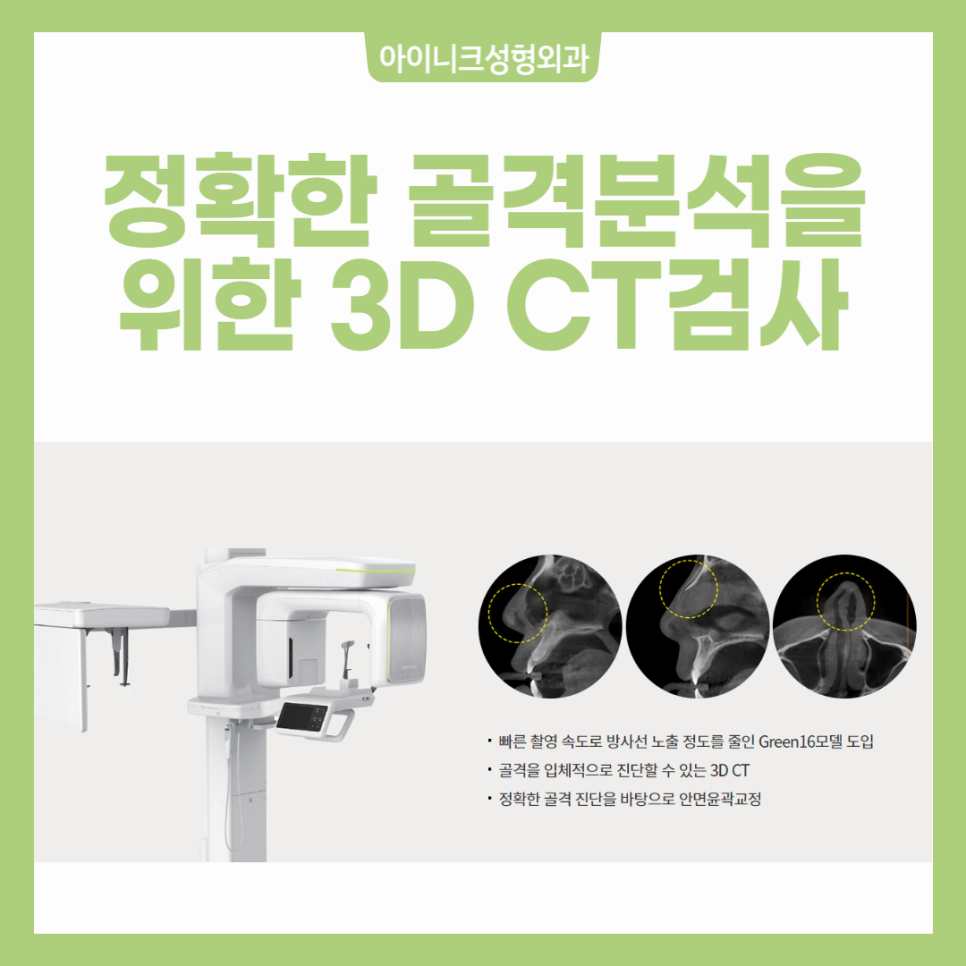
At Ainick, preoperative diagnosis is performed using a 3D CT scan,
which allows for accurate skeletal analysis.
To minimize radiation exposure during CT imaging,
the clinic introduced the Green16 model, which allows for quick scans,
and based on the skeletal diagnostic results obtained from imaging,
revision surgery is performed on the areas that need correction.
By looking at the deformation patterns of the internal nasal structures through imaging,
the types of rhinoplasty side effects can be classified.
Typical side effects that may require revision rhinoplasty include
a crooked nose, a drooping nasal tip, an upturned nose (snub nose),
implant visibility, implant movement, nasal tip deformity,
and nostril asymmetry.
By analyzing the causes according to each type of side effect,
customized revision rhinoplasty solutions can be provided.
Let’s look at the solutions for each side effect one by one.
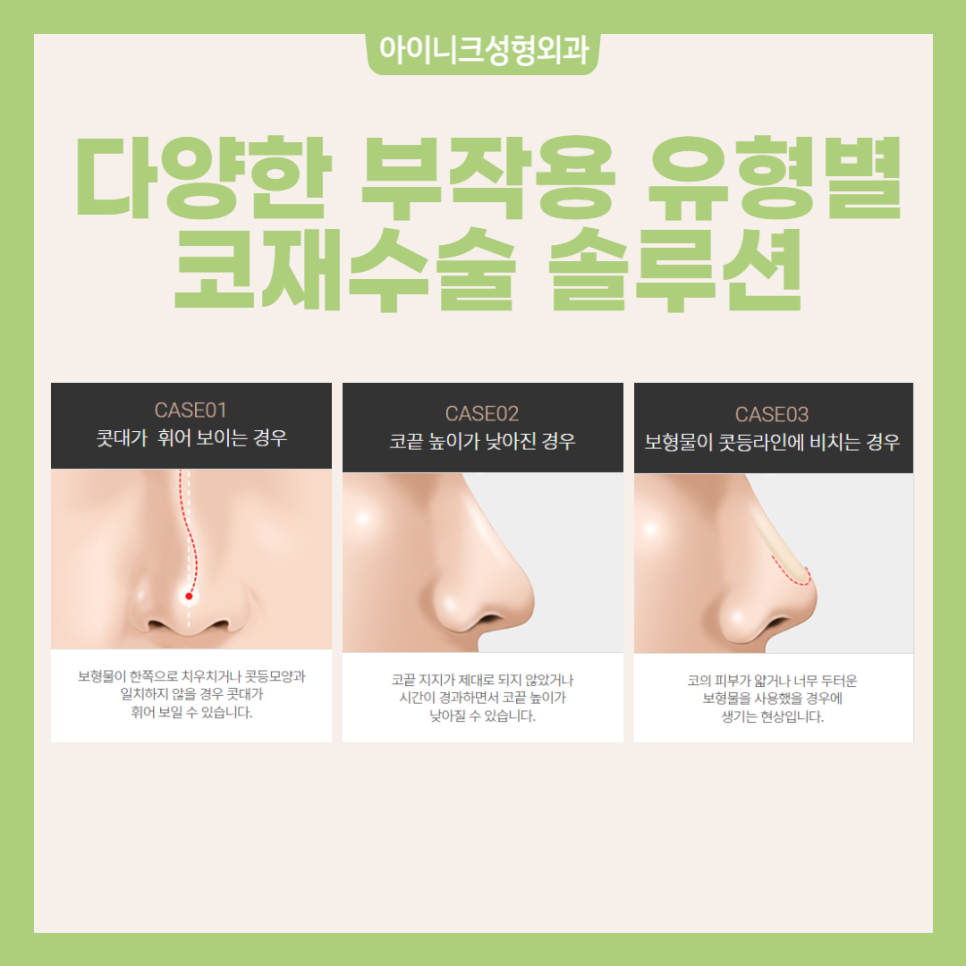
If the bridge of the nose is crooked
If the implant is shifted to one side or does not match the original shape of the nasal bridge,
it may appear crooked.
In this case, the implant area that contacts the nasal bone is adjusted,
corrected to match the nasal line,
and tailored all the way to the tip to restore a straight shape.
If the nasal tip has become lower
When the nasal tip was not properly supported during surgery,
its height may gradually decrease over time.
The tip support is reinforced,
and a customized implant is inserted to raise and correct the tip again.
If an upturned nose occurs due to contracture of the skin
After nose surgery, if inflammation occurs or revision surgery is repeated,
adhesion can form between the capsule tissue around the implant and the scar tissue inside the nose,
making the nose stiff and shorter and causing an upturned nose.
In such cases, the adhered scar tissue is released,
the skin is sufficiently stretched,
and the nasal tip cartilage is repositioned for correction.
If the implant becomes visible along the bridge of the nose
This can happen when the skin is thin or the implant is too thick.
The issue can be resolved by adjusting or replacing the implant size,
or by covering the area around the implant with fat grafting
or autologous fascia.
If the implant moves
If the implant is not properly fixed between the bone and the periosteum
and is instead placed under the skin, it may move.
In such cases, revision surgery can correct this by moving the implant
to beneath the periosteum.
If nostril or nasal asymmetry occurs
If the nasal tip cartilage was weak during the initial surgery,
or if cartilage repositioning and grafting were not performed properly,
the nostrils may appear asymmetrical when viewed from below,
causing nasal asymmetry.
In such cases, the preoperative photos are reviewed carefully,
and the cartilage is repositioned to reinforce the nasal tip and correct it.
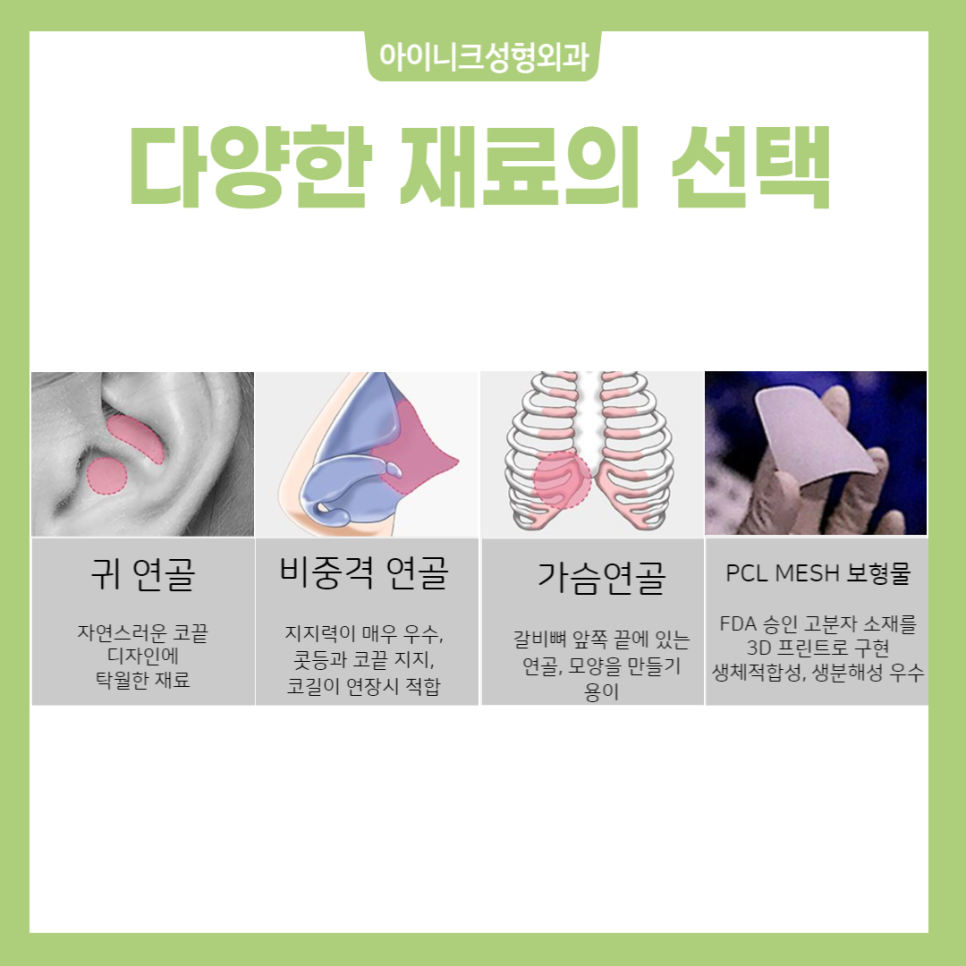
At Ainick, a well-known revision rhinoplasty hospital,
when performing personalized revision rhinoplasty,
if new implant materials are needed,
the range of material selection is expanded so that correction can be carried out more flexibly
depending on the patient.
Ear cartilage has excellent tissue compatibility and elasticity,
allowing for a natural-looking nasal tip,
and it is easy to harvest and use.
Septal cartilage has excellent support strength,
making it suitable when reinforcing the support area for the nasal bridge and tip,
or when the nose needs to be lengthened.
Rib cartilage is the cartilage located at the front end of the ribs,
and a large amount can be harvested, with the advantage that it can be shaped in various forms.
If there is a shortage of cartilage after multiple revision surgeries,
rib cartilage can be used.
Among the implant materials used at Ainick,
PCL MESH is an FDA-approved polymer material that can be 3D-printed into implants.
It allows for implant designs that perfectly match the patient’s anatomical nasal structure,
identified through 3D CT,
and its excellent biocompatibility and biodegradability
help create a flexible and natural-looking nasal tip.
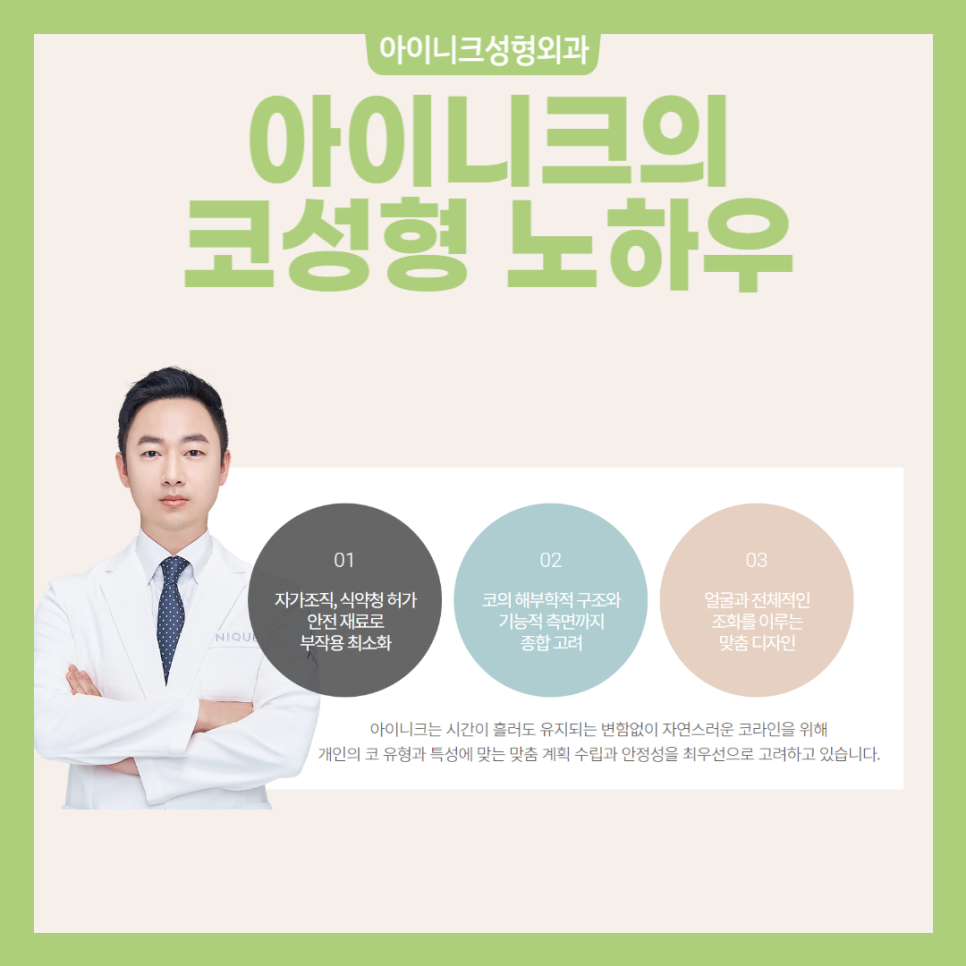
As a revision rhinoplasty hospital, Ainick Plastic Surgery focuses on three key points
to complete a nose that does not lose its beauty from any angle
or in any environment.
First,
all materials are either autologous tissue or safe materials that have completed approval by the Ministry of Food and Drug Safety,
minimizing side effects.
Second,
the anatomical structure of the nose is identified
and the functional aspects are considered comprehensively.
Third,
a customized design that harmonizes with the face as a whole is provided.
Are you unable to obtain satisfying results from rhinoplasty,
or are you experiencing discomfort due to side effects?
Do not endure it any longer—resolve it at Ainick,
a well-known revision rhinoplasty hospital.
We will find the most suitable solution for you,
as if you were receiving your first surgery rather than a revision.
So, until now,
this has been Ainick, making you look beautiful from the start.
Thank you.