
Hello.
This is Inique Plastic Surgery.
Today, we’ll talk about the nose, which is one of the most important features in the overall harmony of the face.
As the saying goes that a beautiful nose line is completed at the tip of the nose,
in the past, procedures were performed to simply raise the nasal bridge unconditionally.
But now, the goal is to design a line that flows naturally from the bridge to the tip of the nose.

It is not just about designing the line.
You also need to consider the proportions and symmetry of the nostrils,
a slim and natural-looking tip even from the front,
the tip design based on the line descending from the forehead,
and the ideal angle from the columella to the philtrum,
among many other factors.
Above all, it must be designed so that it creates overall harmony with your face.
Rhinoplasty for the bridge and tip has many different cases, so let’s take a look at the solutions one by one.
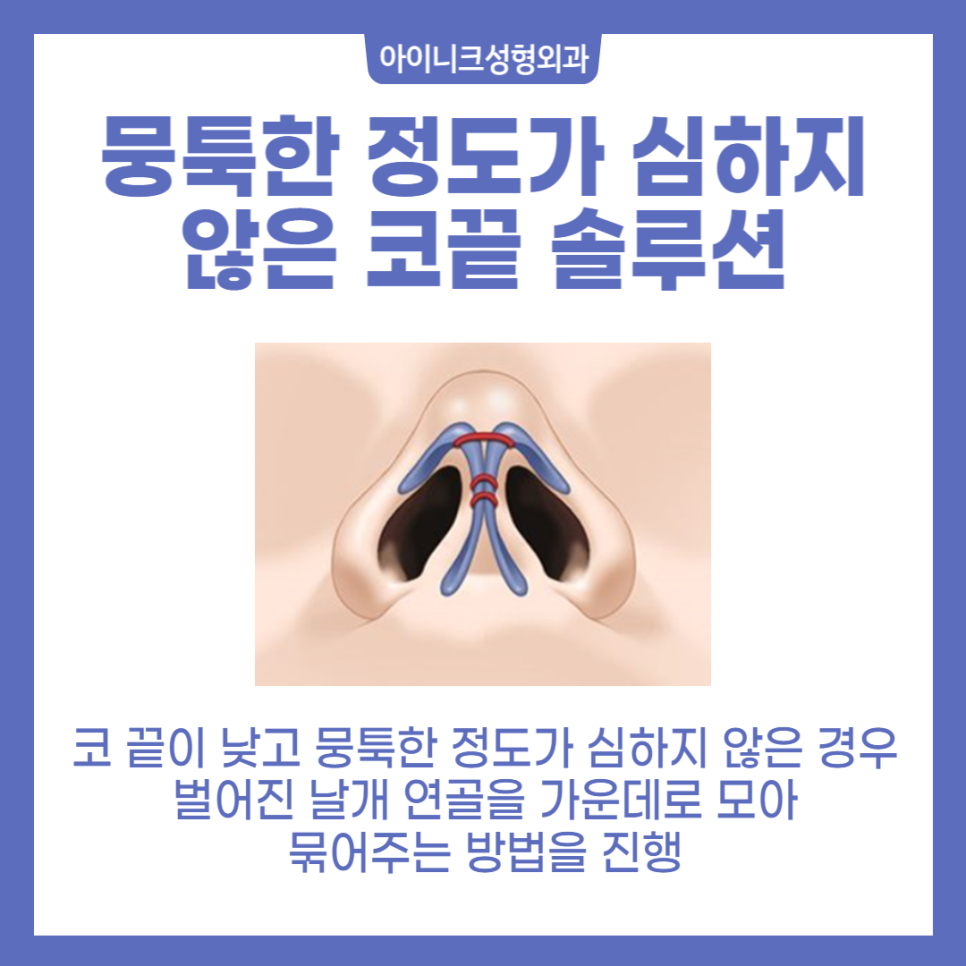
First, if the tip is not especially bulbous,
a method is used to bring the separated alar cartilages toward the center and secure them together.
However, if the tip also needs to be raised,
simply bringing the alar cartilages together is not enough.
In that case, appropriate materials suited to the patient’s condition, such as autologous cartilage or dermis, must be selected and inserted into the tip of the nose.
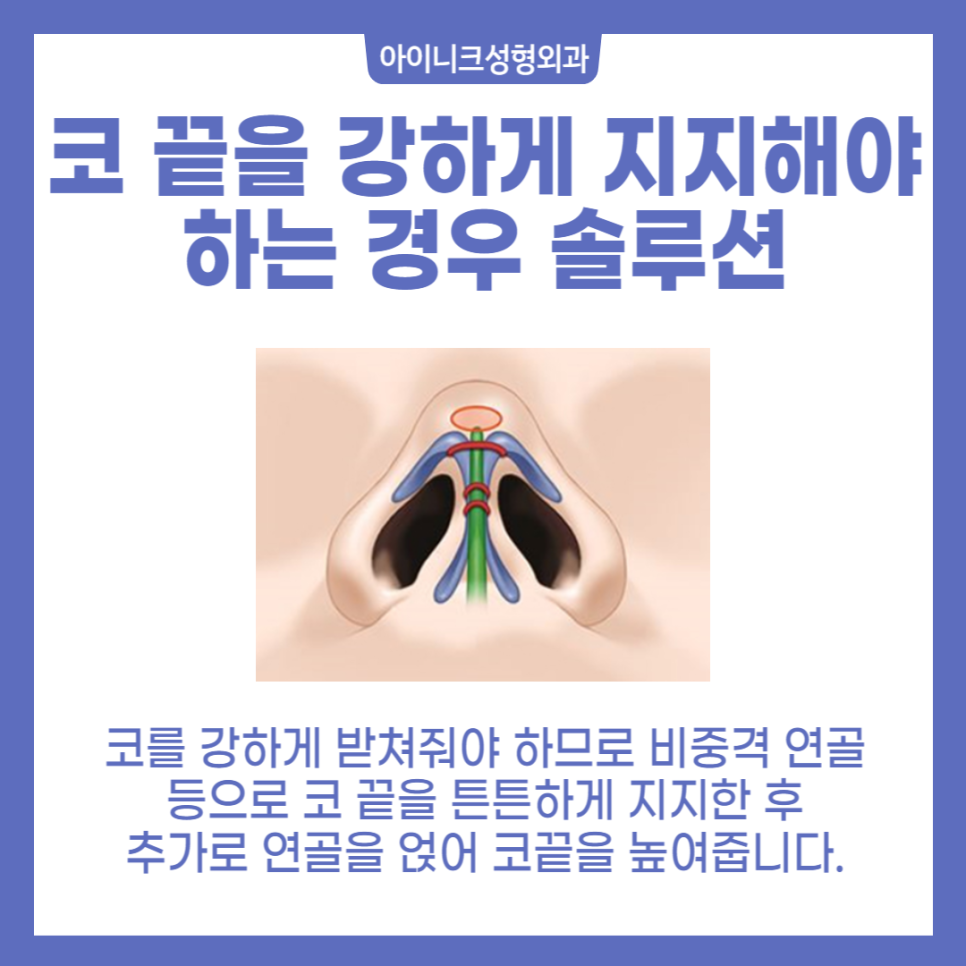
Lastly, in rhinoplasty for the bridge and tip,
if the tip needs strong support,
the tip must first be firmly supported with septal cartilage, or similar material, so that it does not collapse,
and then additional cartilage is placed on top to create a natural line.

When going through this process,
Inique considers not only the functional aspects of the nose,
but also the entire anatomical structure of the nose in a comprehensive way.
In addition, for natural-looking rhinoplasty for the bridge and tip that will not collapse over time,
we prioritize a customized plan that fits each person’s nose type and characteristics,
as well as safety above all else.
Because of this, the materials used in bridge and tip rhinoplasty
are also limited to safe materials such as autologous tissue and materials approved by the Ministry of Food and Drug Safety to minimize side effects.
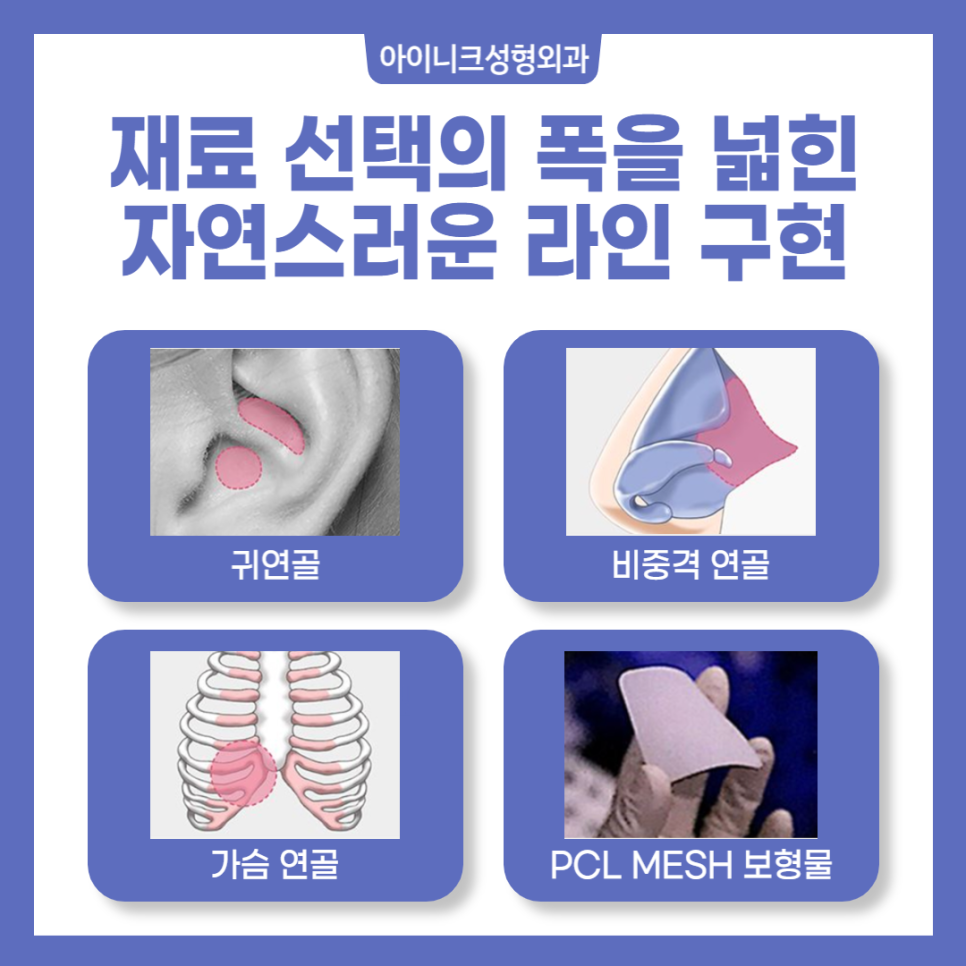
The materials used in bridge and tip rhinoplasty
include ear cartilage, septal cartilage, and rib cartilage, among others.
First, ear cartilage is recommended as an excellent material for designing a natural-looking nose tip.
In particular, it has excellent tissue compatibility and elasticity, and one advantage is that it can be harvested easily.
Septal cartilage is a material with very strong support.
For that reason, it is recommended not only for the tip of the nose, but also when support for the nasal bridge or nose lengthening is needed.
Rib cartilage is the cartilage located at the front of the chest wall,
and its advantages are that a large amount can be harvested and that it is easy to shape.
In the case of rib cartilage, it is used when revision surgery is performed and there is a shortage of cartilage, or when a plan requiring a natural shape has been established.
Lastly, there is the PCL MESH implant,
a material created using a 3D printer from an FDA-approved polymer material.
Because it has received FDA approval, it offers excellent biocompatibility and biodegradability,
and it can be used to design a flexible, natural-looking nose tip.

Rhinoplasty for the bridge and tip is most beautiful when the ideal angle is maintained from any viewing angle.
Inique Plastic Surgery not only maintains the ideal angle,
but also designs natural yet distinctive beauty
through one-on-one customized design that harmonizes with the overall face.
If you are 고민ing about rhinoplasty,
now is the time to do it with Inique.
Until now, this has been Inique Plastic Surgery,
as if you had been beautiful from the very beginning.
Thank you.