
Hello, this is iNiQ.
Because the nose is the most protruding part of the face,
it greatly influences a person’s impression.
Many people who have concerns such as a low nose bridge, hump nose, bulbous nose, fleshy nose tip, short nose, or long nose
seek to improve them through rhinoplasty.
However, the nose is not only an aesthetic feature that defines the center of the face,
but also an organ that performs important functions such as breathing and smell.
Therefore, the functional aspects of the nose must also be considered
to improve its shape safely and effectively.
Today, we will take a focused look at low nose rhinoplasty in particular.
As mentioned earlier, the nose is an important part of the body.
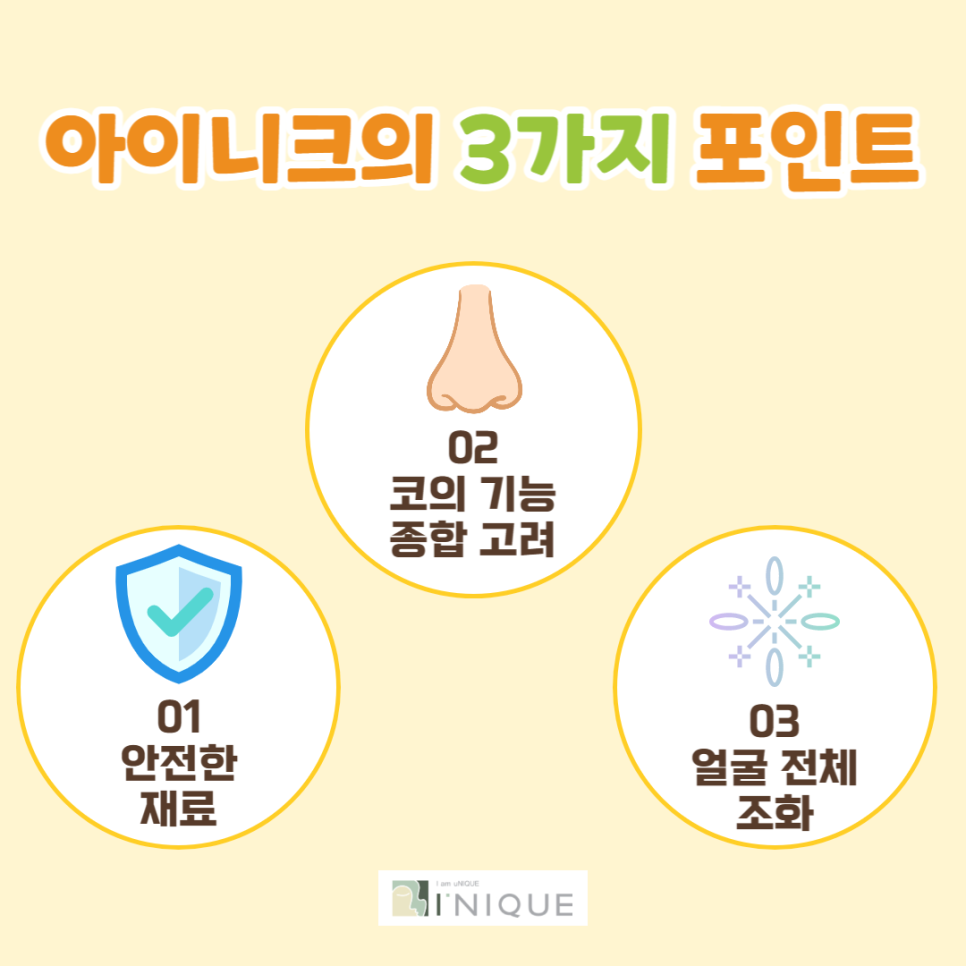
That is why iNiQ approaches low nose rhinoplasty with three key points.
First,
all materials are either autologous tissue or safe materials that have completed MFDS approval,
minimizing side effects.
Second,
after identifying the anatomical structure of the nose, surgery is performed with a comprehensive consideration of functional aspects
through a 3D CT scan.
Third,
we provide a customized design that harmonizes with the face as a whole.
At iNiQ, for a nose line that remains unchanged and naturally beautiful over time,
our top priority is safe surgery through customized planning
that matches each person’s nose type and individual characteristics.
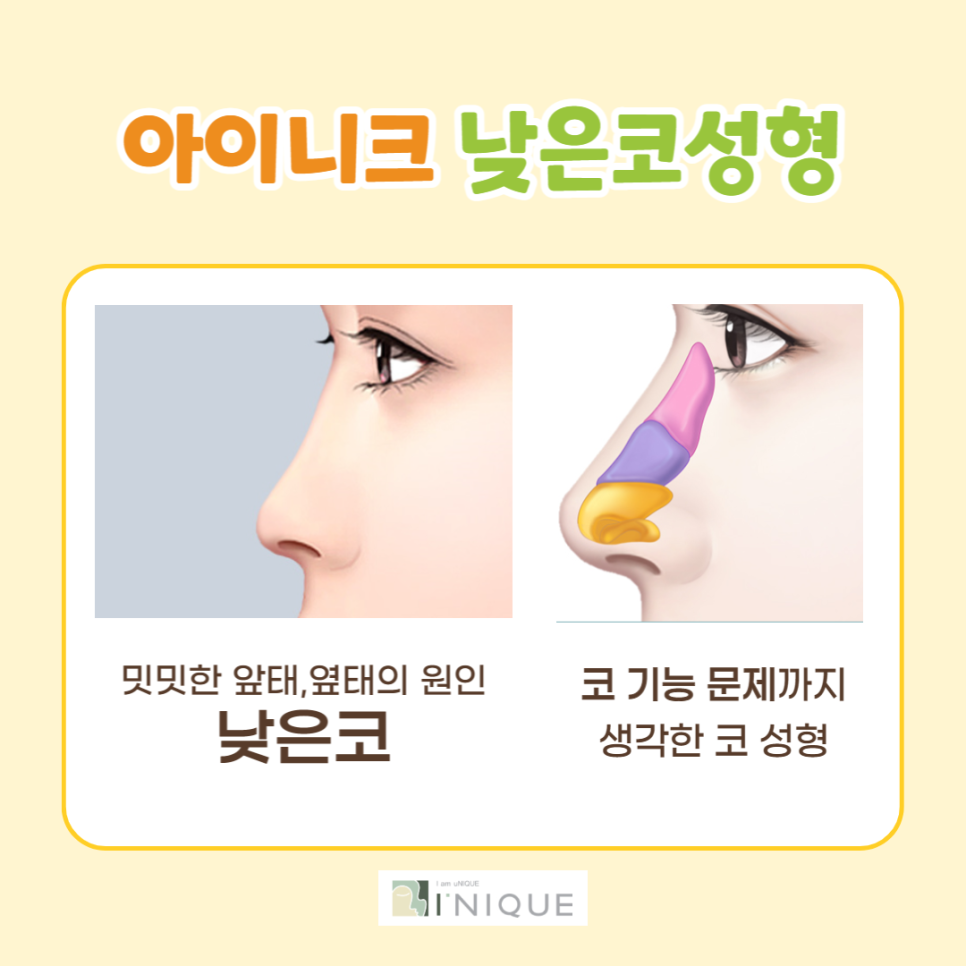
How is iNiQ rhinoplasty performed?
At iNiQ, we do not simply raise the bridge of the nose.
We design harmonious beauty while also considering the functional aspects of the nose.
Everyone’s features are different,
so a one-size-fits-all standard ratio alone
cannot provide the most ideal proportion for each individual.
That is why iNiQ takes into comprehensive account each person’s facial proportions,
structural issues inside the nose, and breathing function
to preserve natural beauty for a long time.
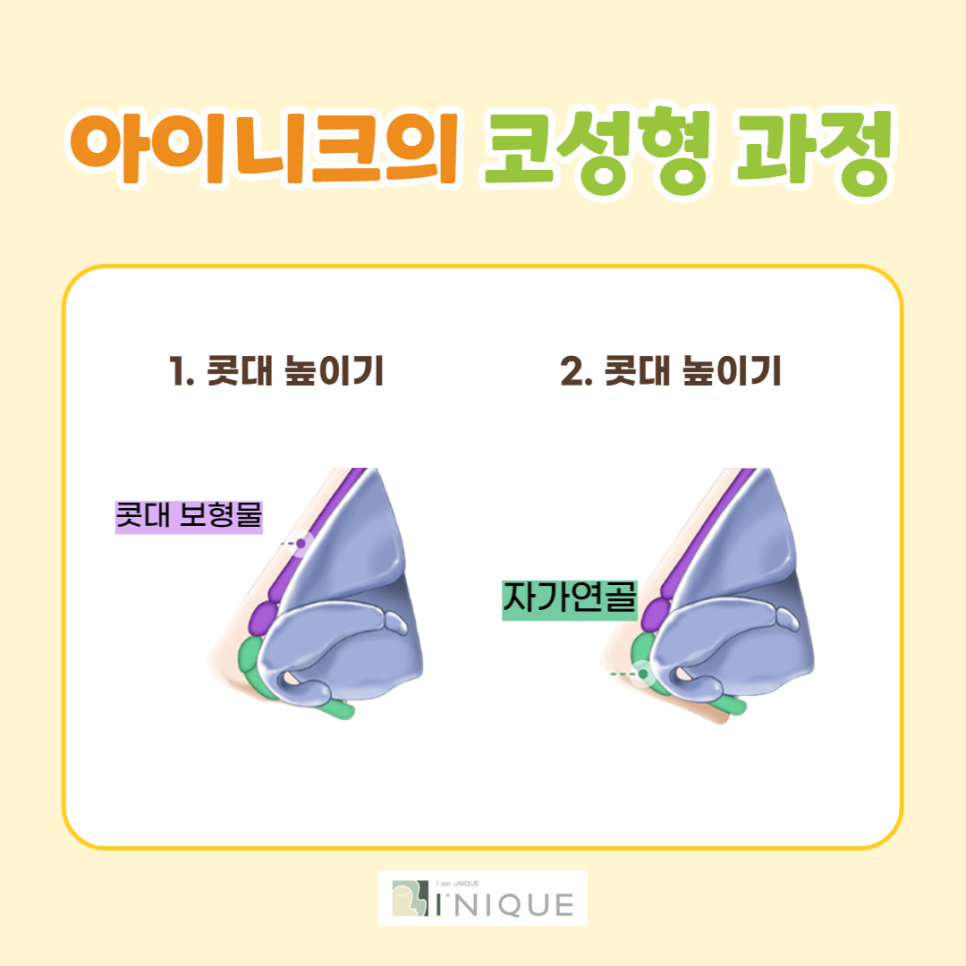
Low nose rhinoplasty performed at iNiQ
uses artificial implants to raise the low nasal bridge,
creating more dimension in both the bridge and the tip of the nose.
In addition, for overall facial harmony,
we also consider the height of the patient’s forehead bone and nasal bone, as well as the patient’s needs.
By selecting the most suitable implant,
a natural and balanced nasal bridge can be achieved.
At the same time, autologous tissue such as ear cartilage or septal cartilage is used
to adjust the height and volume of the nose tip, creating a natural line.
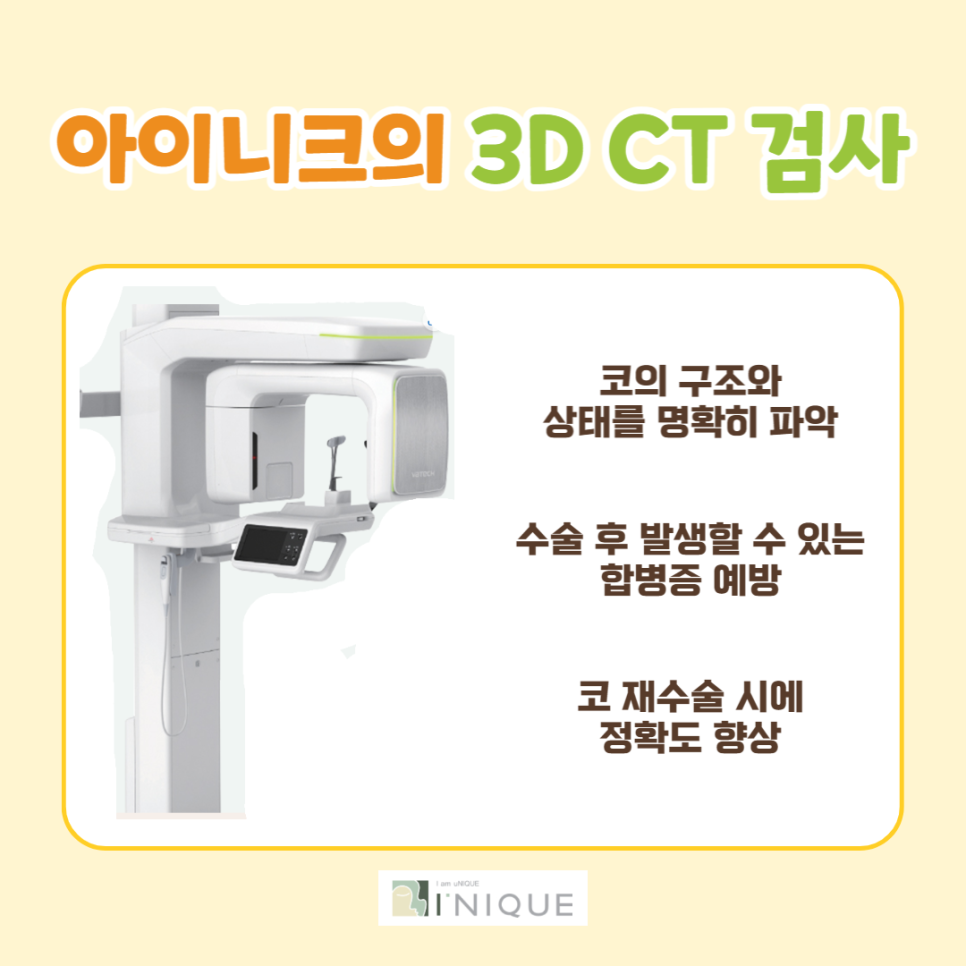
At iNiQ, preoperative diagnosis is performed through a 3D CT scan,
which enables accurate skeletal analysis.
This identifies issues that cannot be confirmed through a general consultation.
Through this process, the nasal bone, septal cartilage,
skin tissue condition, and asymmetry are analyzed three-dimensionally,
allowing rhinoplasty to be performed more safely and accurately.
The 3D CT scan helps not only to understand the nasal structure,
but also to prevent possible complications before surgery
and improve accuracy in revision surgery after nasal surgery.

Many people choose iNiQ,
which has extensive surgical experience with more than 5,000 eye surgeries and revision surgeries to date,
and is a hospital where the surgeon who appeared on Let Me In Thailand Seasons 1–3 works together.
In addition, through an award from the Minister of Health and Welfare
and presentations in textbooks and academic papers,
iNiQ continues to prove its technical expertise.
If you want to safely and effectively improve a low nose
and design a nose that suits your face, join iNiQ for low nose rhinoplasty!
If you need a more detailed consultation,
please click the banner below.
Until now, this has been iNiQ,
as if you had always been beautiful from the start.
Thank you.