Hello,
This is Inique.
�a0
Recently, as the barrier to cosmetic procedures has become lower,
a procedure many people are familiar with is double eyelid surgery.
So, have you also heard of 'ptosis,' which is referred to as
'heavy eyelid surgery' or 'droopy eyelid surgery'?
Ptosis makes the eyelids cover part of the pupil,
giving the impression of sleepy eyes.
�a0
For example, if you clearly opened your eyes wide when taking a photo,
but it looks as if they are only half-open,
or if you are not sleepy but often hear people say,
"Are you tired?"
�a0
we can suspect ptosis.
�a0
If you hear this kind of thing too often from people around you,
it can cause aesthetic stress,
and because it may also be a functional problem with the eyes,
if the drooping is severe, you need a way to improve it.
�a0
So, let's take a look at Inique's sleepy-eye surgery,
which can address ptosis.
�a0
�a0
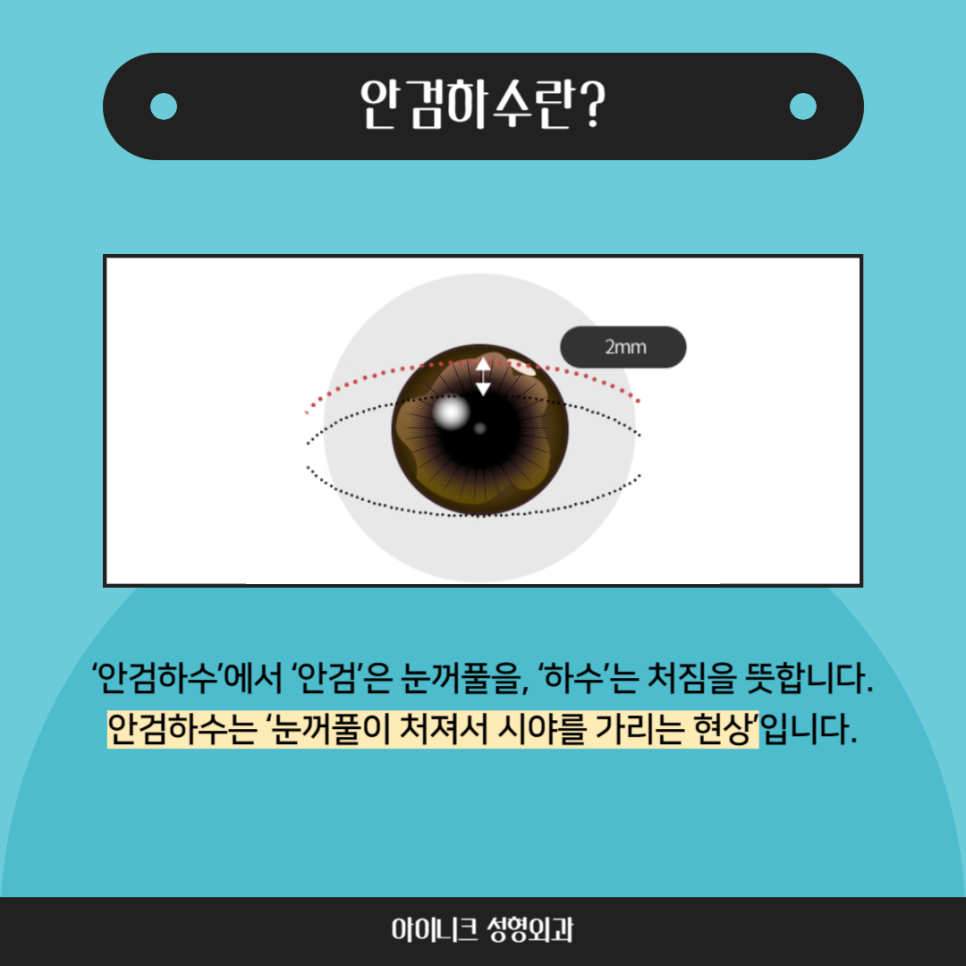
Ptosis is a term that refers to how much the black part of the eye, located at the center of the eye, is exposed.
Generally, when you open your eyes to a normal size,
the eyelid covers 1 to 2 mm of the black part of the eye,
and if it covers more than 2 mm, the eyes can look sleepy.
�a0
Sleepy-eye surgery is broadly divided into two types:
non-incisional eyelid correction and incisional eyelid correction.
Today, let's look at the differences between the two methods,
their respective pros and cons,
and who they are recommended for.
�a0
�a0
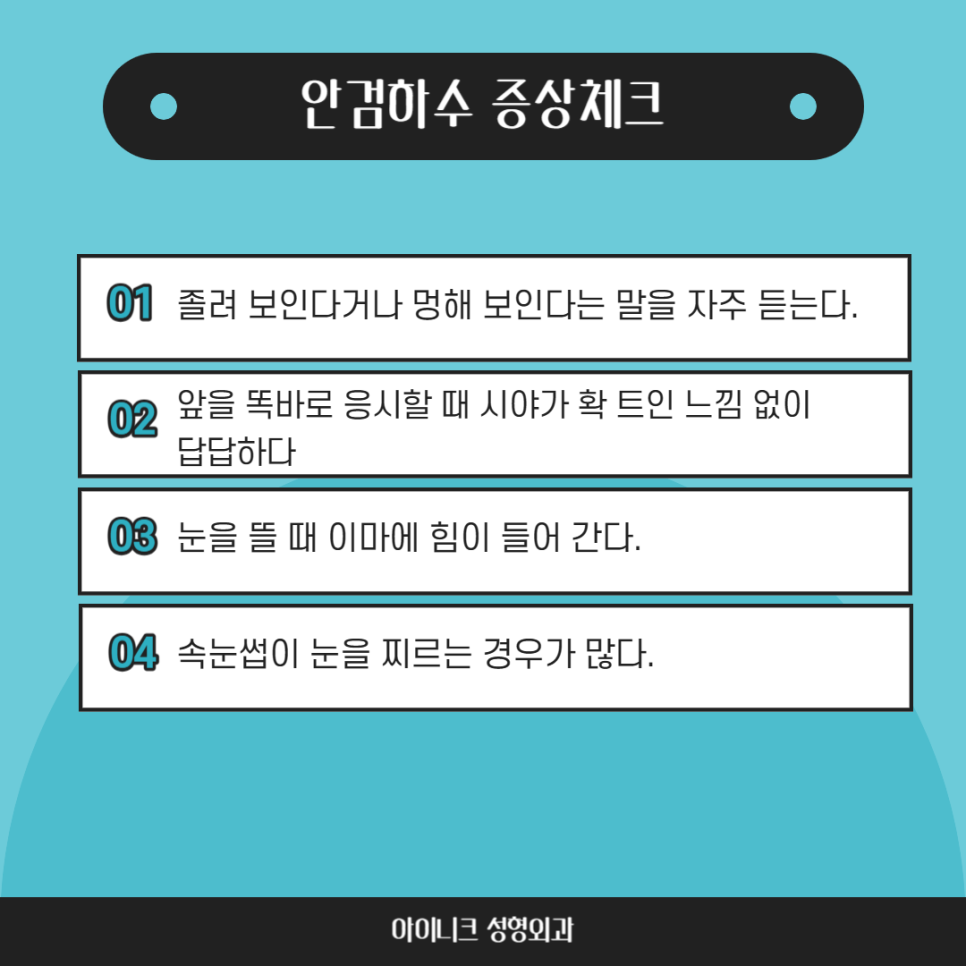
Cases in which sleepy-eye surgery is needed
�a0
- You often hear from people around you that you look sleepy or dazed.
- When looking straight ahead, your field of vision does not feel fully open and feels cramped.
- You use your forehead muscles to open your eyes.
- Your eyelashes keep poking your eyes.
�a0
If the symptoms above appear, it may be ptosis,
and it can be improved through sleepy-eye surgery.
�a0
�a0
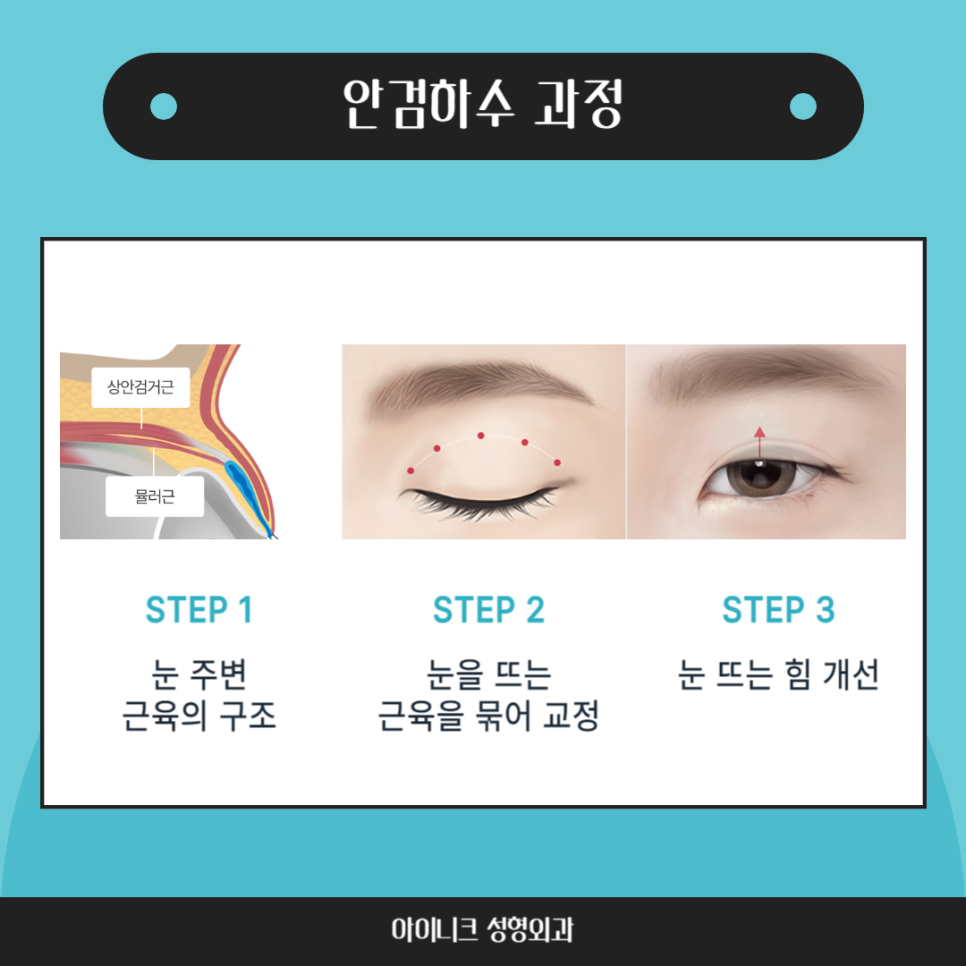
Sleepy-eye surgery is performed by reinforcing the strength used to open the eyes.
�a0
The precise term for ptosis correction is
ptosis correction,
which is a surgery that shortens the levator muscle that opens the eyes,
as well as the fascia and Mueller's muscle that connect the eyelids.
�a0
Here, the levator muscle is the most important muscle for opening the eyes,
and the two muscles or tendons connected to it are bundled and shortened.
As a result, the strength used to open the eyes improves,
allowing ptosis to be corrected.
�a0
Sleepy-eye surgery is divided into non-incisional eyelid correction and incisional eyelid correction
depending on whether or not an incision is made during the procedure.
From here, let's take a closer look at the principles behind the two eyelid correction methods
and compare their pros and cons.
�a0
�a0
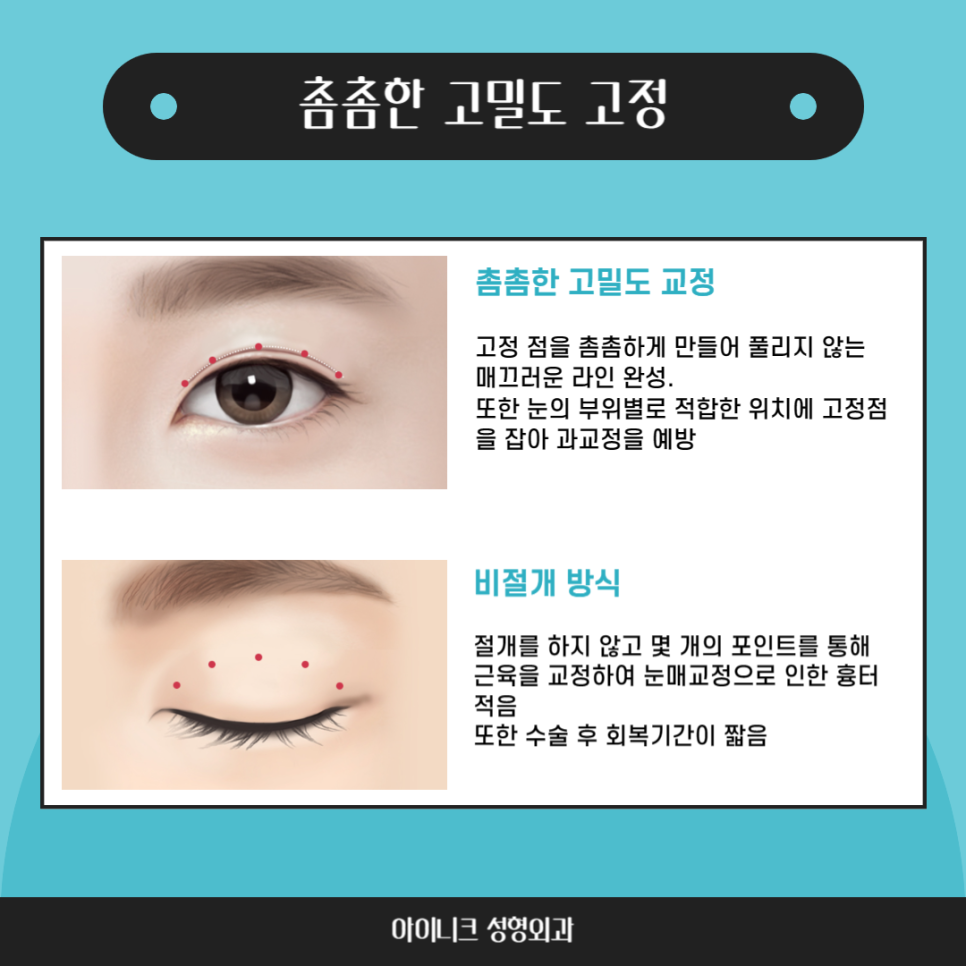
As the name suggests, non-incisional eyelid correction
is a method of correcting the eyelid shape without making an incision,
similar to double eyelid surgery performed with the buried-suture method.
�a0
If the buried-suture double eyelid surgery creates a double eyelid
by fixing threads at the center of the eyelid,
non-incisional eyelid correction passes threads through the inside of the eyelid
and fixes the tendon and Mueller's muscle area to shorten the length.
�a0
Inique uses high-density non-incisional eyelid correction,
increasing the number of fixation points during sleepy-eye surgery
to improve durability and reduce the chance of loosening.
In addition, by creating fixation points with a dense, high-density pattern,
the fixation positions are adjusted by area to match the shape of the eye,
so the line is formed smoothly
and overcorrection is prevented.
Let's look at the pros and cons of the two methods of sleepy-eye surgery.
�a0
In the case of non-incisional eyelid correction,
because the muscle is corrected using only a few points above the eyelid without cutting the skin,
it has the advantages of minimal scarring and a quick recovery.
�a0
However, since it is a method that corrects using threads,
there is a possibility that the fixed areas may loosen over time.
That is why Inique Plastic Surgery strengthens fixation by increasing the number of points to compensate for this drawback.
�a0
In the case of incisional eyelid correction, scars may form during the incision process,
and the recovery period may be longer.
�a0
However, compared with the non-incisional method, the results tend to last longer,
and when the strength used to open the two eyes differs significantly,
the surgeon can adjust this during the procedure,
so it is recommended for cases where there is eye asymmetry.
�a0
�a0
�a0
�a0
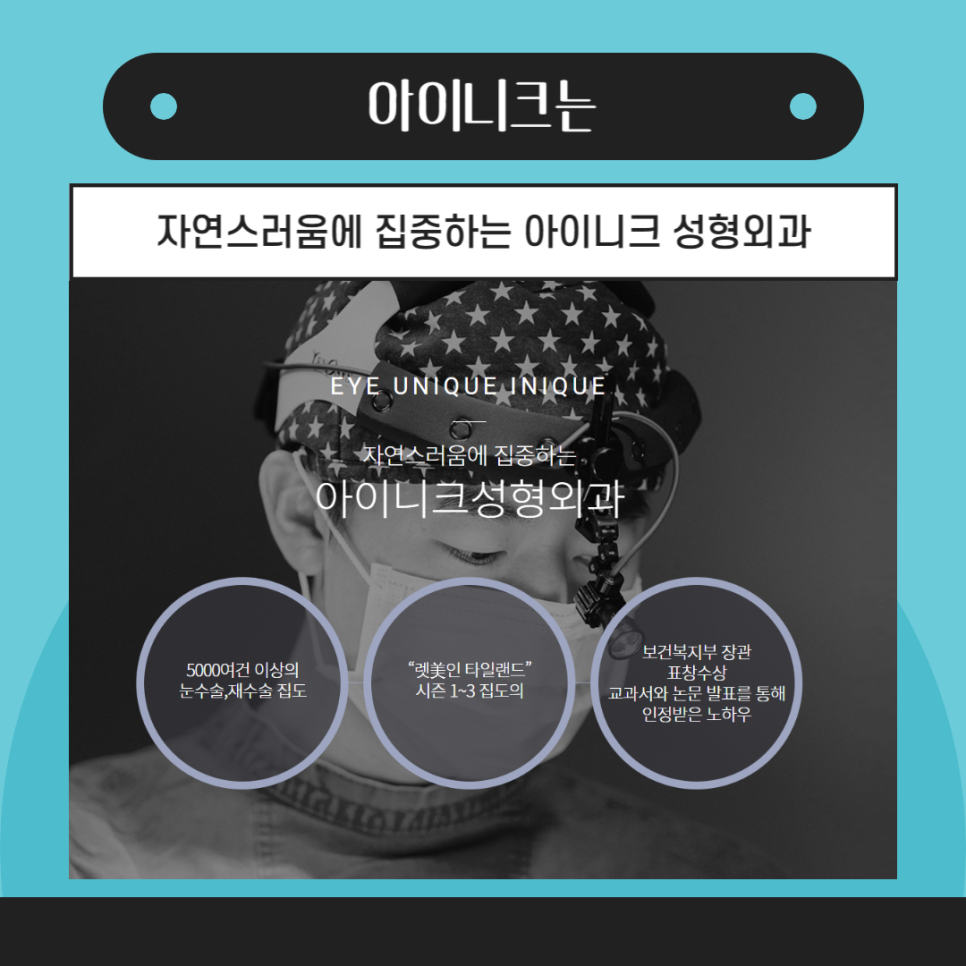
Director Yang Hae-won of Inique Plastic Surgery
has contributed a related chapter to the American text
"Aesthetic Plastic Surgery of the East Asian Face"
based on expertise in buried-suture methods and non-incisional eyelid correction surgery.
In addition, as a board-certified plastic surgeon with more than 15 years of experience,
he is currently an adjunct professor at Sungkyunkwan University School of Medicine
and a plastic surgery specialist at Samsung Medical Center,
with know-how built from vast experience and technical skill.
�a0
If you are worried because your eyes look sleepy,
please do not continue to stress over it;
come to Inique and try sleepy-eye surgery.
�a0
Then, this has been Inique,
as if you had been beautiful from the very beginning.


�a0
�a0