
Hello.
This is Inique Plastic Surgery.
As you get older,
the elasticity of the skin decreases
and muscle strength weakens,
so ptosis, in which
the eyelids droop,
can easily appear
even in the mid to late 40s.
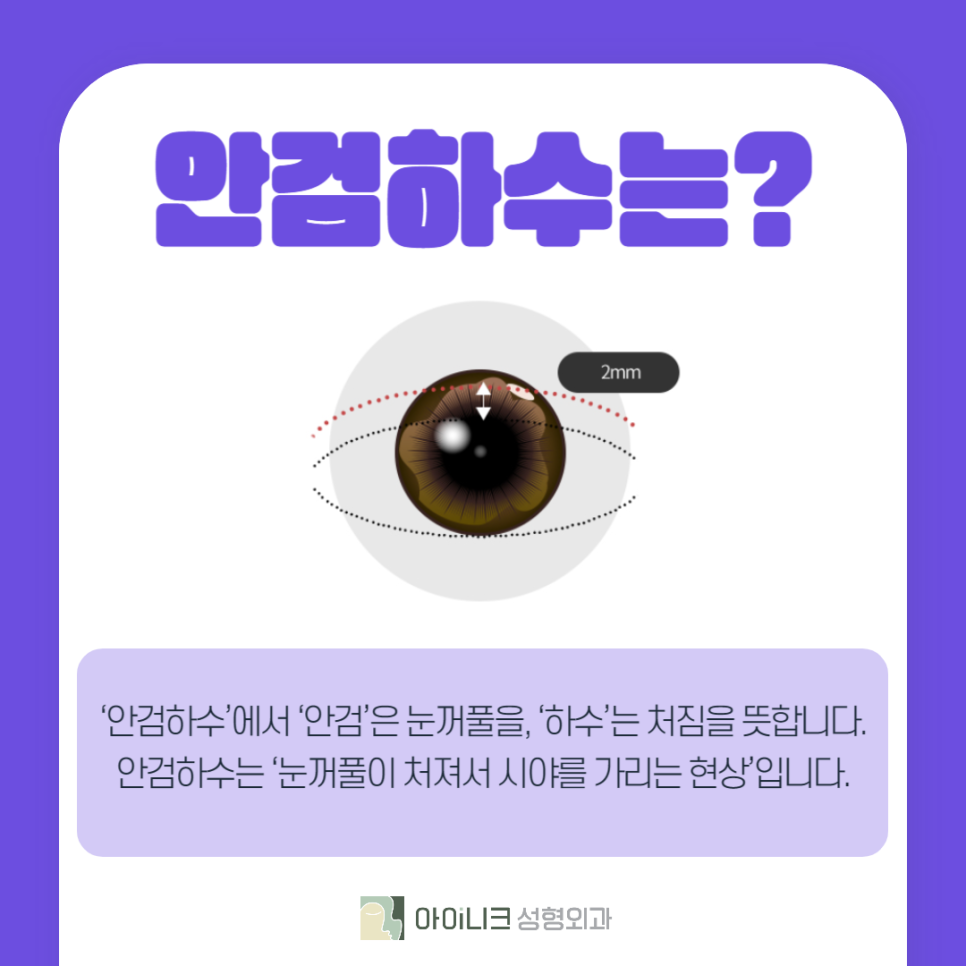
Normally, the upper eyelid
is positioned so that it slightly covers
the upper part of the black pupil,
but in cases of ptosis,
the upper eyelid droops,
covering more of the pupil,
which obscures the field of vision
and can create
an unfavorable impression.
Also, when ptosis is present,
people tend to use their forehead muscles,
which can make forehead wrinkles more likely.

If you have ptosis, there are many accompanying side effects,
and because it also causes significant inconvenience in daily life,
more and more people are considering ptosis in their 40s.
Ptosis can occur because the muscle related to the upper eyelid
becomes weak,
and it is divided into congenital and acquired causes.
In the case of congenital ptosis,
it may occur because the muscle that
moves the upper eyelid
is abnormally developed,
and in such cases, because the eyes cannot be used properly
during the period when vision should be developing,
it can lead to amblyopia.
On the other hand, acquired ptosis can occur due to trauma
that injures the muscle moving the upper eyelid,
damage to nerves, or changes caused by aging.
For correction of ptosis in your 40s,
eyelid correction and forehead lift methods are often recommended,
but you do not necessarily need to do both.
There are cases where improvement is possible
with eyelid correction alone,
and cases where an entirely different surgical method is needed,
so to address ptosis in your 40s,
it is best to choose the appropriate surgical method for yourself
through an in-depth consultation with a specialist.
If you choose the wrong surgical method,
there is a risk of eyelid length issues or muscle abnormalities,
which can result in not being able to close the eyes properly even when trying to close them.

Typical symptoms of ptosis in your 40s include
frequently hearing that you look sleepy or dazed,
feeling as if your vision is not clear and open when staring straight ahead,
using your forehead muscles when opening your eyes,
and often having eyelashes poke the eyes.
A more accurate way to self-check is to
press both eyebrows with your thumbs to hold them in place,
then direct your gaze downward as much as possible
and look upward again.
At this time, if you have ptosis,
the eyelid will move 14 mm or less,
so if there is an issue with the levator function of the upper eyelid,
it is better to visit a hospital
and receive a more accurate diagnosis.
To improve ptosis in your 40s,
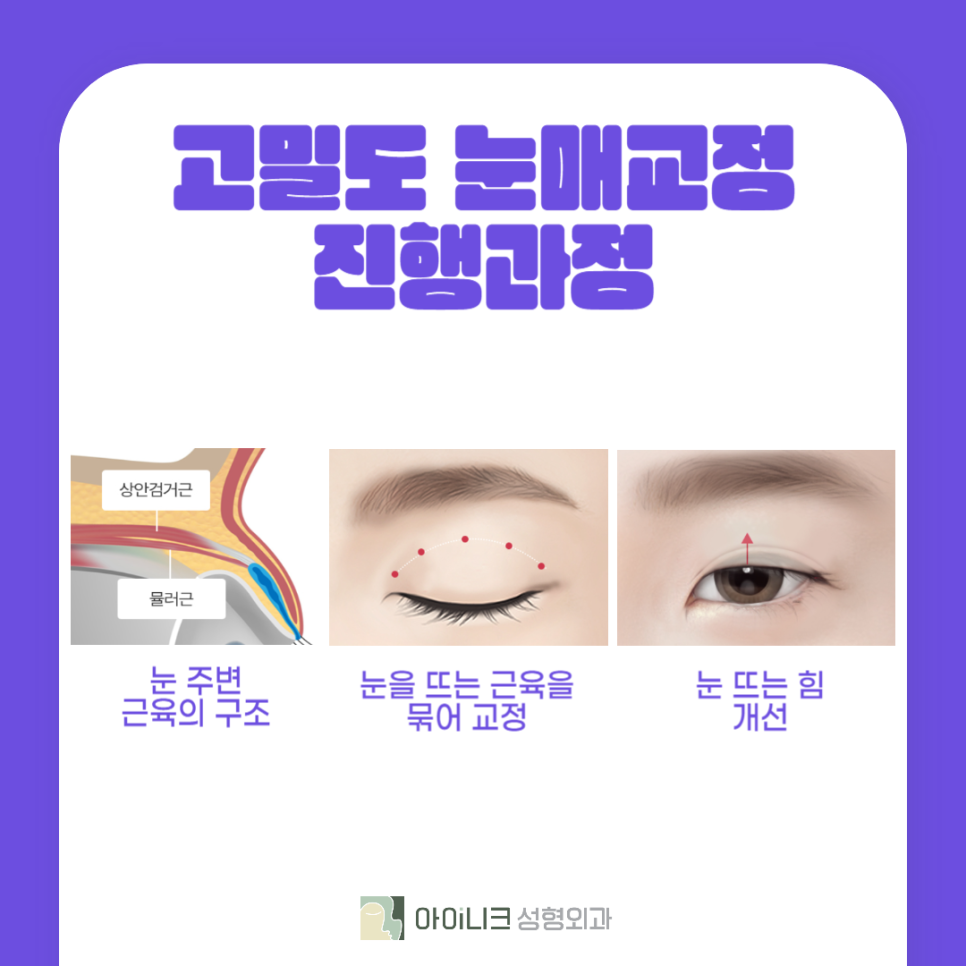
Inique recommends a high-density non-incisional eyelid correction.
Non-incisional eyelid correction refers to shortening the Müller muscle
by tying it with the buried method without incision.
The Müller muscle is one of the muscles that plays an important role in opening the eyes,
and non-incisional eyelid correction has the advantage of a shorter surgery time and recovery period.
At Inique, when performing eyelid correction,
we increase the number of fixation points to strengthen the force of opening the eyes
and make it last longer without loosening.
In addition, if the fixation points are denser,
the line becomes smoother,
and by setting fixation points at appropriate locations for each part of the eye,
overcorrection can also be prevented.
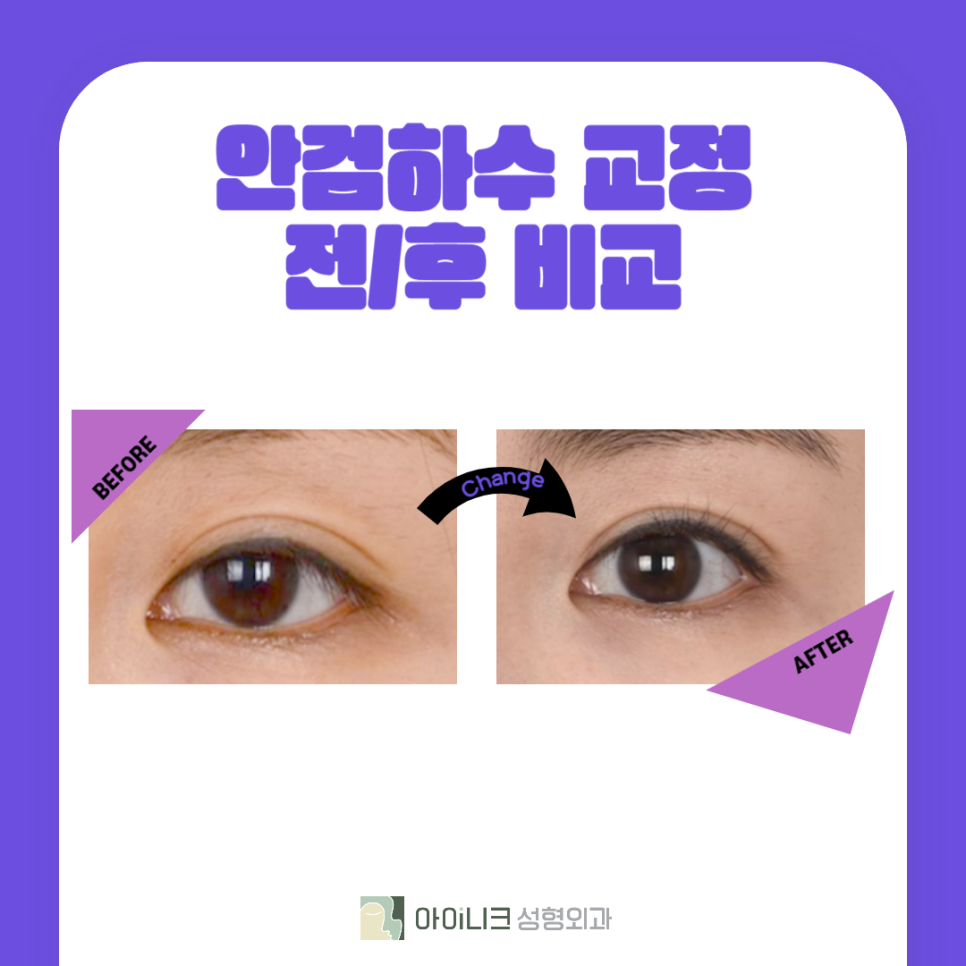
For successful ptosis improvement,
it is necessary to accurately identify the cause of ptosis for each individual,
carefully check the degree of muscle function in this area
and how much loosened skin there is,
and then plan the surgical approach.
Also, the amount of fat around the eyelids that needs to be removed differs from person to person,
so it is best to proceed after 충분한 consultation with medical staff who have extensive experience in ptosis surgery.
If you want satisfying results
for natural beauty and improved eye function,
please visit Inique for a consultation.
Thank you.