Hello, this is iNique.
When thinking about 'plastic surgery,'
if I had to name one of the most widely known procedures,
it would probably be
'double eyelid surgery.'
There are many types of plastic surgery,
but even correcting the eyes alone can bring about a clear improvement in appearance.

For this reason, double eyelid surgery has been steadily preferred from the past to the present,
and over time,
the procedure itself has also evolved.
It would be ideal if everyone could naturally achieve clear eyes through double eyelid surgery,
but there are also people who feel disappointed because the result is not as satisfying as they expected.

If it is not simply a matter of disliking the shape,
but daily life becomes difficult because of a problem such as sausage-like double eyelids,
you may have no choice but to consider sausage-eye revision surgery.
'Sausage eye' is a term used for a side effect that can sometimes occur after double eyelid surgery.
It is named that way because the eyelids appear puffy and thick like a sausage,
creating an unnatural shape.

Today, I will explain why sausage eyes develop
and what approach is needed to correct them through sausage-eye revision surgery.
Causes of sausage-like double eyelids
Sausage eye is medically referred to as
double eyelid hypertrophy, or
pretarsal hypertrophy.
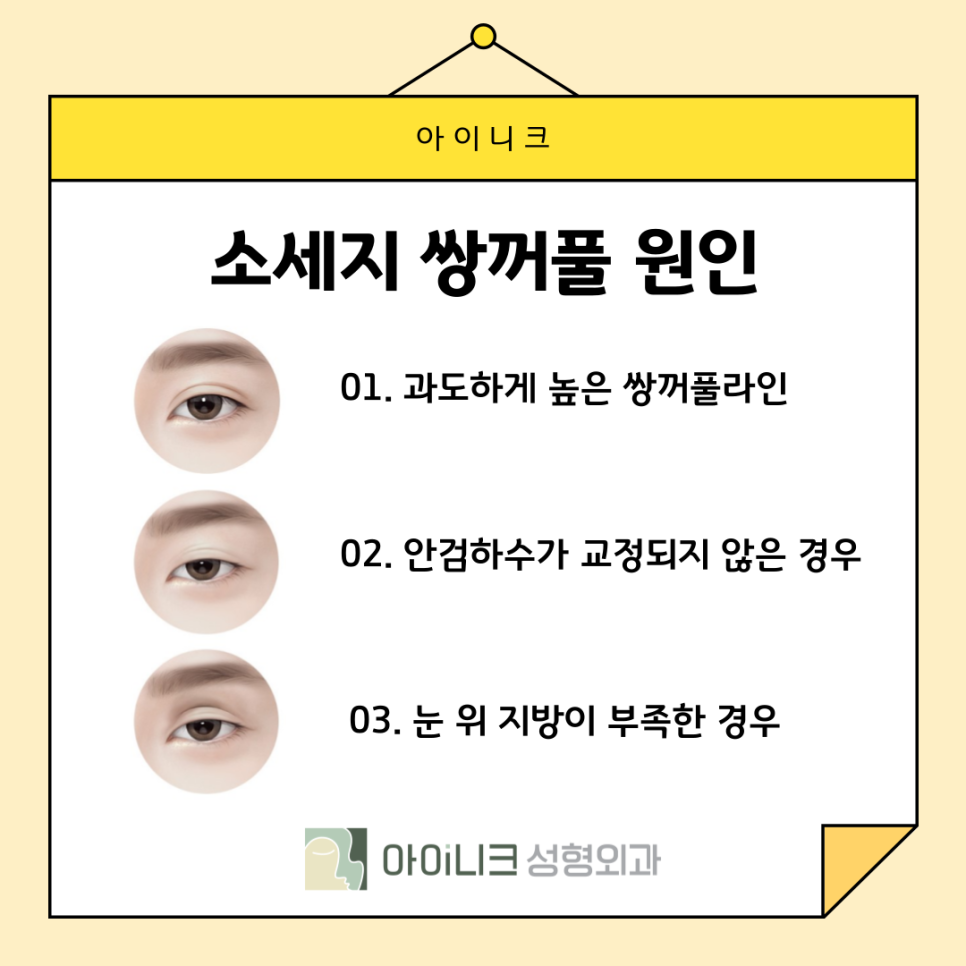
There are three main factors.
First, when the double eyelid line is too high
When fixing the double eyelid line,
if it is set too high above the natural upper limit of the eye,
the likelihood of a sausage-like result increases.

Second, when ptosis is not corrected
If there is ptosis that covers the black part of the eye,
but surgery is performed without correction,
a sausage eye may result.
Third, when there is insufficient fat in the upper part of the eye
If there is too little tissue in the brow area and it looks sunken,
even when double eyelid surgery is performed normally,
it may appear excessive.
Because the causes differ like this,
each person's condition must be diagnosed,
and an appropriate sausage-eye revision plan must be found.
The solutions for each case are as follows.
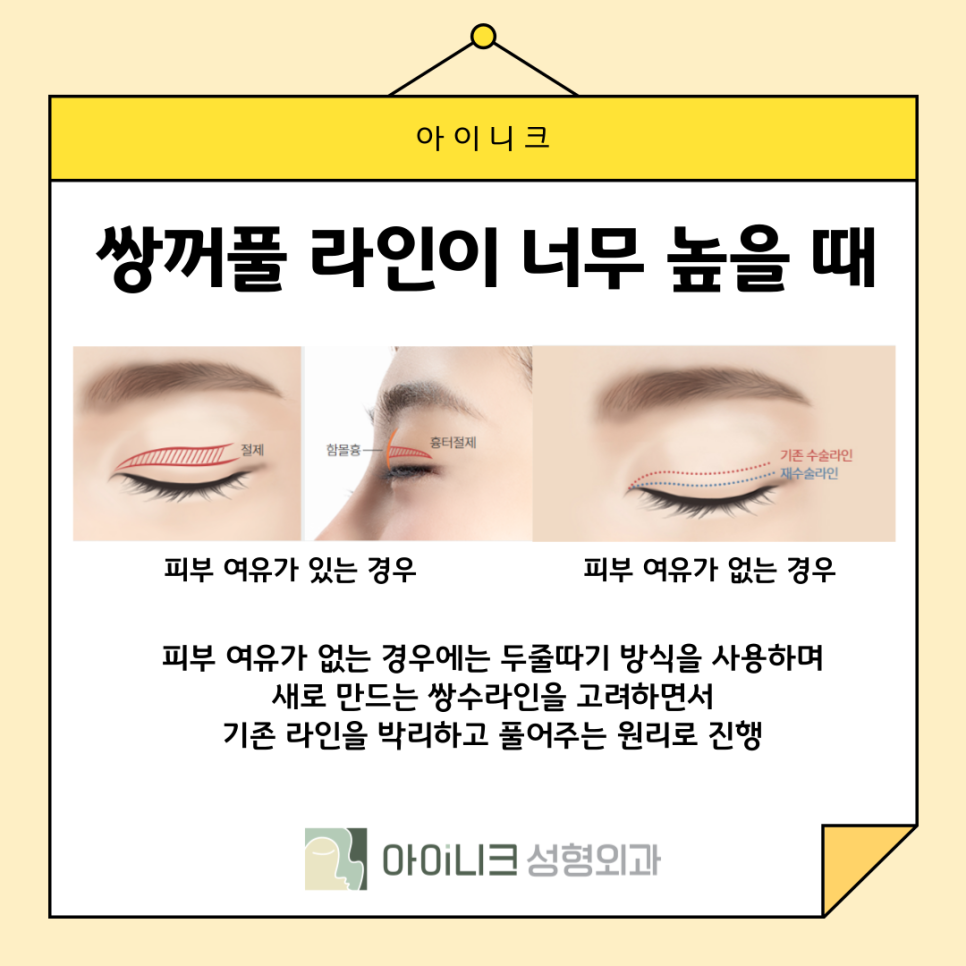
When the double eyelid line is too high
The key to double eyelid surgery is to
set the line at an appropriate height so it is not too high when it is fixed.
If a double eyelid line fixed too high has resulted in a sausage-like appearance,
the line must be lowered to make it thinner,
and the sausage-eye revision method differs depending on the amount of excess skin available.

If there is enough excess skin, the skin between the existing higher line
and the lower line needed for the revision surgery is removed to lower the height.
If there is not enough excess skin,
the amount of tissue that can be removed is limited,
so rather than a simple incision method,
a 'double-line' technique is used.
This method first precisely designs the new double eyelid line,
then carefully separates and releases the adhesion line that had already formed,
based on the principle of distributing tissue tension and thickness.
When ptosis correction is needed
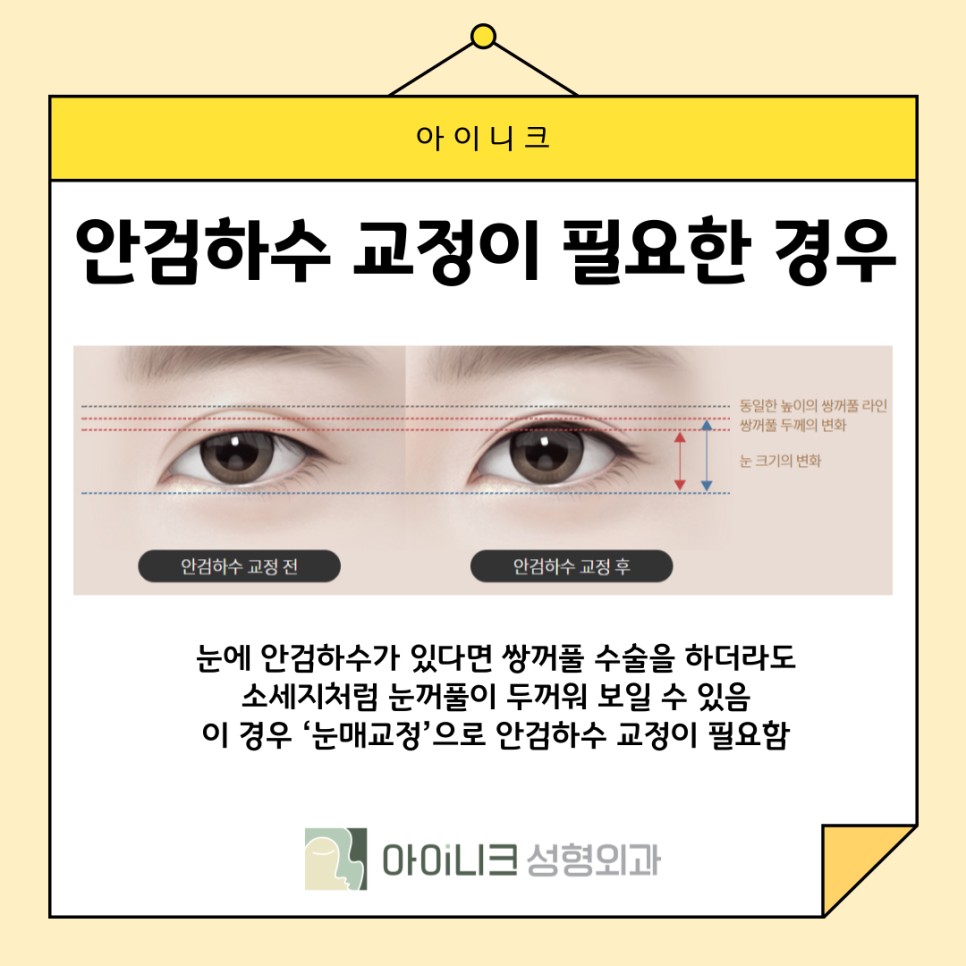
If the eyes have ptosis,
the strength of the muscles that open the eyes is generally weak,
which can create a sleepy impression,
as if the eyes are not fully open.
In this state of ptosis,
even if double eyelid surgery is performed,
the eyes may still look thick like sausage eyes.
In such cases, ptosis correction is performed
to strengthen the muscles that open the eyes,
and then sausage-eye revision surgery can be attempted to correct it.
When there is insufficient fat above the eyes
Simply put, a double eyelid is a fold in the eyelid skin.
When the skin folds at the double eyelid line and the upper skin settles in a way that covers the lower part,
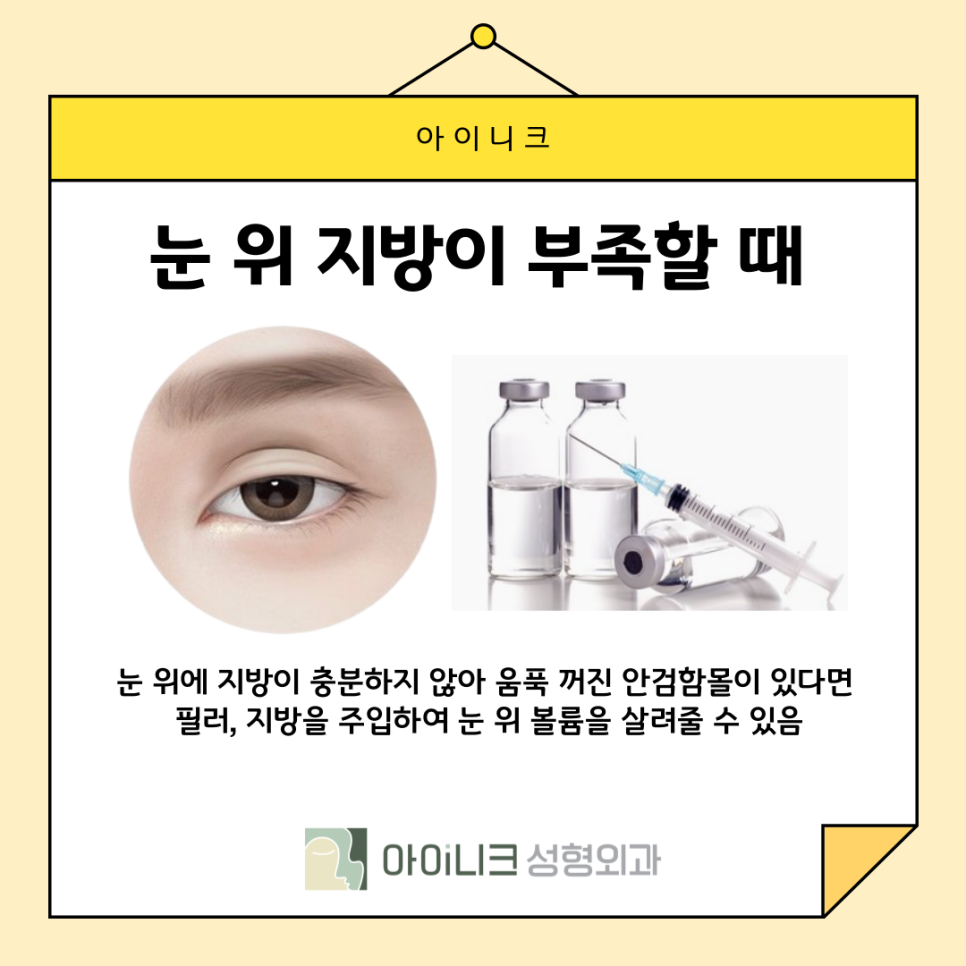
if there is not enough fat or soft tissue above the line,
enophthalmos in the eyelid area can occur, causing the upper eye area to look sunken.
In such cases, it is important to supplement the volume of the soft tissue above the eyes,
and the procedure is carried out by precisely injecting filler or autologous fat
into the upper eyelid area to restore dimension to the sunken area.

Through this, the balance of the eye area can be improved,
and a more natural and stable result can be expected.
When is revision surgery appropriate?
The appropriate timing for sausage-eye revision surgery is
after six months have passed since the operation.
However, if the side effects are very severe
or are severe enough to make social life impossible,
surgery can be performed quickly regardless of the timing.

So far, at iNique,
we have explained the causes of sausage eyes
and sausage-eye revision surgery for resolving them.
If you would like a consultation or surgery,
please contact us through the channel below.
Thank you.