
Hello, this is Inique.
In a first meeting with someone,
we look at the other person’s eyes first,
and through their gaze, size, and eye shape,
we form our first impression of their face.

In particular, first impressions are said to be formed
within just 3 seconds,
so the role of the eyes and
the importance of enhancing their appeal
in this brief moment
can be considered very significant.

The eyes are also a key part that determines
the harmony and overall image of the face,
and even a small change can greatly alter
the mood of an impression and its sophistication.

Because the eyes are so important in a first impression,
more and more people who are unhappy with
their eye shape, size, or eye line
are considering eye surgery such as
a corner lift or lower-corner correction.

With the continuous advancement of medical technology,
a variety of cosmetic surgery methods have been developed,
and eye surgery in particular continues to receive
steady attention regardless of gender or age.
For a successful eye surgery,
the most important thing is to achieve a more
natural and harmonious result through customized improvement
that considers each person’s facial proportions
and anatomical structure.

Today, at Inique, we’ll take a look at
the various types of canthoplasty procedures,
such as corner lifting and lowering,
among the different methods that can help
make the eyes look clearer and more natural.
Canthoplasty is a method used when the eyes feel
narrow and closed off,
opening up the area through procedures such as
corner lifting or lowering to create a more refreshed look.
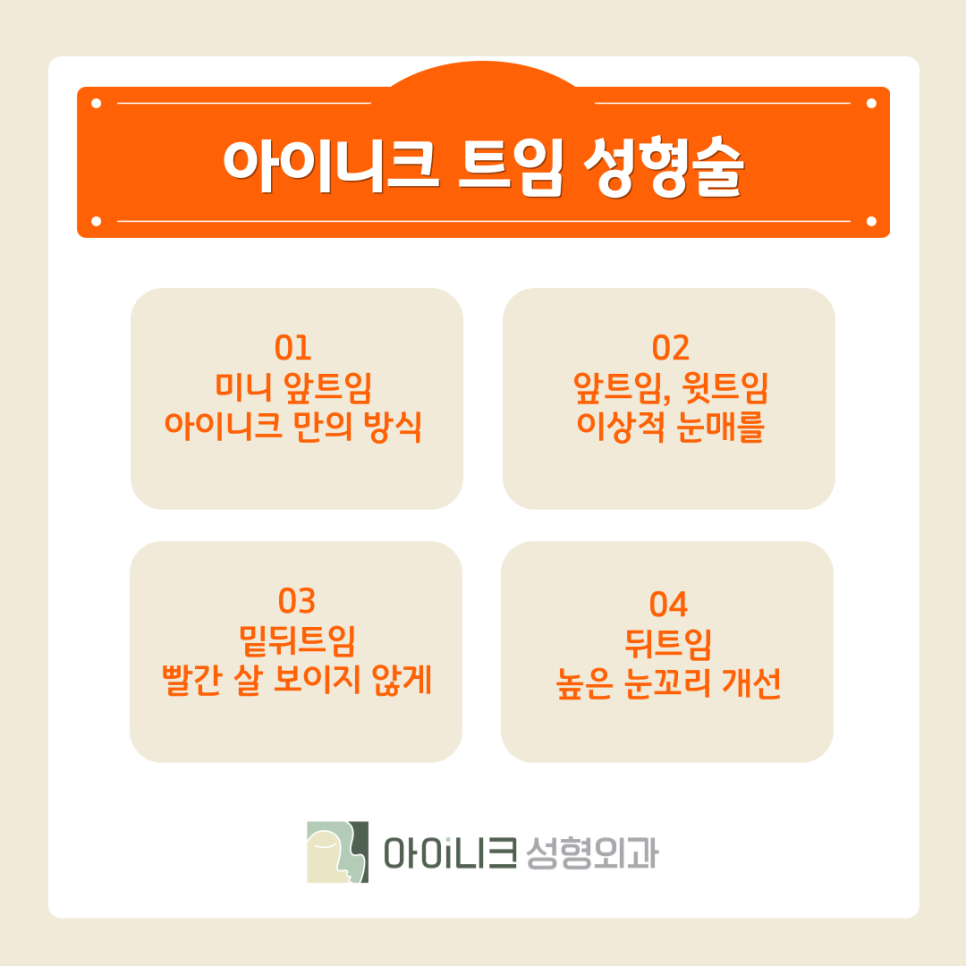
The representative types of canthoplasty include
inner corner surgery, upper corner surgery,
Inique’s mini inner corner surgery,
outer corner surgery, and lower outer corner surgery.
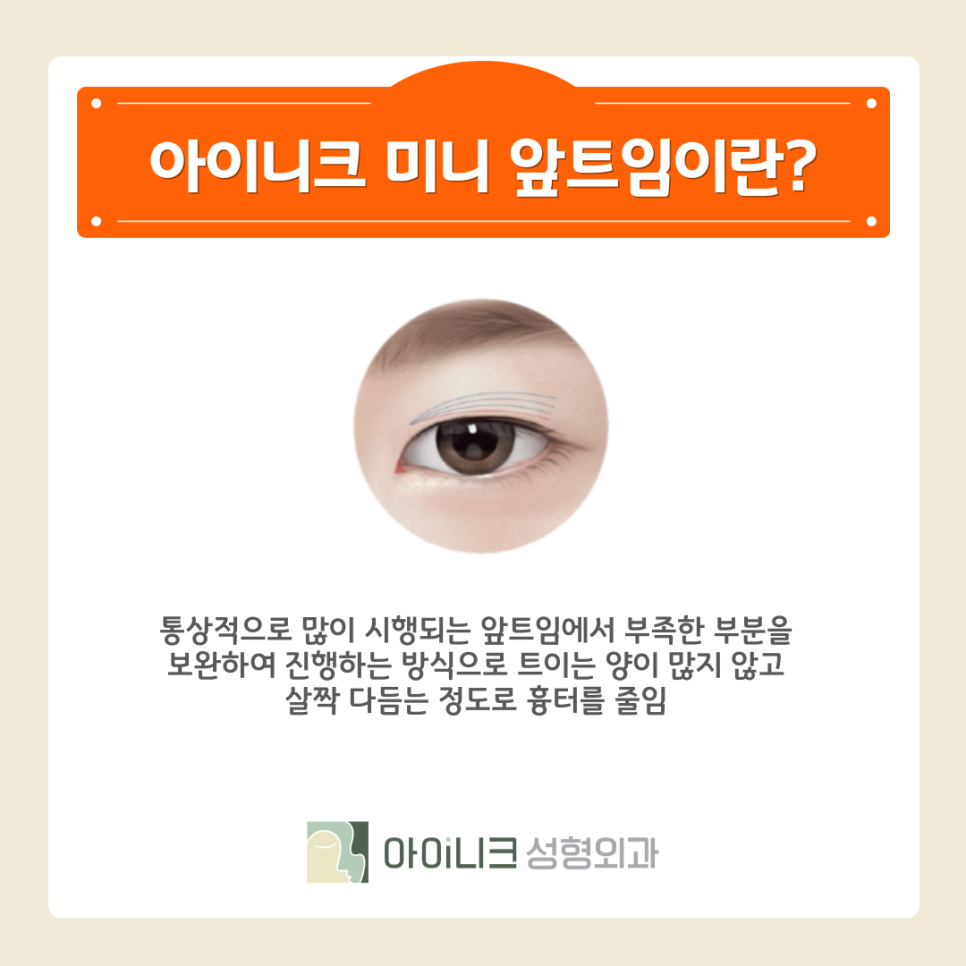
The first, mini inner corner surgery,
is a method that complements the shortcomings
of the conventional inner corner surgery that is
often performed.
Unlike standard inner corner surgery, it does not create
a large amount of opening and is done in a
slight refining manner, so it can be a suitable
option when reducing scarring and changing the angle.

The second, inner corner surgery & upper corner surgery,
can be performed when the inner part of the eyes looks
narrow because it is covered by an epicanthal fold.
If the epicanthal fold is positioned higher,
it can be improved with upper corner surgery,
and you can expect a result that makes
the front of the eyes look more open
and smoother.
In particular, it can help naturally reveal the hidden inner eye shape,
creating a clearer impression and
increasing the overall openness of the eyes.

Inner corner surgery is especially suitable for people
who want their eyes to look more open,
as if the outer corners have been lifted,
people with small or short eyes,
and people with a wide distance between the eyes.
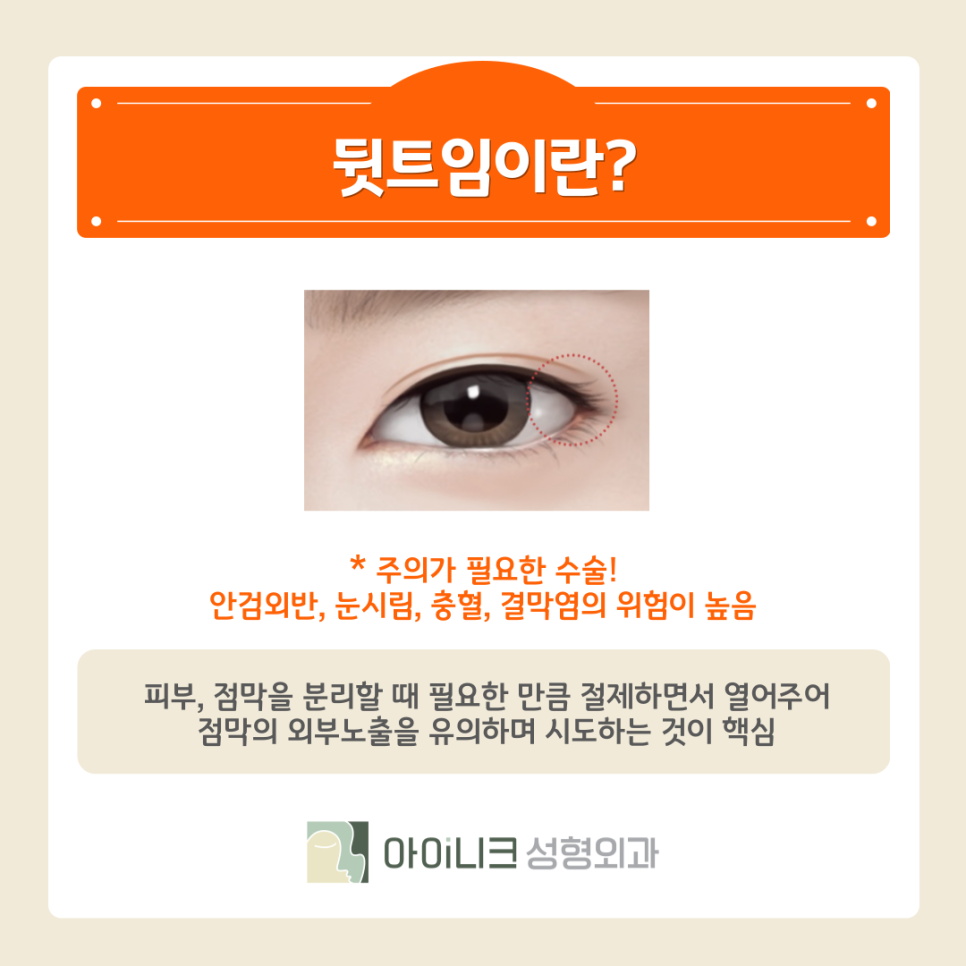
The third, outer corner surgery, must be performed very carefully,
and it is important to have it done at a clinic with
skill and experience.
If the surgeon’s skill is lacking
or experience is insufficient,
eversion of the eyelid or conjunctival exposure
can cause issues such as redness,
discomfort, and conjunctivitis.
Therefore, when separating the skin and mucosa,
the key is to make only the necessary incision,
authorly opening the area while paying attention to
minimizing external exposure of the mucosa.
Because outer corner surgery must also take into account
the tilt and shape of the eyes,
it can be applied even when a corner lift is needed.
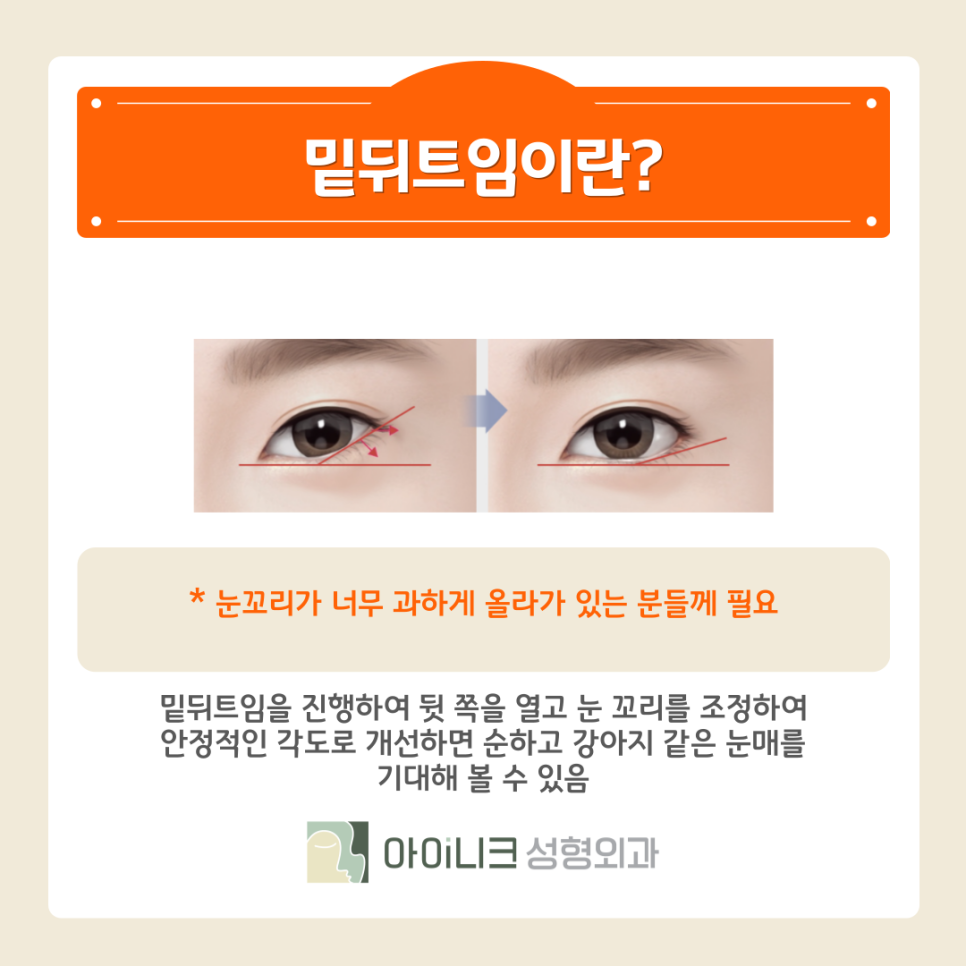
Fourth, lower outer corner surgery is not
a procedure to lift the outer corners of the eyes,
but a method needed for people whose eye corners are
too upturned and give a strong impression.
By opening the lower outer area of the eyes
and adjusting the angle of the outer corners in a stable way,
you can expect a softer and gentler impression,
and an effect that improves the eyes into
a relaxed, puppy-like look.
It also helps ease eyes that looked tight or closed off
and makes the overall facial image appear even softer.

So far, with Inique, we’ve introduced
canthoplasty procedures for solving concerns about
eyes that feel closed off, such as corner lifting and lowering.
If you have any questions, please click the channel below.
Thank you.