
Among all the features of the face,
one of the areas we pay the most attention to
is the “eyes.”
The eyes are an important feature
that determines the overall impression of the face.
Depending on the size of the eyes and
how much of the pupils are visible,
they have a significant influence on creating
a defined and lively appearance.

In particular, when there is drooping eyelid skin
or ptosis,
the eyes may appear to have a restricted field of vision
or give a tired impression.
Conversely, the more naturally defined the eye shape,
the more advantageous it can be
for creating a brighter and more appealing impression.
Therefore, people whose eyes are not particularly large
or whose eyes appear constricted because they have
full or thick upper eyelids
may try to compensate for this
by paying more attention to eye makeup.
If the eyes are simply on the smaller side,
improvement may be expected
through double-eyelid surgery, but

if the eyelids themselves are affected by aging
or a congenital issue
to the extent that they influence the overall impression,
this can become a source of concern.
In severe cases, it may be ptosis.
This condition can give the eyes
a sleepy and tired appearance,
while functionally, the eyelids can cover the pupils
and obstruct the field of vision,
causing discomfort.
Today, INIQUE will explain
how Seoul ptosis can be corrected
for those experiencing this kind of discomfort.
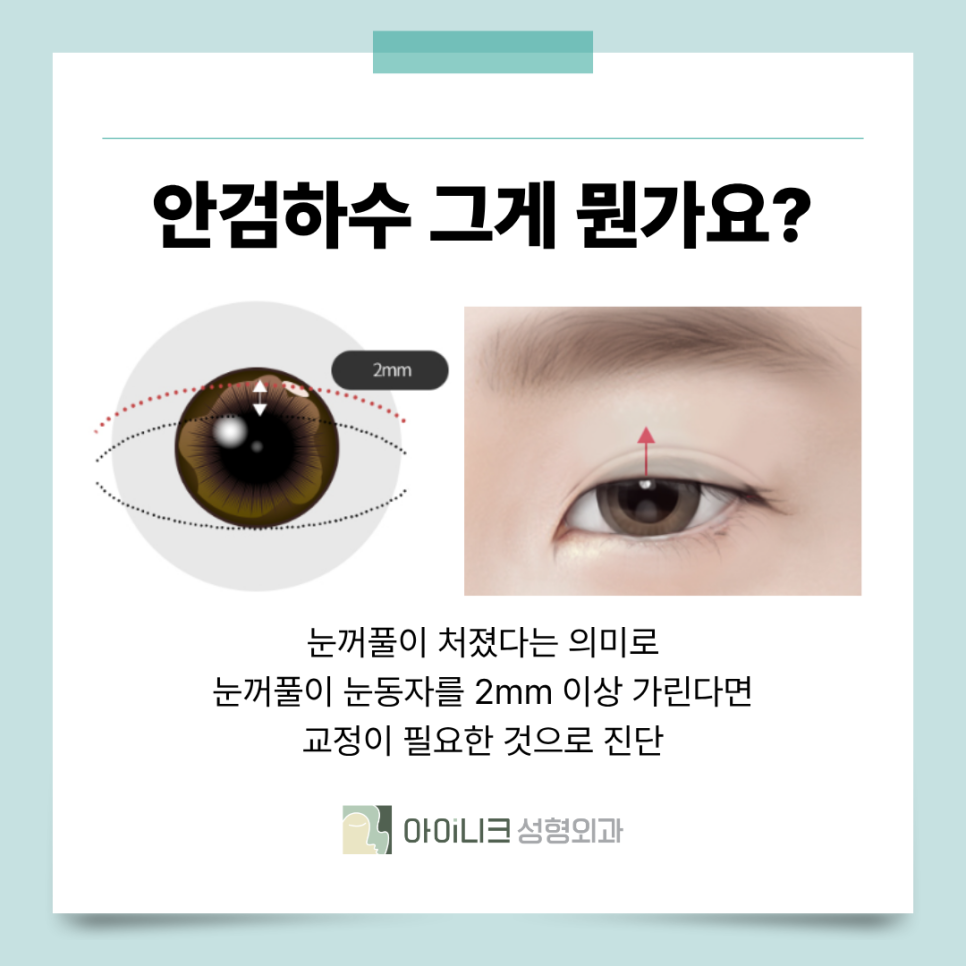
In literal terms, ptosis
means that the eyelid has drooped.
However, it can also lead to the problem
of the eyelid covering the eye
and obstructing the field of vision.
For Seoul ptosis,
correction is diagnosed as necessary
when the eyelid covers 2 mm or more of the pupil.
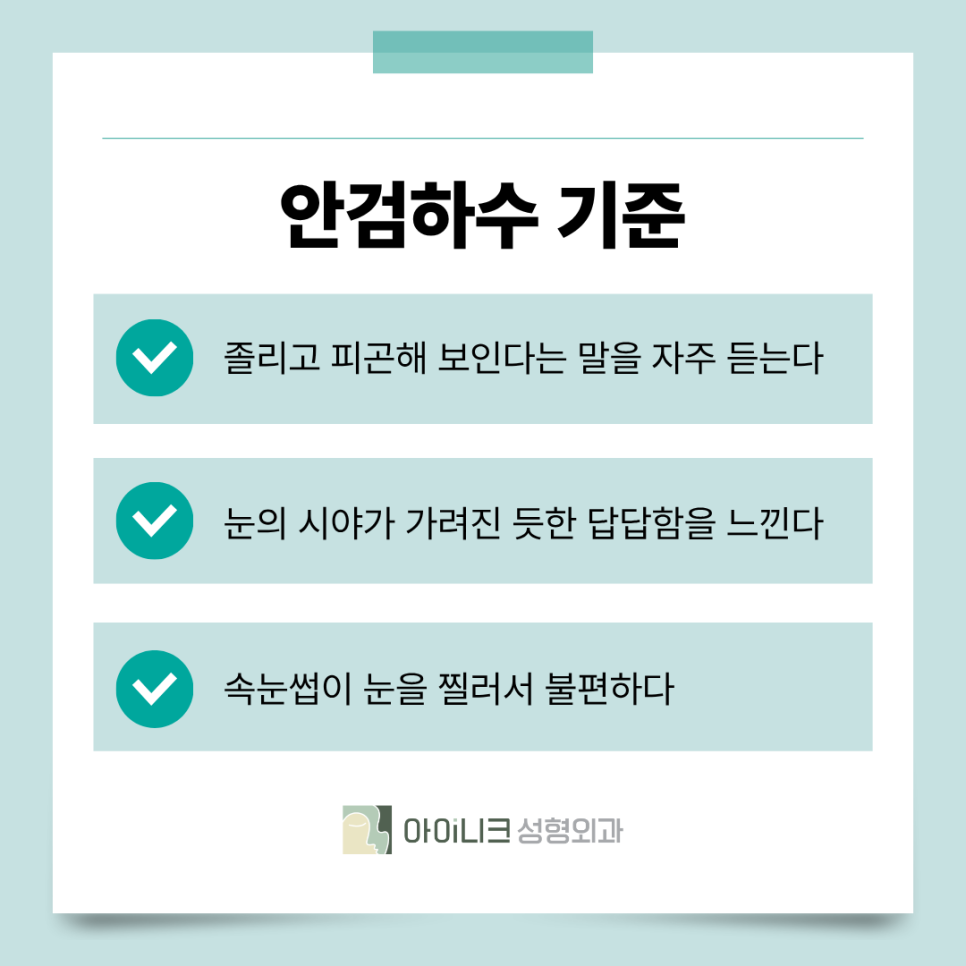
Looking more closely at the criteria for Seoul ptosis:
First, you are often told that you look sleepy and tired.
Second, you feel uncomfortable, as though your field of vision is obscured.
Third, your eyelashes poke your eyes and cause discomfort.
Fourth, you use your forehead muscles to try to open your eyes wider.
In addition, the eyelids may feel heavy when opening the eyes,
or asymmetry may appear, making the two eyes look different in size.
When the eyes remain open for a long time,
forehead pain or headaches may also occur.
As such, ptosis can appear in various ways,
with the severity and
form of the symptoms varying from person to person.
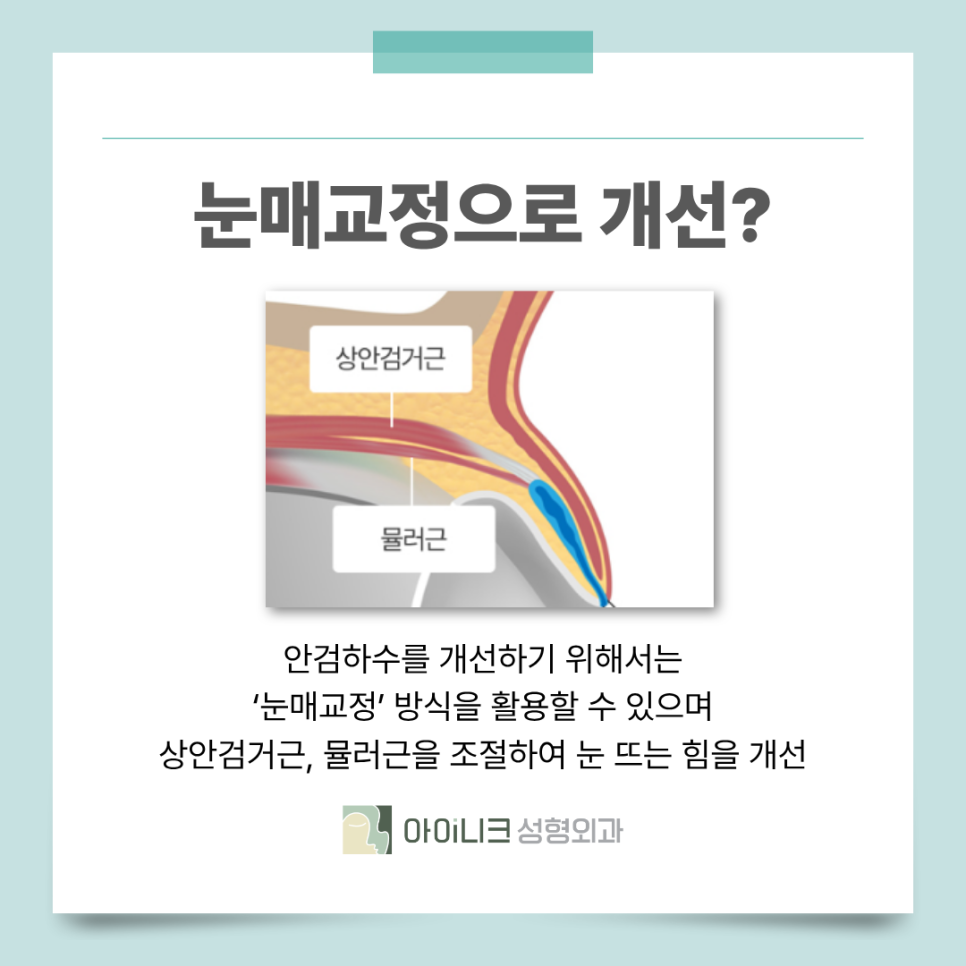
To improve Seoul ptosis,
a method called “eye-shape correction” can be used.
Before surgery,
the condition of the muscles around each person’s eyes is assessed,
and the levator palpebrae superioris muscle and Müller’s muscle
are adjusted to strengthen the ability to open the eyes itself.
In addition, correcting the eyelid that covers the eye
can secure the field of vision,
providing greater comfort in terms of function
while also creating a more open-looking eye shape.
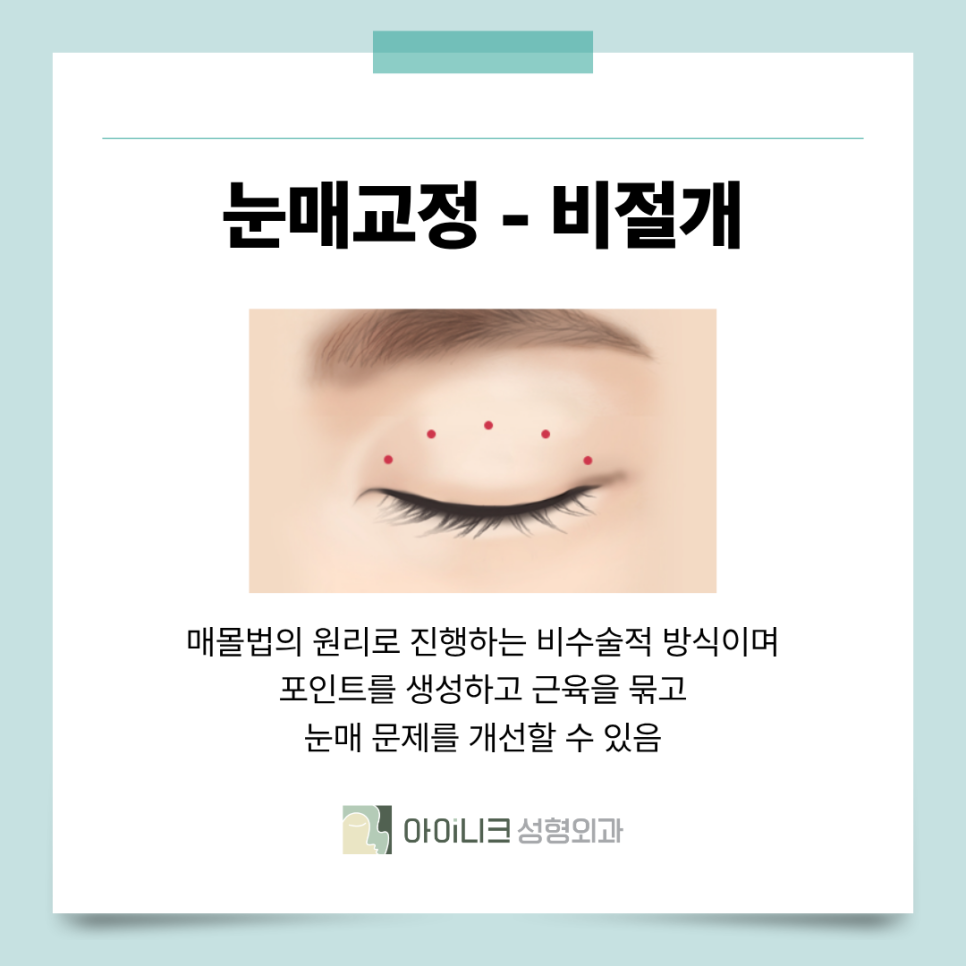
INIQUE’s Seoul ptosis correction
using the non-incisional method is based on the principles of the buried-suture technique.
This method encourages natural improvement without an incision.
Like non-incisional double-eyelid surgery,
it reduces the burden on the skin while delicately adjusting
the strength of the muscles that open the eyes,
helping create a defined and lively eye shape.
By precisely securing specific points,
it improves drooping eyelids and a constricted impression,
and can also naturally correct a sleepy-looking eye shape.
Compared with the incisional method in particular,
it may reduce the possibility of bleeding and tissue damage.
Because swelling and recovery-related burden are relatively limited,
this method is also frequently chosen by office workers and students
for whom a quick return to daily life is important.
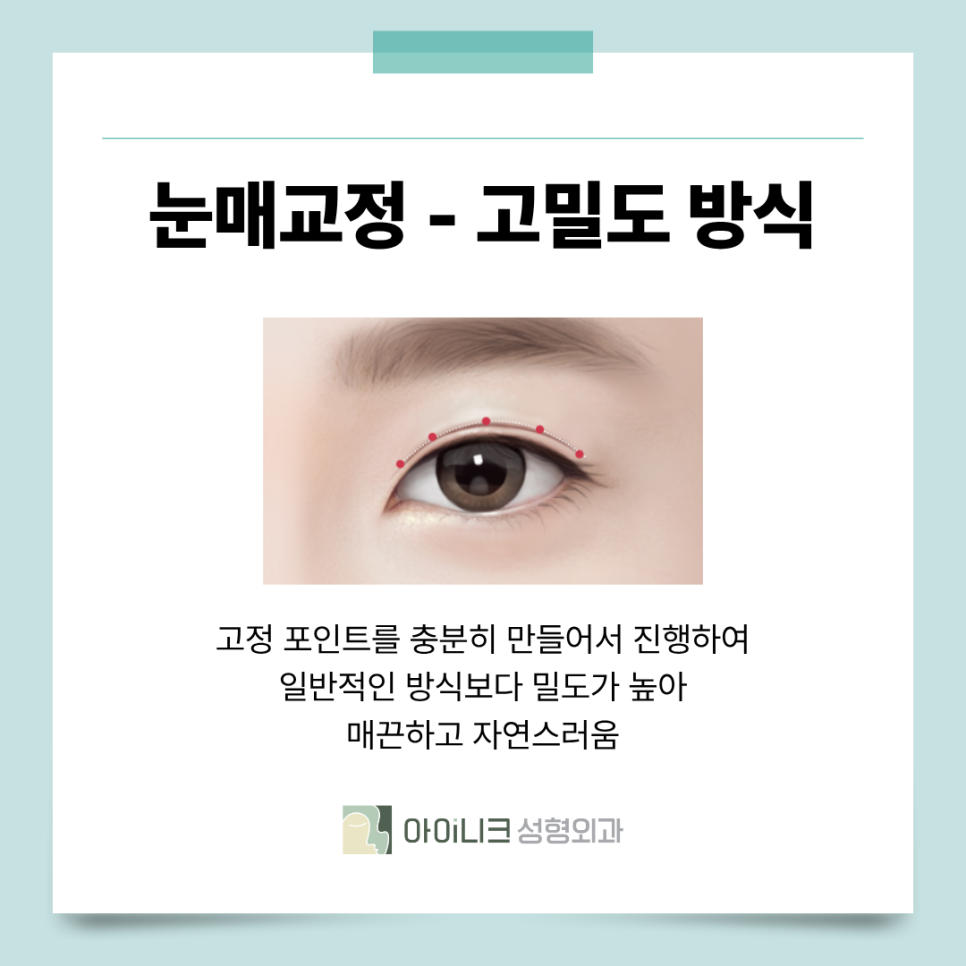
INIQUE’s Seoul ptosis solution
is carried out based on a highly dense fixation principle.
Because the line is formed
by creating sufficient fixation points,
it can offer a much higher level of completion
compared with conventional methods
and can be completed with a natural, smooth appearance.
Today, together with INIQUE,
we explained the features and criteria of Seoul ptosis
and the methods available for correcting it.
If you need a detailed consultation,
please click the channel link below.
Thank you.