
The method for addressing under-eye fat should be selected after distinguishing the causes of under-eye fat protrusion, hollowness, and fine lines.
If the under-eye area appears sunken, fillers may be helpful. However, if the fat protrusion is pronounced, lower eyelid fat repositioning may be more suitable.
Lower eyelid fat repositioning is a method that relieves under-eye unevenness by repositioning orbital fat to the areas where it is needed, rather than removing it excessively.
If fine lines are the main concern, Botox or skin elasticity care may also be considered.
The under-eye area is one of the first parts of the face where people notice changes as they age. When the area looks puffy or a shadow forms beneath it, it can make you appear more tired and older than you actually are. This is why many people search for ways to get rid of under-eye fat, but in practice, it is more important to determine whether the fat should be removed, whether the area should be filled with a filler, or whether surgery is necessary. From the reasons under-eye fat becomes prominent to the differences between fillers, lower eyelid fat repositioning, and Botox, I will organize the options according to their causes below.
- Why the under-eye area can appear to sag first
- Summary: The skin under the eyes is thin and moves frequently, so reduced elasticity, wrinkles, and sagging may appear relatively quickly.

The skin under the eyes is relatively thin and has fewer sebaceous glands than other areas of the face. As a result, it is prone to dryness and reduced elasticity, and even small changes are easily noticeable. In addition, the muscles around the eyes move repeatedly whenever you smile or frown, making fine lines more likely to develop. Over time, the shadows under the eyes may appear darker along with skin sagging. As these changes accumulate, the area may simply look like dark circles, or develop into an under-eye concern that is difficult to cover even with makeup.
- Why does under-eye fat develop?
- Key summary: Under-eye fat is not simply a problem caused by an increase in the amount of fat. It may occur as reduced skin elasticity, orbital fat protrusion, and changes in the retaining ligaments act together. As a result, the under-eye area may appear puffy or sunken, while fine lines and shadows may also become more prominent.
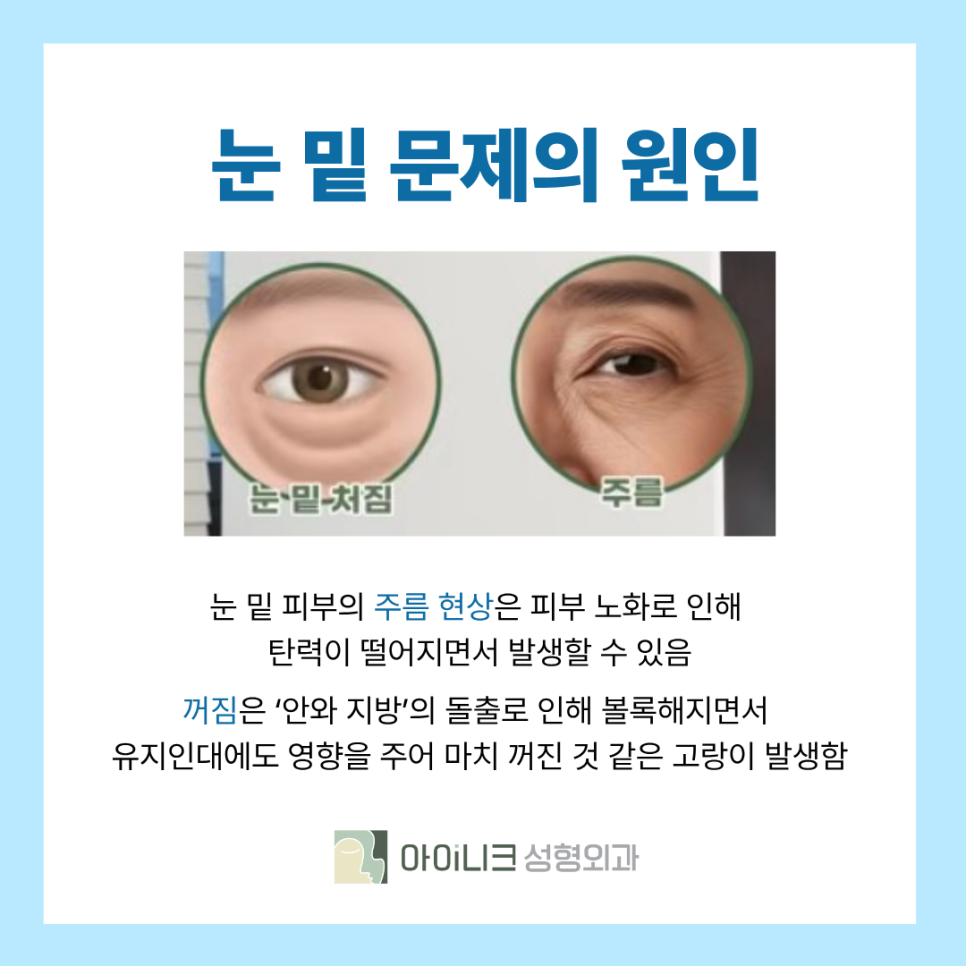
When the area under the eyes appears puffy and protruding, it is easy to assume that it is simply due to weight gain. In many cases, however, the actual cause is protrusion of the orbital fat. As skin elasticity decreases with age and the structures supporting the under-eye area weaken, orbital fat may be pushed forward, creating a puffy appearance.
At this point, a groove that looks sunken may also form directly beneath the protruding fat. This can create a complex appearance in which the under-eye area looks both puffy and sunken. Therefore, when considering how to get rid of under-eye fat, it is important to first distinguish whether the main issue is fat protrusion, hollowness, or fine lines.
- When fillers may help
- Summary: If the under-eye area appears sunken or shadows have formed due to a lack of volume, fillers may be helpful.
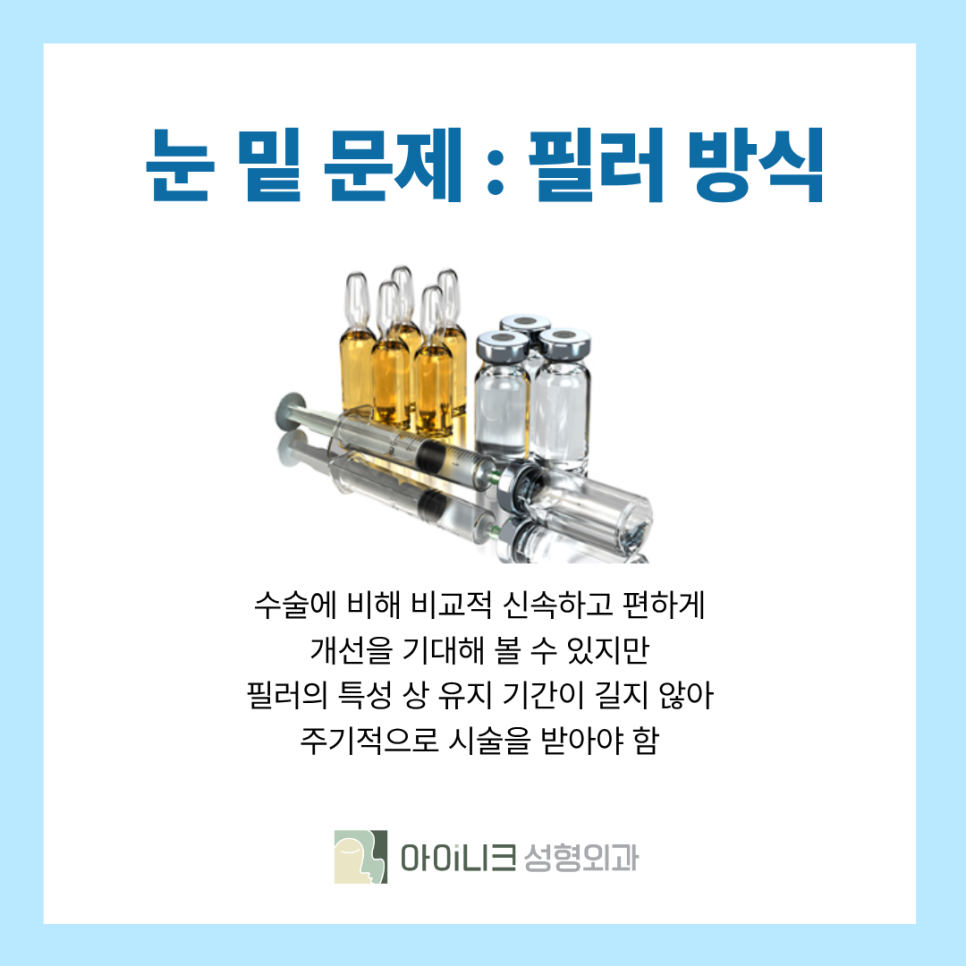
Under-eye fillers are a relatively simple option compared with surgery. They may help reduce shadows by restoring volume to sunken areas and create a smoother under-eye contour. However, fillers are not a permanent solution. Although the duration varies from person to person, the filler is generally absorbed after a certain period, so repeated treatments may be necessary. In particular, when under-eye fat protrusion is significant, simply adding filler may make the area look more swollen or unnatural, making it important to identify the cause first.
- When lower eyelid fat repositioning may be necessary
- Summary: If fat protrusion and the tear trough are both prominent, repositioning the fat rather than removing it forcefully may be necessary.
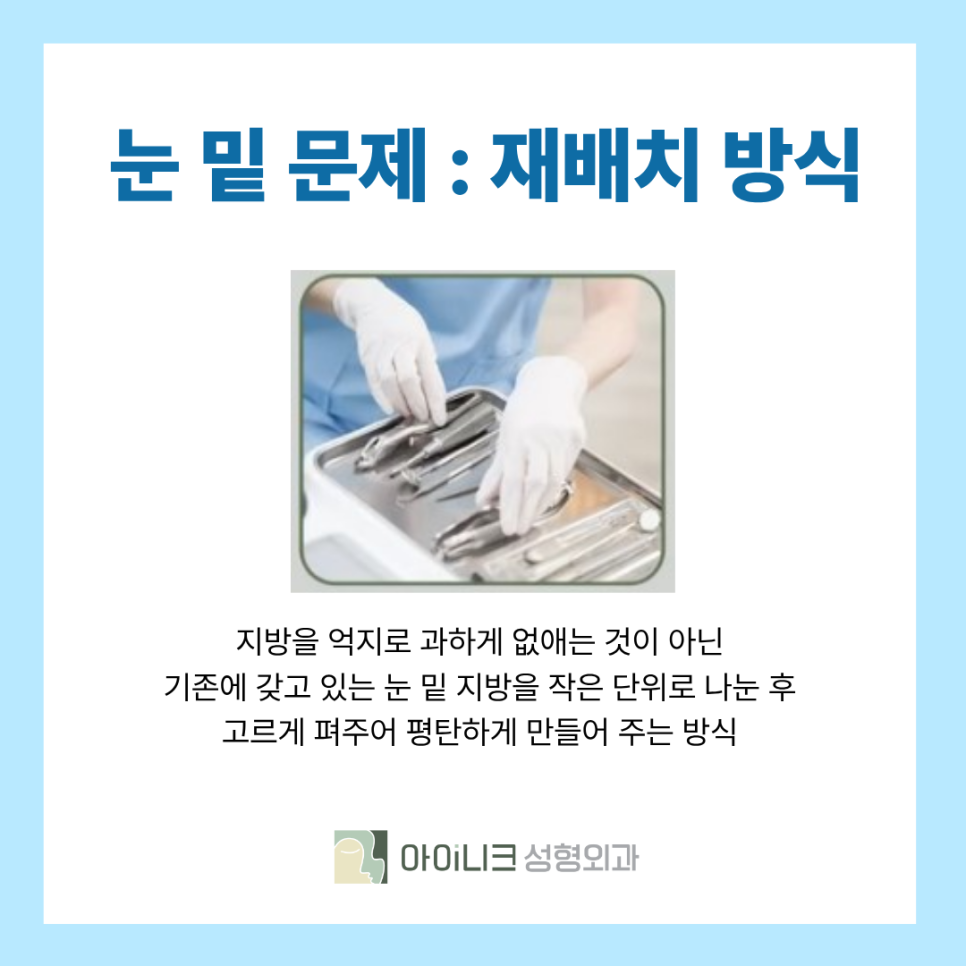
Lower eyelid fat repositioning does not involve excessively removing under-eye fat. Instead, it moves the existing orbital fat to the areas where it is needed to relieve unevenness under the eyes. The goal is to make the protruding fat appear less prominent and evenly spread the fat over the sunken groove, creating a smoother overall under-eye contour. Therefore, when fat protrusion is clearly visible and a tear trough or shadow also appears beneath it, lower eyelid fat repositioning may be a more effective option to consider than fillers.
- When Botox may help
Summary: If fine lines or expression lines are the main concern rather than under-eye fat, Botox may be an option.

Not every under-eye concern is caused by fat. If fine lines on the skin’s surface or expression lines that become prominent when smiling are the main cause, Botox may be considered. Botox can help reduce the deepening of wrinkles by controlling muscle movement, but it does not address fat protrusion or the tear trough itself. Therefore, when looking for ways to get rid of under-eye fat, it is important to first determine whether the issue is related to fat, hollowness, or wrinkles.
- Summary of selection criteria by cause
✓ If the under-eye area appears sunken: Fillers that restore insufficient volume may be helpful.
✓ If under-eye fat is visibly protruding: Rather than simply adding volume, consider a method that adjusts the structure, such as lower eyelid fat repositioning.
✓ If fine lines are the main concern: Botox or skin elasticity care may also be needed.
✓ If puffiness and hollowness occur together: Instead of considering only one method, the anatomical structure and skin condition should be assessed together.

- Ainik’s approach to improving the under-eye area
- Summary: After assessing each person’s under-eye structure, it is important to take an approach that reduces tissue damage and recovery time.

At Ainik, we assess the degree of under-eye fat protrusion, skin thickness, sagging, and the depth of the tear trough before providing guidance on an improvement plan suited to each individual. To reduce the burden of recovery, we use the Encore Ultra Laser to minimize tissue damage and aim for minimal dissection within the necessary range. We also carefully monitor post-treatment care to support stable recovery, with the goal of creating a natural and balanced under-eye contour.
Today, together with Ainik, we discussed various under-eye characteristics and possible approaches. Please feel free to contact us anytime if you have any questions. Thank you!