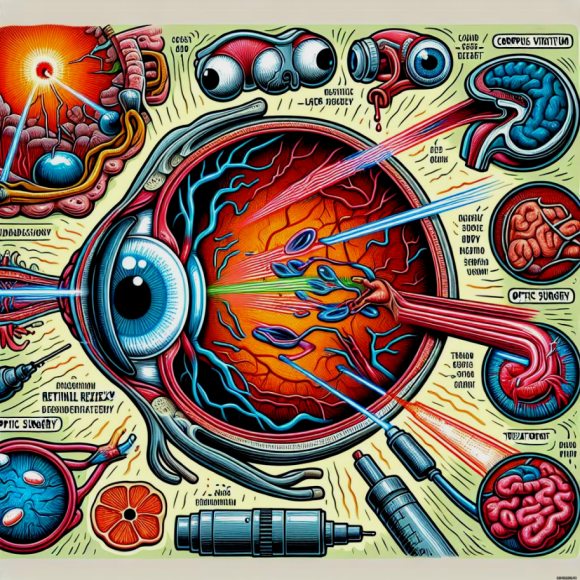
Eye health is a very important factor in our daily lives. Among eye diseases, retinal detachment is one of the serious ophthalmic conditions that requires attention. The retina is a thin tissue located at the back of the eye that detects light and plays an important role in sending signals to the brain. When this retina becomes detached from its proper position through retinal detachment, it can lead to vision loss. So what causes this condition?
Retinal detachment mainly occurs for three major reasons. The first is a retinal tear. This refers to a case in which a small hole or tear forms in the retina, causing it to detach. It is mainly caused by aging and is also commonly observed in people with high myopia. The second is tractional retinal detachment. This mainly occurs in patients with diabetes, when fibrous vascular tissue that pulls on the retina grows and causes the retina to detach. The third is exudative retinal detachment, in which inflammation or damage inside the eye causes fluid to accumulate and lift the retina away.
Symptoms of retinal detachment may include flashes of light or floating objects that suddenly appear in your field of vision. Because these symptoms can lead to serious situations that may cause accidents, you should visit an ophthalmology clinic immediately for a diagnosis. The biggest risk factor for retinal detachment is age, and in general, the likelihood increases after age 40. Also, if you have a family history of it or have previously experienced an eye injury, you should be even more careful.
Treatment for retinal detachment varies depending on the cause and condition. One of the most common treatments is laser therapy. The holes or tears in the retina are sealed with a laser to prevent the retina from detaching further. Another method is vitrectomy, which removes the jelly-like substance inside the eye and injects gas to press against the retina. In severe cases, surgery may be necessary.
Retinal detachment is a serious condition that can threaten vision, but it can be managed with early detection and appropriate treatment. If you notice unusual symptoms in your eyes, it is important to seek consultation without delay. Regularly checking your eye health and taking preventive measures is the best way to prevent disease. Therefore, it is important to confirm your eye health through regular ophthalmic examinations and minimize the risk of eye diseases, including retinal detachment.