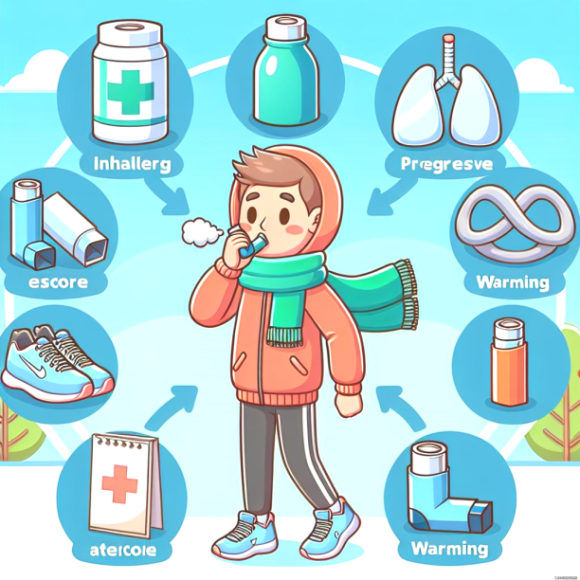
Exercise offers many benefits for our physical and mental health, but in certain situations it can also cause side effects. Exercise-induced asthma is one such condition, in which the airways constrict during exercise and cause breathing difficulty. People with exercise-induced asthma may experience coughing, wheezing, and chest tightness during or immediately after exercise. In this article, we will look at the causes, symptoms, and management methods for exercise-induced asthma.
First, let’s look at the causes of exercise-induced asthma. Under normal conditions, the airways inhale warm, moist air, but during exercise, cold and dry air is more likely to enter. These changes in the airways can irritate the lungs’ sensitivity and trigger asthma. In particular, outdoor exercise or activity in cold air can make this airway response worse.
The main symptoms of exercise-induced asthma are coughing and wheezing. Symptoms may appear about 5 to 10 minutes after starting exercise, and in severe cases they can affect you to the point that you have to stop exercising. These symptoms may also occur during recovery after exercise. If symptoms are severe, you may feel chest tightness or have difficulty breathing.
There are several ways to manage this asthma effectively. First, it is important to warm up and stretch sufficiently before exercise to warm the airways and gradually increase exercise intensity. A warm-up of at least 10 minutes is recommended. Second, if needed, you should consult a doctor and consider receiving an appropriate prescription medication. Commonly prescribed medications include inhalers that help prevent asthma attacks, and these are effective when used before exercise. In addition, to support respiratory health, it is best to exercise indoors when possible or on days with low levels of fine dust.
Finally, having exercise-induced asthma does not mean you should avoid exercise. With proper prevention and management methods, you can still enjoy a healthy exercise routine. You should make plans that take your physical condition and fitness level into account, and be prepared to respond immediately if asthma symptoms appear. Regular exercise can help manage asthma and improve overall health, so it is important to get advice from a professional and find the right management method. Even with exercise-induced asthma, you can maintain a healthy and active life through exercise with a positive attitude.